


WWW.THECOLLECTOR.COM
How Imperialist Ambitions Sparked World War I in 1914
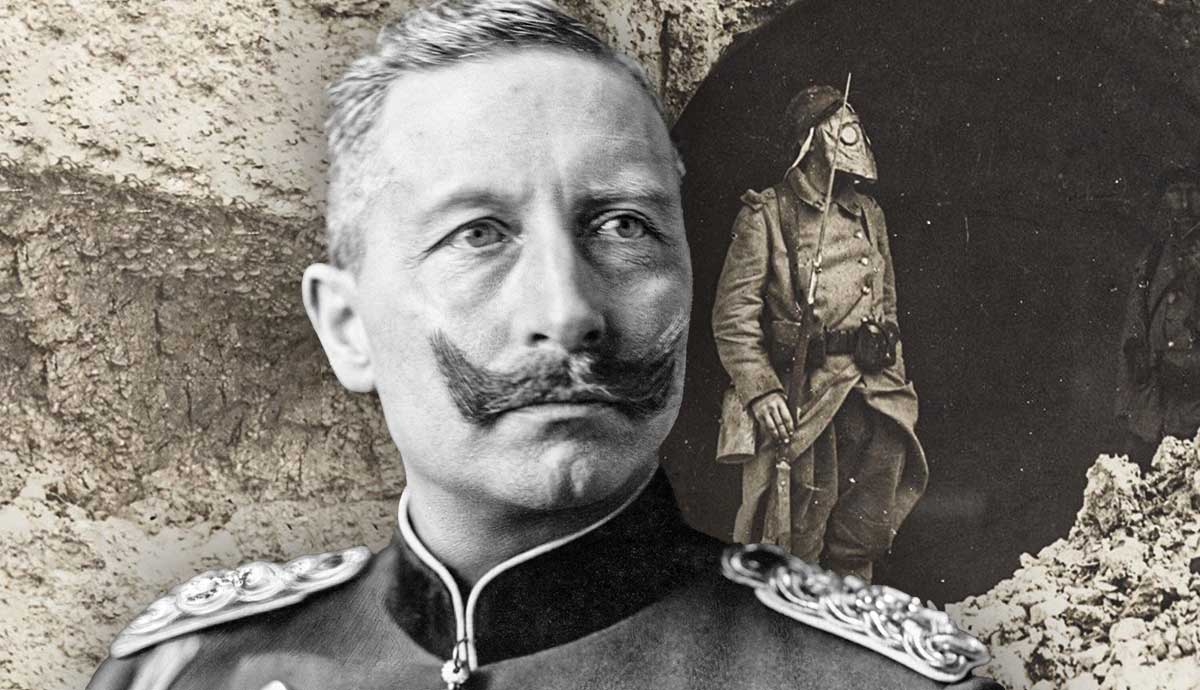
How did imperialism lead to World War I? The First World War officially began in 1914 and ended in 1918, but its seeds were sown long before the assassination of Archduke Franz Ferdinand in Sarajevo in the summer of 1914. The murder of Archduke Ferdinand in his car was the straw that broke the camels back, emphasizing and amplifying the political and economic tensions that had been building up for decades between the European powers, particularly Britain, France, and Germany. The declaration of war was the direct result of years of aggressive imperialism and boiling nationalism, particularly in the Balkans, where Slavic Serbs were increasingly seeking independence from the Habsburg and the Ottoman Empires. Indeed, the Archduke of Austria was assassinated in Sarajevo by a Serbian nationalist, Gavrilo Princip.The Year is 1914The Signing of the Treaty of Peace at Versailles, 28 June 1919, painting by Joseph Finnemore, 1919. Source: National Museum of AustraliaWhen 20-year-old Gavrilo Princip (1894-1918) gunned down Archduke Franz Ferdinand of Austria (1863-1914) and his wife Sophie, Duchess of Hohenberg, in the streets of Sarajevo, now the capital of Bosnia and Herzegovina, on June 28, 1914, the world was still divided into empires and colonies. Four years and millions of dead and wounded later, the Great War was over. So were four huge empires that had ruled over thousands of people for centuries. One of them was the Habsburg Empire, also known as the Austro-Hungarian Empire or the Dual Monarchy. When the war ended, it was carved up into a constellation of different countries. Vienna, the glorious capital of the Empire, became the capital of a small state, Austria, and the most vivid symbol of the disintegration of the Habsburg Monarchy. The collapse and dissolution of another great power, the Ottoman Empire, already in serious decline, was sanctioned by the Treaty of Svres signed in August 1920.Members of the Romanov family, including Anastasia Nikolaevna (the first from the left) in Mogilev. Source: Wikimedia CommonsThe Russian Empireor Romanov Empire, after the House of Romanov, the Imperial House of Russia from 1613 to 1917also crumbled, leading to the rise of the Soviet Union (USSR) in 1922 and the independence of former territories, such as Finland, Poland, and the three Baltic states: Estonia, Latvia, and Lithuania. Under the Treaty of Versailles (1919), the German Empire, or Hohenzollern Empire, after the Hohenzollern Dynasty, was stripped of all its overseas possessions in Africa, China, and the Pacific, which were ceded to Britain, France, and Belgium.The Treaty of Versailles essentially singled out Germany as the sole power responsible for the Great War and punished it by largely reducing its territory on European soil. As per Articles 42 and 44, the Rhineland, a loosely defined region extending along the Rhine River in what is now Western Germany, was demilitarized.Airplane in flight during World War I, 1915-1918. Source: Art Gallery of OntarioAlsace-Lorraine was returned to France and Northern Schleswig to Denmark. Parts of Upper Silesia, West Prussia, and the province of Posen were assigned to the newly restored Polish state. The humiliation was immense and set the stage for the rise of Hitler and the outbreak of the Second World War just a few decades later. But how did the world end up in a four-year war that resulted in millions of deaths and the collapse of four major empires? The causes, both direct and indirect, of the First World War are a well-explored topic in historical studies. Here we look at just one of them: imperialism.A World of ColoniesChromolithograph celebrating the French conquest of Tonkin, 1885. Source: Wikimedia CommonsIn the years leading up to the First World War, the European powers had carved out and consolidated their spheres of economic and cultural colonial dominance across the globe. The two major powers were France and Great Britain. On the eve of the Great War, France ruled over much of North Africa, from present-day Morocco to Tunisia and Algeria, as well as various regions in both East and West Africa, such as modern-day Chad and Burkina Faso, and islands such as Madagascar and Runion.France began its conquest of Algeria in 1830. 50 years later, in 1881, it annexed Tunisia, while Morocco only became a French protectorate in 1912. From the 1860s, France also ruled over large parts of Asia, known as French Indochina, and had territories in Oceania, from so-called French Polynesia to various smaller islands.Nigeria was ruled by the British until 1960, when it became independent, photograph by Omotayo Tajudeen. Source: UnsplashBritain, on the other hand, after occupying (but not annexing) Egypt in 1882, took control of Kenya, Nigeria, Sudan, Uganda, Rhodesia, Sierra Leone, and British Somaliland, officially the Somaliland Protectorate. Italy annexed Eritrea in 1885, Somalia in 1889, and finally Libya in 1911, while the Germans ruled over Togo, Cameroon, and Namibia. Until the 1970s, Portugal controlled Angola and Mozambique and Belgium ruled the Congo with an iron fist.In the so-called Scramble for Africa, British possessions stretched vertically, from north to south, from the northern coast of Egypt to the last strip of land in South Africa. French possessions, on the other hand, stretched from west to east (or east to west), in a long and large belt of influence that covered almost the whole of West Africa (with important exceptions such as Nigeria and Cameroon) all the way to Madagascar.Between Alliances and TensionsThe Algeciras Conference, 1906. Source: Wikimedia CommonsAlthough they are distinct phenomena, colonialism and imperialism are animated by what Barbara Arneil, author of Colonialism versus Imperialism, calls a central thread, or a central set of comprehensive arguments/principles that seek to justify the right of one power to subjugate another. In other words, imperialism is about influence, mainly through economic control and diplomacy, and the extension of the power of one (European) nation over another, with the latters citizens usually described in colonial propaganda by a handful of interrelated terms: uncivilized, idle, backward, and barbaric.In this race for dominance, European alliances were formed and tensions were heightened in the years leading up to the outbreak of the Great War. Tensions and alliances that would dominate the course, and outcome, of the conflict, while highlighting the precarious political balance of power on the European continent.The old city walls of Tangier, Morocco, 1930s. Source: Royal Museums GreenwichIn some cases, they led to territorial disputes that consolidated old alliances against a common enemy (Germany) while contributing to a general climate of threat and mistrust. This was the case with the Moroccan Crises. France was already ruling Algeria and Tunisia when it turned its attention to Morocco, one of the last free and uncolonized regions in North Africa.In March 1905, Kaiser Wilhelm II (1859-1941) traveled to Tangier, the ancient strategic Phoenician city and commercial center in north-western Morocco. From his yacht, he delivered an inflammatory speech, emblematic of the tensions between the European powers, declaring that Morocco should retain its right to its self-government and independence. France (and its allies) saw this as a threat to its claims. The crisis subsided a year later at the Algeciras Conference (1906), with Britain and Russia supporting France and its claims over Morocco (although the country remained independent), leaving Germany not only politically isolated but also openly humiliated.Kaiser Wilhelm II, 1902. Source: Wikimedia CommonsTensions peaked again five years later, when Germany sent its gunboat Panther to Agadir in July 1911, sparking what became known as the Second Moroccan Crisis. Germanys show of force represented a threat not only to France (and Spain, who also had interests in Morocco) but also to the supremacy of the British navy.The Treaty of Fez signed on March 30, 1912, put an end to the crisis by making Morocco a French protectorate. In return for its willingness to recognize French control over the Arab country, Germany was granted a small strip of land in the French Congo. For the time being, war in Europe had been averted. But when the treaty was made public in mid-April, the people in Fez rose up and riots broke out. Abd al-Hafid (1875-1937), the Alaouite sultan of Morocco, abdicated and left for France.From Ideologies to MilitarizationThe Battle of Port Arthur on 10 March 1904, during the Russo-Japanese War, by Ogata Gekko, 1904. Source: Queensland Art Gallery (QAGOMA)While colonialism involves the physical, methodical, and often violent occupation and administration of territory by colonial officials, imperialism is a different kind of domination. It is a domination from above and afar, which does not necessarily require direct settlement or occupation. It could be argued that imperialism represents the overarching ideology of colonialism, and colonialism is its physical implementation.Since 1415, when Portugal conquered Ceuta in North Africa, and especially after 1492, when Christopher Columbus (1451-1506), reached the American continent, European powers began to act on this ideology by securing colonies around the globe. Then, to protect their colonies, trade, and the stability of their empires, they began to expand their armies and navies, investing in more advanced machine guns and artillery, such as the German Big Bertha (Dicke Bertha in German), a siege howitzer built in great secrecy by the Krupp armaments factory in Essen and designed in the aftermath of the Russo-Japanese War of 1904.HMS Dreadnought, 1906. Source: Wikimedia CommonsA shipbuilding arms race between Russia and Britain, now known as the Anglo-German Dreadnought arms race, soon began. The spark came on a wet February day in Portsmouth, where the worlds media gathered to witness King Edward VII (1841-1910) launch the innovative royal battleship HMS Dreadnought (literally Fear Nothing), built in just one year. It was clear to all that Britains newest warship was a revolutionary piece of technology that would ensure the supremacy of the British navy over all other European fleets and make all previous warships obsolete.The colonies also provided a pool of men to be recruited in the event of conflict, as was the case in both the First and the Second World Wars. The colonies were both a resource to be protected (through the arms race) and a force that could provide protection and help in the event of war. By this logic, the arms race was not only necessary but inevitable.Portrait of Winston Churchill, by Dwight D. Eisenhower, 1955. Source: National Churchill MuseumIt was the duty of every European power to defend its subjects, knowing (and expecting) that these subjects would rise up to defend them if necessary. In his famous We Shall Fight speech, delivered after the evacuation of Dunkirk in June 1940, Winston Churchill (1874-1965), then Prime Minister of the United Kingdom, famously concluded that even if, which I do not for a moment believe, this Island or a large part of it were subjugated and starving, then our Empire beyond the seas, armed and guarded by the British Fleet, would carry on the struggle, until, in Gods good time, the New World, with all its power and might, steps forth to the rescue and the liberation of the old.The arms race inevitably escalated tensions and contributed to the climate of fear, suspicion, threat, and hatred that led to the Great War.The Domino EffectSoldier wearing a gas mask in a dugout during the First World War, 1915-1918. Source: Art Gallery of OntarioThe territorial disputes and the arms race created a domino effect that contributed to the outbreak of the First World War. To protect their interests, the imperial powers established formal alliances. The United Kingdom, the French Third Republic, and the Russian Empire formed the Triple Entente, which served as a powerful and threatening counterweight to the Triple Alliance.This alliance, originally established in the early 1880s and renewed periodically, included Germany, Austria-Hungary, and Italy. Germany, in particular, perceived the Triple Entente as a threat not only to its economic interests but to its very survival. Such a system of alliances formed the basis of the two opposing sides fighting during the First World War, the Allied (or Entente) and the Central Powers.Soldiers of the 1st Battalion of the West Yorkshire Regiment in Egypt, 1931-1933. Source: Wikimedia CommonsThe Central Powers included Germany, Austria-Hungary, the Ottoman Empire, and Bulgaria, while the Allied Powers consisted of France, the United Kingdom, and Russia, later joined by the United States (in 1917, the same year when the crumbling Russian Empire withdrew from the war), Japan, and Italy.A factor that further escalated the conflict was the so-called German blank check, that is, Germanys offer of unconditional and full military support to its Austro-Hungarian ally made by Kaiser Wilhelm II and Chancellor Theobald von Bethmann-Hollweg in July 1914. Historians now generally agree that the German blank check had the ultimate effect of emboldening Austria-Hungary, pushing it to take a hardline stance against Serbia and anyone supporting it. As Gerwarth & Manela write, On the eve of the Great War much of the landmass of the inhabited world was divided into formal empires or economically dependent territories. That world unraveled dramatically in the twentieth century, beginning with the cataclysm of the First World War.Inside the trenches of World War I. Source: National WWI MuseumWhen Austria-Hungary declared war on Serbia, backed by the German blank check assurance, the complex web of alliances that had developed over decades came into play. These alliances, partly fueled by imperial ambitions, compelled European powers to join the conflict. As each European nation became involved, their respective colonies also entered the conflict.Alongside the Allied powers fought troops from British India, French Algeria, Japanese Korea, Belgian Congo, and the American Philippines. On the other hand, several officially neutral states sided with the Central Powers. And so the conflict that began in the streets of Sarajevo in the summer of 1914 expanded to become a war fought by millions of men from all over the globe: the Great War, or, as it is known today in retrospect, the First World War.
0 Yorumlar
0 hisse senetleri
146 Views

 English
 Arabic
 French
 Spanish
 Portuguese
 Deutsch
 Dutch
Dutch
 Italiano
 Russian
 Romaian
 Portuguese (Brazil)
 Greek
Greek