How the Samurai Rose from Mercenaries to Monarchs of Japan
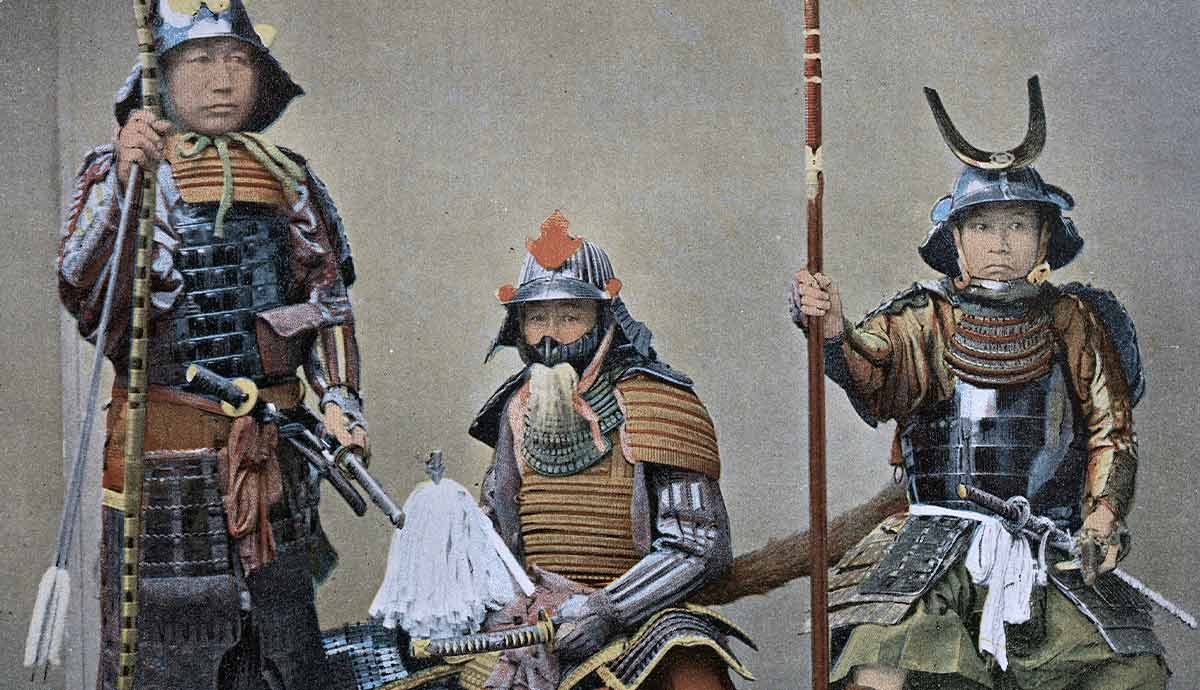
A colorized photograph from 1860 of three samurai equipped with a variety of armor and weapons. Source: Wikimedia CommonsFor centuries, a group of sword-carrying fighters called the samurai served as Japans warrior class. They emerged in the late Heian period due to the need for provincial warriors, and grew to become Japans most feared fighting force. Samurai stood at the very center of Japanese life and culture from the late 12th century until their class came to an end in the 19th century. The word samurai comes from the Japanese term saburau, meaning to serve, hinting at the samurais roots as men who served the elite and landowners.Changes in Military ConscriptionPortrait of Emperor Kanmu, 16th centuryIn 794, Emperor Kammu moved the capital of Japan from Nagaoka-kyo to Heian-kyo, present-day Kyoto. The move led to the start of the Heian period, which lasted from 794 to 1185, the final stage of classical Japanese history. During this time, provincial warriors gradually gained importance. They would later form the samurai class and help bring about Japans feudal era. Although Emperor Kammu ended mass conscription in 792, he continued military campaigns to control the Emishi people in northern and eastern Japan. From then on, local fighters were chosen from the sons of local chiefs and the rural noble class. Military duty therefore changed from a burden on farmers to a respected service performed for the state and the emperor by the high-born class.The Lack of Law EnforcementThe Mts-ji portrait of Oshu-Fujiwara clan heads: clockwise, Kiyohira, Motohira and HidehiraWith the end of the peasant army system, the new fighters, known as bushi, later became known as samurai. They lived by a strict code that prized combat skill, survival, archery, loyalty, and personal honor. The samurais rise was closely linked to their service under daimyo (feudal lords). The lords gave them land and support, and the samurai offered military service and loyalty in return. Over time, the samurai gained more power. One key reason was that the ruling Fujiwara family had begun to ignore the countryside and the provinces. The Fujiwara also let the police system collapse, allowing robbers to prey on the rich. Because the court had little control outside the capital, bands of samurai stepped in to fill the gap. The bands of warriors eventually took control of large areas of land in eastern Japan, around modern Tokyo.The Rise of Rival Samurai ClansA sphere map on 1183 at Genpei War. However, it was not clearly divided in this way, and there were conflicts among Genjis as well as TairasBetween the 10th and 12th centuries, two major rival samurai clans, the Taira and the Minamoto, grew powerful by defeating weaker clans and seizing their lands and wealth. In 1160, the forces of Minamoto Yoshitomo were defeated by the Taira clan led by Taira no Kiyomori. However, two of Yoshitomos young sons, Yoritomo and Yoshitsune, survived. Though kept apart from a young age, the brothers later avenged their father. They became legendary samurai warriors. In a series of battles known as the Genpei War, they defeated the Taira clan. In 1185, the Minamoto clan established a new government in Kamakura, south of modern Tokyo. Minamoto Yoritomo received the title of shogun in 1192, giving him formal rule over the country.Influence From ChinaKorean woodblock print of The Sixth Patriarchs Dharma Jewel Platform Sutra (c. 1310), a key Zen text which contains the basic doctrines of Zen. Bibliothque Nationale de FranceZen Buddhism flourished in Japan during the Kamakura period, brought by monks who had travelled to China during the Song and Yuan dynasties. The military leaders, based in Kamakura, were particularly open to its ideas, supporting Chinese and Japanese monks and paying for the building of large temples in the east during the 13th century. With its focus on mental discipline, Zen was quickly taken up by warriors, especially the Hj clan who used Zen practices for their mental focus. The warrior families that took power during the Muromachi period also introduced Zen Buddhism and built a new warrior culture of their own. This new samurai class was not only about fighting as running its lands required the additional ability to read and write, a working knowledge of laws, and formal written records. Zen monks advised the military government on matters related to leadership, foreign relations, and culture. They also wrote books and poetry, a sign that learning and political power went hand in hand within the same ruling class.The Long Decline and the Meiji RestorationPortrait of Tokugawa Ieyasu, Kano Tanyu, Early 17th century. Source: Osaka CastleThe word samurai originally derived from the term saburai later came to mean all members of the warrior class that rose to power in the late 12th century. It was during the long period of peace under the Tokugawa shogunate that most samurai were moved into administrative jobs or scholarship. In the mid-19th century, lower-ranking samurai seeking advancement and driven by a new sense of national pride joined the movement to overthrow the Tokugawa shogunate. Their efforts helped bring about the Meiji Restoration of 1868 which ended the power of the samurai class.




 English
 Arabic
 French
 Spanish
 Portuguese
 Turkish
 Dutch
Dutch
 Italiano
 Russian
 Romaian
 Portuguese (Brazil)
 Greek
Greek