


WWW.THECOLLECTOR.COM
6 Major Port Cities of the Spanish Empire
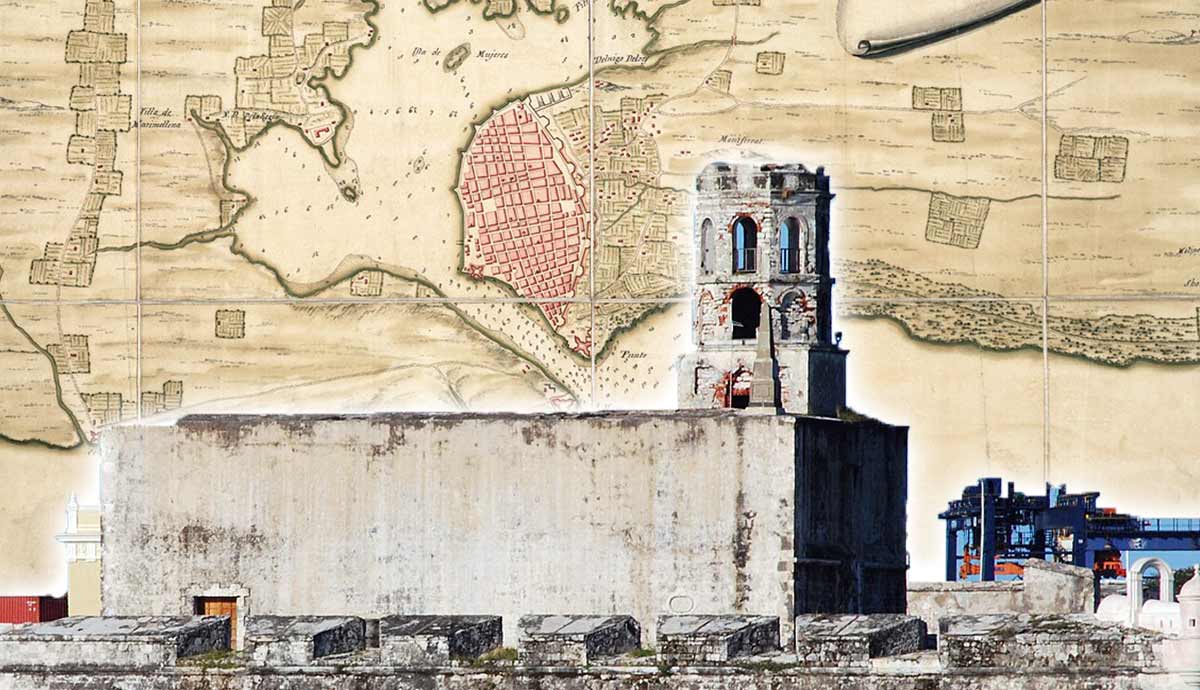
Many of the major port cities in Latin America and the Philippines were first developed by the Spanish Empire from the 16th century onwards. These ports helped turn Spain into one of the wealthiest global powers in the Early Modern era. The following six ports were the most prominent in the empire.1. SevilleA view of Seville, 1660. Source: Focus-Abengoa Foundation, Seville, SpainWhen the Spanish Crown formally established the Casa de Contratacin in Seville in 1503, the city gained exclusive rights over all Transatlantic commerce headed to Iberia. This transformed Seville into the commercial heart of the Spanish Empire. Every ship bound for the Americas was required to depart from and return to Sevilles inland port on the Guadalquivir River. This propelled the citys economy and enabled it to grow rapidly.As a result of the citys growth as a commercial powerhouse, Seville became a vibrant, cosmopolitan hub, attracting merchants, navigators like Magellan and Vespucci, artists such as Velzquez and Murillo, as well as the writer Miguel de Cervantes. The port attracted immigrants from inland communities hoping to get work in the harbor or to catch one of the galleons leaving for Spains overseas colonies. This population boom led to the creation of several new neighborhoods on the citys periphery. The larger workforce increased the production capacity of the shipyards.However, the 17th century proved to be a disastrous period for Seville. The Guadalquivir River began to silt up, making it more difficult for ships to enter and leave the harbor. The loss of revenue drove people away from the city, leading to a loss in revenue. Additionally, the population boom led to several epidemics in the city, causing lots of deaths from disease. By 1717, the Spanish government announced it was moving the trade monopoly to the port of Cdiz, which had direct access to the Atlantic. This ended Sevilles reign as the trade center of the Spanish Empire.2. CallaoPhotograph of the Real Felipe Fortress in Callao, Peru. Source: Wikimedia CommonsDuring the colonial period, Spains most vital port on the Pacific coast in the Americas was the Peruvian port of Callao. Founded by Francisco Pizarro in 1537, Callao became the mandatory point of shipping all raw materials and riches from the Spanish holdings on the West coast of South America to Iberia. Gold and silver from the mines of Peru, Bolivia, and Argentina were transported by mule train across the Andes to the port. From there, they could be shipped to Spain via the Pacific or sent to Panama for the Atlantic passage.Callaos population increased rapidly from European settlement, the arrival of African slaves, and indigenous people being brought to the port. Because of its importance, it was repeatedly attacked by Spains enemies, including English privateer captain Sir Francis Drake. The authorities responded by building a wall to protect the harbor in the mid-17th century.In 1746, a major earthquake and tsunami destroyed large parts of the city. The formidable Real Felipe Fortress was built as part of the reconstruction program. While it remained a critical port for Spain, its prosperity declined as the Spanish Empire weakened during the Napoleonic era. In 1826, the Spanish garrison surrendered to the revolutionaries, making it the last surviving Spanish stronghold in continental South America. Callao maintained its importance as a port for the newly independent state of Peru for many decades and is now part of the metropolitan area of the Peruvian capital of Lima.3. ManilaUniversity of Santo Tomas in Manila, a relic of Spanish rule, 2022. Source: Wikimedia CommonsSpains empire was not confined to the Americas. In 1571, the Spanish conquistador Miguel Lpez de Legazpi founded a settlement on the grounds of an old Muslim fortress. The Spanish city came to be known as Manila. Its access to the South China Sea made it a crucial node in Spains overseas trade and the center of Spanish power in the Philippines. Manila witnessed massive development during more than three centuries of Spanish rule and was nicknamed the Pearl of the Orient.Spanish galleons crossed the Pacific and Indian Oceans to bring raw materials and riches home from the Philippines. Manilas port was essential for this purpose. Because the city was a major target, the Spanish authorities ordered the construction of a network of fortifications to protect the harbor. Most famous of these was Fort Santiago, which protected the administrative heart of the colony. Spain ultimately deployed a fleet of warships to protect the colony and held onto Manila long after the collapse of the empire in South America.In 1896, Filipino revolutionaries began fighting the Spanish for independence. While the Spanish garrison on the islands struggled to hold off enemy attacks, Manila remained in Spanish hands throughout the war due to its formidable protection. However, this changed during the Spanish-American War of 1898. While the war was caused by events in Cuba, the US Navy opened a second front and crushed the Spanish fleet in Manila Bay. US forces subsequently landed and forced the Spanish garrison to surrender. While fighting continued between the Americans and Filipino guerillas, 1898 marked the end of hundreds of years of Spanish rule in Manila.4. VeracruzFortress San Juan de Ula in Veracruz. Source: Wikimedia CommonsIn 1519, the Spanish conquistador Hernn Corts landed on the Mexican coast and planned to march inland. The area he landed in became known as Villa Rica de la Vera Cruz (The Rich Town of the True Cross) and was the first Spanish settlement on the North American mainland. The settlement became known as Veracruz and was the sole authorized deep-water port on Mexicos Gulf Coast for the entire colonial period.A yearly Spanish treasure fleet gathered at Veracruz to load the primary exports: silver and gold, cochineal red dye, chocolate, and vanilla, along with Asian luxury goods that had arrived via the Manila galleon trade. The return journeys brought essential European goods, Spanish immigrants, and enslaved Africans, who formed a significant part of the local population and culture. Silver from the mines at Zacatecas, Guanajuato, and San Luis Potos was transported to Veracruz and then sent back to Iberia. Most of the Spanish imperial trade in the Americas relied on Veracruz owing to its access to the Gulf of Mexico.Like the other Spanish imperial ports, Veracruz was protected by a formidable network of forts to keep Spains enemies away from the harbor. The ports prosperity led to a wealthy mercantile class that was sometimes richer than that of Mexico City, even though yellow fever made the city a difficult place to live. Veracruz remained the final bastion of Spanish royalist power in Mexico, with Spanish troops at the fort of San Juan de Ula holding out against the newly independent Mexican government until 1825.5. CartagenaSpanish Admiral Blas de Lezo, who defended Cartagena from a British naval attack in 1741. Source: Historic UKSpanish colonizers founded the port of Cartagena in 1533 as part of an effort to expand Spains trade network on the Pacific coast. The citys primary function was economic: it was the main collection and embarkation point for precious metals from the Viceroyalty of New Granada (present-day Colombia) and even silver from the Potos mines in Bolivia, which were then shipped to Spain. This immense wealth attracted frequent attacks from pirates and rival European powers, including Francis Drake in 1586 and the French in 1697.The fortifications around the city proved to be formidable, as they were in Veracruz. The Castillo San Felipe de Barajas, constructed in 1639, was the largest land fortification in all of South America. The city remained a target for outside attackers due to the riches exported from its harbor. It was also the second of two ports in Spanish South America that allowed for the importation of slaves. This led to the creation of a strong Afro-Colombian culture that persists in the city to this day.In 1741, Britain and Spain fought a naval war known as the War of Jenkins Ear. Admiral Edward Vernon attempted to seize the city in what became known as the Battle of Cartagena de Indias. The Spanish victory in this battle prolonged their control over continental South America. Seventy years later in 1811, Cartagena was one of the first locations of revolutionary activity in the Spanish Empire. To this day, Cartagena continues to be Colombias main international trading port.6. HavanaA map of colonial-era Havana, 1740. Source: Boston Public LibraryHavana, which became known as the Paris of the Antilles, was the center of Spanish power in the Caribbean due to its access to the Gulf Stream and favorable currents for ships returning to Europe. Founded in 1519, Havana was the port where Spanish merchant convoys assembled before heading to Iberia. Cuba itself had little in the way of mineral wealth like Peru or Mexico, so the main product exported from Havana was sugar.Havana saw major development in its port capacity because of the citys role as a critical node in the Spanish trade networks. Havana witnessed repeated attacks as part of an effort by Spains enemies to weaken its grip on the Caribbean. The Dutch privateer Piet Hein launched a major assault on a Spanish silver convoy off Havana during the Dutch War of Independence in 1628. A century later, the British seized the city in 1762 during the Seven Years War. Spanish rule was restored after the war and held onto it for more than a century.When Spains empire in South America collapsed, Havana became the center of Spanish rule in the West Indies and rivaled Manila in importance. The citys population continued to grow and most Spanish loyalists in Cuba lived in the city or its environs. Havanas time as a Spanish possession came to an end in 1898, when the Americans took the city and forced the Spanish to vacate Cuba entirely. In 1902, Havana became the capital of the newly independent state of Cuba.
0 Comentários
0 Compartilhamentos
177 Visualizações

 English
 Arabic
 French
 Spanish
 Deutsch
 Turkish
 Dutch
Dutch
 Italiano
 Russian
 Romaian
 Portuguese (Brazil)
 Greek
Greek