


ALLTHATSINTERESTING.COM
Inside The Myth Of Sekies, The Seal-Human Shapeshifters Of Celtic Lore
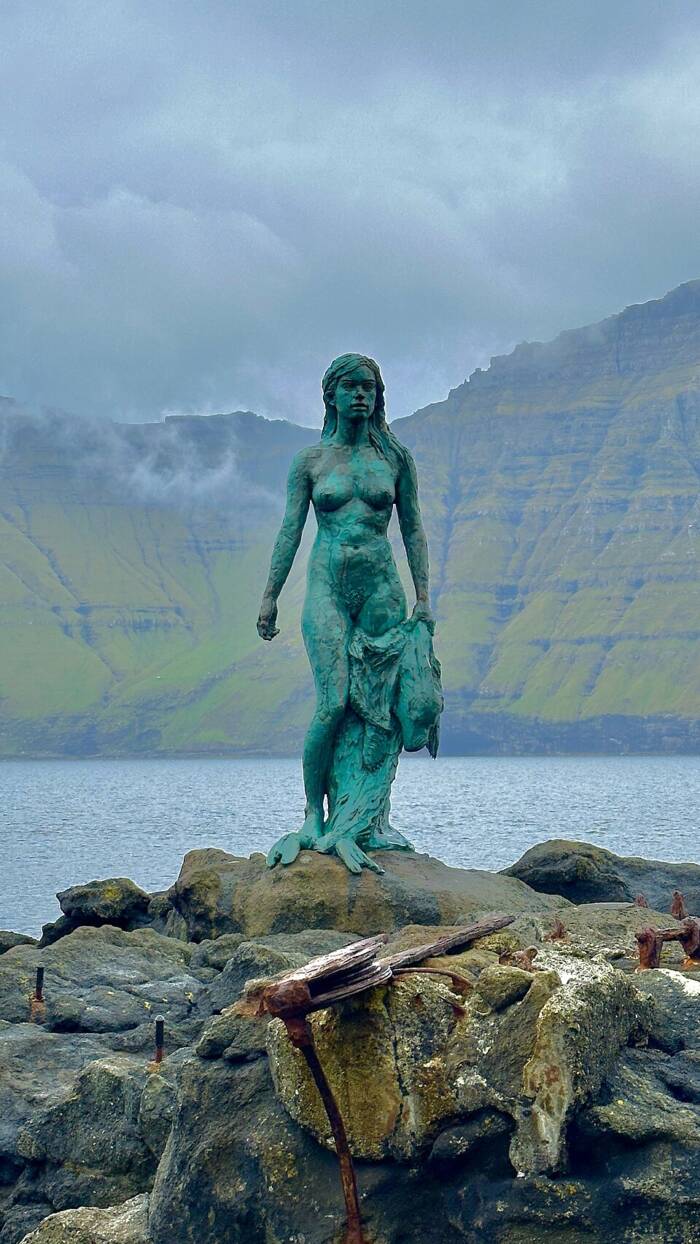
Anyone who has spent time near the water has noticed seals, animals which seem playful, intelligent, and soulful all at once. In Celtic and Norse myth, seals were also believed to be mythical beasts known as selkies, creatures who could shift between their human and animal form. lamblukas/Wikimedia CommonsA statue of a selkie from myth known as Kpakonan, located on the Faroe Islands.In these legends, selkies split their time between water and land. In the sea, they were graceful seals, dancing through the waves. On the shore, they appeared as human beings with incredible beauty. But while legends about selkies differ, most agree on one thing: selkies shed their sealskin to appear human when they spent time on land, and they needed this precious pelt to return to the water. If their sealskin was stolen by a human, however, tragedy could ensue. Origins Of The Selkie LegendPerhaps unsurprisingly, the very word selkie comes from the Scotch word selch, which means seal (specifically, gray seal). Myths about these creatures abound in places like Scotland, Ireland, and Iceland. Lucc77/Wikimedia CommonsA gray seal in the water near Sweden.Seals, omnipresent in the cold waters of the North Atlantic, are known for their dark intelligent eyes and human-like qualities. And local populations grew fond of them. According to The Encyclopedia of Celtic Mythology and Folklore by Patricia Monaghan,eating them was considered cannibalism in Scotland and Ireland, and local fishermen were known to talk to seals. Indeed, seals were seen as more than just animals they were considered shapeshifters who could transform into humans. These selkies could be men or women, and myths about them differed. Male selkies were often thought to comfort unhappy women who wept at the seashore. According to Monaghan, they were thought to be kind lovers, but prone to sudden disappearances. As such, selkie men were sometimes blamed when unwed women became pregnant, or when women vanished mysteriously at sea. Female selkies, on the other hand, were sometimes considered to be women who had drowned at sea, and who had been reborn as half-human, half-seal selkies. Indeed, some families in Scotland and Ireland believed that they were descended from selkies, and that they had selkie blood. Carolyn Emerick/Wikimedia CommonsAn illustration of a female selkie.But whether male or female, selkies were considered to be wildly beautiful when they took their human form. And this could cause problems when landlocked human beings fell in love with them.Sealskin, Unrequited Love, And Forced Marriages: Inside Stories About SelkiesThere are many different myths about selkies. Most agree that selkies are able to become human by removing their sealskin, but while some legends claim that selkies can do this at will, others suggest that their ability to become human is more limited. One legend, for example, states that selkies can only come on land on the 12th day of Christmas.Many myths, however, have to do with human-selkie interactions. In the ballad The Great Silkie of Sule Skerry, a selkie man seduces a human woman, singing: I am a man upon the land, I am a Selkie on the sea. Though variations of the story exist, it is consistently a tragedy. The woman bears the selkies child, which returns to the ocean with its father. But both the selkie and the half-selkie child are ultimately killed by the womans husband.However, the most famous and tragic selkie myth has to do with a female selkie and a human man. Wikimedia CommonsA selkie stamp from the Faroe Islands.In this story which also has multiple variations a man spies a selkie woman sunning herself on the beach while in human form. The man steals her sealskin, which means that the woman is trapped on land. With no other choice, the selkie agrees to marry the man, and even bears him children. But when she comes across her sealskin one day in their home, she quickly puts it on and returns to her life in the sea. While some versions of this story claim that the selkie woman abandons her children, others suggest that she turns them into stone, drowns them, or brings them to the ocean with her. Other versions also suggest that her human husband seeks revenge by hunting seals, and that the selkie woman returns to shore as a banshee. This version of the legend claims that the selkie/banshee cursed the man and his community to die watery deaths. Selkies are obviously mythical creatures, but as with many myths, they may contain a grain of truth. So where did the legend of selkies come from?The Real-World Inspiration Behind The Seal MythFolklore is often composed of stories passed down over the generations, which can make it difficult to determine exactly how some myths developed. But when it comes to the origin of the selkie legend, a couple of different possibilities have been floated over the years. One suggests that the legend of a human-seal creatures came from people born with syndactyly, a condition where toes and fingers are webbed together. As people of the era were unable to explain the condition, its possible that they surmised that people with syndactyly were descended from selkies, and had some seal blood. Phil Sangwell/Wikimedia CommonsA gray seal in Scotland.Another possibility is that the legend of the selkie emerged from sightings of Finnish or Inuit people, who often wore sealskin coats and traveled along the water in sealskin kayaks. These seafaring people sometimes needed to stop along shore to dry out their sealskins, which could have caused confusion and perhaps given rise to rumors about selkies. Whatever the reason, the rocky coasts and murky seas along Scotland and Ireland, and the soft eyes of gray seals that abound in the area, make it easy to see how the selkie legend emerged. There is something strangely human about seals; its perhaps not surprising that their penatrating gaze gave rise to the idea that these seals knew something about human life. After reading about selkies, the mythological beings who could shapeshift between seals and humans, discover the captivating stories of other creatures from folklore. Or, go inside the legend of Atlantis, the sunken city that some claim is based on a real place. The post Inside The Myth Of Sekies, The Seal-Human Shapeshifters Of Celtic Lore appeared first on All That's Interesting.
0 Comentários
0 Compartilhamentos
134 Visualizações

 English
 Arabic
 French
 Spanish
 Portuguese
 Deutsch
 Turkish
 Dutch
Dutch
 Italiano
 Russian
 Romaian
 Greek
Greek