


WWW.THECOLLECTOR.COM
The Rise and Fall of Victoria Woodhull, the First Woman to Run for President
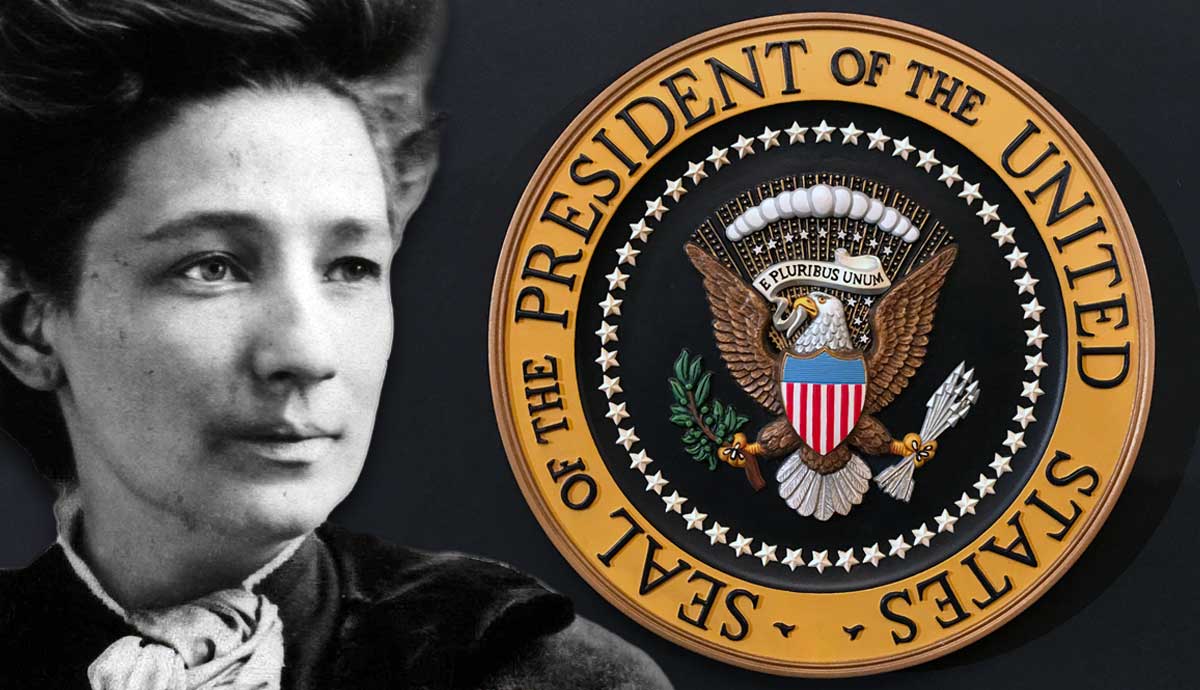
Born into poverty and married at 15, Victoria Woodhulls early life experiences helped fuel her belief that women should be able to vote and even get divorced if they wished. She gained popularity as a charismatic public speaker, and in 1872, became the first woman to run for President, despite not being allowed to vote herself. While Woodhulls campaign brought publicity to the cause of womens suffrage, she was seen by much of the public as a radical menace, and many suffragists distanced themselves from her.Behind-the-Scenes: A Turbulent Upbringing and an Unconventional RisePhotograph of Victoria Woodhull by Mathew Brady, c. 1863-1872. Source: Harvard Art Museum/Fogg MuseumThe details of Victoria Woodhulls life read like a sensational dime novel, full of almost unbelievable melodramatic plots and extreme personalities. Born in rural Ohio on September 23, 1838, she was the seventh of ten children. The family was poor, and as a child she received just three years of formal, consistent schooling. Her family was forced to flee their home when her father, Reuben Buck Claflin, was accused of burning down his own gristmill to get insurance money. Afterwards, the Claflins floated town to town, putting on their own traveling medicine show. Victoria and her younger sister, Tennessee, were part of the act, billed as the AMAZING CHILD CLAIRVOYANTS.At 15, Victoria married Canning Woodhull, who was thirteen years her senior. The marriage was not a successful one; her new husband struggled with alcoholism and spent much of his time and money in nearby brothels and taverns. To support their two children, Woodhull was forced to work a number of odd jobs, including as a cigar store clerk, a seamstress, and a stage actress. The marriage eventually ended in divorce, and the experience led Woodhull to embrace the free love movement, which sounds more whimsical than what it wasa movement to normalize divorce and help women escape abusive marriages.Woodhull relocated to New York City with Tennessee, where they carried on their familys business in their own way. They worked together as psychic healers for the citys elite class and soon amassed a fortune. They had a particularly lucky break when Cornelius Vanderbilt, the railroad tycoon, hired the sisters to serve as mediums between him and his recently deceased wife.Newspaper clipping from the Donaldsonville Chief (Louisiana), December 2, 1871. Source: Library of CongressIn 1870, Woohull and her sister used their newfound wealth to open a Wall Street brokerage firm called Woodhull, Claflin, and Company. They were the first women in the country to ever do so. They also began publishing a newspaper, Woodhull and Claflin Weekly, which they used to advocate for expanding rights for women, the working class, and the poor.Around this time, Woodhull also became more involved in the womens suffrage movement, attending conventions and gaining popularity as an effective public speaker for the cause. Described as an extremely charismatic speaker, thousands flocked to hear her lectures. In addition to suffrage, Woodhull was also unapologetically vocal about her free love beliefs. During one event in New York City, she adamantly declared, an inalienable, constitutional and natural right to love whom I may, to love as long or as short a period as I can; to change that love every day if I please. Many of her would-be supporters found these kinds of statements repellent.The year 1871 saw Woodhull reach perhaps the apex of her influence in the suffrage movement. She made history again in January when she became the first woman to testify before a committee of the House of Representatives. In her testimony to the House Judiciary Committee, she argued that the U.S. Constitution already guaranteed women, as citizens, the right to vote via the 14th and 15th amendments; any state that excluded citizens from voting was in violation of the Constitution. This argument soon became one of the first major legal strategies employed by suffragists to challenge womens exclusion from the political sphere.Victoria Woodhall reads her arguments in favor of womens suffrage to the Congressional Judiciary Committee, from an unknown periodical, 1871. Source: Library of CongressWoodhulls performance impressed many prominent leaders of the suffrage movement, including the titanic Susan B. Anthony, who had until then been put off by her radical reputation. Anthony invited Woodhull to address the National Woman Suffrage Associations convention in May of that year, where she reportedly delivered a rousing and passionate speech that was well received by the audience.But then, Woodhulls fervor to win the vote for women led her to do something more extreme, something many of her friends and allies thought was ridiculous, something which caused the army of suffragists who had recently embraced Woodhull to once again distance themselves from hershe ran for president.A Most Unusual CandidateGet thee behind me, (Mrs.) Satan! Victoria Woodhull is depicted as a satanic figure, tempting a woman who is overloaded with children and an alcoholic husband to embrace the cause of free love. Thomas Nast, 1872. Source: Library of CongressIn 1872, Woodhull became the first woman to run for president. While women could not yet vote at this time, there were no formal laws that barred them from running for office, a fact that Woodhull took advantage of. She ran as the official candidate of the newly formed National Equal Rights Party (NERP). In addition to nominating Woodhull as their presidential candidate, NERP nominated the famous abolitionist and orator Frederick Douglas as their Vice Presidential candidate. But Douglas never acknowledged the nomination and actively supported Victorias opponent, Ulysses S. Grant.Woodhulls candidacy was not taken very seriously by the press or the public. Her support for the free love movement, communism, and her form of spiritualism were considered extremely radical by the standards of the dayas was her campaign platform, which included support for racial and gender equity, civil service and tax reform, and opposition to giving government land grants to railroads and other corporations, almost unthinkable in a time of unprecedented westward expansion and economic growth.Newspapers across the country depicted Woodhull as a sort of female satan. Thomas Nast, the famous political cartoonist, depicted her with literal devil horns and wings, tempting an overburdened but steadfast wife and mother to join her hedonistic free love cause. In Nasts cartoon, the angelic woman seems to nobly refuse Woodhulls offer.Other newspapers simply used inflammatory and colorful language to disparage Woodhull:Her ideas are not merely preposterous; they are revoltingly indecent and nasty Victoria Woodhull is a stench in the nostrils of all virtuous women and pure men, and those who hold out the hand of friendship to her and hers must and shall take the consequences of their self-degredation. The Arizona Sentinel, June 29, 1872Undated portrait of Victoria Woodhull. Source: The New York HistoricalWoodhulls campaign was opposed by many in the suffrage movement, who saw it more as an attention-seeking publicity stunt rather than a genuine form of activism and advocacy. In the end, Woodhull won no electoral college votes (theres no record of how many individual popular votes she received), and Ulysses S. Grant won the presidency.Woodhulls influence in the suffrage movement largely declined after her presidential campaign; she was never invited to speak at another suffrage convention. But her brief involvement exacerbated tensions within the movement and kept suffragists on the defensive for years. They had to convince the public that their movement was not filled with free love radicals and that the majority of suffragists were well-mannered, refined, and indeed respectable women. Later, when Susan B. Anthony, Elizabeth Cady Stanton, and Matilda Joslyn Gage published their history of the suffrage movement in the 1880s, they largely left Woodhull out.Campaign Scandal: The Beecher AffairHenry Ward Beecher in an undated photograph. Source: Yale University LibraryWoodhulls campaign and reputation were further pummeled by a controversy that became known as the Beecher Affair. Just days before the election, on November 2, 1872, Woodhull used her newspaper to publish an account of an affair between Henry Ward Beecher, a prominent religious figure, and one of his married female parishioners, Elizabeth Tilton. Beecher had used his pulpit to criticize Woodhulls views on marriage; she felt it was hypocritical for him to publicly criticize a woman for wanting sexual freedom while privately engaging in an extramarital affair himself.I am not charging him with immoralityI applaud his enlightened views. I am charging him with hypocrisy. Victoria WoodhullWoodhulls newspaper wrote about the affair in extreme detail. The reaction of a 19th-century Victorian public was decidedly not on her side; publishing such a story was largely considered an extremely lewd and indecent thing to do. The story also infuriated suffrage leaders. Beecher was a vocal supporter of womens suffrage and had many friends in the movement. Moreover, his sister was Harriet Beecher Stowe, the beloved author of the extremely popular Uncle Toms Cabin. Beecher Stowe called Woodhull an impudent witch and a vile jailbird. One newspaper wrote about the fallout from Woodhulls publication:For some days past we have known of, but refrained from mentioning a publication against Rev. Henry Ward Beecher and Mrs. Theodore Tilton, by Mrs. Victoria Woodhull, through the medium of Woodhull and Claflins Weekly The charges against the lady and gentleman named are of the gravest kind. Mrs. Woodhull asserts that they have been criminally intimate; that they have acknowledged their guilt in the presence of the guileless Victoria, and plead with her not to expose them. These accusations are made with great circumstantiality, date and place of each criminal transaction being given, and conversations between the accused and accuser detailed. In justification of her course, Mrs. Woodhull pleads that she has been persecuted for opinions sake, and is now houseless and penniless. Landlords refused to rent their premises to her, boarding houses were closed against her; hotels would not give her shelter Wheeling Daily Intelligencer (Wheeling, WV) Nov. 5, 1872Testimony in the Great Beecher-Tilton Scandal Case Illustrated. In the center, Henry Beecher sits with Elizabeth Tilton on his lap. Published circa 1875. Source: Library of CongressAs a result of the story, U.S. marshals arrested Woodhull, her sister, and her husband and charged them with circulating obscene literature. Woodhull ended up spending election day in jail. The courts eventually acquitted all three, but only after they had been imprisoned for some six months.The legal costs and public fallout surrounding the Beecher Affair would dog Woodhull for years. In addition to ruining any remaining goodwill she had from those in the suffrage movement, it also ruined her financially. Woodhull and her husband paid half a million dollars in bail and then went bankrupt.Woodhull and her sister were forced to eventually shut down the newspaper in 1876. That same year, Woodhull also divorced her second husband.Post-Campaign Life: Embracing EugenicsJohn Biddulph Martin, Victorias third husband, circa 1901. Source: University of CaliforniaAfter fleeing to England and marrying her third husband, John Biddulph Martin, Woodhull tried to rehabilitate her image and eventually began making trips back to the U.S. to once again lecture around the country. According to newspapers, she was as magnetic as ever. Apparently, the American public was in a mood to be softer on her.That Mrs. Woodhull is a brilliant, gifted woman, capable of entertaining the most intelligent audiences, none will deny. She holds advanced views and has said some bold things quite startling to sedate people. She claims, however, that she has been greatly misrepresented and is making this extensive lecture tour to set herself right before the public on account more especially of her young daughter. All she asks is a hearing, and we have no doubt but she will have a crowded house Sunday night. Public Ledger (Memphis, TN), February 4, 1876During this period, Woodhull began articulating a strong belief that certain members of society should not be allowed to procreate. As she told the Helena Independent:We know that one pauper may be the ancestor of a thousand paupers. We know that many diseases tend to become hereditary. We acknowledge, purely as a matter of theory, that much of the crime committed is the result of inherited weak blood or malformation or disease of the brain. We know that we can get rid of vicious traits in animals by breeding, and yet we go on building institutions for the incarceration of the insane, the idiots, the epileptics, the drunkards, the criminals, and never realize that nowhere on the face of the earth is there a building erected to teach people how to perfect the human body It is a crime to reproduce in ones own offspring ones own debilitated condition both of body and mind. May 11, 1890Victoria Claflin Woodhull, albumen silver print on cabinet card mount by Mathew Brady, c. 1870. Source: Google Arts and CultureToday, such sentiments are associated with eugenics, a discredited and immoral pseudoscience. But in the 19th century, the idea that the human race could be improved by only breeding people with desirable traits gained significant popularity. It was also connected to scientific racisma belief that science could prove that certain races were biologically inferior to others.In 1892, Victoria announced she was running for president again, but with much less fanfare and publicity this time around. She used her second campaign to largely promote her newfound belief in eugenics, as she told the Los Angeles Herald:I come back to ask my people to put me in the White House, not that I care for the position. I only care for it so far as it will give me power to inaugurate a system of education which will awaken the people to the responsibility of creating a race of gods instead of the inferior human beings who encumber the face of the earth today. The Los Angeles Herald, April 23, 1892Woodhulls Legacy: Spectacle and AudacityHarvard Art Museum/Fogg Museum, Historical Photographs and Special Visual Collections Department, Fine Arts LibraryWoodhull died in 1927, at the age of 88. The 19th Amendment, which finally gave American women the right to vote nationwide, had passed just seven years prior. Victoria lived long enough to see womens suffrage become a reality. So many other giants of the suffrage movement didnt.Victoria Woodhull was a complex woman, but for much of her life, she wasnt treated as such. Unflinching and unapologetic about beliefs considered radical in her time, she was easily demonized and reduced to a caricature, and often considered an embarrassment to the suffrage movement. If she is remembered at all today, it is for her notable firstthe first woman to run for president of the United States. But that hardly captures the extent of her legacy. As Gloria Steinem remarked, Victoria Woodhull was one of the few women to live out in public the principles of female emancipation and sexual freedom that were not only unusual in her day but illegal.She cared little about the societal norms and expectations that ruled the lives of women in the 19th century. She enjoyed the spotlight and was brazen in her belief that she could capably occupy spaces the world said were not for her: Wall Street, the press, the U.S. presidency. She could also be flexible with the truth, opportunistic, and prejudiced against societys most vulnerable. Still, her audacious daring to put herself out thereto start a Wall Street firm, a newspaper, to give lectures in front of hundreds if not thousands, to run for presidentmade it easier and less radical for the next woman to do so.
0 Комментарии
0 Поделились
137 Просмотры

 English
 Arabic
 French
 Spanish
 Portuguese
 Deutsch
 Turkish
 Dutch
Dutch
 Italiano
 Romaian
 Portuguese (Brazil)
 Greek
Greek