


WWW.THECOLLECTOR.COM
The Dark Roots of Europes Terrifying Wild Hunt Myth
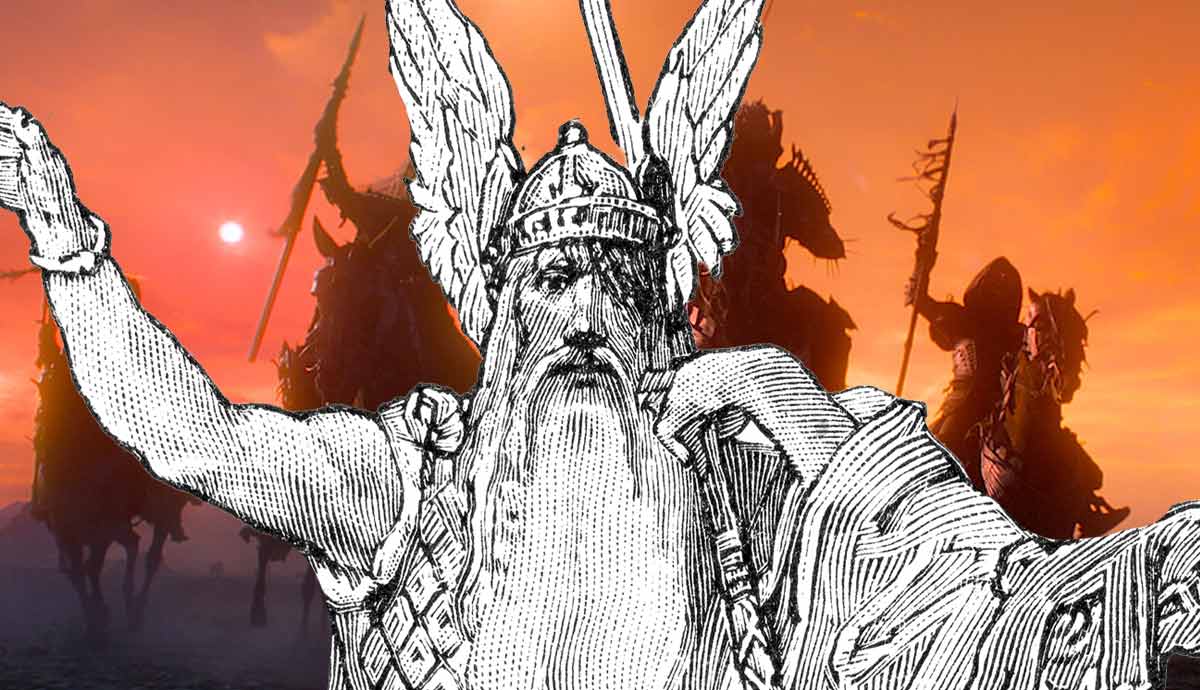
Throughout European history, legends tell of a grim cavalcade of spectral riders, chasing prey across the night sky in an eternal procession of ghostly horror. Found in cultures from the Germanic peoples to the Slavs and the Celts, this phenomenon was, and still is, a portent of doom, preceding war, plague, and death.Striking fear into the hearts of all those who witnessed it, this is the Wild Hunt.What Was the Wild Hunt?Wild Hunt of Odin by Peter Nicolai Arbo, 1872. Source: National Gallery of Norway/Wikimedia CommonsFound across many cultures of Europe, including Slavic, Germanic, and Celtic societies, the Wild Hunt was a motif that involved the common idea of a procession of ghostly hunters making their way across the night sky. While the details may have varied from culture to culture, and indeed, from person to person, the theme remained the same, and it was always ominous.It was believed to precede great catastrophes, and those who saw it feared for their lives. Their spirits could be whisked away to join in the eternal procession, or they could be abducted and taken away to some horrific fate in unearthly realms.Tied into regional myth, the Hunt could be led by a wide variety of figures, from gods to legendary heroes and the spirits of people who actually lived. Accompanying them were a host of spirits that were equally diverse across cultures.The Origins of the Wild HuntJacob Grimm, 1857. Source: Wikimedia CommonsThe term Wild Hunt existed for many centuries, but was popularized in modern literature by Jacob Grimm, who documented tales relating to it in his Deutsche Mythologie of 1835. Variations on the theme saw it being referred to as a Wilde Jagd (Wild Hunt), a Wtendes Heer (Raging Host), and a Wildes Heer (Wild Army) in different parts of Germany.Grimm researched medieval and modern texts, as well as oral narratives surrounding the myth, noting how these stories changed over time. He traced the tale back to ancient times before Christianity spread through Germany, and suggested that the leader of the Hunt was actually the god, Wodan (or the Norse version Odin), or a female counterpart named Holda or Berchta. The Hunt could also be led by Wodans wife, whom Grimm called frau Gaude.He further suggested that the Hunt was not always ominous tidings. It was, in fact, quite the opposite and represented good fortune. It was thought that the Hunt visited the mortal realm during Yule and other special occasions, accepting offerings and blessing the land and its people. With the adoption of Christianity, the old ways were recast in an unflattering light, demonized to discredit their support within communities.Wodans Wilde Jagd by Friedrich Wilhelm Heine in Nordisch-germanische Gtter und Helden by Wilhelm Wgner, 1882. Source: Wikimedia CommonsGrimms theories, however, have been challenged in modern times. Historian Claude Leconteux noted that there is no evidence of Odins association with the Wild Hunt prior to the early modern period. This is unsurprising given that early Germanic religion was one of oral tradition.Much of what is believed is based on Grimms assumptions rather than rigorous academic research. There is no evidence that associates the Wild Hunt with similar beliefs across pre-Christian Europe, although certain pre-Christian figures were later incorporated into the myth. A perfect example of this was the god Wodan, also known as Odin in Germanic mythology.The Re-Interpretation of Odin in the Wild HuntOdhin by Carl Gehrts, 1899. Source: Wikimedia CommonsGermanic (including Norse) myths lent themselves to the Wild Hunt myth, and Odin was particularly well-suited to guide it in Christian interpretation over the ages. Odin was the leader of the sir and was immensely powerful, invoked for strength, courage, and wisdom by his worshipers and as an instrument of terror to his foes.In Germanic mythology, Odin was also the god of war and death, who, along with his Valkyries, oversaw the recruitment of fallen warriors into his army. His domain fitted the Christian interpretation of the Wild Hunt, as it struck down mortals and took their spirits to join in its unholy cavalcade.The caveat is that in pre-Christian beliefs, Odin oversaw only those who died in battle, and he did not ride around causing doom and destruction and mass killings of people who were not warriors. As such, Odin and his motives were reinterpreted rather than lifted from ancient beliefs.Other Cultures, Gods, and Legendary FiguresHerne the Hunter by George Cruickshank, ca. 1840s. Source: Wikimedia CommonsThe Wild Hunt is not limited to German tales, and it is found in cultures throughout Europe, from Germanic people to the Latin European countries, the Celtic peoples, and in Slavic culture.In Old English, one of the leaders of the Hunt was Herla, who has been suggested as being a form of Wodan or Odin. The Hunt was referred to as Herlaing (Herles assembly). Another major figure associated with the Hunt in England is Herne the Hunter, a Shakespearean character influenced by folktales around the county of Berkshire.The Hunt has many other names in England, including Herods Hunt, likely referencing the biblical King Herod who murdered infants, as Herod makes an appearance in certain French tales of the Hunt as well.Unsurprisingly, Odin appears in the Scandinavian myths, and the Hunt has many names, including sgrdsrei (Asgards Ride) or Oskoreia (also tentatively translated as Asgards Ride) in Norway, and Odens Jakt (Odins Hunt) and Vilda Jakten (Wild Hunt) in Sweden.In Wales, the myth appeared in the Middle Ages, and is led by either Arawn, who is the king of the Otherworld, or Gwyn ap Nudd, who, according to the tales, ruled the realm in Arawns stead for some time. The Hunt is accompanied by Arawns red-eared hounds and can be found in the tale of Cn Annwn (Hounds of Annwn).In Slavic cultures, the myth is also present, although it is usually considered to have been imported from Germanic culture. In Polish, it is known as Dziki w (Wild Hunt), in Czech, divok hon or tvan (Wild Hunt or Pursuit), and in Belarus, it is known as (Dzikaje PaliavannieWild Hunt).A mural depicting the Santa Compaa in Pontevedra, Galicia. Source: Wikimedia CommonsIn Spain, the myth is first mentioned in literature in 1260 by a deacon named Gonzalo de Berceo, who described the event as a hueste antigua (ancient host), led by the Devil. The Hunt has many references and variations of names, the most imaginative of which are Cortejo de Gente de Muerte (Deadly Retinue) in Extremadura, and Hueste de nimas (Troop of Ghosts) in Len.In the Northwest of Spain and in parts of Portugal, the Wild Hunt is manifested as the Santa Compaa (Holy Company) and involves tormented souls in hooded white cloaks being led through the parish by a cursed, entranced living person who has no recollection of the event.Italy, too, has many variations. Some stories involve the Hunt being led by King Theodoric the Great, who ruled over vast areas of the former Roman Empire. This is in contrast to the Germanic legend of Theodoric as a heroic figure with apocryphal stories. It is said he encountered the Wild Hunt while trying to rescue the maiden Babehilt from a giant named Fasolt.In the Lunigiana region of Italy, the Wild Hunt (Caccia Selvaggia) is known as the Caccia Infernale (Infernal Hunt), and is preceded by icy gusts of wind and involves packs of ferocious hounds and violent spirits.The Wild Hunt in Modern TimesA scene from the television series The Witcher on Netflix. Source: NetflixThe symbolic representation of the Wild Hunt is poignant in that it is malleable and can be interpreted to fit certain traditions. It has found a home in the modern rebirth of paganism, the Wiccan religion. Some Wiccan groups have used the Wild Hunt to inspire their own rituals. Such an example was noted by anthropologist Susan Greenwood, who provided an account of a Halloween ceremony in Norfolk involving a race through a forest.So popular was the idea of the Wild Hunt that it became a widespread trope that endures to the present, if not as a believable phenomenon, then as a form of entertainment. Adapted for fantasy fiction, it forms a central plot of The Witcher books, video games, and television series, created by Polish author Andrzej Sapkowski. One of the biggest-selling video games, The Witcher III: Wild Hunt, follows the story of Geralt of Rivia as he attempts to find his ward, Ciri, who is pursued by the Wild Hunt, a group of powerful elves.Santa Claus by William Holbrook Beard, ca. 1862. Source: Rhode Island School of Design Museum of ArtDespite the immense popularity of the Witcher series, there is a possible derivative of the Wild Hunt that is even more famousthat of Santa Claus. In pre-Christian times, Yuletide was associated with Odin, and when Europe underwent a transition to Christianity, many of Yules traditions were adopted into the tradition of Christmas.A common image of Odin is that of an old fatherly figure with a long white beard, riding his eight-legged horse, Sleipnir, across the night sky through the last days of December. It is easy to see how this would influence popular imagery of Santa Claus, and it is theorized that Odin was a direct inspiration for Santa Claus. Thus, Santa Claus may be connected to the Wild Hunt. The similarities between the Wild Hunt motifs and a reindeer-pulled sleigh riding across the night sky in midwinter are not easy to dismiss.Le Chasse sauvage by Franz von Stuck, 1899. Source: Muse dOrsay, Dist. RMN-Grand Palais/Patrice SchmidtThe Wild Hunt is a case in how mythology evolves, and elements of beliefs are preserved through the traditions of others. To this day, it persists in many forms, reflecting the human fascination with explaining death and the unknown.
0 Комментарии
0 Поделились
151 Просмотры

 English
 Arabic
 French
 Spanish
 Portuguese
 Deutsch
 Turkish
 Dutch
Dutch
 Italiano
 Romaian
 Portuguese (Brazil)
 Greek
Greek