


WWW.THECOLLECTOR.COM
The 1898 Defeat That Undermined the Spanish Monarchy and Led to Civil War
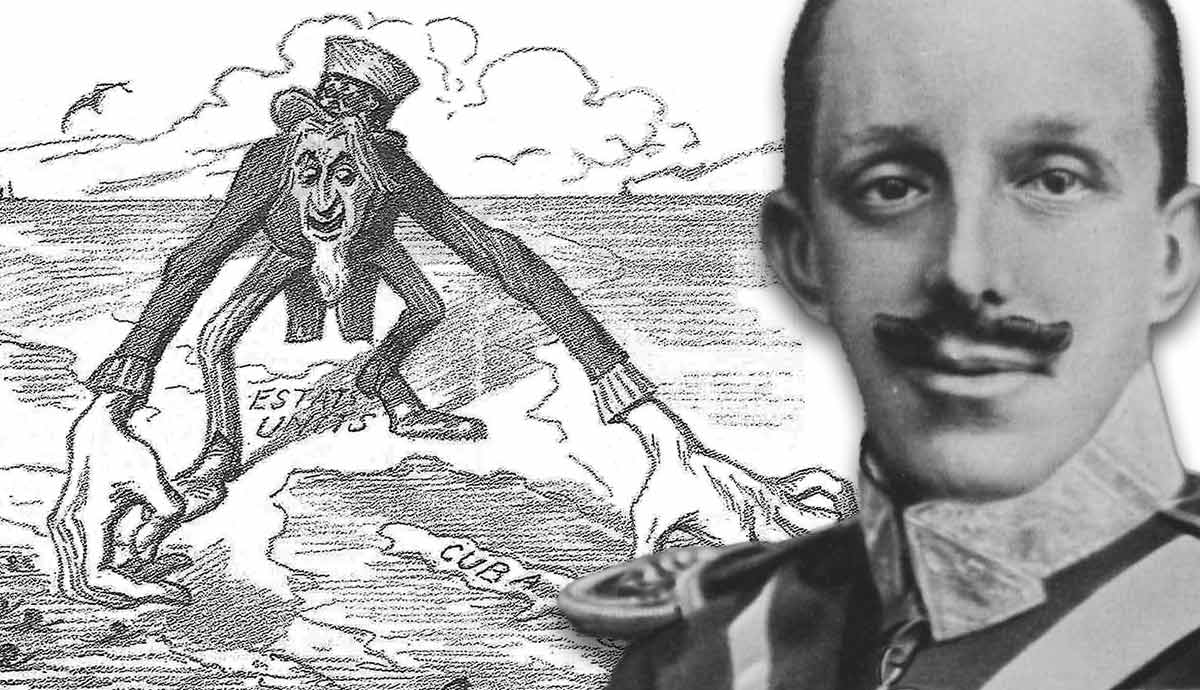
The victory of the United States in the Spanish-American War of 1898 not only proved fatal to what remained of the Spanish Empire, it also led to the downfall of the House of Bourbon in the 1930s and created the conditions for the Spanish Civil War of 1936-1939.Why Was the Disaster of 98 a Turning Point for Spanish Identity?An image of the Battle of Manila Bay on May 1, 1898, via the Naval History and Heritage CommandAt the end of the 19th century, Spain was a country facing enormous challenges. The conservative elite insisted that Madrid fight to hold as much of its overseas empire as possible. They had the support of the monarchy, which insisted that if Spains empire was going to be destroyed it should go down fighting. The conservative and liberal parties, as part of an arrangement since the restoration of the monarchy in 1874, rotated power. Both parties believed that Spain should continue to maintain, at minimum, some control over its colonies.When the United States declared war against Spain after the sinking of the USS Maine in Havana, the government was led by the Liberal politician Prxedes Mateo Sagasta. The Queen Regent, Maria Christina of Austria, exercised most of the royal power, although she was constitutionally limited in what she could do. The Liberals did not believe that they could defeat the United States in a war waged overseas. However, they had no choice because if they made a deal, they feared being ousted in a military coup.In the late 19th century, the Spanish government sent almost 200,000 men to fight rebels in Cuba alone. Tens of thousands died, mostly from disease. The suffering of these men, most of whom came from working class backgrounds, radicalized much of the Spanish public. The defeat in the Spanish-American War in 1898 and the loss of the colonies of Puerto Rico, Cuba, and the Philippines was the final straw. El Desastre led to the rise of radical left and right movements, tensions between the wealthy and the poor, and demands for a new Spanish identity that went beyond the image of the country being an impoverished, declining imperial metropole.The Radicalization of the Spanish Officer CorpsA photograph of General Valeriano Weyler, c. 1890. Source: Spanish Army Museum, MadridThe turmoil in Spains domestic politics after the defeat was exacerbated by the rage felt by much of the Spanish military leadership. For years, generals and admirals insisted that Madrid do everything necessary to suppress rebellions in Cuba and the Philippines. When the United States declared war in 1898, they publicly claimed that they could fight the Americans as long as possible. Privately, however, they warned Madrid that the Americans outnumbered and outgunned them and they could only prevail with more reinforcements.For many Spanish junior and senior officers, the Treaty of Paris in 1898 was an unacceptable blow. Spain had fought hard to preserve its overseas possessions and its defeat was a major humiliation. Many, especially General Valeriano Weyler, blamed the government for not properly mobilizing the country for an extended period of conflict. Weyler, the commander of Spanish troops in Cuba, insisted that he could have won if he had been properly reinforced before the American intervention. He also resented the Liberals criticisms of his tactics against the Cubans and accused them of stabbing him in the back.Admiral Pascual Cervera, the commander of the Spanish navy in Manila Bay, was put on trial for his defeat by the Americans. This was a hamfisted attempt by the Liberals to blame him for the defeat, even though he warned that his fleet was ill-equipped to fight the modernized American fleet. Despite his acquittal and subsequent promotion, this trial reinforced the belief that many Spanish officers held that the military was the only credible institution in Spain and that the civilian politicians could never be trusted.The Rise of Catalan and Basque NationalismHeadshot of Sabino Arana, the founder of the Basque Nationalist Party. Source: El MundoEl Desastre didnt just strain civil-military relations; it also contributed to regional separatism within Spain itself. As long as Spain possessed overseas colonies, the industrial elites of the Basque country and Catalonia were major beneficiaries of the imperial system. Cuba and the Philippines were captive markets for Catalan textiles and Basque steel, protected by high tariffs that kept foreign competitors out. The defeat in 1898 meant that these markets were lost. It also proved to local elites that the government in Madrid was not invincible or inevitable.In 1901, Catalan politicians and businessmen formed the Lliga Regionalista, a nationalist party that demanded greater autonomy. The leaders of this party did not want full separation from Spain, believing that an independent Catalan state could not survive on its own. They did believe that Spain was a moribund state that could only survive through further decentralization to the regions. A relatively conservative party, it gained some support, although not enough to force a major change to the status quo.In the Basque country, nationalism became a much more potent and dangerous force. Sabino Arana, the founder of the Basque Nationalist Party (PNV), claimed that the defeat proved that Spain was not capable of standing up on its own two feet. He also claimed that the government in Madrid was trying to destroy Basque identity. Basque nationalism gathered strength and led to a major insurgency that consumed Spain for most of the 20th century. The rise of regional nationalism petrified Spanish conservatives and the military, which sought to use force to curtail any separatist tendencies.The Loss of Legitimacy of the Bourbon MonarchyFormal portrait of King Alfonso XIII of Spain, 1916. Source: National Museum of Art, CataloniaIn 1874, a military coup led by Brigadier Arsenio Martnez Campos brought the Bourbon family back to power in Spain six years after Queen Isabella II was overthrown in a coup. The restoration was designed to end a period of chaos in the First Republic and to bolster the role of the military in Spanish political life. King Alfonso XII, a young man then studying in England, agreed to take up the throne as a constitutional monarch. To avoid radicalizing the Spanish moderates and liberals, Antonio Cnovas del Castillo, a Spanish politician and Conservative Prime Minister, created the rotating premiership between the Liberal and Conservative parties that was in place in 1898.The destruction of Spains military overseas did not immediately lead to the ouster of the royals. However, the Bourbons faced a crisis of confidence in their status. Alfonso XII died in 1886 shortly before the birth of his son Alfonso XIII, who became king at the moment of his birth under his mother Maria Christinas regency. After Alfonso came of age, he became more politically active, often bypassing ministers to speak directly to generals. This enraged everyone: the Liberals thought he was violating the constitution and the military thought that he had no reason to meddle in their decisions.Republicanism had a strong presence in Spain, especially in the poor, urban districts. The radical left gained an opportunity after the war to blame the monarchy for not helping Spains impoverished residents. Alfonsos fondness for racing cars on Spains few well-paved roads didnt help combat this perception. Even though he attempted to reach out to common people, many Spaniards did not believe that the monarchy was prepared to rule over a modernized and developed Spain. This had consequences in the post-1898 period.The Link Between 1898 and the Spanish Civil WarA photograph of Spanish Assault Guards firing from a building during the coup in 1936. Source: National Digital Archive, PolandSpains politics following El Desastre proved to be even more unstable than they had been before the war. The post-1874 arrangement disenfranchised voters on the far left and far right. Anarchism had made a splash on Spains political scene when an Italian-born anarchist militant named Michele Angiolillo assassinated Conservative Prime Minister Antonio Cnovas in 1897. The political polarization roiling Spain only got worse over the next several decades.Spain fought another brutal colonial war in the interwar period, this time in North Africa. Berber tribes in Morocco rebelled against French and Spanish rule, leading to a series of brutal battles. When Spain began suffering several defeats, a general named Primo de Rivera (a veteran of the Cuban War of Independence) took matters into his own hands. He mounted a coup with the support of King Alfonso XIII, taking power and abolishing Spanish democracy. His regime managed to win the war, but exacerbated Spains political turmoil and he had to resign in 1930. In April 1931, Alfonso XIII abdicated and the Spanish monarchy was abolished for a second time. Spanish politics remained unstable as power shifted between left and right until 1936.Several officers who fought in Africa, Cuba, and the Philippines became convinced that only the military could save Spain from falling to the radical left. These men were known as Africanistas and were mostly stationed in Spanish Morocco. Among them were veterans of the 1898 war including Jos Milln-Astray who founded the Spanish Foreign Legion. In 1936, General Francisco Franco led Spanish forces from North Africa in rebellion, triggering the Spanish Civil War. Francos victory in 1939 resulted in a Nationalist dictatorship that lasted until his death in 1975, when the Spanish constitutional monarchy was restored under Alfonso XIIIs son Juan Carlos I.Why Spain Never Truly Recovered From the 1898 DisasterA cartoon from a Catalan newspaper showing the United States preparing to grab the Spanish island of Cuba, 1896. Source: Wikimedia CommonsFor centuries after the Reconquista, Spains national identity was largely defined by its extensive overseas empire. Since the countrys economy relied on having secure markets overseas, Madrid fought hard to preserve its colonial possessions. Even after the loss of most of its American colonies in the 1820s, Spain still retained control over several critical pieces of territory overseas. The defeat it suffered in 1898 not only exposed Spains military weaknesses; it created a vacuum in the countrys national identity.By the turn of the 20th century, Spanish power was in terminal decline, similar to the Ottoman Empire before the First World War. Regionalism gained strength as a way of offering the long-suffering Basque and Catalan people a way to deal with their nations post-imperial hangovers. The working classes embraced international communism and socialism. The military reacted to this by promoting fascism and Catholic nationalism. The divisions in Spanish society had always been present, but El Desastre opened them up for the world to see.Today, Spain has recovered from the Civil War and is a strong democratic state within the European Union. Its economy is booming and its population has a higher standard of living than ever before. But Spain is no longer the superpower it had been in the 16th century, or even the colonial power of the 1800s. Spains role as hegemon in the Americas has been replaced by the United States. Its military remains weak due to fears that drastically strengthening it would resurrect Francos Falangism within the ranks. The restored Spanish monarchy is no stranger to scandal. In the 21st century, Spain relies on NATO as a multilateral guarantor of its security.
0 Comentários
0 Compartilhamentos
131 Visualizações

 English
 Arabic
 French
 Spanish
 Portuguese
 Deutsch
 Turkish
 Dutch
Dutch
 Italiano
 Russian
 Romaian
 Greek
Greek