


WWW.THECOLLECTOR.COM
How the Dutch Forged a Maritime Empire While Fighting for Independence
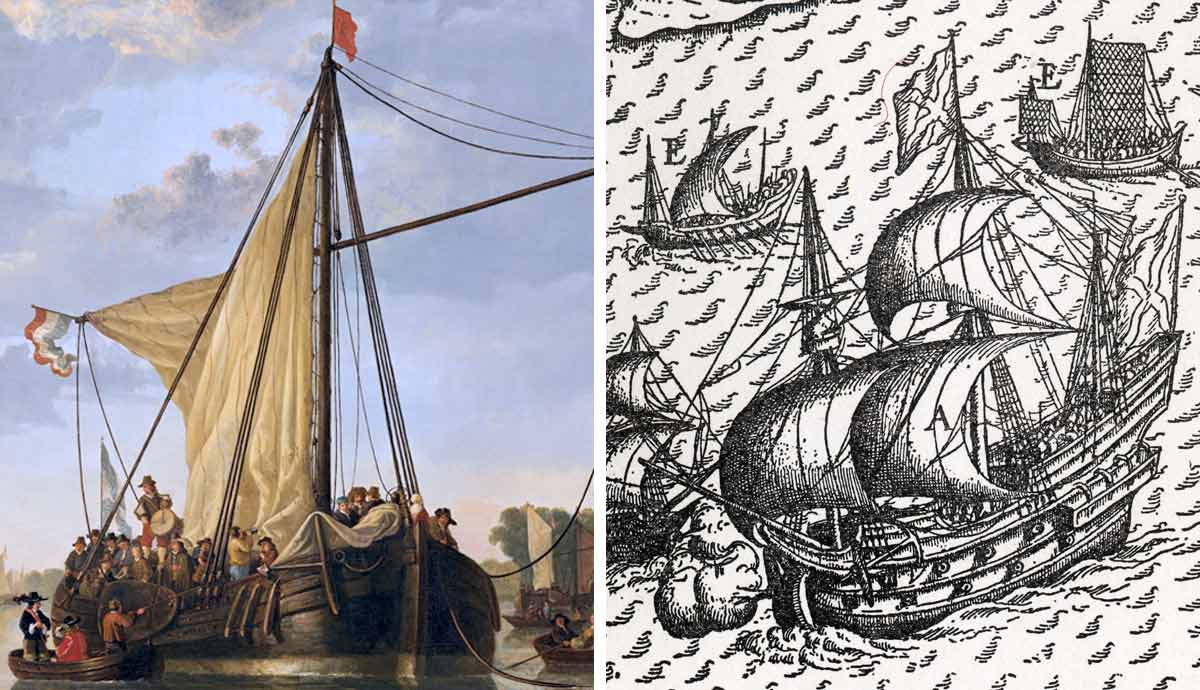
One of the main Dutch strategies in their quest for independence from the Spanish Empire involved the creation of a naval force to seize Spanish convoys and protect the Dutch coastline. This contributed to the Dutch willingness to engage in empire-building later on.The Causes of the Eighty Years WarA painting of a Spanish attack on a Flemish village by Peter Snayers, 17th century. Source: Friedenstein Castle, GothaWhen the Spanish government began restricting the rights of Dutch people to practice Christianity outside the bounds of the Catholic Church, they sparked a backlash that led to one of Europes longest independence struggles. The Dutch War of Independence, otherwise known as the Eighty Years War, began in 1566 after Dutch Calvinists attacked Spanish and Catholic targets in the Low Countries. When the Duke of Alba arrived in the Netherlands and initiated a brutal crackdown that killed thousands, local rebels began forming militias to fight the Spanish.At the beginning of the war, the Spanish had one of the most experienced militaries in Europe, thanks to the Reconquista, the Habsburg-Valois War, and other conflicts. Its garrison in the Netherlands was very formidable and the Duke of Alba brought reinforcements with him. By contrast, the Dutch forces were citizen militias with little formal organization. The command and control of this force was very decentralized and many of the leaders of the rebellion had been forced into exile by the Spanish.Nonetheless, the rebels eagerly began attacking Spanish garrisons. Prince William the Silent and his brother, Louis of Nassau, led an attack on Heiligerlee, defeating the Spanish. However, the subsequent Battle of Jemmingen exposed the critical weakness of the Dutch rebels. William and his allies realized that they needed a new strategy to fight the Spanish.The Sea Beggars and the Establishment of the Dutch NavyNaval battle between Dutch Sea Beggars and Spanish warships at Haarlemmermeer. Painting by Hendrick Cornelisz Vroom, 1629. Source: Rijksmuseum, AmsterdamThe main reason that the Spanish were able to keep such a large garrison of troops in the Netherlands was their dominance of the sea off the Dutch coast. At the same time, the Habsburg Empire was overstretched in trying to protect all of its overseas possessions. Therein lay a vulnerability: if the Dutch could build armed vessels and attack Spanish shipping, Spains ability to supply its forces in the Netherlands would become very difficult.William came to see this very quickly and began to issue letters of marque to Dutch ship captains authorizing them to seize Spanish ships without being accused of piracy. Initially, 18 ships were issued these letters and equipped in the French port of La Rochelle, a Huguenot (French Protestant) stronghold. These armed privateers became known as Watergeuzen, or Sea Beggars. By the end of 1869, 84 Dutch ships had been granted letters of marque.Following diplomatic pressure from Spain, in 1572 Queen Elizabeth I of England denied the Dutch ships sanctuary in English ports. Needing a base to operate from, William de la Marck (Lord of Lumey) took a fleet and seized the ports of Brielle and Vlissingen. These attacks galvanized the Dutch rebels and gave the privateers two ports to operate from against Spanish shipping.How the Conflict Created Dutch Maritime PowerA wooden model of a Dutch fluyt, 2014. Source: Model Ship WorldThe successes of the Sea Beggars inspired the leaders of the Dutch revolt to expand both their naval forces and their merchant marine. The Dutch had two different objectives by doing this: they wanted to expand the reach of their naval power and encourage profitable maritime trade to finance their revolt. To do this required serious changes to how the Dutch approached sea power.The Dutch merchant marine expanded its fleet significantly throughout the war despite Spanish attacks on Dutch ports. This was in large part due to the rebels success in retaining some of their ports and their innovative use of shipbuilding technology such as the wind-powered sawmill. Additionally, the Dutch were able to recruit more manpower from across Europe because many common laborers aspired to go to sea and make a fortune. In 1595, shipbuilders in the town of Hoorn developed the fluyt, one of the most advanced hull designs of its generation.When King Philip of Spain sent the Armada to Englands shores in 1588, the Dutch assisted Lord Howard of Effingham and Sir Francis Drake in fighting off the invasion. The Dutch fleet, led by Justinus van Nassau, blockaded their own ports to prevent the Armada from linking up with the Duke of Albas army that was planning to invade England and dethrone Queen Elizabeth. This victory emboldened the Dutch to develop an organized fleet known as the Dutch States Navy.Dutch Naval Expansion Into Asia and the AtlanticBattle in the Bay of Matanzas off the Cuban coast, 1909. Source: Wikimedia CommonsWith the increase in the size of the Dutch fleet after 1588 and the increased range of Dutch naval and civilian ships, the war now extended into Spanish colonial possessions in the Americas and Asia, which also included the colonies of the Portuguese empire between 1580 and 1640. In 1621, the Dutch West India Company, one of two major corporations set up by the Dutch government to expand its maritime power, began sending armed merchantmen to the Caribbean to target galleons bringing back riches from the Americas to Spain. These attacks not only weakened the Spanish; they also filled the Dutch coffers with prize money.The Spanish navy, being overstretched and weakened by the loss of warships to the English and poor weather, could not properly protect its galleons. The Dutch, working with English warships and privateers, seized convoy after convoy, with the most successful attack being Admiral Piet Heins capture of a silver convoy in the port of Havana, Cuba. Similarly, the Dutch East India Company commissioned privateers to work with the Dutch and English navies to seize Spanish ships leaving port in the Philippines and Goa.In 1639, the Dutch gained permanent naval supremacy when a fleet led by Admiral Maarten Tromp destroyed a Spanish force hiding in English waters. Around 40 Spanish ships were lost, a devastating toll that ensured Dutch control over the English Channel. From then on, the Dutch States Navy and its privateers had a permanent advantage against Spain, enabling it to create and maintain an overseas empire.The VOC and the GWCFlag of the Dutch West India Company, or GWC, 1621. Source: Wikimedia CommonsAs part of their efforts to expand their naval and maritime power, the Dutch Republic set up two companies that became the cornerstones of the Dutch Empire. In 1602, the States General (the Dutch governing body) decided to establish a trade conglomerate of already existing companies to try to take control of the Spanish/Portuguese spice trade in Asian waters. This company was known as the Dutch East India Company (VOC) and it was initially granted a charter with a 21-year monopoly on all Dutch trade east of the Cape of Good Hope and west of the Strait of Magellan.In 1621, the States General did the same thing with the Dutch maritime companies in the Caribbean once the Twelve-Year Truce with the Spanish collapsed. Like the VOC, the Dutch West India Company (GWC) was governed by a board of commissioners. It aimed to establish colonies in the Americas and weaken the Spanish and Portuguese trade routes in the Caribbean waterways. Admiral Heins seizure of the Spanish silver convoy off the Cuban coast was only one of several successful actions by Dutch ships in the Caribbean.Both companies became an integral part of the Dutch war effort. Thanks to their financial successes, they enabled the Dutch to borrow at lower interest rates than Spain, giving them a sustained financial advantage throughout the long war. They also established overseas colonies, giving them the ability to strike at different points in the Spanish Empire. Over time, these companies became the faces of the Dutch Empire and the Dutch slave trade.The Beginning of the Dutch Golden AgeDutch vessels in the Maas preparing to go to sea, 1650. Source: National Gallery of Art, Washington DCThanks to the efforts of the Dutch army and navy, as well as the exhaustion of the Habsburgs, Dutch independence was formally recognized with the Treaty of Mnster in 1648. The Dutch government, hoping to cut spending on military equipment, began disarming and selling off many of its warships. Additionally, the navys command and control remained in the hands of the separate provincial admiralties set up during the war. Privateers were no longer needed, and the Dutch fleet changed its mission to escorting merchantmen to evade pirate attacks and bring settlers to its overseas colonies.The growth of the Dutch merchant fleet and the increasing power of both trade conglomerates contributed to what would become known as the Dutch Golden Age. The influx of goods from the Americas and Asia turned Dutch ports such as Rotterdam and Amsterdam into financial powerhouses. Only when the Dutch began fighting their erstwhile English allies in the 18th century did they need to return to a wartime posture at sea.The Eighty Years War revealed two major components of Dutch power that helped create its empire. First was the shrewd financial policy implemented by Dutch bankers and the States General (including Sephardic Jewish refugees involved in commerce). Second was the ability to mass construct warships and create a thriving merchant marine. The Dutch were able to decisively weaken the Spanish fleet and its monopoly on trade routes in the Caribbean and Asia by attacking and destroying convoys headed back to Iberia. Owing to the efforts of its ship captains, the Dutch became one of the strongest naval powers in Europe for the next several centuries.
0 Commentarii
0 Distribuiri
185 Views

 English
 Arabic
 French
 Spanish
 Portuguese
 Deutsch
 Turkish
 Dutch
Dutch
 Italiano
 Russian
 Portuguese (Brazil)
 Greek
Greek