


WWW.THECOLLECTOR.COM
Why Is Ireland Divided Between the United Kingdom and the Republic of Ireland?
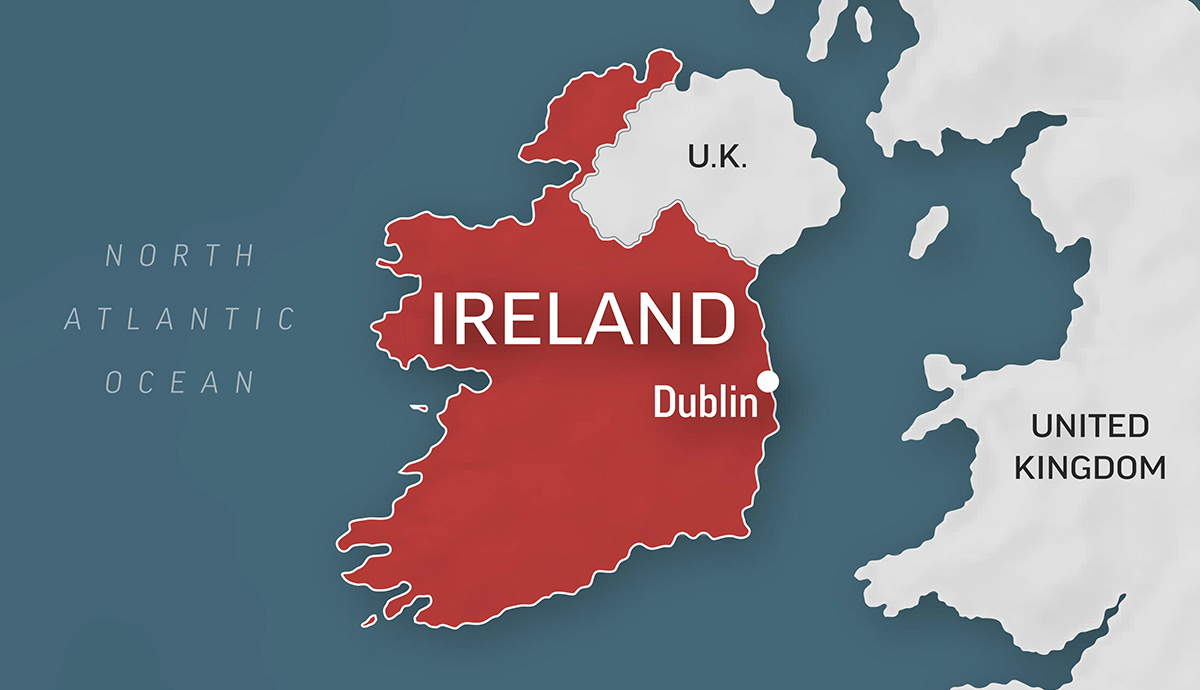
Irelands division between the United Kingdom and the Republic of Ireland is the result of revolution, compromise, and unresolved conflict. Although often treated as inevitable, partition emerged from a specific historical moment. The Anglo-Irish Treaty of 1921 formalized the split, but its roots lay in decades of nationalist resistance and unionist opposition. This article explains why Ireland was divided, tracing the process from the War of Independence through civil war, the creation of the Republic, the Troubles, and the modern settlement that governs relations today.The Anglo-Irish Treaty: How Partition Became RealityMembers of the Irish delegation, 1921. Source: Illustrated London NewsThe Anglo-Irish Treaty of December 1921 transformed partition from a political proposal into a concrete reality. It followed the Irish War of Independence and the Truce of July 1921, which ended two years of guerrilla warfare between the Irish Republican Army (IRA) and British security forces. By this stage, neither side believed outright victory was achievable through military means. Britain faced rising costs, international pressure, and an overstretched empire, while Irish leaders recognized the limits of sustaining prolonged conflict against a superior military power.British negotiators sought stability above all else. Their priority was to end violence in Ireland while preserving strategic interests, particularly naval access and imperial cohesion. Partition had already been legislated through the Government of Ireland Act (1920), which created separate administrations for the northern and southern counties of Ireland. Although the southern parliament never functioned, Northern Ireland had already been established and was supported by a substantial unionist majority determined to remain within the United Kingdom. British officials feared that abandoning Ulster would provoke civil war and further destabilize the region.Irish negotiators faced a dilemma. The Treaty offered self-government for 26 counties through the creation of the Irish Free State, but at the cost of accepting Dominion status, an oath to the Crown, and the continued exclusion of six counties. Rejecting the agreement risked a renewed war Britain had made clear it was prepared to escalate. As Michael Collins famously observed, the Treaty provided the freedom to achieve freedom, not a final settlement. Partition emerged as a negotiated compromise between Irish nationalist aspirations for independence and British determination to retain a presence.The War of Independence and the Road to the TreatyArrests during the War of Independence. Source: Irish Military ArchivesBritain agreed to negotiate with Irish leaders in 1921 because its ability to govern Ireland by conventional means had collapsed. The roots of this crisis lay in the political upheaval following the First World War. In the general election of December 1918, Sinn Fin won a decisive majority of Irish seats and refused to take them at Westminster. Instead its representatives established an independent parliament, Dil ireann, and declared Ireland a sovereign republic. This claim was backed by the IRA, which launched a guerrilla campaign against British rule.From 1919 to 1921, the IRA targeted government infrastructure rather than attempting to defeat British forces in open battle. Police barracks were attacked, tax collection was disrupted, and intelligence networks were systematically dismantled. The Royal Irish Constabulary (RIC), once the backbone of British administration, became increasingly demoralized and unable to operate in large parts of the country. In response, Britain deployed the Black and Tans and the Auxiliary Division, whose brutal reprisals alienated public opinion in Ireland and abroad.Despite its military superiority, Britain struggled to suppress the insurgency without escalating into full-scale war. The economic cost of continued operations, domestic unrest at home, and international criticism all weighed heavily on the government. At the same time, Irish leaders realized that they could not force the British to withdraw through guerrilla war alone. The resulting stalemate made negotiation inevitable. Partition became possible only because Britain could no longer maintain order in Ireland, and instead sought a political solution to an increasingly unmanageable conflict.From Treaty to Civil War: Ireland Divides ItselfWounded at the Four Courts, 1922. Source: RT Photographic ArchiveThe Anglo-Irish Treaty immediately split the Irish revolutionary movement and plunged the country into civil war. While the agreement ended British rule over most of the island, it also exposed deep divisions over sovereignty, legitimacy, and compromise. Supporters of the Treaty accepted Dominion status as a logical step toward full independence, arguing that renewed war with Britain would be disastrous. Opponents rejected the settlement as a betrayal of the Republic proclaimed in 1916 and reaffirmed by Dil ireann, viewing the oath of allegiance to the British Crown and the acceptance of partition as intolerable concessions.These political disagreements quickly hardened into armed confrontation. Anti-Treaty forces occupied the Four Courts in Dublin in April 1922, directly challenging the authority of the Provisional Government. Under pressure from Britain to assert control, the Free State used artillery to bombard the complex in June before storming it, marking the outbreak of the Civil War. What followed was a bitter and personal conflict, as former comrades fought and killed each other. Michael Collins, who had gained a reputation as a master of guerrilla warfare as the IRAs Director of Intelligence, had been the chief negotiator of the Anglo-Irish Treaty on the Irish side. In August 1922, Collins was killed in an ambush by anti-Treaty forces.The Civil War entrenched division in ways the War of Independence had not. Reprisal killings, executions, and deep personal animosities poisoned Irish politics for generations. Crucially, the conflict also ensured that partition remained unchallenged at the moment it mattered most. With nationalist energies consumed by internal conflict, there was no unified effort to contest Northern Irelands position within the United Kingdom. By the time the Free State emerged victorious in 1923, partition had hardened into political reality. The Civil War did not create Irelands division, but it ensured that it would endure.From Free State to Republic: Cutting Ties With Britainamon de Valera in the USA. Source: TG4 ArchivesAlthough the Anglo-Irish Treaty established the Irish Free State in 1922, it was not a fully independent republic. Instead, Irelands separation from Britain unfolded gradually over the following decades through a series of legal and political steps. In its early years, the Free State operated as a self-governing Dominion within the British Empire, sharing a monarch and remaining subject to certain constitutional constraints imposed by Westminster. Similar arrangements existed in Canada, Newfoundland, Australia, New Zealand, and South Africa.This relationship began to weaken as Irish governments asserted greater autonomy. The Statute of Westminster in 1931 was a crucial turning point, granting dominions legislative independence and allowing the Free State to amend or repeal British laws. Successive Irish administrations used this authority to dismantle remaining imperial controls, including removing the oath of allegiance and curtailing the role of the Governor-General.The process accelerated under amon de Valera, whose 1937 Constitution replaced the Free State framework with a new political structure rooted in Irish sovereignty. While it stopped short of formally declaring a republic, the constitution established an Irish presidency and significantly reduced the Crowns role in domestic affairs. He also succeeded in the return of the Treaty Ports which likely helped keep Ireland out of the Second World War.The final break came with the Republic of Ireland Act of 1948, which formally severed all constitutional ties with Britain and took effect in 1949. Throughout this period, Northern Ireland exercised its right under the Treaty to remain within the United Kingdom. Its parliament formally opted out of the new arrangements, ensuring that partition endured. The Irish Republic, therefore, was not born in a single revolutionary moment, but emerged through deliberate and incremental separation from Britain.The Troubles and Failed Paths to ReunificationBritish soldiers in Northern Ireland, 1969. Source: BBC ArchivesPartition endured in the decades after Irish independence largely because it became embedded in Northern Irelands political and social structures. The new state was dominated by a Protestant unionist majority, while the Catholic nationalist minority faced systematic discrimination in housing, employment, and political representation. By the 1960s, these inequalities gave rise to a civil rights movement inspired by similar campaigns in the United States. Peaceful demonstrations, however, were frequently met with hostility from unionist authorities and police, escalating tensions rather than resolving them.As unrest intensified, violence increasingly replaced political reform. Paramilitary organizations emerged on both sides, with republican groups seeking to end British rule and loyalist groups determined to preserve Northern Irelands place within the United Kingdom. The British Army was deployed in 1969 to restore order, but its presence soon became deeply controversial. Internment without trial, aggressive security operations, and incidents such as Bloody Sunday in 1972 eroded nationalist confidence in the British state and broadened support for militant republicanism.The conflict, which became known as The Troubles, hardened divisions within Northern Ireland and between Britain and Ireland. Reunification became politically impossible while violence continued, as unionist fears were reinforced and British governments prioritized stability over constitutional change. The Republic of Ireland, though sympathetic to nationalist grievances, was constrained by its own security concerns and diplomatic realities. Rather than weakening partition, decades of conflict entrenched it further. The open violence of the 1970s transformed into a lower intensity conflict that continued into the late 1990s.The Modern Settlement: Peace, Borders, and BrexitAn infographic illustrating the impact of Britains departure from the European Union, 2021. Source: New StatesmanThe modern framework governing Irelands division was established by the Good Friday Agreement of 1998, which ended decades of conflict and reshaped relations between Britain, Ireland, and Northern Ireland. Central to the agreement was the principle of consent: Northern Ireland would remain part of the United Kingdom unless a majority of its population voted otherwise. This provision removed the constitutional question from the battlefield and placed it firmly within democratic politics.The agreement also transformed daily life along the border. The long-standing Common Travel Area allowed free movement between Ireland and the UK, while joint EU membership eliminated customs and immigration controls on the island. For many years, the border became almost invisible, reducing its symbolic and practical significance. Cross-border cooperation expanded, and relations between Dublin and London improved markedly.Brexit disrupted this delicate balance. The United Kingdoms departure from the European Union in January 2020 raised the prospect of a hard border in Ireland, threatening both the peace process and economic stability. To avoid this, the Northern Ireland Protocol kept Northern Ireland aligned with certain EU rules, effectively placing regulatory checks in the Irish Sea. While this preserved an open land border, it provoked strong opposition among unionists who viewed it as weakening their place within the UK.Today, partition remains politically unresolved but practically managed. The mechanisms of peace, cooperation, and shared governance have altered the meaning of the border, even as debates over sovereignty and identity continue. Ireland remains divided, but the nature of that division has fundamentally changed.
0 Commentarios
0 Acciones
173 Views

 English
 Arabic
 French
 Portuguese
 Deutsch
 Turkish
 Dutch
Dutch
 Italiano
 Russian
 Romaian
 Portuguese (Brazil)
 Greek
Greek