


WWW.THECOLLECTOR.COM
The Guelphs vs. Ghibellines Feud That Turned Italian Cities Into Battlefields
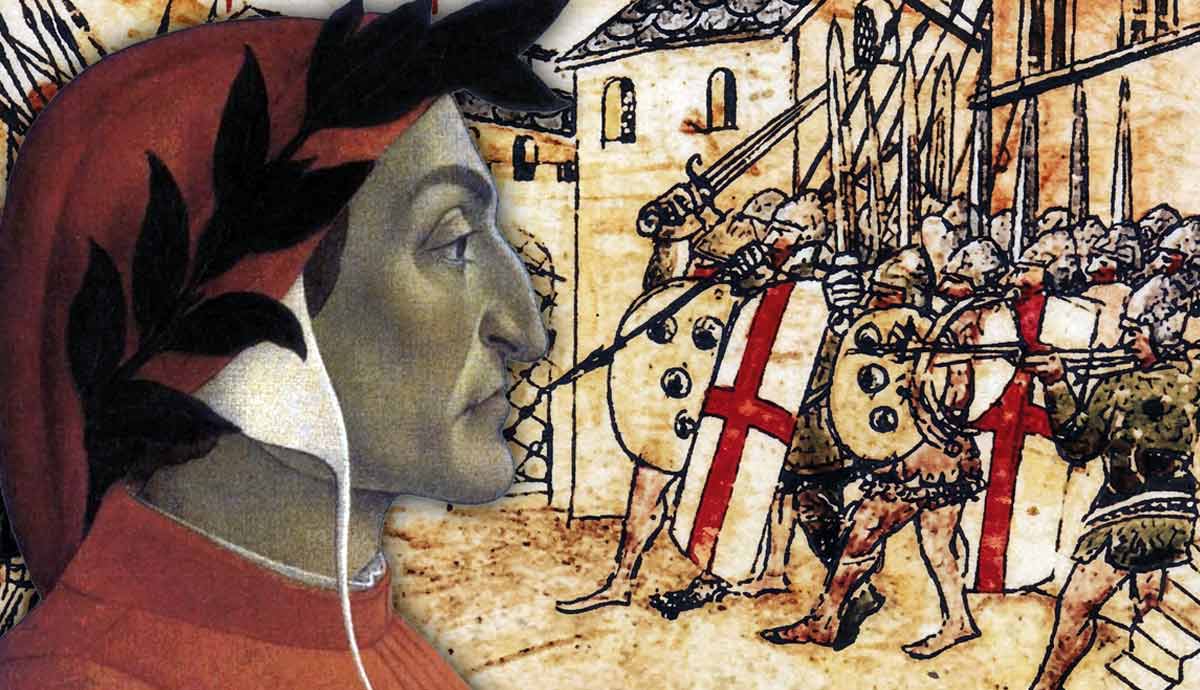
In the 13th century, a fierce rivalry began to dominate the Italian political scene, already plagued by an endemic state of unrest. Within the communes of northern and central Italy, the internal disputes among the urban elite led to the emergence of two opposing factions: the pro-papal Guelphs and the pro-empire Ghibellines. The feud, intertwined with the communes struggle for independence, would tear the Italian peninsula apart well into the 14th century, leading to exile, violence, and bloodshed. Lets look into how the rivalry between Guelphs and Ghibellines originated and evolved.Who Were the Guelphs & Ghibellines?Drawing for a memorial of the Hohenstaufen dynasty, published in the magazine ber Land und Meer, 1817. Source: Wikimedia CommonsThe exact etymology of the Italian terms Guelfi and Ghibellini is not clear. However, scholars generally trace the origins of the two parties names to the rivalry between the German dynasties of the Welf and Hohenstaufen.After Emperor Henry Vs death in 1125, the Welf, dukes of Bavaria, vied for the throne of the Holy Roman Empire against the Hohenstaufen, dukes of Swabia. It is generally believed that the term Ghibelline derived from the Hohenstaufens castle of Waiblingen. In particular, it has been suggested that the names Guelphs and Ghibellines originated as battle cries (Hie Welf! Hie Waiblingen!) during the strife between the Hohenstaufen Emperor Conrad III and Welf VI of Bavaria. The theory, however, is dubious.When the names Guelfi and Ghibellini began to circulate in the Italian peninsula in the 13th century, they acquired a new significance. The term Guelphs identified the party siding with the papacy during its struggle against the Hohenstaufen Emperor Frederick Barbarossa, who sought to reassert imperial authority over the Italian territories.His claims alarmed the popes, who viewed Barbarossas Italian policy as a challenge to their own influence and independence. In the ensuing strife, the papacy allied itself with the Lombard communes, equally displeased by the emperors intention to restore imperial rights in Italy. In 1176, the Lombard League, led by Pope Alexander III, defeated Barbarossas forces at the Battle of Legnano. The struggle between the two powers, however, continued with Emperor Frederick IIs ascension to the imperial throne.Setting the Stage: The Papacy, the Empire, & the Italian CommunesFrederick I, Holy Roman Emperor as Crusader, image from Robert the Monks Historia Hierosolymitana, ca. 1188, photograph by Ronald Preuss. Source: Wikimedia Commons/Vatican Library, Vatican CityThe Hohenstaufens emperors attempts to restore imperial control over Italy split the Italian political scene into two factions: those who sided with the empire (the pars imperii, later known as Ghibelline), hoping to legitimize their authority, and those who saw the support for the papacy as a means to safeguard their autonomy.In the 11th and 12th centuries, as the Kingdom of Italy began to disintegrate, a new form of government emerged in northern and central Italy: the comuni (communes). In the absence of a centralizing authority, the communes, some of the first nonmonarchical governments in medieval Europe, quickly became a key part of the new political order.Indeed, boosted by a wave of economic and trade growth, the towns in north and central Italy turned into autonomous city-states, asserting their right to establish forms of self-government. As the communal institutions began to expand their control over the countryside, extending beyond the cities walls, they also pursued their own political and diplomatic agendas, de facto acquiring (and claiming) higher degrees of independence from the empire and the papacy.Over time, the division sparked by the Hohenstaufen emperors Italian policy evolved, with the already existing rivalry within the communes and between the city-states providing breeding ground for factionalism.From FlorenceFarinata degli Uberti, fresco by Andrea del Castagno, c. 1455. Source: Wikimedia Commons/Villa Carducci, FlorenceAs the death of Frederick II (1250) left a power vacuum in Italy, a bitter feud between Guelphs and Ghibellines pitted local factions and towns against each other. In his Divine Comedy, Dante described the Italian peninsula as an inn of sorrows and a ship without a helmsman in harsh seas. Indeed, in the political order that emerged after the decline of the Hohenstaufen dynasty, the papacy saw an opportunity to fill the void, beginning to exercise imperial prerogatives and securing the influence of the Papal States in the political scene. The popes oscillating policies, however, led to chronic instability across the peninsula.The early stages of the Guelph-Ghibelline feud that split the Italian peninsula in the 13th and 14th centuries began in Florence, where the political antagonism turned more brutal and deadly than in any other town. Chronicler Giovanni Villani dates the first violent clash between local families in 1117, emphasizing the role of the influential Uberti family in the dispute. At the time, however, the terms Guelphs and Ghibellines were not yet used to identify the feuding factions.The earliest mention of a Guelph presence in Florence would emerge only in 1248, when a letter sent to Frederick II referred to a Guelph party in the city. In the previous years, Cardinal Ottaviano degli Ubaldini, the pontifical legate to Florence, had urged a group of local families (later known as Guelphs) to oppose Frederick IIs imperial vicar. On February 2, 1248, however, a coalition led by Manente Farinata degli Uberti seized control, expelling the Guelph families from the city and destroying their properties. The Guelphs would return in 1250, forcing the Ghibellines into exile. To ItalyA page from La sconfitta di Montaperti (The Defeat of Montaperti), by Niccolo di Giovanni Ventura, 1442-1443. Source: Biblioteca Digitale SienaIn 1251, Farinatas group signed a secret pact with the Tuscan towns of Siena, Pistoia, and Pisa, identifying themselves as the Ghibelline party of Florence. The pact is the earliest extant document to mention the term Pars Ghibellinorum. By 1260, the feud between Guelphs and Ghibellines had spread to the rest of the peninsula, spread by groups of Florentine exiles. Meanwhile, the papacy, supported by Charles of Anjou (the brother of King Louis IX of France), strongly opposed the claims of Manfred, Frederick IIs natural son.The two factions clashed at the Battle of Montaperti on September 4, 1260, where the pro-Manfred Ghibelline forces, led by Siena, defeated the Guelph Florentine army. The battle was one of the bloodiest events in the Guelph-Ghibelline rivalry. In Inferno 10, Dante referred to Montaperti as the carnage, the great bloodshed that stained the waters of the Arbia [a stream near Siena] red. In the aftermath of the battle, the Florentine Guelphs were once again forced into exile.Miniature depicting the Battle of Benevento, from the manuscript Grandes Chronique de France, 1375-1380. Source: GallicaSix years later, however, the Guelph forces, supported by the papacy and Charles of Anjou, scored a pivotal victory against the Ghibellines and Manfreds army at Benevento. The battle marked the end of the Ghibelline influence in Florence (and Italy). In the following years, the Guelphs launched a violent persecution against their political rivals. Some deceased members of the Uberti family, for example, were posthumously condemned, their remains exhumed and destroyed. The Guelph victory, however, did not end the factionalism, and toward the end of the 13th century, more conflict erupted within the Guelph party.Guelphs, Ghibellines, and National IdentityPortrait of Dante Alighieri, by Sandro Botticelli, c. 1495. Source: Wikimedia Commons/Bibliothque et fondation Martin Bodmer, Cologny, SwitzerlandBy the mid-13th century, the Guelphs and Ghibellines who clashed at Montaperti had little in common with the original pro-papacy and pro-empire factions. Indeed, what began as local disputes within the communes changed character over time, leading to the emergence of organized political parties that resorted to mass political exile to define themselves.The political warfare inevitably created political disunity throughout the Italian peninsula. At the same time, however, the birth of the Guelphs and Ghibellines partially recomposed the extreme factionalism within the communes, contributing to the formation of larger regional states. In the 19th century, during the Risorgimento, the patriots fighting for Italian unification and independence saw the exile experienced by many (including Dante) during the 13th and 14th centuries as a mirror of their own diaspora, creating a new paradigm of nationhood.
0 Comentários
0 Compartilhamentos
164 Visualizações

 English
 Arabic
 French
 Spanish
 Deutsch
 Turkish
 Dutch
Dutch
 Italiano
 Russian
 Romaian
 Portuguese (Brazil)
 Greek
Greek