


WWW.THECOLLECTOR.COM
8 Medieval Universities That Taught Europe How to Think
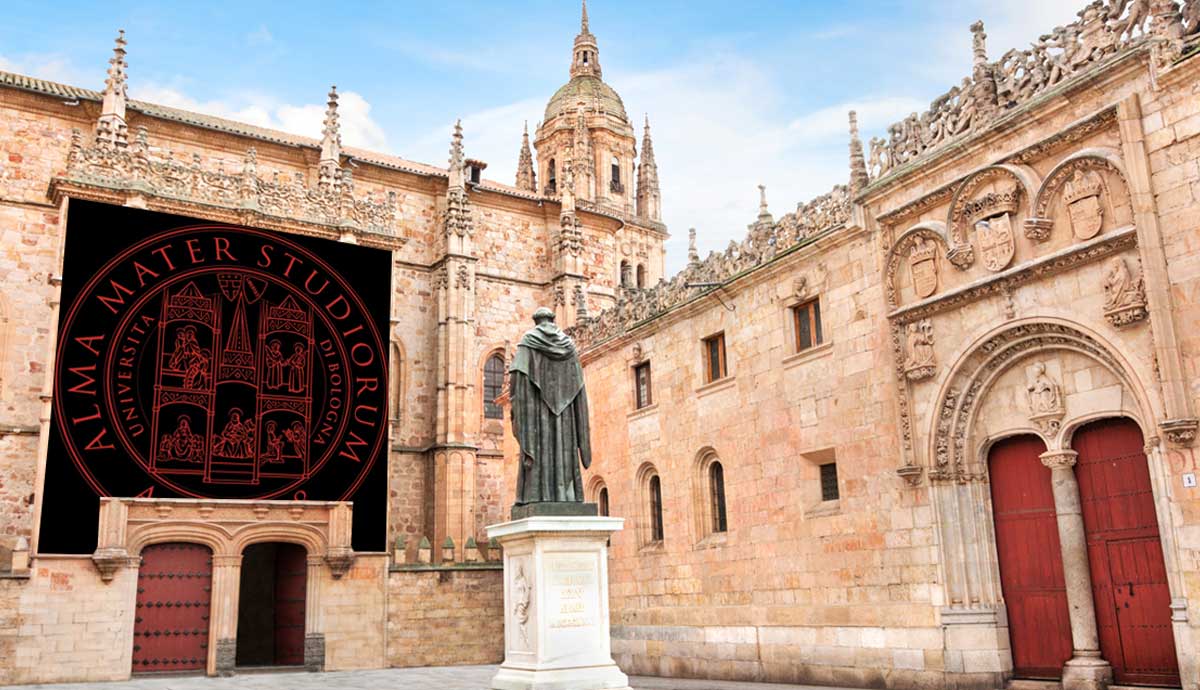
In the 8th and 9th centuries, the Carolingian Renaissance sparked an intellectual revival in Europe, laying the groundwork for the emergence of the oldest institutions of higher learning in the Middle Ages: the universities. The first universities began to appear in the 11th century, first in Italy and then in northern Europe, replacing the previous monastic and cathedral schools. Born as corporations of teachers and students, the universities attracted people from all over the continent, and eventually acquired charters from the church or kings. Lets take a look at eight leading medieval universities.1. University of BolognaSeal of the University of Bologna with the motto Alma Mater Studiorum (Nourishing Mother of Studies). Source: Wikimedia CommonsReputed to be the oldest university in the Western world, the University of Bologna was established around 1088 as a spontaneous initiative of a group of students. At the time, Bologna was experiencing a revolutionary time that saw the birth of the commune (comune, a republican government), the rise of new social classes, and the increasingly turbulent relations between the papacy and the Holy Roman Empire.The newly established learning institution focused its attention on the study of canon and civil law, aiming to find legal solutions to the many conflicts of the 11th and 12th centuries. Combined in the same Studium, the School of Canon Law and the School of Roman Law played a key role in mediating the fight between the papal and imperial authorities. In doing so, the Bolognese scholars laid the groundwork for the legal system of medieval Europe.By the 12th and 13th centuries, the University of Bologna had become one of the leading centers of learning in Europe, attracting students from all over the continent who brought with them considerable wealth. Thanks to the booming economy and its famed university, Bologna became known as La Dotta (The Learned) and La Grassa (The Fat).Known for:Petrarch, Italian poetLeon Battista Alberti, Italian Renaissance humanist and architect2. University of ParisPlace de la Sorbonne in Paris, featuring the church of the same name, photograph by Mbzt, 2015. Source: Wikimedia CommonsLike Bologna, the University of Paris was also established as a corporation of students and teachers. It formed around 1150, when it replaced the cathedral school of Notre-Dame, and was divided into three superior faculties (theology, canon law, and medicine) and one inferior faculty (arts).In the mid-13th century, following support from the papacy, the University of Paris became a self-governing legal entity, with its own statutes and regulations. By the end of the century, it had gained considerable prestige as the leading center of theological studies in northern Europe. Over the following centuries, the university, with a rigidly fixed program founded on Scholasticism, was a staunch supporter of Roman Catholic orthodoxy.The many students arriving in Paris to enroll in the universitys program were accommodated in several colleges. The most famous was the Sorbonne, established by the theologian Robert de Sorbon around 1257. It soon became the stage for many theological disputes.Known for:Albertus Magnus, German Dominican friar and philosopherSt. Thomas Aquinas, Doctor of the Church3. University of OxfordThe southern facade of Merton College, one of the oldest colleges of Oxford University, photograph by Jonas Magnus Lystad, 2023. Source: Wikimedia Commons/CC BY-SA 4.0Records of teaching activities in the town of Oxford date as far back as 1096. However, the university emerged only some time later, probably around 1167, when Henry III, following a dispute with Thomas Becket, the Archbishop of Canterbury, prohibited English students from studying in Paris.By the end of the 12th century, the University of Oxford had already become a well-established center of learning, the oldest in the English-speaking world, offering courses in theology, law, medicine, and liberal arts. Modeled on the University of Paris, the English institution was also composed of several colleges that served as privately endowed boarding houses for impoverished scholars. The oldest college, University College, was founded in 1249, followed by Balliol and Merton in the early 1260s.Over the following centuries, alongside the traditional program in the liberal arts, the University of Oxford began to focus on the emerging physical sciences.Known for:Cardinal Wolsey, Lord High Chancellor of England (1515-1529)John Wycliff, English theologian4. University of CambridgeThe chapel of Peterhouse College, the oldest college of the University of Cambridge, photograph by Chris Huang, 2009. Source: Wikimedia Commons/CC BY-SA 2.0In the early 13th century, the relationship between town and gown (students and townspeople) in Oxford soured, and life in the English town was disrupted by frequent riots. To escape this hostile environment, some scholars moved to Cambridge. Their arrival led to the establishment of a university around 1209.To avoid any hostilities between the students and the residents of Cambridge, King Henry III ordered that scholars would be allowed to remain in the town only under the supervision of a master. Thus, colleges were soon built to provide orderly places of residence. The first, Peterhouse, was built in 1284 with funds donated by Hugo de Balsham, Bishop of Ely.Known for:Isaac Newton, English physicist and mathematicianCharles Darwin, British naturalist5. University of SalamancaThe facade of the University of Salamanca facing a statue of Fray Luis de Len, by bluejayphoto. Source: iStockThe oldest institution for higher learning of the Hispanic world, the University of Salamanca was originally established in 1218 by Alfonso IX. The first teaching activities, however, began more than 30 years later, in 1254, during the reign of Alfonso X (Alfonso IXs grandson), with the establishment of three chairs in canon law, and one chair each in grammar, art, and physics.Shortly after its establishment, the University of Salamanca was already on its way to becoming a leading center for learning. Pope Alexander IV gave it the status of General School in 1254, and the following year, a series of papal bulls granted recognition for all degrees awarded to its students.During the Age of Exploration, the University of Salamanca became one of the most important institutions dealing with the discovery of a New World. Thanks to the lectures held by Francisco de Vitoria (1526-1546), the university shifted its attention to international law, addressing key issues of the new age, such as the nature of power and justice, international conflicts, just war, and the rights of indigenous communities.Known for:St. Ignacio de Loyola, founder of the Jesuit orderCaldern de la Barca, Spanish poet6. University of PaduaThe facade of the University of Salamanca facing a statue of Fray Luis de Len, by bluejayphoto. Source: iStockThe University of Padua was established in 1222 by a group of students and teachers who decided to leave Bologna and form a free body of scholars in the present-day Veneto region. Grouped in different Nationes according to their place of origin, the students paid their teachers with their own money and elected the rettore (rector).Over the following centuries, the University of Padua gained recognition as the leading center of modern medicine. Indeed, the introduction of empirical and experimental methods, alongside a focus on the observation of nature, made the university a pioneer in anatomical investigations.In the mid-1400s, Padua was one of the first institutions to revive the practice of human dissection (long forbidden) and to build a permanent anatomical theater. The universitys regulations even made it mandatory to perform at least two examinations of human cadavers every academic year.Known for:Nicolaus Copernicus, Polish astronomerGalileo Galilei, Italian astronomer, philosopher, and mathematician7. University of NaplesThe historical seat of the University of Naples, photograph by Giuseppe Guida. Source: Wikimedia Commons/CC BY-SA 4.0While most medieval universities were the result of the spontaneous initiative of students and teachers, the University of Naples is the oldest institute for higher learning founded by a ruler. Indeed, Emperor Frederick II established it in 1224, even before scholars had arrived in the city.Embroiled in a fierce conflict with the papacy at the time, Frederick II envisioned the new center of learning as a means to counterbalance the preeminence of the universities in northern Italy, which he considered too strongly influenced by the popes. (After all, Bologna was part of the Papal States at the time.)As a result, the administration of the University of Naples was rigid and centralized. Its teachers were hired directly by Frederick II, who also paid their wages, making them royal employees. Moreover, teachers and students were banned from traveling to other universities and were required to swear their loyalty to the emperor. Thus, the university served as both a center for learning and a political tool aimed at training skilled bureaucratic professionals.Known for:Giovanni Boccaccio, Italian poet and scholarGiambattista Vico, Italian philosopher8. University of HeidelbergThe library of the University of Heidelberg, photograph by Jan Beckendorf, 2003. Source: Wikimedia Commons/CC BY-SA 2.0The University of Heidelberg, the oldest in Germany, was founded in 1386 by Rupert, the Elector Palatinate, with the consent of the pope. Modeled after the University of Paris, its students resided in colleges.In April 1518, the University of Heidelberg gained visibility for hosting Martin Luthers defense of his Ninety-Five Theses, a series of propositions for debate that would spark the Protestant Reformation. In 1556, the university formally became a Protestant institution at the behest of Otto Henry, Elector Palatinate.Known for:Philipp Melanchthon, Protestant reformerGeorg Wilhelm Friedrich Hegel, German philosopher
0 Comentários
0 Compartilhamentos
164 Visualizações

 English
 Arabic
 French
 Spanish
 Portuguese
 Deutsch
 Turkish
 Dutch
Dutch
 Italiano
 Russian
 Romaian
 Greek
Greek