


WWW.THECOLLECTOR.COM
How William the Conqueror Rose From Bastard to King of England
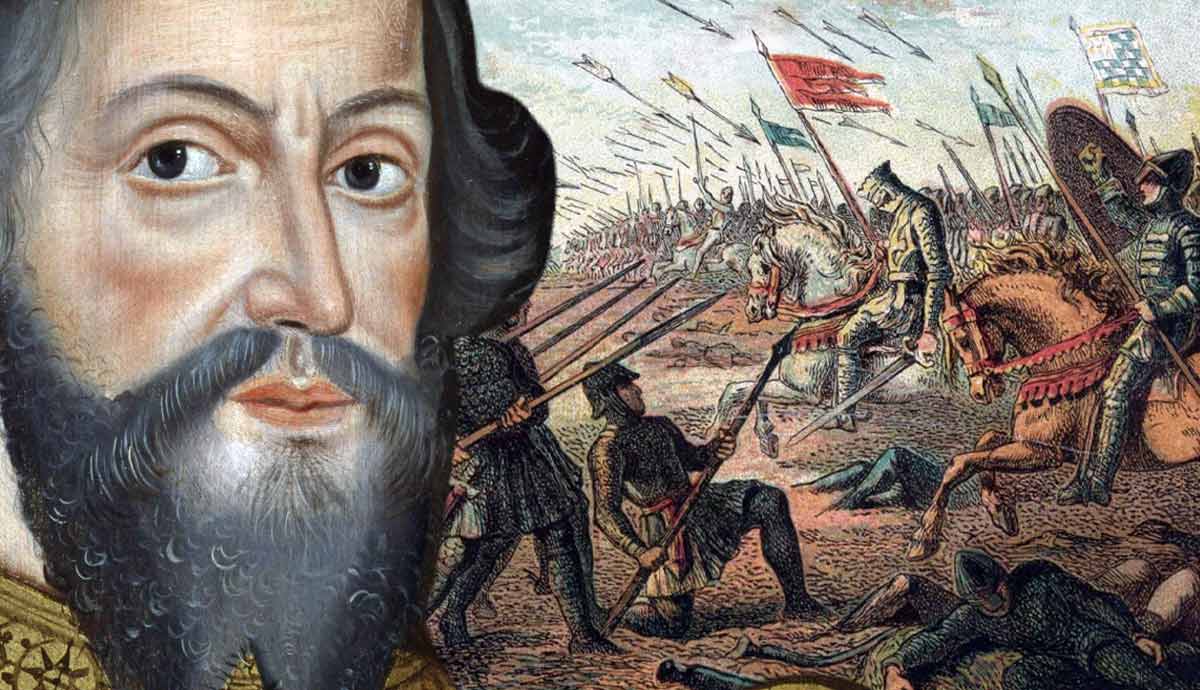
The illegitimate son of Duke Robert I of Normandy, William I succeeded his father as a child and spent much of his early reign pacifying his duchy. In late 1066, he enshrined his place in history by invading England and defeating Harold Godwinsson at the Battle of Hastings. Williams conquest was one of the most impactful events in English history and its legacy continues to the present day.The Boy Duke in his Early Years (10281047)Aerial photograph Chteau de Falaise by Viault. Source: Wikimedia CommonsWilliam was born in 1027 or 1028 in the Chteau de Falaise in Normandy. He was the only son of Duke Robert I, nicknamed Robert the Magnificent. His mother Herleva was the daughter of a courtier. Since William was an illegitimate child, he was sometimes known as William the Bastard to his detractors. The Norman elite that William came from were the descendants of Viking raiders who had settled in northern France and later acknowledged the sovereignty of the Frankish king after being granted the territory that came to be known as Normandy.When Robert died in 1036 while on pilgrimage to Jerusalem, the boy succeeded his father as Duke of Normandy. This angered many Norman nobles who believed that as an illegitimate child, William had no right to the duchy. Rival factions sprang up around William, who was constantly threatened with assassination. Williams early years as duke were spent under the protection of loyal guardians, several of whom, including Osbern the Steward, were murdered in his defense.Nonetheless, the young William soon proved to be a formidable political force. He forged an alliance with local Church leaders, reinforced his ranks with more loyalists, and convinced some of his detractors, including Archbishop Mauger of Rouen, to side with him. By being ruthless and calculating, he managed to avoid being hunted down by his enemies.Forging his Authority (10471060)Map of the Battle of Val-s-Dunes, 2009. Source: Wikimedia CommonsNormandys chaos caused real concern throughout the region. Nobles were assassinated, castles were stormed and looted, undermining the stability that had persisted since the establishment of the duchy a century earlier. William managed to overcome many of these challenges with the assistance of advisers like his kinsman Count Gilbert of Brionne and Archbishop Mauger.In 1047, William rallied an army behind him to fight the rebellious barons. He was supported by King Henry I of France, who saw William as a reliable ally in keeping Normandy stable. Guy of Burgundy raised a force to challenge William and the French King but was crushed at the Battle of Val-s-Dunes in 1047. William was a skilled commander and his leadership was far superior to the rebellious nobles.William still faced challenges from opponents who refused to accept him as Duke. Nonetheless, a truce was signed, which enabled him to exert control over the rest of Normandy. After the battle, he exiled Guy and installed nobles loyal to him in castles throughout the Duchy. When Henry betrayed him and backed another invasion of Normandy alongside dissident nobles, William beat them off, permanently consolidating his control over the Duchy.A Contested Claim and Englands Succession Crisis (1060-1066)A religious icon depicting Edward the Confessor, canonized as a saint in 1161. Source: Historic UKAcross the Channel in England, the childless King Edward the Confessor was approaching his sixties. Although he had been married to Edith of Wessex in 1045, Edward had resented the influence of Ediths father, Earl Godwin of Wessex, the most powerful Anglo-Saxon aristocrat. Edwards mother was the Norman princess Emma of Normandy, and he had spent many years in Norman exile.Some sources, including the Norman chronicles, claim that Edward promised the crown to William after exiling Earl Godwin and his sons from England in 1051. However, Godwin soon raised an army and forced Edward to restore his earldom in 1052. The Earl died the following year and was succeeded by his son, Harold Godwinsson. When Edward died in January 1066, Harold quickly claimed the throne on the basis that Edward had named him as his successor on his deathbed.The Normans argued that Harold had usurped the throne, particularly as he had made a promise to support Williams claim during a visit to Normandy several years earlier. As a result, William began preparing a fleet to invade England. Elsewhere, additional claimants such as Harald Hardrada of Norway also prepared to invade England. A race had developed to see who could take the English throne and keep it.The Invasion and the Battle of Hastings (1066)A drawing of the Battle of Hastings, 1868. Source: Joseph Martin Kronheim/Wikimedia CommonsWilliam left Normandy in the hands of his wife, Matilda of Flanders, while he awaited the opportunity to cross the Channel with his fleet. His forces were substantial in size with over a hundred ships built from scratch. The army consisted of a mixed force including both Normans loyal to him and mercenaries from around the rest of Europe. Difficult weather delayed his departure until late September.King Harold found himself facing assaults on multiple fronts and moved to parry each of them. In the north, Harald Hardrada and Harolds estranged brother Tostig marched on London, but were defeated and killed at the Battle of Stamford Bridge. Harold had already disbanded his army on the way to London when he received news of Williams landing at Pevensey Bay. As the king hurried to raise new forces, Williams Normans raided the south coast, seeking to provoke Harold into doing battle before he was fully prepared.Harold brought a force numbering several thousand to Senlac Hill near Hastings in East Sussex and ordered his men to form a shield wall and hold their ground. The Normans advanced up the hill and on the morning of October 14. Although the attackers made little progress initially and William was obliged to raise his visor in response to rumors that he had been killed, the English shield wall began losing its integrity and Harold was killed in the midst of the fighting.By the end of the day, the Anglo-Saxon army had been routed and William was marching on to London. With Harold dead, further efforts by English nobles to rally a new army to oppose William proved futile, and William was crowned king of England on Christmas Day 1066.The Norman Transformation of England (1066-1087)William the Conqueror, 1597-1618. Source: The National Portrait Gallery, LondonIn order to prevent English nobles who had supported Harold from challenging him, William adopted a carrot-and-stick approach. He allowed certain English nobles to retain their titles while crushing an attempt by Harolds mother to organize a revolt against him. Additional challenges followed when a revolt broke out in the north and a Danish invasion force landed to oust William in 1069. He responded with a brutal series of military campaigns known as the Harrying of the North to extinguish any embers of rebellion.William often struggled to maintain power because his lands were separated by the English Channel. Between 1067 and his death 20 years later, he crossed the Channel at least 19 times to ensure that he could maintain proper control of both England and Normandy.To help maintain control of England, he rewarded Norman nobles with English land and titles. This new class of Norman aristocrats began to build castles across England as feudal power bases. While William continued to face Anglo-Saxon uprisings during his two-decade reign, he centralized power and strengthened the English monarchy. As a means of facilitating tax collection and as a record of the Norman conquest, in 1085 William ordered the compilation of a survey of the landholdings held by himself and by his vassals throughout his kingdom, organised by counties. In less than a year, the results of the survey were compiled into the Domesday Book.Williams Final Years and His LegacyTomb of William the Conqueror in the Abbey of Saint-tienne in Caen, Normandy. Source: Berkhamsted CastleIn 1086, William returned to France as part of an attempt to rally support from other French nobles to stand up to the French throne. He was still concerned after Henrys prior betrayal and attempt to march against him. While leading an army against the town of Mantes, he was reportedly injured in the saddle. On September 9, 1087, he died in the priory of Saint Gervase at Rouen. The exact cause of his death was confused by different accounts by contemporary observers.He was laid to rest at the Abbey of Saint-tienne in Caen. The duchy of Normandy passed to his eldest son, Duke Robert II of Normandy, while the kingdom of England was inherited by his second son, King William II of England. The two brothers began fighting each other to inherit their fathers entire legacy, resulting in further anarchy in Normandy. The two realms were reunited under Williams third son Henry, who succeeded William II as King Henry I of England in 1100 and defeated Robert in battle to become Duke of Normandy in 1106.With the Norman conquest, William the Conqueror had a huge impact on English history. The Norman aristocracy that William put in place dominated English politics for centuries, the English legal system was influenced by Norman customs, and the English court spoke French for the next three centuries. The fact that the English king held extensive territories in France, which further expanded during Angevin rule, often led to conflict between England and France.
0 Comments
0 Shares
182 Views

 Arabic
 French
 Spanish
 Portuguese
 Deutsch
 Turkish
 Dutch
Dutch
 Italiano
 Russian
 Romaian
 Portuguese (Brazil)
 Greek
Greek