


WWW.THECOLLECTOR.COM
The Strange Death of Grigori Rasputin & What Actually Happened
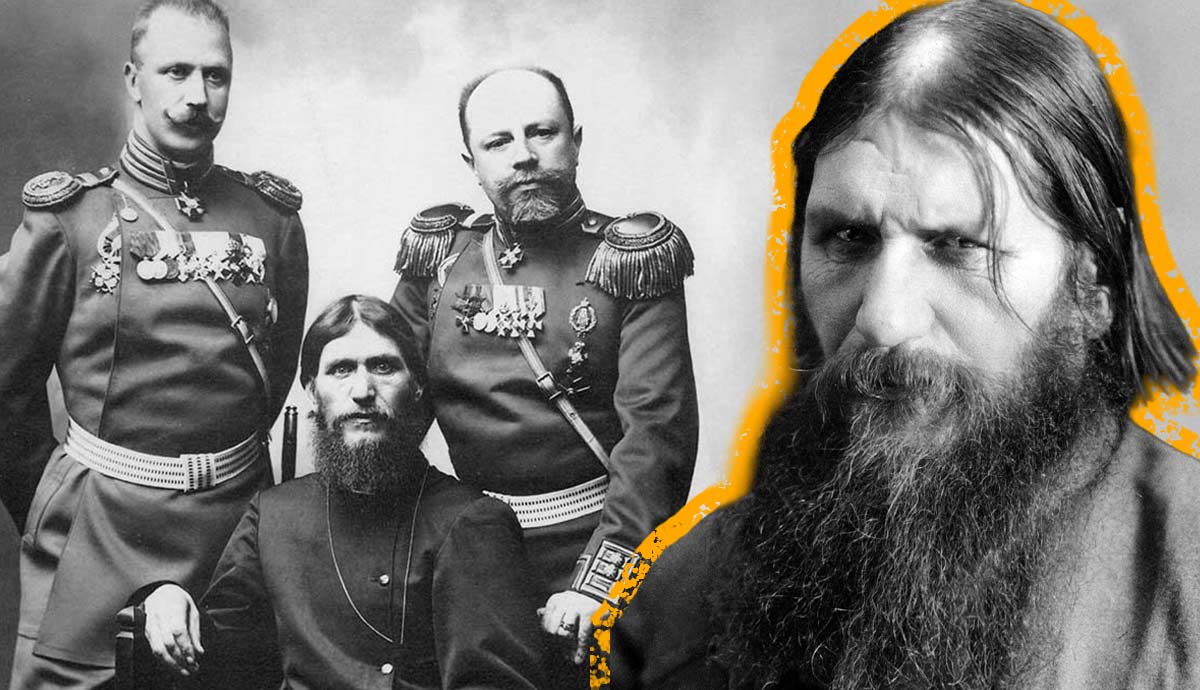
Grigori Rasputin was a Siberian peasant and holy man of incredible charisma, poor hygiene, and notoriously bad teeth. Revered as a man of God, reviled as a shameless womanizer, and infamous for his exceptionally heavy drinking, Rasputin defied expectations by rising from humble peasant origins to become one of the most influentialand divisivefigures in late imperial Russia. In the final years of the Romanov Dynasty, he became part of the inner circle of Tsar Nicholas II and his wife, Alexandra, gaining extraordinary political influence. For a time, he was considered to be the de facto power behind the throne. On the night of December 30, 1916, he was brutally murdered by a group of young aristocrats, fearful of his growing power and influence. The precise circumstances of his death remain shrouded in mystery to this day.Rasputins RiseRasputin in Siberia, with some of his children. Source: Russia BeyondGrigori Rasputin, the infamous, unsavoury, mad monk of late-imperial Russia, was brutally murdered on December 30, 1916. Born into poverty in the remote village of Pokrovskoye in western Siberia, he ascended, against the odds, from humble peasant stock to the highest circles of imperial power. His abrupt fall from grace marked the impending collapse of the Romanovs and imperial Russia itself.As a youth, Rasputin was said to be defiant and unruly. Accounts of his early life suggest that he was drawn to petty crime, fighting, and vodka. In his 20s, he underwent a rapid religious conversion. Despite marrying young and fathering several children, he abandoned family life in search of religious devotion.He spent years wandering the Russian countryside, living as a Strannika holy wanderersleeping in barns, forests, and monasteries and preaching mythical interpretations of Orthodox Christianity. He drank a lot of vodka, and his charismatic intensity, wild appearance, and piercing gaze left a deep impression on all he met.Rasputin eventually made his way to St. Petersburg, the heart of Russian imperial power. In 1905, with Russia in the grip of revolution, he met the Imperial family just days after his arrival. Before long, his influence was such that he was advising Tsar Nicholas II on matters of national policy (Braithwaite, 2016).Rasputin in St. Petersburg, 1907-8. Source: Wikimedia CommonsMeanwhile, Tsarina Alexandra Feodorovna, desperate for relief from the suffering of her hemophiliac son, Alexei, became convinced that Rasputin possessed miraculous healing powers after he managed to ease the boys pain during an acute episode. The Tsarina came to revere Rasputin not only as a healer but as a holy man sent by God.However, beyond the walls of the winter palace, lurid tales of Rasputins exploits spread like wildfire. His eccentric behavior, open promiscuity, and nocturnal drunken escapades stood in stark contrast with his self-styled image as a man of God. Dangerous rumors swirled that Rasputin was the lover of the Tsarina herself.When the Tsar left St. Petersburg in 1915 to lead Russian forces in World War I, many feared Rasputins influence and control over the Tsarina. With Alexandra now acting as de facto regent, Rasputin was accused of wielding the real power behind the throne (Thomas, 2020). Demands from Russians across the political spectrum to remove him from powerby any means necessarysoon reached a fever pitch.Assassination AttemptsHoly Wanderers: Rasputin, Hermogen, and Iliodor in 1908. Hermogen was banished to a monastery in 1912 by Tsarina Alexandra after he beat Rasputin with a crucifix. Source: Wikimedia CommonsRasputin spent years as a holy wanderer before arriving in the capital. Though he had no formal ties to the Orthodox church, he successfully presented himself at the Imperial court as a prominent mystic and religious healer. Once in St. Petersburg, he was quickly drawn to the temptations of city life.At the height of his powers, the streets outside his apartment thronged with devout followers of the mysterious holy man, known to have the ear of the Tsar. Up to 400 Rasputiniki had been known to gather before sunrise, sometimes waiting for days just to catch a glimpse of him wandering back homestone drunk (Welch, 2014).Yet, in the final months of his life, he grew increasingly paranoid, and not without cause. Aware that he was amassing a number of powerful enemies, he became reluctant to leave his flat. Over the last two and a half years before his death, at least ten attempts had been made on his life (Welch, 2014). Some were strangehe was allegedly run down in the street by a sled and frequently received threatening telephone calls, cursing him and declaring his days were numbered. Other attempts were more serious.Rasputin in St Petersburg surrounded by admirers, 1914. Source: Deviant ArtThe first major attempt occurred in July 1914. Outside his home in the Siberian village of Pokrovskoye, Rasputin was stabbed in the stomach by 33-year-old Khioniya Guseva, a peasant woman and former follower of his holy man rival, Sergei Trufanov, better known as Iliodor. Rasputin survived the attack despite the severity of his injuries. He conceived that Iliodor was behind the attack, though Guseva doggedly claimed to be acting alone. Following the incident, Iliodor fled Russia.In 1915, Rasputin caught a woman leaving his flat in St. Petersburg and became suspicious. When he ordered her to drop what she was concealing in her muff, a gun fell to the floor (Welch, 2014). The finaland ultimately successfulattempt to kill Rasputin was carried out in 1916 by a pair of young Russian aristocrats: Prince Felix Yusupov, the wealthiest man in Russia, and Grand Duke Dmitri Pavlovich, a first cousin of Tsar Nicholas II.The Yusupov PlotPrince Felix Yusupov pictured with his wife Princess Irina Alexandrovna of Russia, 1915. Source: Wikimedia CommonsBy late 1916, Rasputin had become a lightning rod for resentment within the Russian nobility. Seen as a corrupting influence at the heart of the Romanov court. His perceived manipulation of Tsarina Alexandra, his flagrant debauchery, and his growing political sway grew increasingly intolerable. What followed was one of the most infamous murders in Russian history.The widely known account of Rasputins murder comes from Prince Felix Yusupovs own memoir, published in 1928. According to his account, Rasputin was lured late in the evening to his residence at Moika Palace, where, after some cordial formalities, he was plied with cakes and wine laced with cyanide. When the poison appeared to have no effect, Yusupov and his accomplice, Grand Duke Dmitri, shot him at close range and left him for dead.This, however, was not enough to kill the Mad Monk. Rasputin reportedly sprang up and attempted to flee the scene. He was pursued across the palace courtyard, shot again, and brutally beaten. Incredibly, he was still alive. His assailants then bound him and threw him into the nearby ice-cold Nevka River. When his body was found several days later, the autopsy showed that he had died by drowning (Thomas, 2020).Grigori Yefimovich Rasputin, Siberian peasant turned advisor and confidant to the Tsar and Tsarina of Imperial Russia. Source: Wikimedia CommonsA 1917 commission into Rasputins murder included testimony from Rasputins niece, Anna Vyrubova, that it struck her as odd that Rasputin would be invited to Yusupovs residence so late at night. She apparently urged him not to go. Yet, much of the additional detail in Yusupovs account, beyond Rasputins death, is widely regarded as fabrication.Yusupovs sensational account, and his open delight in being known as the man who killed the Mad Monk, transformed Rasputin into a near-mythical, superhuman figure. His narrative no doubt served a dual purpose: it amplified the threat Rasputin was believed to pose to the empire, and simultaneously cast Yusupov as a patriotic hero. Yet, for all its drama, it was, at best, only partially true.The Death of RasputinPrince Felix Yusupov, murderer of Rasputin, 1914. Source: Wikimedia CommonsDespite the folklore surrounding Rasputins death, the facts are ultimately less sensational. The official investigation into his disappearance, launched by Minister of the Interior Alexander Protopopov, began when a brown boot was retrieved from the Nevka River, and blood was noticed on the railings of Petrovsky Bridge. The police were called in, and Rasputins body was soon retrieved.An autopsy was conducted the same day. Dr Dmitry Kosokotov reported that Rasputin had been shot three times: once in the chest, once in the back, and once, believed to be the fatal shot, in the forehead. No traces of poison were found in his system, nor was any water found in his lungs, suggesting that he was dead before he was thrown into the river (Reynolds, 2016).The established facts are as follows: Rasputin was invited for a late-night supper at Yusupovs palace, attended also by Prince Yusupov himself, Grand Duke Dimitri Pavlovich, and Vladimir Purishkevich, a monarchist Duma Deputy. There may have been others present. During the gathering, Rasputin was shot and killed. His body was then disposed of in the nearby Nevka River. Based on the forensic evidence, the most obvious cause of death explanation is execution by a contact gunshot wound to the forehead (Byard, 2025).Rasputin with Alexandra and her children, 1908. Source: Wikimedia CommonsAn intriguing subplot is that a British spy named Oswald Rayner, a close friend of Yusupovs, was also present and delivered the fatal shot. Tsar Nicholas II himself complained to the British Ambassador, George Buchanan, that he believed British intelligence had played a role. The working theory was that Rasputin opposed war with Germany and was aiming to negotiate a peace deal. The claim was flatly denied by the ambassador, and hard evidence of British involvement remains elusive (Cook, 2004; Reynolds, 2016).The publics reaction to Rasputins death was deeply divided. Russias aristocracy and political elite largely celebrated his demise. In contrast, many peasants, who saw Rasputin as a spiritual figure and one of their own, mourned his loss (Harris, 2016). The Romanovs, particularly Tsarina Alexandra, were devastated. She arranged for Rasputin to be buried at her summer palace. However, following the breakout of the 1917 Revolution, the Romanovs were executed, and Rasputins remains were exhumed, burned, and destroyed by revolutionaries (Braithwaite, 2016).BibliographyBraithwaite, R., 2016. Rasputin review how myth and murder created a Russian legend. The Guardian, [online]. Available at: https://www.theguardian.com/books/2016/nov/06/rasputin-douglas-smith-review-myth-murder-russia-mad-monk-biography-romanovs [Accessed 28 May 2025].Byard, R.W., 2025. The death of Rasputin A forensic evaluation. Forensic Science, Medicine and Pathology, 21(1), pp.492501. doi:10.1007/s12024-024-00793-9.Cook, A., 2004. To Kill Rasputin: The Life and Death of Grigori Rasputin. London: The History Press.Harris, C., 2016. What Really Happened During the Murder of Rasputin, Russias Mad Monk? Smithsonian Magazine, [online]. Available at: https://www.smithsonianmag.com/history/what-really-happened-during-murder-rasputin-russia-mad-monk-180961572/ [Accessed 28 May 2025].Reynolds, P., 2016. The Murder of Rasputin. National Archives, [online]. Available at: https://blog.nationalarchives.gov.uk/murder-rasputin/ [Accessed 28 May 2025].Thomas, H., 2020. The Murder of Rasputin. Library of Congress, [online]. Available at: https://blogs.loc.gov/headlinesandheroes/2020/10/the-murder-of-rasputin/ [Accessed 28 May 2025].Welch, F., 2014. Rasputin: A Short Life. London: Short Books.
0 Commentarios
0 Acciones
198 Views

 English
 Arabic
 French
 Portuguese
 Deutsch
 Turkish
 Dutch
Dutch
 Italiano
 Russian
 Romaian
 Portuguese (Brazil)
 Greek
Greek