


WWW.THECOLLECTOR.COM
The True Story of Donn Fendler, the 12-Year-Old Who Survived Alone in the Wilderness
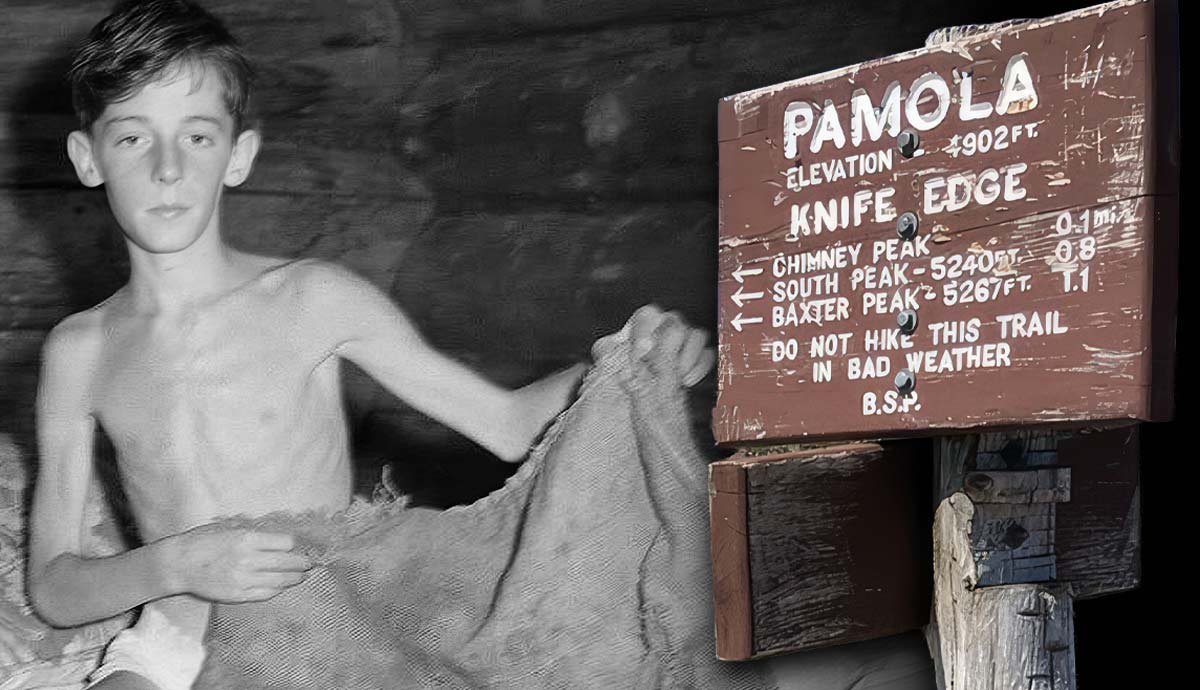
Feeling antsy and chilly in the foggy rain, 12-year-old Donn Fendler ran down the mountain ahead of his hiking party. The next thing Donn knew, he was alone and lost in the rugged Maine wilderness. His story of survival was almost unbelievable, but there he was, emaciated and chewed by bugs, but alive. Donns story flew across a shocked nation, where thousands had been waiting to hear the outcome of his plight. Later, Fendler wrote a book about his ordeal, Lost on a Mountain in Maine, which continues to be a beloved read for students throughout the state of Maine.Facing the SummitA depiction of Newport, Maine, where the Fendler family spent summers, ca. 1930-1945. Source: Boston Public Library, Tichnor Brothers Collection/Wikimedia CommonsDonn Charles Fendler was born, along with his twin brother Ryan, on August 29, 1926, in Rye, New York. The pair also had three sisters, Patricia, Nanci, and Kathy, and a younger brother named Thomas. Their family spent summers in Newport, Maine, during the siblings childhood.While Newport wasnt the wilderness, like many places in Maine, the family didnt need to go far to find vast forests. Thats just what they did in July of 1939. Donn, his brothers, and his father joined family friend and local Henry Condon to scale Mount Katahdin. Katahdin is the highest peak in the state, and just two years earlier, had been declared the endpoint (or starting point) of the Appalachian Trail.As the group moved up the mountain, the weather began to cloud in. The fog became heavy, and the air chilled as it began to rain. Donn and Henry reached the summit but were only able to see dense cloud cover, not the amazing view 12-year-old Donn had anticipated. Disappointed and cold, Donn grew impatient as Henry paused to speak with another hiker. Though Henry told him it was a foolish idea (Fendler, 9), Donn decided to start heading back down the trail, where his father and brothers were tarrying. He soon realized, too late, that Henry was right.LostMount Katahdin. Source: Wikimedia CommonsThrough the thick cloud cover, Donn lost sight of Henry after traveling a matter of yards. He headed back the way he cameor so he thought. The fog limited his view in front of him as well, and he didnt recognize the area he was in. He assumed his father and brothers must be close to approaching the area and yelled for them, but there was no response.Sleet began to fall, and Donns blue jeans and sweater were soon coated in ice (Fendler, 12). The boy grew increasingly uncomfortable, and as he recalled later, I was never good at standing cold anyway. He continued his hike and even fell into a hole at one point. He was able to extricate himself but was terrified and began to cry (Fendler, 17).Donn tried to clear his head and remember what hed learned as a member of the Boy Scouts. Though it is often recommended that lost people stay where they are and wait for rescue, Donn knew he would freeze stiff if he did that (Fendler, 19). He kept moving, looking for a trail. Despite his resolution to focus on his scouting skills and keep a clear head, as night approached, Donn was terrified, wondering if people were looking for him and thinking about a campfire story. Hed heard the story of Pamola, a spirit that the local Penobscot Indian nation believed occupied the summit of Katahdin. Legend had it that Pamola could make people disappear with the shake of his wings, and Donn wondered if the spirit would come for him.Seeking ShelterOne of Katahdins peaks has been named for the spirit of Pamola. Source: Famartin via Wikimedia CommonsDonn, growing exhausted and hungry, searched for a place to sleep. He came across a stream where he drank and washed his feet, which had become bruised and wounded as he climbed over rocks and brush. His sneakers were slashed and heavily damaged (Fendler, 26). Finding a hollow within the exposed roots of a tree, Donn said his nightly prayers and tried to sleep, which did not come easy. Even the smallest noises echoed throughout the forest, and his feet were freezing in the cold rain. He later recalled praying more and thinking about his parents (Fendler, 27).1863 depiction of Mount Katahdin. Source: Hathi Trust via Wikimedia CommonsUnbeknownst to Donn, search parties were already mobilized, led by his father. When Henry had reached Mr. Fendler and the boys, he was shocked to see Donn wasnt with them. They hurried back down the trail, spreading out to cover as much of it as possible, calling out for the lost boy (Fendler, 96). Henry, who was familiar with the area, raced to the base, notifying the Forest Rangers. Searchers reported temperatures in the 40s, with wind speeds over 40 miles an hour that night, with continuing rain (Fendler, 99).Early the next morning, Donns father contacted every agency he could think of to assist with the search for his son. The Forest Service deployed dozens of Rangers from numerous branches. The Great Northern Paper Company sent woodsmen familiar with the area to search (Fendler, 101), and workers from the paper mill in nearby Millinocket joined in the rescue efforts. The Maine State Police deployed bloodhounds who quickly lost Donns trail and suffered torn and cut paws from the terrain. National Guardsmen, locals, and Registered Maine Guides all joined in the efforts to find Donn. Searchers numbered as high as 500 over the following days (Fendler, 105).Still AloneFendler later recalled that while jeans were great for a daytime hike, they were not so suitable once wet and the temperatures dropped. Source: Partonez via Wikimedia CommonsMeanwhile, when Donn awoke from his brief slumber, he saw visions in the woods, including his Dad and Henry. He was dismayed when he rushed to them, only to find nothingness. Collecting himself, he decided to carry his stiff, damp jeans and now-useless sneakers. Donn came across a stream and, remembering a scouting rule, decided to follow it, hopefully to civilization. On bloodied feet, Donn continued to travel for nine days. He encountered clouds of biting mosquitoes, was harangued by leeches, and saw multiple bears and other wildlife, including deer and birds. On the sixth day of wandering, he heard a plane but was unable to see or signal it (Fendler, 69). Fendler was ecstatic when he found cabins, only to have his hope shattered when it became evident that the cabins were abandoned.Wild strawberries helped sustain Fendler as he moved through the woods. Source: Ermell via Wikimedia CommonsWith no food on him when he disappeared, Donn soon grew hungry but was hesitant to eat wild berries without confirming that they werent poisonous. To his delight, he did find some wild strawberries to eat. Though the berries brought him a little respite, Donn was growing weak and emaciated as the days went on. As his body struggled, Donns mind was growing weary as well. He later reported several strange dreams and hallucinations that he experienced on his journey, particularly in the last days before his rescue (Fendler, 85). At the base camp, rescue efforts were beginning to slow, and press coverage of the ordeal, which had been nationwide, was winding down. No one believed that a grown man, much less an unequipped child, would have survived the conditions Donn was subjected to.The East Branch of the Penobscot River. Source: Jan Kronsell via Wikimedia CommonsAfter nine brutal days in the Maine wilderness, covering more than 80 miles on foot, Donn came upon the East Branch of the Penobscot River. To his amazement, a cabin across the river proved to be occupied. The elderly couple within the cabin rendered first aid and fed Fendler, called authorities, and then helped Fendler call his mother. The boy was transported by canoe to Grindstone Township, where an ambulance took him to Bangor.Faith RestoredDonn Fendler upon his July 16 rescue. Source: Associated Press via Wikimedia CommonsDonn was overjoyed to be reunited with his family. Over the nine days, he lost 16 pounds and suffered countless insect bites, bumps, and bruises. His feet had been cut to ribbons, and he was dehydratedbut he survived. Donn was able to resume a relatively normal pre-teen life, though he participated in parades and received medals from President Franklin D Roosevelt.Donn studied Forestry at the University of Maine and joined the military. He served in three wars over his military career, training as a Green Beret in Vietnam. Though he settled in Tennessee with his wife, Maryrose, and their four children, Fendler summered and spent a great deal of time in the state of Maine. He was a state hero, spending many hours in his retirement visiting local schools after the publication of his book in 1978. His novella, Lost on a Mountain in Maine, was required reading for Maine fourth-graders for years. The book was adapted into a graphic novel, and then in 2024, a feature film produced by Sylvester Stallone. Donn Fendler passed away at the age of 99 in 2016. Maine has named July 25, the day of his rescue, as Donn Fendler Day.Mount Katahdins wilderness was no match for a resilient twelve-year-old. Source: TJ aka Teej via Wikimedia CommonsDonn Fendlers story is one of incredible grit and resilience. The story of a 12-year-old beating the odds is beloved by generations, particularly in the state of Maine. Not only did Fendler survive, but he went on to live an incredible life of community-minded service. Fendler inspires children and adults alike, proving that with a determination to never give up and a little bit of luck, success is attainable.Recommended ReadingFendler, Donn (1978). Lost on a Mountain in Maine. New York: Beechtree Books.
0 Yorumlar
0 hisse senetleri
134 Views

 English
 Arabic
 French
 Spanish
 Portuguese
 Deutsch
 Dutch
Dutch
 Italiano
 Russian
 Romaian
 Portuguese (Brazil)
 Greek
Greek