


WWW.THECOLLECTOR.COM
The Strange Truth About George Washingtons Famous Teeth
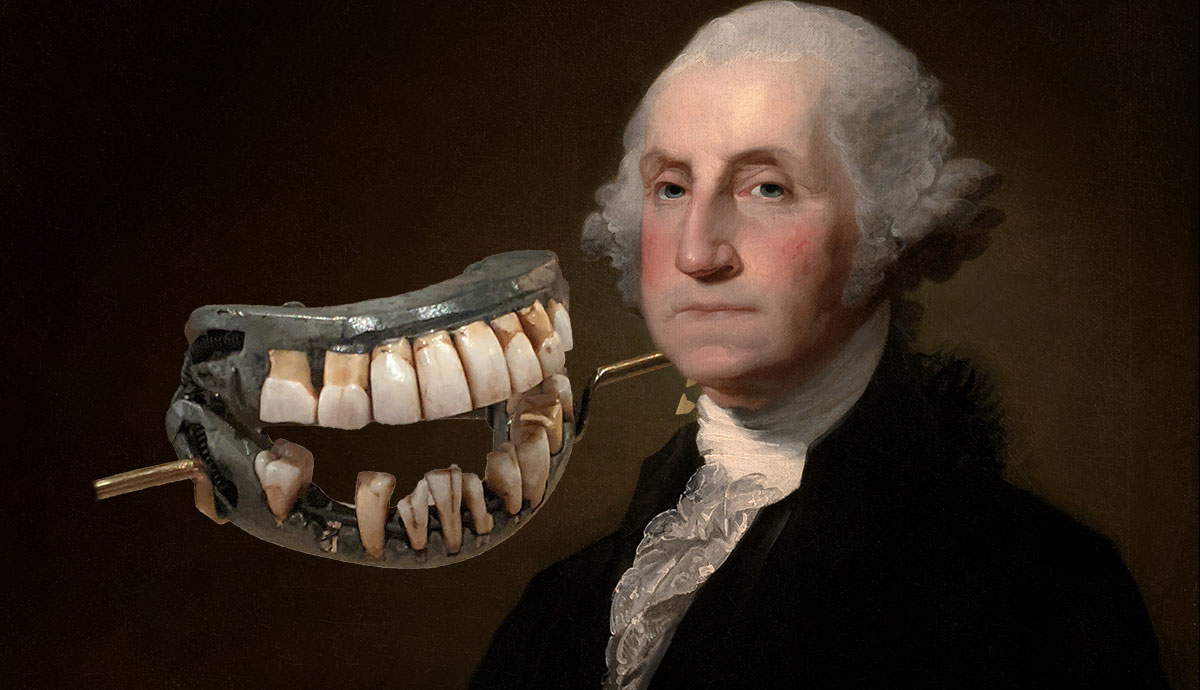
George Washington was Commander-in-Chief of the Continental Army and first President of the United States. However, he has become equally renowned for his teeth. This article seeks to explore the various myths surrounding George Washingtons teeth, their legacy, and what they represented about 18th century expectations and perceptions of the body.Washingtons Dental HistoryPortrait of George Washington by James Peale, 1782. Source: Look and Learn History ArchiveGeorge Washington struggled with his dental health throughout his life. The exact cause behind the poor state of Washingtons mouth is unclear. Washington himself attributed it to the act of cracking walnuts with his teeth in his youth. However, part of the rapid dental deterioration he experienced could have been due to a brush with smallpox, which he contracted while in Barbados in 1751. 18th century medical care for smallpox involved intensive mercury treatments which caused peoples teeth to fall out. Although speculative, financial records do reveal that Washingtons wife Mary Washington purchased mercury in 1752 at least to treat her husbands smallpox scars.Washington became committed to dental hygiene, purchasing toothbrushes, toothpastes and powders, tinctures of myrrh, a liquidized herb used as an early form of mouth wash. Despite these efforts, Washington had his first tooth pulled at the age of 24. Whether it was walnuts, mercury, or even genetics, Washington would gradually lose more teeth throughout his professional career.Dentures: The Latest Medical TechnologyA couple assemble their false body parts: false teeth, a glass eye and wigs. Colored lithograph by F-S Delpech after L Boilly, 1825. Source: Look and Learn History ArchiveDespite how 18th century dentures look to the modern reader, they represented the latest advancements in medical technology at the time, and a considerable advance from dentistry centuries earlier. Dentures were designed, and advertised, to function as real teeth and create the illusion that wearers had all of their teeth. However, only high-status people could afford them. Luckily for Washington, being Commander-in-Chief and eventually President of the United States afforded him this technology, which was rare even among elites.Dentures could be made in a range of sizes and numbers of teeth, depending on the needs of the client. Washington went through several different sets of dentures throughout his life. The loss of his final tooth in 1796 led him to wear a full mouth of dentures.Washingtons DenturesGeorge Washingtons full set of dentures. Source: Wikimedia CommonsSo, what were they made of? Popular myths aside, George Washingtons dentures were not made from wood. In fact, wood was probably the only material not used in dentures, which could be made from a range of materials. The artificial teeth on one set of George Washingtons dentures were made entirely from hippopotamus teeth, which were fastened into the base with gold springs. Hippopotamus teeth were highly recommended by dentists who believed they were more resistant to decay and staining. Other materials for artificial teeth included ivory, horse and cow teeth, even walrus tusks.The only full set of Washingtons dentures that survive today reveal a conglomeration of ivory, horse, and human teeth that are fastened into a lead base with brass wire. Exactly whose human teeth were fastened into this set of dentures is a topic of much speculation. Washington held on to the teeth he lost over the years to be re-used in sets of dentures he commissioned from his dentists. However, it is also possible they were made using teeth from people in bondage at his Mount Vernon property.Washingtons Teeth PurchaseWashington as Farmer at Mount Vernon by Junius Brutus Stearns, 1851. Source: GetArchiveAside from hippopotamus teeth, human teeth were ideal for dentures. 18th century US dentists frequently put out calls for human teeth in advertisements. An ad dated to 1787 from the Virginia Independent Chronicle requests any person, white, or black (excepting slaves) willing to dispose of their Front Teeth to contact the dentist (Van Horn, p. 37).In May 1784, Washington paid 122 shillings to several enslaved people on his property for nine teeth, although their names are excluded from the record. Some scholars suggest the 1784 teeth purchase was for Jean-Pierre Le Mayeur, a French dentist close to Washington, to create a commissioned set of dentures. However, it is also possible they were unsuccessfully used in an attempt to transplant teeth into Washingtons mouth.George Washington would not have been the only white person at the time to use an enslaved or black persons tooth for their own purposes, reflecting broader social dynamics of colonial America. People in bondage were expected to give not just their labor, but parts of their bodies.The Reality of Wearing DenturesCaricature depicting a dentist extracting a tooth from a woman, by G. Cruikshank, 1821, after A.E. Source: Wikimedia CommonsAlthough advertised as being able to pass for real teeth, dentures were not as functional as advertised. Dentists did not actually recommend eating and drinking with them. Artist Charles Willson Peale learned this the hard way when his dentures broke at a dinner with James Madison in 1804 (Van Horn, p. 16). Despite professional advice against it, Washington did consume wine while wearing his dentures. In fact, this may have contributed to the myth that his teeth were wooden. Port wine deteriorated denture surfaces, causing them to darken and become dull. However, Washington did listen to advice about food, and was noted at dinners to solemnly play with his utensils like drumsticks (Van Horn, p. 17).If he couldnt eat, why did he wear them? One important thing Washington could do with the dentures was speak. As commander-in-chief and later president, Washington was expected not just to speak, but speak well (Van Horn, p. 17). With dentures, he could fulfil his duties as an orator, which would have been impossible without teeth. More importantly, dentures also helped the president create an illusion of a man without physical flaws at a time when bodies were perceived as the physical manifestation of a persons moral character. Derivations from perfection reflected that persons lack of morality, or giving into indulgences.Did the Illusion Work?Close up of one dollar bill. Source: Wikimedia CommonsWashington was able to give speeches, although some contemporaries noted that the president could sometimes be hard to understand. Additionally, numerous people who had the presidents company remarked how well-spoken he was despite having them. However, for all their praise, peoples knowledge of Washingtons dentures suggests not the success of an illusion, but rather an acceptance of it. For the president, the illusion also came at another physical cost.A portrait by Gilbert Stuart shows a constrained president with a slightly protruding jaw, no doubt a physical effect of the dentures. Unfortunately for Washington, this slight physical distortion was memorialized through the use of this portrait to create the engraving that now appears on the U.S. dollar bill.Were the teeth in Washingtons dentures his own, or were they from the enslaved people on his property? The answer could be bothbecause the tooth implant surgery failed, it is possible that he saved the teeth he purchased to be incorporated into a future set of dentures, like he did with his own teeth. Whether they were used for dentures or not, Washington was likely constantly reminded about which enslaved people at his Mount Vernon property he inflicted the deformity he sought to conceal (Van Horn, p. 43).BibliographyVan Horn, Jennifer. George Washingtons Dentures: Disability, Deception, and the Republican Body. Early American Studies, vol. 14, no. 1, 2016, pp. 247.
0 Reacties
0 aandelen
205 Views

 English
 Arabic
 French
 Spanish
 Portuguese
 Deutsch
 Turkish
 Italiano
 Russian
 Romaian
 Portuguese (Brazil)
 Greek
Greek