


WWW.THECOLLECTOR.COM
The Mongol Siege of 1240 That Turned Kyiv to Ashes
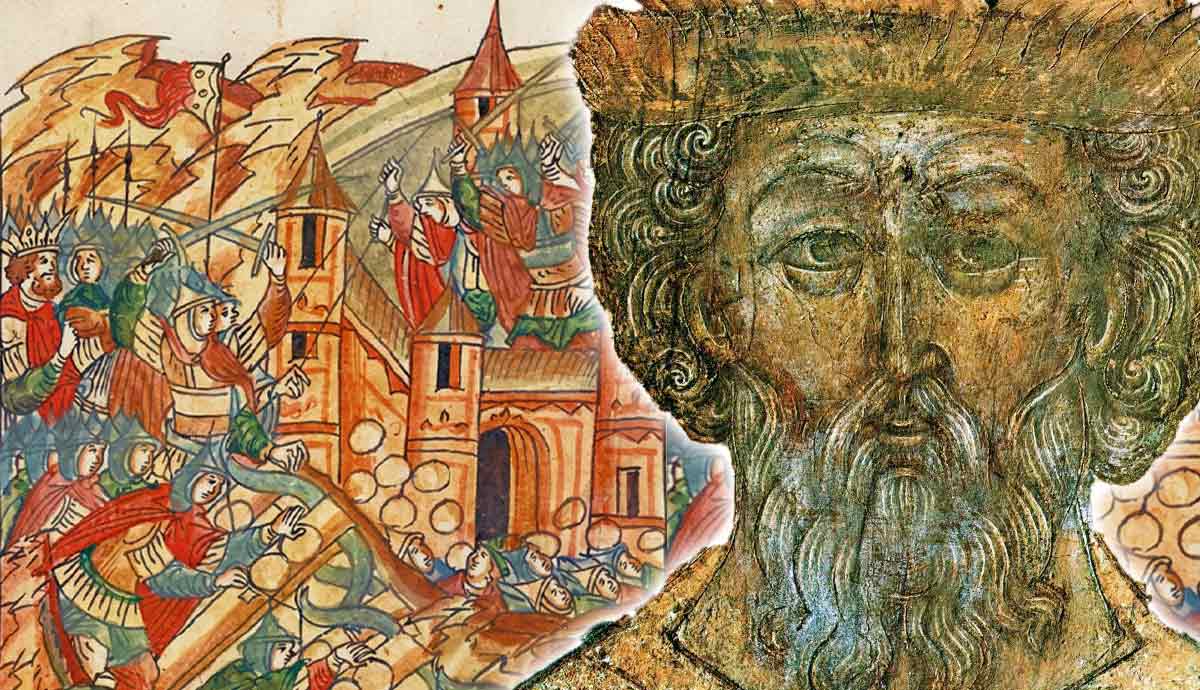
As part of his relentless march west, Genghis Khan devastated large parts of what is today Russia and Ukraine. His armys destruction of Kyiv is considered one of the most traumatic moments in that citys history before the Russian Civil War and the Second World War.The Mongols on Europes FrontierMap of Mongol expansion to the westIn the early 13th century, the Mongol army of Genghis Khan burst out of its heartland in present-day Mongolia and advanced southward and westward. His death in 1227 did not end the Mongols lust for expansion. In the late 1230s, Batu Khan, Genghiss grandson, expanded beyond the Volga River and began to conquer large swaths of Eastern Europe.During the early 1220s, the principalities of Rus had already experienced the brutality of the Mongol armies in a famous raid led by the Mongol generals Jebe and Subutai. Less than two decades later, the Mongols under Batu were intent on establishing a more permanent presence.In the sights of Batus warriors was the city of Kyiv, the center of a confederation of principalities known as the Kyivan Rus. Kyiv was a trade hub, a center of Orthodox Christianity, and a vital point of defense for the Slavs resisting the Mongol advance. Batus army, one of the most mobile on Earth at the time, quickly advanced to its outskirts as it devastated enemy forces in its way.When the Mongols finally laid siege to the city in 1240, it became not just a battle between rivals but a clash of civilizations. On one side was an army honed by years of rapid conquest and containing a reputation for being brutal conquerors. On the other side were the weakened defenders of one of the oldest Christian states in Europe. The conquest of the city led to the collapse of Kyivan Rus and the start of Mongol domination in Eastern Europe.Kyiv Before the SiegeStatue of Prince Danylo Romanovich, who tried to save Kyiv from the Mongol assault. Source: Encyclopedia of UkraineFounded by traders on the Dnipro River, Kyiv was a major population center that linked Europe with the tribes of the eastern steppe. It had a large number of churches and synagogues that reflected the citys religious diversity. Merchants traveling from Central Asia to Europe often stopped in the city and contributed to the local economy.However, beneath the citys grandeur, there was trouble. Rus was prone to infighting among its principalities. Before the Mongols arrived at the citys doorstep, power had shifted north to cities such as Vladimir and Novgorod in present-day Russia. Conflicts over succession to the office of Grand Prince had led to the erosion of authority in Kyiv.In 1240, the city was ruled over by a new actor on the scene: the principality of Galicia-Volhynia, also known as the kingdom of Ruthenia. One of the successor kingdoms to Kyivan Rus, they had seized the city in 1239 to deny control to northern rivals. After taking control of Kyiv, Prince Danylo of Galicia-Volhynia failed to prepare the citys defenses and ignored the threat of the Mongols.Kyiv had seen conflict before. Steppe nomads, such as the Cumans, had attacked the outskirts of the city but were never able to occupy the whole city. Local rulers often cut deals with regional princes to keep the city intact. This approach would not work against an enemy as formidable and ruthless as the Mongols. They destroyed several Russian cities, including Vladimir, Ryazan, and Kolomna, before arriving at the gates of Kyiv.The Mongol ApproachA recreation of a Mongol cavalryman at a museum in Singapore, 2019. Source: World HistoryIn 1239, Batu Khans army sacked the cities of Periaslav and Chernihiv, which lay in the path of their advance towards Kyiv. He sent envoys to Kyiv, hoping to secure the citys surrender before he arrived there. However, the Ruthenians executed both men and vowed to defend the city. The Grand Prince of Kyiv, Danylo Romanovych, vowed to defend the city at all costs. He went to Hungary to gain support from other European princes and kings for his effort, leaving the citys defenses in the hands of Voivode Dmytro.The Mongols were effective practitioners of psychological warfare. After sacking cities, they allowed a few survivors to escape to spread word of their brutality to persuade them to submit to the Mongols. As Dmytro prepared the defenses of Kyiv, refugees from other cities east of the Dnipro river poured into the city, exacerbating its supply situation. Morale in Kyiv collapsed as the refugees passed along tales of the Mongols slaughtering and looting the inhabitants of other cities.As Batus army marched towards Kyiv, Danylos pleas for help had gone unanswered. No reinforcements were on the way and the garrison had just over 1,000 men available. The Mongols built siege weapons from local timber and had a force with lots of experience. The odds were against the Ruthenian defenders.The SiegeMongol Siege of Kyiv ca. 1240 from the Facial Chronicle (Illustrated Chronicle of Ivan the Terrible) by an unknown artist, 1560-1570. Source: State Historical Museum, MoscowBy early December, the Mongol forces had surrounded the city. While the exact number of men and horses under Batus command is not known, it is almost certain that they heavily outnumbered the citys garrison. Their siege engines made quick work of the wooden palisades and platforms around the city. An attempt by the Chorni Klobuky, Turkic warriors fighting for Rus, to relieve the garrison was stopped. No other attempts to relieve the siege were made and the Mongols controlled river traffic going towards the city. Batu brought up the main body of his force and prepared to storm the walls.The conditions for the inhabitants were horrific. Supplies ran short quickly and Dmytro was not able to maintain order while the Mongols kept pressing against the outer defenses. Siege projectiles destroyed many homes, forcing people to take shelter in churches and other major buildings. News that relief wouldnt arrive spread around, causing additional defeatism.After the killing of their messengers, the Mongols were in no mood to negotiate. They aimed to breach the walls and annihilate the garrison and anyone who resisted them. Dmytro attempted to plug the gaps, but he lacked the manpower and the citys fall became more likely. Far off in Hungary, Prince Danylo failed to secure Christian support for an army to march to the garrisons aid. Written accounts say that it only took about nine days before the Mongols managed to enter the city and slaughter its inhabitants.The Fall of KyivSt. Sophias Cathedral in Kyiv, which was looted by the Mongols. Source: World Heritage SitesThe sack of Kyiv left the city a shadow of its former self. Contemporary chroniclers described the once-bustling capital reduced to smoldering ruins, its population decimated. The garrison was practically wiped out in brutal hand-to-hand combat in the streets, while the citys outer fortifications were destroyed. After they conquered the place, the Mongols carried out a systematic slaughter, sparing few beyond those deemed useful as slaves or artisans. Kyivs sacred sites, including the famed Saint Sophia Cathedral and the Pechersk Lavra, were pillaged and looted.The demographic and cultural losses were immense. The overcrowding of the city during the siege compounded the tragedy. Those who survived carried harrowing memories of mass killings and destruction, ensuring that the terror of the Mongol invasion spread across Eastern Europe through oral and written accounts. The Church of the Tithes was reduced to rubble, becoming a symbol of the citys ruin.Politically, the fall of Kyiv shattered any remaining illusions of Rus unity. The city was no longer a functioning political or economic center owing to its devastation. Trade routes along the Dnipro faltered, and the balance of power shifted decisively to the northeast towards Moscow and Tver in what is now the Russian heartland.For the Mongols, Kyivs destruction was both strategic and symbolic. By destroying the spiritual and cultural heart of Kyivan Rus, Batu Khan had sent a chilling message. Any attempt at resistance was futile, and submission was the only path to survival.Aftermath and LegacyYaroslav II of Vladimir, who collaborated with the Mongols before he was poisoned, 17th century. Source: Wikimedia CommonsFollowing the destruction of the city, Batu incorporated it into the Golden Horde, the name given to the Mongol state in Eurasia. The citys population dwindled to a few thousand people who struggled to get by amidst the smouldering ruins. Grand Prince Michael of Chernihiv tried to parley with Batu to gain recognition as ruler of the city but was soon executed by the khan.In 1243, Batu gave titular control of the city to Yaroslav II Vsevolodovich of Vladimir-Suzdal, who had collaborated with the Mongols during the invasion. However, the Mongols retained authority over the city, allowing the Hromada (city council) limited powers. Mongol control over Kyiv continued until 1363, when internal struggles weakened the Mongols ability to maintain their empire. Subsequently, the Grand Duchy of Lithuania conquered Kyiv and much of Ukraine from the Golden Horde.The Mongol siege was a brutal experience for the citys inhabitants that would be repeated in subsequent conflicts. Although Kyiv never regained its status as the principal city of the Rus, the city gradually recovered and would become an important cultural and religious center as part of the Polish-Lithuanian Commonwealth and later the Russian Empire.However, the Mongol siege of Kyiv reverberates in Ukraine to this day. Survivors of the Nazi occupation during World War II and Russias invasion in 2022 compared their actions to Batus warriors. Mongol actions during the siege and sack of the city epitomized their aggression and brutality when seizing land for the Golden Horde.
0 Commentarii
0 Distribuiri
173 Views

 English
 Arabic
 French
 Spanish
 Portuguese
 Deutsch
 Turkish
 Dutch
Dutch
 Italiano
 Russian
 Portuguese (Brazil)
 Greek
Greek