


WWW.THECOLLECTOR.COM
13 Most Important Ottoman Sultans Who Defined an Empire
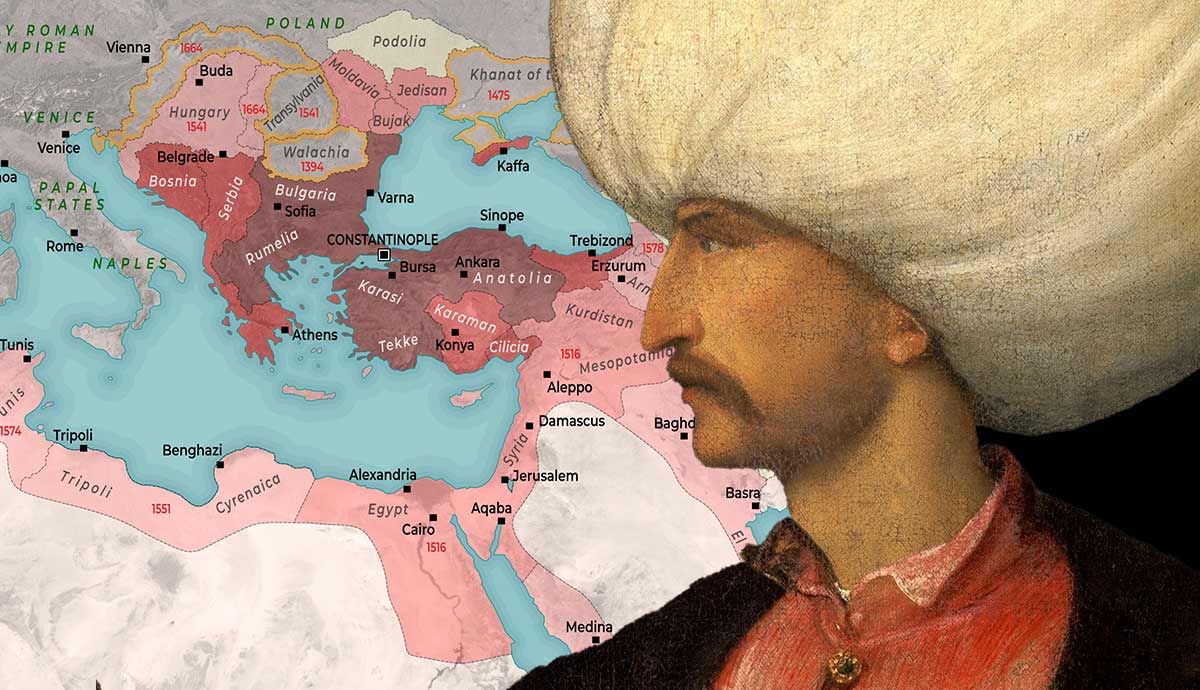
Over six centuries, 36 Ottoman Sultans ruled over an empire that spanned from central Europe to the Red Sea. Having to contend with religious, cultural, diplomatic, and ethnic tensions was not an easy task. Some managed to rise to the challenge, and some felt dismally short. These thirteen Sultans epitomize the rise and fall of the Ottoman Empire, from its humble beginnings, rapid expansion, gradual contraction, and to its eventual collapse.1. Osman I (1299-1323/4)Portrait of Osman I, by an unknown artist. Source: Wikimedia CommonsPerhaps the most mysterious Ottoman sultan, Osman I, is also the very first. Even lending his name to the dynasty (in Arabic, he was Uthmn), there is no contemporary information regarding his reign. As a result, we are forced to rely on chronicles written a century after his reign.Dispelling the many myths surrounding his sultanate, we can gather that Osmans rule began in a beylik (equivalent to a principality) in northern Anatolia (modern-day Turkey). At the time, the region was divided, as various rulers tried to gain a foothold in the crumbling remnants of the Byzantine Empire.Osman used this confusion to his advantage, slowly eroding Byzantine territory and some of his neighboring southern states. Although he never held the title of sultan, Osman I set in motion the gradual expansion of the Ottoman Empire and is revered as the founder of the Ottoman dynasty.2. Murad I (1362-1389)Miniature of the Janissaries (white-capped) battling the Knights Hospitallers, painted by Matraki Nasuh in the Sleymanname, ca. 1550. Source: Wikimedia CommonsThe third Ottoman Sultan, Murad I undertook the empires first major territorial expansion. Varying timelines are suggested, but it is agreed that sometime in the 1360s, Adrianople fell to the Ottomans. Murad quickly moved his capital there, where it would remain until 1453. The sultan then turned his attention further towards Europe, vassalizing Serbia, Bulgaria, and the Byzantines.A key development during this reign was the founding of the Janissaries. Much like the Praetorians of Rome, they were an elite standing army that would dictate much of Ottoman political life going forward, often removing sultans who did not favor them.Murad I also holds the distinction of being the only Ottoman sultan to ever be killed in battle. This occurred at the Battle of Kosovo (1389). In a clash which wiped out both the Ottoman and European armies, Murad was slain when a group of European knights made a direct line for him. Despite the devastation of the battle, the larger manpower pool allowed the Ottomans to press their advantage in the following year, solidifying their control over the Balkans. The Battle of Kosovo remains a key aspect of both Serbian and Kosovan nationalism.3. Bayezid I (1389-1402)Sultan Bayezid I, by Paolo Veronese, 16th century. Source: MeisterdruckeBayezids legacy as an Ottoman Sultan began with attempts to consolidate Anatolia and multiple failed attempts to conquer Constantinople. Perhaps his greatest success was victory in the Battle of Nicopolis (1396). A united Crusader army was destroyed in its attempt to siege the city, again with considerable losses on both sides.The Crusader defeat meant that Europeans were less likely to unite to defend against the Ottomans, fearing similar devastation. Bayezid (Murads successor) also solidified his control over southern Europe, taking advantage of the weak Second Bulgarian Empire.His reign ended in disaster with a defeat at the Battle of Ankara (1402). The emir of the Timurid Empire, Timur, overwhelmed a smaller Ottoman force and captured Bayezid. Humiliated in captivity, Bayezid I died the following year, with rumors swirling about whether he committed suicide or was poisoned.Bayezid Is death led to a ten-year period during which the Ottoman Empire was divided between his sons, who all attempted to seize power over the fragmented territory. This was the first major crack in Ottoman expansion, delaying the empires growth by a few decades.4. Mehmed I (1413-1421)View of Venice (detail) by Jacopo de Barbari, 1500. Source: The Minneapolis Institute of ArtThe victorious son of Bayezid I, Mehmed I was the Ottoman sultan who by 1413 had reunited the Empire. Named The Restorer, he centralized control in Anatolia and expanded the territory further in Europe, setting the wheels in motion again for Ottoman dominance.However, a major naval defeat to Venice in 1416 checked Mehmeds ambitions to conquer the seas. Instead, the Venetians would be the ones to dominate the Eastern Mediterranean, forcing Mehmed to turn his attention inland.Ultimately, the legacy of Mehmed I was one of stability. Coming out of a decade of turmoil, he put down numerous revolts and brought the empire back under central control. In the chaos following Bayezid Is defeat, Mehmeds calming eight years as Sultan helped set the platform for the coming centuries of Ottoman dominance.5. Mehmed II (1444-1446, 1451-1481)The Ottomans, led by Mehmed II, capture Constantinople. Source: The World History EncyclopediaThe reign of this Ottoman Sultan can be summarized by his epithet: The Conqueror. Mehmed II did just that, overseeing a broad expansion of the empire in all directions. Mehmed had two stints as Sultan. The first began when the Janissaries forced his father, Murad II, to return to the throne. Mehmed would reclaim the title after his fathers death.Mehmed began his reign by defeating a Hungarian Crusade and rebuilding the Ottoman navy. His greatest triumph came in 1453, when he captured Constantinople and brought an end to the Byzantine Empire, a goal of Middle Eastern Empires for nearly eight hundred years.In addition to foreign policy triumphs, Mehmeds domestic reforms brought Ottoman cities right to the forefront of cultural and scientific innovation. He was the first Ottoman sultan to codify both criminal and constitutional law, helping further stabilize the vast empire. His philosophy of strong personal rule would provide a blueprint for many of the great sultans to come in the following decades.A mark of Mehmeds acclaim came with his death. Throughout Europe, celebrations were held, a testament to the power and prestige that he had accumulated with his conquests. Even to this day, Mehmed the Conqueror is heralded as a hero in Turkey. He appears on Turkish currency, and a key bridge over the Bosphorus bears his name.6. Selim I (1512-1520)Sultan Selim, by Na Osmn, 16th century. Source: Wikimedia Commons/Library of the Topkapi Palace Museum, HazineA grandson of Mehmed the Conqueror, Selim I began his reign through a civil war. After his father, Bayezid II, named Selims brother, Ahmet, to succeed to the throne, Selim rebelled. The Ottoman Civil War was concluded when Selim used Janissary support to overthrow his father and kill Ahmet, ensuring his own ascension.Like Mehmed II, Selims epithet is also apt to describe his reign. Known for his brutal repression, he was given the name The Grim. Even potential unrest was quickly put down, and anyone even suspected of treason was savagely executed. A devout Sunni Muslim, Selim I conducted massacres of Shiites across the Empire as he battled the neighboring Safavid Empire (based mostly in modern-day Iran).Outside of this brutality, Selim I oversaw an incredible expansion of the Ottoman Empire. Despite being in power for only eight years, by the end of his reign, Ottoman territory had grown 70 percent. Victory over the Mamluk Sultanate brought control over the Levant and Egypt.Selims legacy is therefore mixed. His violent and ruthless reputation is weighed against his impressive territorial gain. Regardless, he was crucial in transforming the Ottoman Empire, putting it in a position to further its golden age under his son, Suleiman.7. Suleiman I (1520-1566)Sultan Suleiman in profile, by an unknown author, 1530s. Source: Wikimedia Commons/Kunsthistorisches Museum, ViennaA list of key Ottoman Sultans would be incomplete without one named The Magnificent. The son of Selim I, he continued his fathers conquests, becoming the longest-reigning Sultan in Ottoman history (46 years).Under his rule, the Ottoman Empire dominated both land and sea. Grand victories brought further control over Europe, Persia, the Red Sea, and the Mediterranean. Suleiman rendered the Kingdom of Hungary useless, absorbing much of it into the Empire.Suleiman also presided over a cultural Golden Age, through extensive domestic reform. He brought disparate Ottoman law codes together and encouraged poets and artists to take up residence in the imperial court. The sultan personally gave patronage to forty artistic societies, including numerous construction projects.A controversial moment came when he married a European consort, Roxelana, who would go on to play a central role in Ottoman politics in the following years (previously, only freeborn women were considered worthy to marry a sultan).One of the last sultans to expand his territory, Suleiman the Magnificents reign may be the high point of the Ottoman Empire. The decades following his death were known as the Era of Transformation, where the empire slowly consolidated and was beset by a growing number of crises. Suleimans renown reverberated across the known world even after his death, being mentioned decades later by Shakespeare in The Merchant of Venice.8. Murad IV (1623-1640)Miniature of Ottoman Sultan Murad IV, author unknown. Source: Wikimedia CommonsReigning since he was only eleven, this Ottoman sultan rose to power thanks to a Janissary coup and spent his early reign under the regency of his mother. After years of turmoil, Murad was able to restore order to a struggling empire, brutally cracking down on mutineers and anyone hinting at insurrection.His defining legacy came with a decisive war against the Safavids. Ottoman forces were able to seize Baghdad and maintain their gains in Mesopotamia. The ensuing partition of territory, particularly in the Caucasus, would mirror the borders of modern-day Turkey, Iran, and Iraq.Unfortunately, many of his domestic reforms were curbed by his early death from alcoholism, leaving his (reportedly) mentally unwell brother, Ibrahim the Mad, to rule.9. Mehmed IV (1648-1687)Portrait of Ottoman Sultan Mehmed IV, author unknown, c. 1682. Source: Wikimedia Commons/Ptuj Ormo Regional Museum, SloveniaBeginning his reign even earlier, at the age of six, Mehmed IV would be the second-longest-reigning Ottoman Sultan. After his father, Ibrahim the Mad, was overthrown so that he could rule, Mehmeds reign was beset by instability.However, through careful use of his Viziers (advisors), he managed to stabilize the Ottoman Empire and bring it to its greatest geographical extent in Europe. Nicknamed The Hunter, Mehmed delegated many of the official tasks of state, using the Kprl family as his closest advisers.This success could only last so long, as Europe soon came together to stop the Ottoman advance. The Holy League, comprising the Holy Roman Empire, the Polish-Lithuanian Commonwealth, Russia, and Venice, united in the Great Turkish War, hoping to prevent Mehmed from advancing further north.The war was a resounding victory for the League, and the Ottomans were forced to cede much territory in central Europe. This was the first major reversal of Ottoman expansion in centuries, making the Habsburgs the dominant dynasty within Europe.Despite his early successes, Mehmed IVs rule was an indicator of the gradual decline of the empire. Unable to hold its own weight, it slowly contracted, beset on all sides by its enemies. Mehmed was overthrown early into the Great Turkish War by his own soldiers, a sign that he was able to delay the splintering of the Ottoman dynasty but not stop it completely.10. Mahmud II (1808-1839)Portrait of Ottoman Sultan Mahmud II, by Henry Guillaume Schlesinger, 1839. Source: Wikimedia Commons/Palace of Versailles, FranceMahmud IIs legacy as Ottoman Sultan was marked by both domestic reform and foreign policy disasters.He was finally able to disband the Janissaries, allowing him to centralize authority and rebuild the Ottoman army. The Imperial Court was also modernized, increasing administrative efficiency and setting in motion an era of reform that would radically alter the Empire in the following decades.However, territory-wise, Mahmuds reign continued the trend of previous decades. He lost territory to Russia in two Russo-Turkish Wars, was forced to recognize Greek autonomy, and ceded Algeria to France.Attempts were made to bring the Ottoman Empire into the fold of the European Great Powers, so that they could negotiate on equal footing and not as an afterthought. This was a feat that would eventually be achieved by his son, Abdlmecid I. He was able to ally with the United Kingdom and France, and attended the Congress of Paris in 1856, a sign that they were part of the Concert of Europe.11. Abdul Hamid II (1876-1909)Portrait of Sultan Abdul Hamad II. Source: Britannica.comAbdul Hamid II was the last Ottoman sultan to rule directly over any empire of note. Throughout his reign, he was forced to give up Bulgaria, Cyprus, Egypt, Montenegro, Thessaly, and Tunisia.There were some positives to his leadership, however. Abdul Hamid continued the modernization of the empire, particularly with the construction of railways and the expansion of the education system.This reform was put on soon, as the Ottomans soon found themselves in crisis. The triple threat of uprisings in Europe, another war with Russia, and an economic crisis caused by defaulting on loans made it impossible to maintain the Empire. Soon, Abdul Hamid II found himself under the control of the Concert of Europe to help alleviate the crises, a reversal of Abdlmecid Is previous efforts.Foreign pressure soon triggered domestic crises as several revolutionary groups sprang up, as they had across Europe. The sultans response was brutal repression, cracking down violently on any dissent, as many of his predecessors had done. However, this did not manage to quiet the discontent, and he was deposed by the Young Turks.Abdul Hamid IIs legacy may be the most disputed today. Initially, he was viewed as backward in his views and a hindrance to the Ottoman Empire (named The Red Sultan for his bloodshed). Yet, future generations of revisionists saw him as a heroic last stand of leadership, assertive in the spirit of Selim I and Suleiman the Magnificent. The division remains today, often falling along political lines in Turkey.12 & 13. Mehmed V and Mehmed VI (1909-1918/1918-1922)The territorial losses of the Ottoman Empire over the last century of its existence. Source: Encyclopaedia BritannicaThese two Ottoman sultans are grouped together for their involvement in World War I and the subsequent breakup of the Ottoman Empire.Before the war even started, Mehmed Vs rule lurched from one crisis to another. He saw three separate coups dtat, a war with Italy that resulted in the loss of Libya, the loss of almost all Ottoman territory in Europe, and ten governments in ten years.Throughout World War I, the Ottoman Empire was able to defend against an Allied invasion at Gallipoli. However, by the end of the conflict, it had been driven back to Mesopotamia. At the time, the Committee for Union and Progress was running the country, and Mehmed Vs power was significantly diminished. It was during this time that the Armenian genocide was carried out, which the sultan was unable to prevent or stop.Mehmed V died in the summer of 1918, right as the Central Powers were definitively losing the war. He was succeeded by his half-brother, Mehmed VIthe last Ottoman Sultan.The last Ottoman Sultan, Mehmed VI Vahdettin, in exile in Malta, 1922. Source: Wikimedia CommonsThis new sultan attempted to improve relations with the West in the aftermath of World War I, but was helpless to do so. Greece and Armenia declared independence, and Turkish nationalists created their own government in Ankara. These greatly weakened the empire, and on November 1, 1922, the Sultanate was abolished. Soon after, the Republic of Turkey was established, ending six hundred years of Ottoman rule.Whilst it is commonly agreed that there is little that either Mehmed could have done to prevent the collapse of the Ottoman Empire, there are still debates to this day over how responsible Mehmed VI was for the rise of Turkish nationalism. He gave Mustafa Kemal Atatrk tremendous support throughout World War I and its aftermath through powerful appointments and supplies. Ataturk would use that same support to overthrow the Sultanate.Despite being overthrown, the Ottoman dynasty still survives to this day, with all descendants being allowed to return by 1973.
0 Commentarios
0 Acciones
185 Views

 English
 Arabic
 French
 Portuguese
 Deutsch
 Turkish
 Dutch
Dutch
 Italiano
 Russian
 Romaian
 Portuguese (Brazil)
 Greek
Greek