


WWW.THECOLLECTOR.COM
How the Zealots Resisted Rome in the Siege of Jerusalem
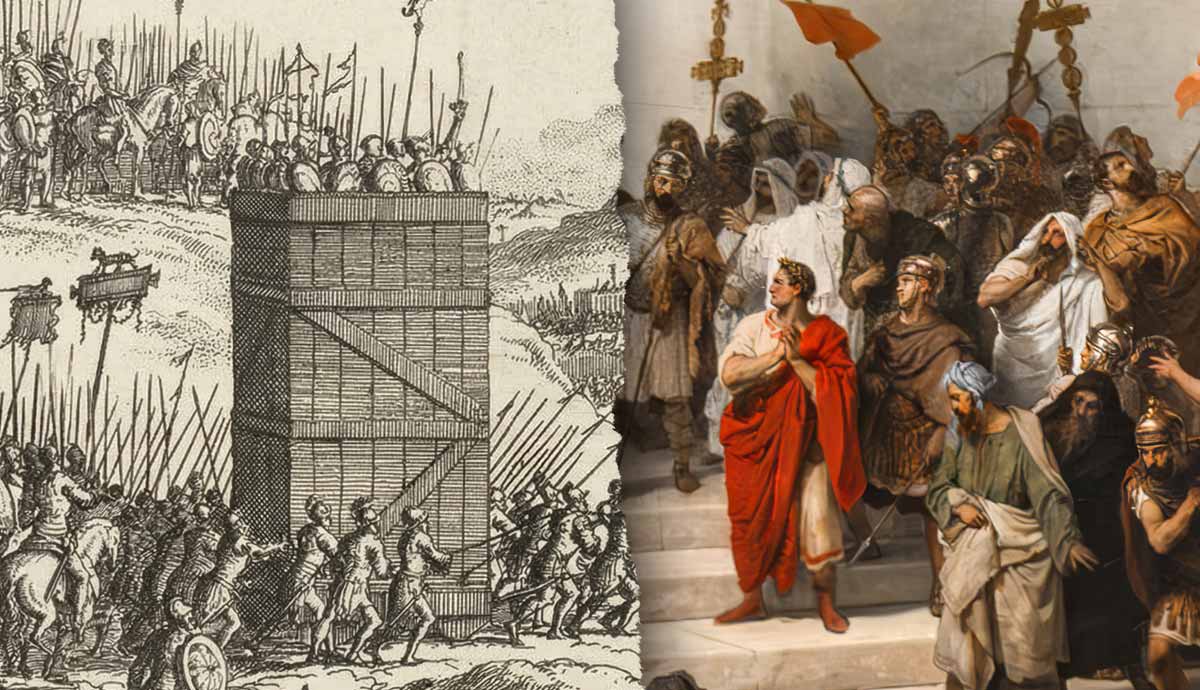
After taking power in a coup in 66 AD, the Zealots, a collection of radical Jewish factions, launched an uprising against the Roman Empire. Their ruthlessness was not enough to prevent the defeat of the Jewish forces and the sacking of the city of Jerusalem.The Rise of the ZealotsThe ruins of Jotapata in Galilee from the Jewish revolt, 2012. Source: Aish.comFrom the year 66 AD to 73 AD, the Romans were embroiled in a brutal war with the Jewish population of Judaea after subjugating them in the 1st century BC. After a period of client rule, Judaea came under direct Roman authority. There were routine riots against the authorities and demands from leaders of the Jewish community to restore their autonomy. The Romans responded with brutal crackdowns, further alienating the Jewish people.Tensions increased with a string of assassinations of anyone suspected of collaborating with the Romans. This was done by a group of men known as the Sicarii. More Jews began to embrace certain forms of religious fanaticism, believing that only total obedience to God and the Torah could save them from total domination by Rome. One such figure, Theudas, even tried to claim that he could part the waters of the Jordan River before he was executed.In 64 AD, when Gessius Florus became the Governor of Roman Judaea, he faced a rising challenge in maintaining control over the territory. When Florus attempted to seize funds from the Temple in Jerusalem, riots broke out that forced him to leave the city. King Herod Agrippa II failed to stop the unrest and Jewish rebels took control of the city and repulsed a Roman counterattack. They formed the Judean provisional government. However, internal chaos led to the rise of hardline factions led by Eleazer Ben Simon. These factions, known as the Zealots, united and overthrew the provisional government, executing several of its leaders and forming a tyrannical government.Jerusalem on the Eve of the SiegeA model of the Second Temple before its destruction, 2006. Source: The Israel MuseumFor the next couple of years, the Zealots ruled over Jerusalem until the Romans returned. Initially, the Roman General Vespasian held off from attacking the city, believing that the Jews would destroy themselves through a civil war. This enabled Ben Simon to tighten his grip on the city. The Zealots created a tribunal that executed members of the former government, including Niger the Perean and Joseph Ben Gurion. They even left the corpses of their rivals unburied in violation of Jewish law and customs.Notwithstanding the turmoil gripping the city, Jerusalem remained the major center Jewish culture and society. The city and its environs covered several hundred acres and may have had a population of 100,000 inhabitants. The Herodians and Hasmoneans had built walls around and within the city, but many of them were too weak to withstand a serious attack. Managing affairs in the Temple Mount was the Sanhedrin, a High Court originally formed in the Hasmonean period. It was the Sanhedrins defiance of Roman orders that led to Floruss theft of Temple funds.Some of the Jerusalemite Jews decided to embrace Roman rule in the theory that they would benefit from collaborating. Most notable of these people was Josephus, a Jewish rebel leader who was captured and later became a trusted advisor to Vespasian and his son Titus. He is best known as a historian and he left an account of the Siege of Jerusalem and the Zealots. Before the siege began, the Zealots cracked down on anyone they believed was a collaborator, often having them executed. Their rule helped tarnish Jerusalems reputation as a cosmopolitan center of life in the region.Zealot Factions and Internal ConflictThe courtyard of the Tower of David, one of the last strongholds of the Zealots in the city, 2024. Source: ChabadAfter leading campaigns in Galilee and Judaea, Vespasian returned to Rome to become emperor in 69 AD. He ordered his son, Titus, to completely crush the Jewish revolt. Titus marched on Jerusalem with an army of 50,000 men and began besieging the city from Mount Scopus in April 70 AD. His forces carried a formidable complement of siege equipment and heavily outnumbered the defenders. However, the walls of the city prevented him from overrunning Jerusalem immediately.Inside the city, the Zealots vowed to fight to the death. However, they were undermined by internal divisions that fatally weakened their ability to resist. In control of the outer courts of the Temple complex and parts of the city was John of Gischala and his supporters. He had fled to Jerusalem after resisting the Romans in Galilee. Once they massacred Eleazar Ben Simons supporters in the inner courts, they took control of the entire Temple complex. Simon bar Giora, who had been invited into the city to stop the other Zealots, took control over large parts of the rest of the city and fought intense battles with both the Romans and Johns men.Throughout the siege, the Zealots engaged in brutal internecine warfare. Both John of Gischala and Eleazar Ben Simon tried to wipe each other out and destroyed most of Jerusalems food stores in the process. Simon bar Giora had the largest contingent of defenders under his command, but was still unable to take control of the rest of the city. All three Zealot leaders brutally murdered anyone standing in their way, including people they suspected of helping the Romans.The Zealots Battle TacticsRoman troops with siege equipment outside Jerusalems city walls, 1682. Source: RijksmuseumTituss army managed to establish siege works that surrounded the entire city, preventing the Jewish garrison from receiving supplies or reinforcements. The Romans were skilled practitioners of siege warfare, having captured many cities before, and they had little difficulty this time. Titus ordered deserters executed publicly to maintain discipline and staged parades outside the city as a show of force to intimidate the defenders. Instead of assaulting the city directly, they methodically captured one strongpoint after another. By steadily making progress, they took the Temple Mount and destroyed it, enabling them to prepare for the final conquest of the rest of the city.Despite their internal divisions and the catastrophic supply situation in Jerusalem, the Zealots proved to be tough fighters for the Romans to defeat. Early in the siege, some of the Jewish defenders snuck out from the walls and launched a surprise attack on Roman positions in the Kidron Valley. Only after Titus personally rallied his troops were the Romans able to repel this attack.When the Romans brought up siege towers, the Zealots dug tunnels underneath them to set them aflame. Their ruthlessness slowed down the Romans progress and they used the formidable city walls to their advantage. However, they lacked the weaponry to destroy all of the Romans siege engines. This meant that they could not break the siege from within. Furthermore, as the siege went on, they struggled to replace their losses and could not drive the Romans out of the positions they captured.The Messianic Fervor Behind the Zealot MovementIlluminated manuscript illustrating a woman named Mary eating her own son during the Roman Siege of Jerusalem, 1465. Source: Jewish Telegraphic AgencyNotwithstanding the intense rivalry between the different Zealot factions, they were all unified behind a common ideology and ruthlessness. One of the main reasons that Eleazar Ben Simon had toppled the Judaean provisional government was his belief that the moderates were insufficiently devoted to God. The other Zealot leaders shared this belief. Like all Jews, the Zealots believed that the Israelites had been elected by God to serve as his chosen people. For them, any support for the Romans was a direct violation of the will of God and an apostasy, as they were not chosen by God.In the Torah, there is a story about a man named Phinehas, who killed an Israelite man and a Midianite woman for engaging in illicit sexual behavior. God rewarded Phinehas by preventing the divine plague against the Israelites. For the Zealots, Phinehass story was a powerful motivator and they brutally cracked down on any Jew who was perceived to not be sufficiently obedient to Gods will.As the siege went on, the Zealots brutality towards their own people increased. In an attempt to motivate Jerusalemites to fight, they burned most of the foodstuffs in the city, causing a famine. According to Josephus, a woman named Mary ate half of her son, fearing that he would be enslaved by the Romans or starve to death. After the city fell, several hundred Zealots fled to a fortress outside of the city called Masada, which they held for a couple more years. When the Romans finally took the fortress, they found that the defenders had all committed suicide. Their ideological fervor did not waver even as it became clear that the Romans were on the verge of winning.The Fall of JerusalemThe destruction of the Temple of Jerusalem. Painting by Francesco Hayez, 1867. Source: Galleria dellAccademia, VeniceOnce the Romans seized the Temple Mount, they slaughtered thousands of Jews that they found inside the compound and plundered the whole area. This was the second time the Temple of Jerusalem was destroyed; the First Temple had been destroyed by the Babylonian king Nebuchadnezzar over six centuries earlier. In other parts of the upper and lower cities, the Zealots hung on, but were short of food, water, and had lost a lot of men.In order to increase pressure on the Jews still resisting, Titus ordered his army to burn and sack what remained of the city. They set fire to parts of the city where the rebels remained ensconced, hoping to burn them out of their positions. At the same time, they promised mercy to any Jew that fled the Zealots, especially the Idumaeans. This was met with additional violence by Zealot holdouts, who condemned any deserter as a traitor.By September, the rest of the upper city had fallen and the Romans destroyed the rest of the city. Only three towers of Herods palace and part of the Western Wall remained; the rest was completely devastated. Titus showed little mercy; 11,000 Jewish prisoners starved to death on his watch. Vespasian allegedly ordered all the members of the Davidic line massacred. For the Jews, the destruction of the temple was a traumatizing event commemorated on Tisha BAv.Following Josephuss historiographical tradition, scholars have long argued that the Zealots helped bring catastrophe upon the Jews with their cruelty and savagery. Their actions served as a warning for those that embraced religious extremism. Additionally, the collapse of the revolt and the Zealots failure led to the rise of Rabbinic Judaism.
0 Comments
0 Shares
168 Views

 Arabic
 French
 Spanish
 Portuguese
 Deutsch
 Turkish
 Dutch
Dutch
 Italiano
 Russian
 Romaian
 Portuguese (Brazil)
 Greek
Greek