


WWW.THECOLLECTOR.COM
Why Did the Byzantine Empress Irene of Athens Blind Her Own Son?
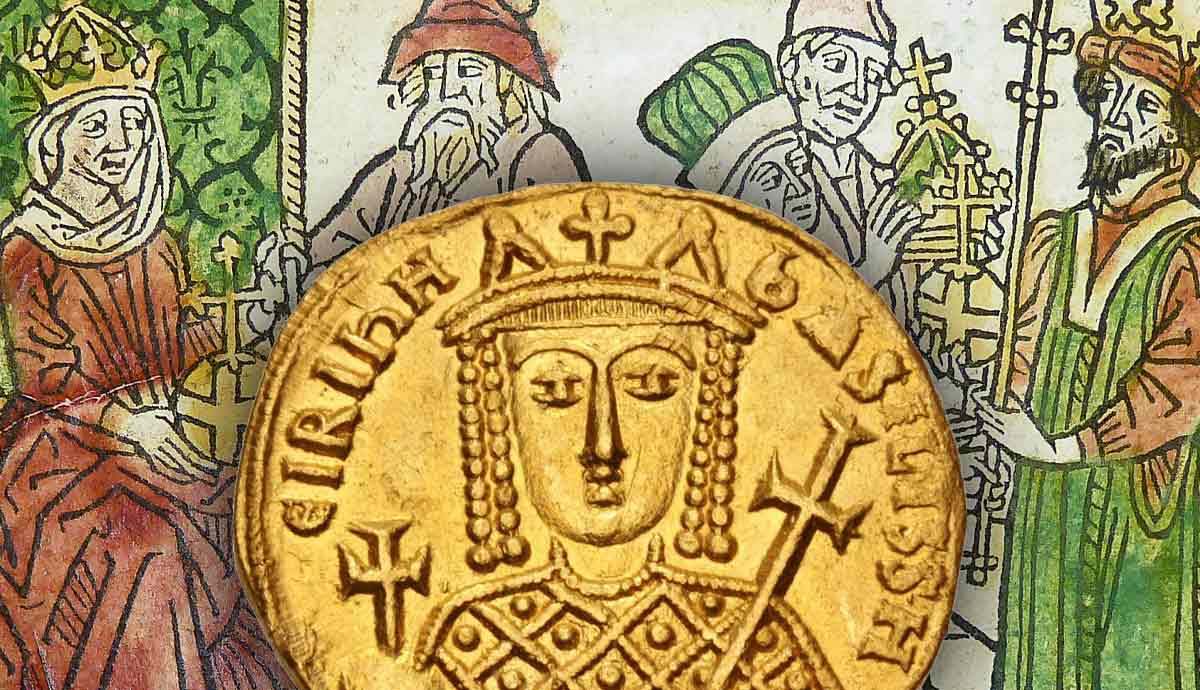
An orphan from minor nobility and rising from relative obscurity, Irene of Athens became one of the most powerful people in the world. She claimed the title of Empress of the Byzantine Empire, and ruled as the sole monarchan incredible feat in a deeply patriarchal world at the timeand was even canonized and revered as a saint in the Greek Orthodox Church. However, the cost she paid to get there was unquestionably horrific, ordering the blinding of her own son, who was a political opponent to her rule.Irene of Athens and Her Path to the ThroneLeft: A 16th-century portrait of Irene of Athens from Speculum Romanae Magnificentiae: Portraits of the Wives of Emperors. Source: Wikimedia Commons; Right: A visualized rendering of Constantinople during the Byzantine era. Source: Wikimedia CommonsBorn into the noble Sarantapechos family sometime between 750 and 756 AD, Irene of Athens is said to have been orphaned at a young age (the records are sparse). Her age at the time, and the nature of her parents death, is unknown, but it is likely she became a pliable political tool in the hands of other family members as they jostled for power in the charged political climate of the time.The circumstances surrounding her marriage to Byzantine Emperor Leo IV are a subject of debate. It has been suggested that she was selected as part of a bride-show, in which eligible women were paraded for selection. Whatever the truth is, she married the 19-year-old co-emperor in 769.Leo IV was the son of the Emperor Constantine V, who served as the senior emperor at the time. This was an era of turmoil for the Byzantine Empire. Muslim Abbasids threatened from the south and east, while Slavic forces threatened from the north and west. Meanwhile, within the Byzantine military, ethnic and regional tensions, as well as ambitious generals, created a situation that demanded constant attention. To add to this dynamic, the empire was being divided from a religious perspective due to the iconoclastic controversy, wherein iconoclasts (like Constantine V) viewed icons as idolatry and took measures to wipe out iconophilia, further increasing factionalism within an already shaky empire.The Porphyra Chamber was lined with an extremely valuable rock called red or imperial porphyry. Source: Flickr/Wikimedia CommonsIrene and Leo had a son in 771, named Constantine. His birth occurred in the Porphyra Chamber, a room lined with purple marble reserved as the place for royal births in the Great Palace of Constantinople. Purple, as was tradition, was a color associated with nobility and wealth, and this room turned out to be a significant setting for the drama that unfolded in the years that followed.Emperor Constantine V died in 775, leaving his son Leo IV as the sole emperor, who crowned his son Constantine VI as co-emperor. Leo, an iconoclast who supported the removal of iconography, was at odds with his wife, who was a secret iconophile. When Leo discovered she had smuggled icons into the palace with the help of courtiers, he had the courtiers whipped and rebuked his wife, causing a very public scandal. The drama did not go much further, as Leo died shortly thereafter, in September 780, from tuberculosis at the age of 30, and was succeeded by his nine-year-old son. With Constantine still a child, the rule of the Byzantine Empire came under the control of Irene, who ruled as regent, aided by the chief minister, the eunuch Staurakios.Imperial ChallengesA Byzantine solidus featuring Constantine VI and his mother, Irene. Source: Wikimedia CommonsIrene was now a young widow in a precarious position. Her rule was threatened by rebellions and coup attempts as she navigated the murky and extremely dangerous waters of being a regent and a woman in charge of the Byzantine Empire. After Leo died, plans were immediately concocted to remove Irene and the child emperor from power in favor of one of Leos half-brothers, Nicephorus. The plot was uncovered, and moving swiftly, Irene had five of Leos brothers arrested and forced to take up the cloth, thus barring them from any imperial ambitions. Such was the swiftness and vigor of Irenes response that it earned her a great deal of respect as a decisive ruler.From this solid foundation of ruthlessness, Irene began her own reforms, winning political support from within the court and replacing iconoclasts with iconophiles, reversing the policies of her imperial predecessors. She took more power than was expected, as evidenced by the coins that were minted, clearly showing her in a position of power over that of her son. In practice, she denied him any say in public affairs.The Byzantine Empire in 802 AD. Source: Wikimedia CommonsShe was driven to upset expectations of her weakness. A female regent before Irene, Empress Martina ruled for less than a year before her tongue was mutilated, and she was sent into exile on the island of Rhodes. By showing a powerful hand, Irene avoided a similar fate. In 781, she took swift military action against those who defied her. She accused the general in charge of Sicily, Elpidius, of plotting against her, and when his troops in Sicily failed to surrender him, Irene sent a fleet to deal with the problem. Elpidius and his supporters were crushed, and Elpidius fled to the Abbasid Caliphate.During her rule, however, Irene found mixed military success, with Staurakios achieving victory against the Sclaveni, a Slavic tribe that had invaded Greece. Byzantine forces, however, struggled against the Abbasids, and Irene was forced into a position where she had to pay an annual tribute to secure the borders.Nevertheless, Irenes most notable achievements were not in the realms of military action but in restoring the veneration of icons within the empire.The Restoration of IconophiliaGreek Orthodox icons. Source: WorldHistoryPics/Wikimedia CommonsIrenes husband and father-in-law had been iconoclasts, and with their passing, Irene pressed for icons to be accepted again. The biggest obstacle was Paul IV, who was Patriarch of Constantinople. When he died in 784, Irene elevated her former secretary, Tarasios, to the position. Despite opposition and the disruption of councils, Irene and Tarasios were able to convene with bishops in Nicaea in October 787, whereupon they formally reversed imperial policy and restored the veneration of icons as an article of faith.The factionalization that the issue created was tense, but through careful politicking and diplomatic efforts with iconoclast and formerly iconoclast religious figures, Irene and Tarasios were able to avoid a civil war. Irene was even able to secure the consent of the Pope in Rome. Within the Greek Orthodox Church, Irenes efforts afforded her a place of great reverence, and she was later canonized as a saint.Irene and Her SonChalcography featuring Constantine VI and Irene, from Giovanni Battista Cavalieri & Thomas Treterus, Romanorum imperatorum effigies, Rome, Vincenzo Accolti, 1583. Source: Municipal Library of Trento/Wikimedia CommonsDespite the political victories, Irenes biggest threat persisted in the form of her son and his imperial ambitions. It was expected that Irene would step down as regent when her son came of age, but she refused to do so, and a great rift opened as the two fought for ultimate control of the Byzantine Empire.Constantine VI, however, was not free from scandal. He rejected his mothers attempts to marry him into the Carolingian dynasty through Rotrude, a daughter of Charlemagne, and the engagement was broken off by Irene. She then selected Maria of Amnia to be his wife, and the couple was wed in 788. Despite having two children (two daughters, Euphrosyne and Irene), Constantine was not fond of Maria and forced her to become a nun. He took his mistress, Theodota, Irenes lady-in-waiting, as his wife (in 795) after having her crowned Augusta (Empress). This move was highly unpopular with the church, and Constantine lost much political and religious support.It is suggested, and certainly likely, that Irene was aware of the fallout from this scandal and encouraged her son into such dangerous waters. His removal from power would be easier, and Irene would be able to consolidate her hold on the throne.A Byzantine solidus depicting Empress Irene. Source: CoinArchives/Wikimedia CommonsWhile being major factors, these marital events were not the catalysts for the distrust between the two. In 790, Constantine had tried to assert his power and had had Staurakios arrested. Irene responded by having her son and his entourage arrested, but she lacked support from the military. When Constantine was sprung from prison, Irene was removed from the court, but Constantine proved ineffective and suffered military defeats. He allowed his mother back into the imperial court in 792.Further eroding his public image, he dealt disproportionately with perceived threats. After an attempt at usurpation by Nicephorus, he not only had him blinded, but had his other uncles tongues cut out as well. This action led to a revolt, which Constantine crushed with particular cruelty. By the time he remarried, he was already suffering from poor support, and ended up being labeled as an adulterer. Meanwhile, his marriage to Theodota produced a son, Leo, in 796, but the infant died a year later.Constantine and Irenes FatesWoodcut depicting Irene and Charlemagne. Source: Penn Libraries/Wikimedia CommonsWhile Constantine was stricken with grief over the death of his son, Irene took the opportunity to retake power. She had garnered military support by bribing several generals who agreed that Constantine was running the empire into the ground. She also bribed palace guards to remain neutral. Constantine became aware of the plot and attempted to flee, but was captured and dragged to the Porphyra Chamber, where he had been born. And it was there that Irene ordered her sons eyes to be gouged out.Irene was now unopposed, but she inherited an empire with severe challenges, and the issue of blinding her own son lost her much support. Facing military threats and being forced to pay tribute to the Abbasids, the empire was under financial strain. She was now in her forties, and she had no heir, and refused to marry. When Charlemagne was proclaimed Emperor of the Romans by the Pope, it sent shockwaves through the Byzantine Empire, as many viewed Byzantium as the rightful successor of Rome. According to legend, there was a marriage proposal from Charlemagne, but it was overturned before it could be properly considered. Nevertheless, Irene managed to strengthen diplomatic ties between the Byzantines and the Franks.In 802, her finance minister (also named Nicephorus) led a coup and ousted the empress from power. Irene was exiled to the island of Prinkipo. While there, she was suspected of plotting to retake the throne, and was subsequently banished to Lesbos where she died on August 9, 803. There are no records of what caused her death, but while in exile, she lived in considerable hardship, having to spin thread in order to support herself.Coastal scenery on Lesbos. Source: Wikimedia CommonsApart from having her own son blinded, Irene is remembered as an iconophile who restored the veneration of icons. Her support of monasteries also won her significant support from the religious community, and today she is remembered as a saint within the Greek Orthodox Church. Her feast day is August 9.
0 Commenti
0 condivisioni
239 Views

 English
 Arabic
 French
 Spanish
 Portuguese
 Deutsch
 Turkish
 Dutch
Dutch
 Russian
 Romaian
 Portuguese (Brazil)
 Greek
Greek