


WWW.THECOLLECTOR.COM
How Marie-Madeleine Fourcade Turned a Secret Spy Network Into Hitlers Worst French Nightmare
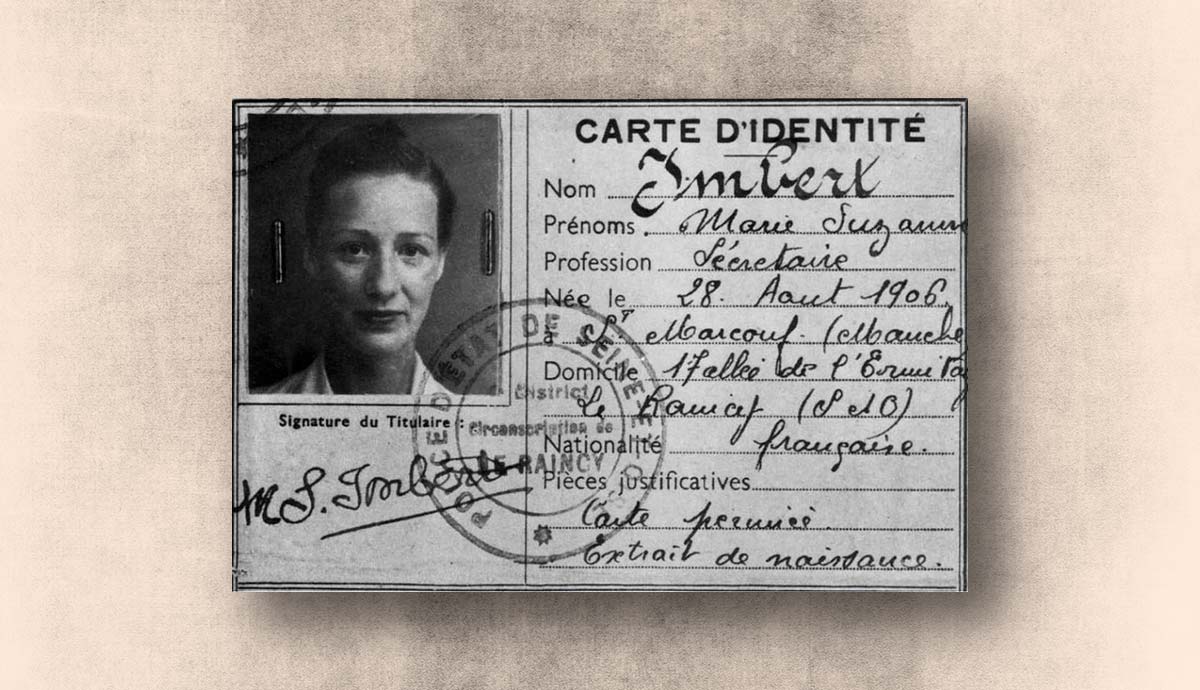
Marie-Madeleine Fourcade, a leader of the French Resistance, stands apart from her compatriots for being the only woman to hold such a position. Known as Hedgehog for her resilience in the face of a powerful regime, Fourcade played a crucial role in gathering intelligence and orchestrating dangerous missions. The Alliance network, guided by Fourcade and dubbed Noahs Ark by the Gestapo, supplied the Allies with the necessary information to perform military operations, such as those on D-Day. At extreme risk to herself and those she loved, Fourcade took on the Nazis and emerged as one of WWIIs greatest underground legends.How the French Resistance Got StartedHitler in Paris, 1940. Source: US National ArchivesThe French Resistance did not begin as the network that it later turned into. It began with quiet, defiant acts and a refusal to accept fascism as the new norm within France. In the summer of 1940, Charles de Gaulle, then a lesser-known general, made a six-minute speech from a BBC studio in London. He spoke words of encouragement to the disheartened French in their homes, rejected Marshal Ptains armistice with Nazi Germany, and reframed the fall of France as a setback, not a surrender.However, this rallying cry did not fully acknowledge how grim the situation at home actually was. The German occupation of the north and the establishment of the Vichy government in the south left the French population demoralized.Before pointing fingers backward in condemnation of historys mistakes, it is important to remember that France had lost a generation of men in WWI and wasnt eager to do so again (though, after the second world war, it would be estimated that France lost over half a million people). Ptains Vichy administration, a puppet regime masquerading as a neutral entity, left little reason for those yearning to resist to believe their voices would be heard. The French militarys famed Maginot Line, touted as an unbreachable defense, had been bypassed almost effortlessly by the German forces seeking to occupy France.French flag featuring the cross of Lorraine, symbol of the French Resistance. Source: Wikimedia CommonsYet even amidst all these defeats, acts of personal defiance began to appear. Flyers appeared denouncing Nazi policies, graffiti defiled Nazi images, and words of rebellion were spread. These early seeds of resistance sprouted, watered by a refusal to become part of the fascist regime and faith in Frances honor, bruised as it may have been. The movement would soon grow into more organized cells, each tasked with constructing chaos behind enemy lines.How Ms. Fourcade Became InvolvedMs. Fourcades ID, 1910-20. Source: PicrylBorn into privilege in Marseille to a family made wealthy in the steamship industry, and raised partly in cosmopolitan Shanghai, Fourcade seemed destined for a conventional socialites life. By the 1930s, however, she was a divorced single mother of two with a pilots license and a career in the burgeoning radio industry. First in Shanghai, then in Morocco, she experienced the freedoms denied to many women in the world and became accustomed to free thinking.During her short time as a military wife, she met Georges Loustaunau-Lacau. He was a young French intelligence officer with suspicions about Germanys fast-growing military might. Loustaunau-Lacau recognized Fourcades sharp intellect and recruited her for his covert information gathering. The two stayed in contact even after her marriage fell apart. By 1940, with France reeling from the Blitzkrieg and the fall of the Maginot Line, Loustaunau-Lacau became the father of the Alliance spy network. Fourcade, with her knack for persuasion and intelligence, became the networks secret weapon. Working alongside Loustaunau-Lacau, Marie-Madeleine was kept busy recruiting agents and gathering intelligence.Vive La France! Men and women read a war poster written by Charles De Gaulle. Source: Museum of the US NavyFourcades spying and coordinating of spies meant her children were deeply endangered. Eventually, when her son was twelve and her little girl ten, Marie-Madeleine realized she had to get them out of France before she was caught or they were used against her. Marie-Madeleine sent her children to Switzerland, although they had to make the last bit of the perilous trek on their own. Later in life, Marie-Madeleine would claim it was her son, the eldest of the two children, whose bravery got them over the line and to safety.The Resistances Greatest SuccessesPlaque in Honor of Ms. Fourcade. Source: Wikimedia CommonsThe French Resistance was absolutely not a military might (too many French soldiers had already been captured or killed). But what it lacked in brute force, it more than made up for in cunning and creativity. Operating under the radar and often against impossible odds, Marie-Madeleine and her ragtag group of unsung heroes made life miserable for the occupying Nazis.The Resistance excelled at sabotaging Nazi supply lines, communications, and infrastructure. They derailed trains, cut telephone lines, and blew up bridges, all while doing everything they could to avoid the Gestapo. These seemingly small acts of rebellion forced the Germans to spread their troops thin, diverting resources that could have otherwise been deployed on the front lines. A thin line of defense is a weak line of defense, making life (and the odds) much better for the Allies.One notable victory was the surrender of Column Elster, where 18,500 German soldiers laid down their arms to the Americans. Months of relentless and unpredictable harassment by Resistance operatives had diminished German morale, both on the battlefield and back home.Soldiers in France, 1944. Source: GetArchiveImagine being a German soldier, knowing that the people whose country you were in hated you. You do not know if the vehicle you have will stop (the Resistance may have put tin shavings in your brake lines) or if the munitions coming to you on train tracks will ever make it to you (the Resistance often removed bolts from the railways), or if youll be driving away and suddenly stuck in enemy territory (French factories that made vehicles for the Germans may have encouraged workers to tamper with the fuel gages). It was exhausting, and it sapped the German will to win.There were quieter but no less important acts of information gathering as well. Resistance agents mapped supply routes, tracked troop movements, and even provided the Allies with a stunningly detailed, 55-foot-long map of Normandys beaches. That map became crucial to the success of the D-Day landings. The Resistance, a group of women and amateurs, was punching well above its weight.It was these same women that carried secret documents in baby carriages, hid weapons under loaves of bread, and delivered life-saving supplies to those in hiding, often right under the noses of Nazi occupiers. They took downed Allied airmen into their homes, facing the threat of being killed or sent to a work camp if they were found out.Resistance to the Germans, French army returns to France. Source: PicrylJulia Pirotte, a Polish-Jewish immigrant, led attacks on Nazi targets in Marseille and documented her efforts through photography. Women like her, Germaine Tillion, and Genevive de Gaulle (Charless niece) shattered stereotypes, proving that resistance came in many forms and every gender.Many of the ladies living under Nazi oppression had never wielded a weapon but had picked up a pen. This is why underground newspapers and pamphlets circulated anti-Nazi propaganda, letting other dissenters know they were not alone. These efforts nurtured the earliest seeds of defiance.It is a myth that the Resistance was one cohesive, all-powerful force. Instead, it was a myriad of individuals and groups, united by a shared goal: to defy tyranny. And in doing so, they showed the world that courage isnt always found on a battlefield; its also found in churches, around kitchen tables, and over a glass of wine.What Happened to the Resistance at the End of the War?Parade after battle of Paris, August 1944. Source: Library of CongressWhen France was finally liberated and began piecing itself back together, the Resistance found itself pushed aside. Women, who had been indispensable during the war, were quickly shushed. The call to repopulate France rang loud, as the nation sought to replenish the workforce lost to two devastating wars. The wartime heroines, many of whom had risked their lives for their country, were now expected to trade their ambitions for aprons and their espionage for strollers. Their sacrifices, if spoken out loud, only served to remind collaborators of their own failings.Simultaneously, the myth of a grand, unified Resistance took hold. Known as rsistancialisme, this post-war narrative allowed France to rebuild its shattered national identity. By painting the Resistance as a vast, collective effort, it helped to obscure uncomfortable truths about the widespread acceptance of the Vichy regime and the shocking moral compromises made under Nazi rule. This myth, though comforting, often overlooked the fact that active resisters were a small minority, leaving the majority of the population to navigate survival under occupation in ways that surely werent heroic.Collaborator Getting Head Shaved, 1944. Source: PicrylWorse, there were war babies, living proof of a more complicated reality. As the Nazis departed, they left behind, among other things, evidence of relationships, both consensual and coerced, between German soldiers and French women. These innocents, who couldnt have picked who fathered them, were sometimes referred to as enfants de Boches, (not a nice term). For women who hadnt acted with the Resistance like Marie-Madeleine had, fraternizing with the enemy was seen as the ultimate cowardice, and public shaming (such as head-shaving) was often their punishment. France would rather believe every one of its people had resisted instead of making the Nazis comfortable in any way.In the end, the Resistances legacy became a double-edged sword: its legend became both a source of immense pride but also a repository for national guilt and selective memory. Womens contributions were often sidelined in favor of a male-dominated narrative that was mostly myth. The complexities of survival under occupation were brushed aside in favor of tales of glory. What remained was a fiction of a shadow army and of heroism that helped France move forward, even as it left many of the actual stories of brave resistors untold.
0 Комментарии
0 Поделились
242 Просмотры

 English
 Arabic
 French
 Spanish
 Portuguese
 Deutsch
 Turkish
 Dutch
Dutch
 Italiano
 Romaian
 Portuguese (Brazil)
 Greek
Greek