


WWW.THECOLLECTOR.COM
6 Thinkers Who Shaped the Zionist Movement in the 19-20th Centuries
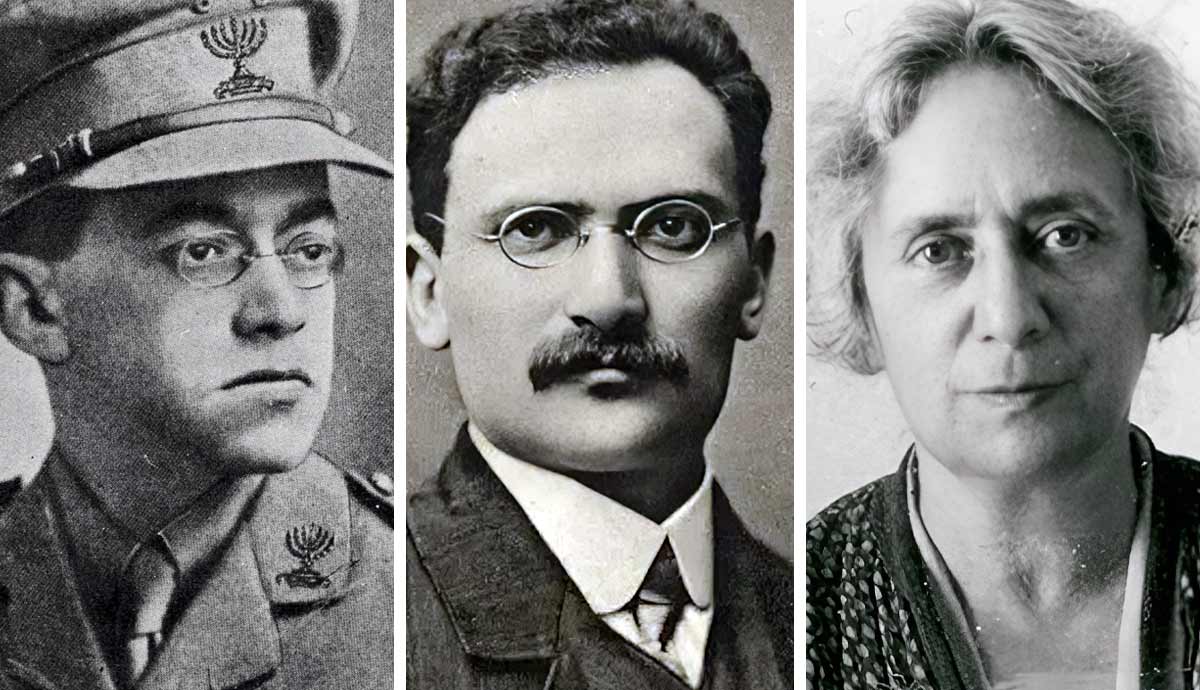
While Jewish communities have been the targets of antisemitic violence for much of European history, pogroms in the Russian Empire in the late 19th century encouraged Jewish intellectuals to consider solutions to the Jewish peoples problems. This process inspired the political Zionism movement in the late 19th and early 20th centuries, which called for the establishment of a Jewish state in the Land of Israel. This article focuses on six prominent Zionist thinkers and their ideas about what a Jewish homeland in Israel would look like.1. Leon PinskerLeon Pinsker, the author of Autoemancipation! and founder of Hovevei Zion. Source: Wikimedia CommonsWhile the idea of the return to the Land of Israel is one dating back to the start of the expulsions of Jews from the Holy Land, modern political Zionism started to develop at the end of the 19th century. The first Jewish thinker to write about the creation of a Jewish state was Leon Pinsker. Born in 1821 in the town of Tomaszow Lubelski in Congress Poland, Pinsker grew up with the belief that Jews must seek to become part of the societies they lived with in order to fight antisemitism.Despite efforts to gain emancipation for Jews in Europe during the 1848 Revolutions, Jewish rights were still infringed upon. In the Russian Empire, Jews faced legal restrictions and discrimination. When Tsar Alexander II was assassinated by a cell of socialist revolutionaries in March 1881, Russian monarchists blamed the Jews. Riots against Jewish communities known as pogroms broke out all over the Russian empire.Pinsker was horrified and became convinced that Jews needed an alternative option to trusting the Gentiles with giving them full equality. He wrote a book called Autoemancipation! which promoted the idea of Jews pursuing a state or entity outside of Europe where they could govern themselves. He initially thought that America was the best place for a Jewish autonomous homeland, but began to embrace the idea of a Jewish state in Ottoman Palestine. In 1881, he helped form the group Hovevei Zion (Lovers of Zion), the first proto-Zionist organization in Europe. In 1891, he died in Odesa, Ukraine, and was reburied in Israel in 1934.2. Theodor HerzlTheodor Herzl, author of Der Judenstaat and organizer of the first World Zionist Conference, 1901. Source: Polin MuseumDespite Pinskers writings and activism, he never achieved the fame that Hungarian Jewish editor and philosopher Theodor Herzl attained. Herzl was born in Budapest in 1860 to German-speaking Jews who moved to Vienna when he was a boy. He became a law student at the University of Vienna. However, he had little interest in law and became a journalist, working for Viennas Neue Freie Presse. According to scholars, he was initially ambivalent about his Jewish identity. That changed when he came to witness European antisemitism firsthand.It has long been alleged that Herzl was radicalized by watching the Trial of Alfred Dreyfus while serving as the Paris correspondent for Neue Freie Presse. Dreyfus, a French Army officer, had been accused of spying for Germany during the Franco-Prussian War in a case that was laced with antisemitism. However, some scholars believe that it was the election of avowed antisemite Karl Lueger as Mayor of Vienna that caused Herzl to embrace Zionism. Austria-Hungary was supposed to be a welcoming place for Jews; seeing an antisemite win an election in cosmopolitan Vienna horrified much of the liberal intelligentsia. Herzl moved away from assimilation and vowed to build a new homeland for Jews elsewhere.Herzl and other delegates at the first World Zionist Congress, 1897. Source: Swiss National MuseumHerzl wrote his seminal work, Der Judenstaat, in 1896. He proposed the idea of a Jewish homeland outside of Europe, arguing that the Jewish question was not a social or religious question, but a national question. In his pamphlet, he identified sites in Ottoman Palestine, Uganda, or Argentina as suitable locations for a Jewish homeland. The new state would be a liberal utopia with equal rights for all of its inhabitants and German would be the main language. He went around Europe hoping to gain support for his idea from different leaders including the German Kaiser, the Russian Tsar, and the Ottoman Sultan. Notwithstanding opposition from officials across Europe and other Jewish community leaders, he persevered in his vision and organized the First Zionist Congress in Basel, Switzerland, in 1897.In Basel, around 200 delegates arrived to confer with Herzl and his colleagues about his vision. They came from all over the world, demonstrating how Zionism appealed to Jews everywhere. The conference created the World Zionist Organization, with chapters in multiple countries. However, there was no consensus on what exactly a new Jewish state would look like. After traveling to Palestine to see the land for himself, Herzl wrote a novel called Altneuland in 1902 about the creation of a utopian Jewish state in Palestine. He died in Vienna in 1904 and was reburied in Israel in 1949.3. Ber BorochovBer Borochov, the founder of Marxist Zionism and a prominent member of the Poale Zion political party, 1910. Source: National Library of IsraelThe Zionist cause appealed to Jews across the political spectrum. One of the founders of left-wing Zionism was Dov Ber Borochov, more commonly known as Ber Borochov. Borochov was born in the city of Zolotonosha, Ukraine. He embraced socialist ideas to support working-class people around the Russian Empire. Being denied the chance to study at any prestigious Russian universities opened his eyes to anti-Jewish discrimination in the empire.For many socialists around Europe, the idea of a Jewish state seemed chauvinistic and contrary to socialist ideas of internationalism. Borochov argued that the Jewish people needed a homeland in light of the antisemitism they faced. He also believed that Jews were kept poor when they did not have the freedom to develop their own land and homes. He embraced the idea of a socialist state in Palestine inhabited by Jewish and Arab working people. This became the platform of Poale Zion, a Marxist Zionist political party.During the First Zionist Conference in Basel, Borochov argued against attempts to create a Jewish state in Uganda, arguing that it would not benefit Jewish working class people. After the Revolution of 1917, he returned to Ukraine to speak publicly about the importance of Poale Zions work. Unlike Herzl and Pinsker, Borochov promoted the Yiddish language and argued that it should be the language of the independent Jewish state. After serving as a delegate to the All-Russian Democratic Conference, he died of blood poisoning in 1917. Borochov was one of the most prominent leftist Zionists in history and much of early Israels politics was influenced by his work.4. Zeev JabotinskyVladimir Zeev Jabotinsky (pictured right), founder of Revisionist Zionism and leader of Betar, 1920s. Source: myjewishlearning.comBorochov faced opposition from right-wing Zionists who did not believe in socialist principles. Vladimir Jabotinsky was born into a middle-class Russian Jewish family in Odesa, Ukraine, in 1880. He was ambitious and cosmopolitan, hoping to become a journalist like Herzl. For several years, he wrote a series of articles for different Russian-language newspapers until 1903, when he learned of the Kishinev Pogrom.Like many other Jewish intellectuals, Herzl became a fervent Zionist in response to pogroms in the Russian empire. He became a believer in the creation of Jewish self-defense militias, especially in places with large Jewish communities like Odesa. He also became a major proponent of the Hebrew language and changed his first name to Zeev (Wolf). He traveled all over Europe to promote the Zionist cause, believing that Jewish life in Europe was in peril. When World War I broke out, he joined the British Army along with other Russian Jewish immigrants in Britain and fought to eject the Ottoman Army from Palestine. The Allies succeeded and the British Mandate of Palestine was created.Zeev Jabotinsky in the uniform of the First Judean Jewish Battalion in the British Army. Source: National Photo Collection of IsraelHe was furious about Britains decision to assume control of the region and the division of Transjordan from Palestine. He became a leader in the newly-formed Haganah, a Jewish militia in Palestine, only to be arrested by British authorities when found illegally carrying a weapon. When it became clear that Palestines Arab population was violently opposed to Jewish settlement in the land, Jabotinsky became an advocate of very aggressive measures to create the state of Israel. His essay, Iron Wall, written in 1923, promoted a Jewish state on both banks of the Jordan River and insisted that an Iron Wall be created to separate the Jewish and Arab populations. That same year, he founded Betar, the first Revisionist Zionist organization created with the intent of challenging the mainstream Jewish Agency in Palestine.As Jewish settlement increased and fascism rose in Europe, Jabotinsky became more alarmed and convinced that Jews needed to flee to Israel. He foresaw catastrophe for Jews around the world and demanded that Britain allow unlimited immigration to Palestine. Events like Kristallnacht made him insist on a global Jewish boycott against Nazi Germany, which was rejected by most Jewish organizations. When he died in 1940 in New York, he was actively aiming to recruit an army of Jews from around the world to fight the Axis armies in Europe.5. Ahad HaamAhad Haam, author of Truth from Eretz Israel and founder of Cultural Zionism, 1920. Source: Center for Israel EducationThe Haskalah, or Jewish Enlightenment, played a role in the development of different forms of Zionism. Cultural Zionism embraced many Haskalah teachings in promoting the creation of a Jewish cultural center in Palestine. The main proponent of this ideology was Ukraine-born Ahad Haam. He was originally known as Asher Ginsburg and born in 1856 to a Hasidic Jewish family. His admiration of the Land of Israel did not come from politics; rather it was from his religious upbringing.Haam shed much of his religious practices later but did become an admirer of Leon Pinsker. While in Odesa, he joined Hovevei Zion. However, he began to criticize the practice of establishing Jewish settlements. In his mind, a Jewish state in Palestine would not be able to absorb all of the diaspora and provide a decent standard of living for its inhabitants. In 1891, he wrote an article called Truth From Eretz Israel based on his first visit to Palestine. It noted the problems with living in the region and the fact that the Arabs were absolutely opposed to the Jewish settlement.In later years, he continued writing pieces for newspapers like Ha-Shiloa about the impracticality of establishing a Jewish polity in Palestine. He grew publicly combative of other Zionist thinkers like Max Nordau and Herzl. Notwithstanding his concerns about mainstream Zionist thought, he still promoted a Jewish presence in Palestine and helped advise the British government on the Balfour Declaration. After serving five years on the Tel Aviv city council, he died in the city in 1927.6. Henrietta SzoldHenrietta Szold, founder of Hadassah and proponent of binationalism between Jews and Arabs. Source: HadassahMost people assume that Zionism was promoted exclusively by male thinkers. However, Jewish women played a prominent role in the development of Zionism. Born in Baltimore in 1860, Szold came from a middle-class Jewish family and was deeply committed to Jewish values and teachings. In 1904, she became the first woman to study at the Jewish Theological Seminary in New York. Her commitment to Zionism made her stand out in the American Jewish community, where support for Zionism was initially limited.When she visited Palestine several times in the early 1900s, she was horrified at the living conditions there and vowed to do something about it. In 1912, she founded Hadassah, a medical service, to help Jews in need of assistance. Hadassah expanded over time as more immigrants arrived in Palestine. Additionally, she was a secretary for the Jewish Publication Society. From 1918 to 1920, she led the Education Department of the Zionist Organization of America.As the clouds of war loomed over Europe in the 1930s, she became committed to getting as many young Jews to move to Palestine in defiance of British efforts to limit Jewish immigration. Szold founded Youth Aliyah and helped an estimated 20,000 Jewish children escape before the Nazis occupied Europe during World War II. Even as she promoted Jewish settlement in Palestine, she was sympathetic to Arab concerns and insisted that Hadassah help Arab communities too. She also was a member of Ihud, an organization promoting binationalism. She died in the Hadassah hospital that she created in Jerusalem in 1945.
0 التعليقات
0 المشاركات
201 مشاهدة

 English
 French
 Spanish
 Portuguese
 Deutsch
 Turkish
 Dutch
Dutch
 Italiano
 Russian
 Romaian
 Portuguese (Brazil)
 Greek
Greek