


WWW.THECOLLECTOR.COM
How Was Life Inside Japans Temples During the Samurai Era?
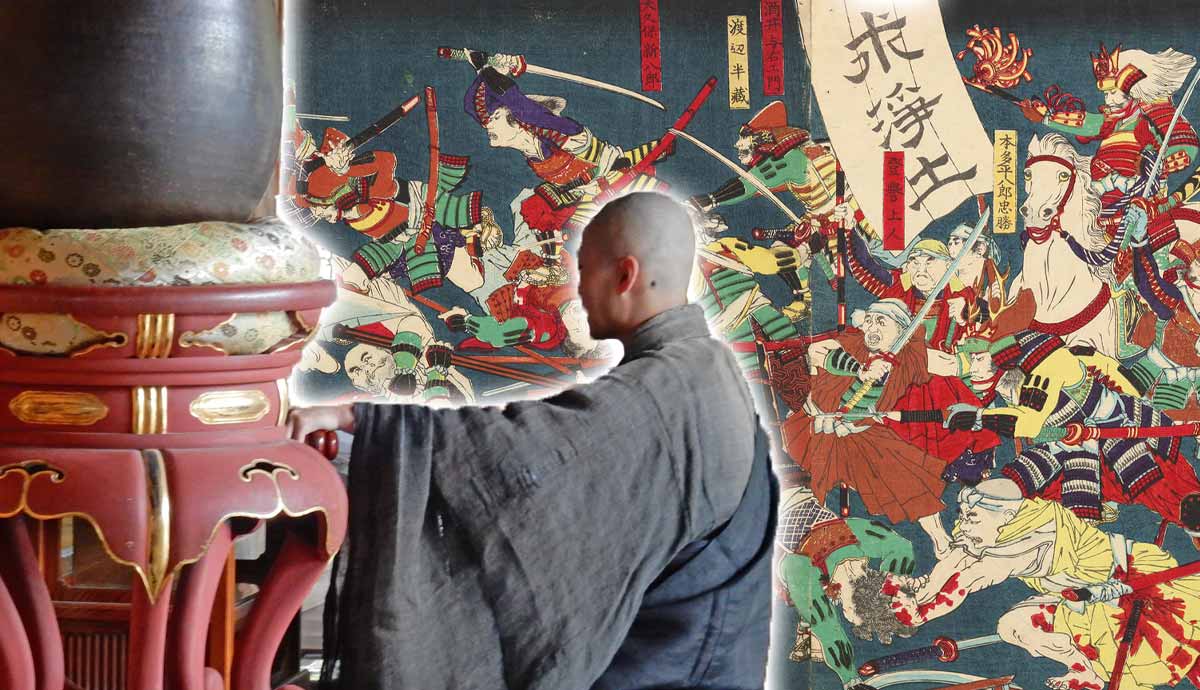
For over a millennium, Buddhist temples impacted everyday life in Japan through their influence on governance, education, and the arts. But what did their everyday lives look like? The monks day-to-day reality reflected the evolution of Japanese Buddhism; in the beginning, their days were simple, like their single-minded pursuits of enlightenment. But as the clergy began participating in systems of power and commerce, their routines became more varied, sometimes involving military training, other times tedious bookkeeping. Little by little, life in a Japanese temple required more than just praying.The Bureaucratization of Temples in Feudal JapanThe temple of Todai-ji Kon-do, at Nara, Japan. Photograph by Wiiii, 2008. Source: Wikimedia CommonsBuddhism arrived in Japan from the Asian mainland in the 6th century AD, but its institutional strength truly emerged during the Nara and Heian periods (8th12th century). Patronized by emperors and aristocrats seeking divine endorsement that was not already bestowed upon them by the native Shinto religion, Japanese temples quickly gained vast tracts of land, tax exemptions, and state power. By the 12th century, major monasteries like Todai-ji, Kofuku-ji, and Enryaku-ji functioned as both spiritual and political centers.During the Edo Period (16031868), the Tokugawa shogunate inherited this legacy of temple authority and attempted to control it by bringing it closer to the state. Recognizing both the organizational capacity and the social reach of Buddhist institutions, the government incorporated them into its administrative apparatus.By establishing a parishioner system where every household had to register with a local temple, the government of feudal Japan gained a valuable tool in monitoring its population while keeping Buddhist monks busy. For over 250 years, these men of the cloth were effectively turned into civil clerks, documenting births, deaths, and movements of citizens.Daibutsu (Great Buddha) at Todai-ji temple in Nara. Photograph by Gilles Desjardins, 2016. Source: Wikimedia CommonsThough this arrangement stabilized religious life after centuries of violent sectarian conflict, it also institutionalized a rigorous temple hierarchy. The Edo government created a system that ranked the importance of Buddhist complexes, granting the shogun another level of control over the clergy by being able to reward loyal abbots with prestigious appointments or by raising their monasterys standing.For monks, this era redefined the nature of devoting ones life to the Buddha. Faith and state service became intertwined, and spiritual discipline operated within strict political boundaries. Temples, once semi-independent religious enclaves, were turned into instruments of governance in post-17th century Japan, with high-ranking monks as preoccupied with bureaucracy and raising their social status as they once were with pursuing spiritual enlightenment. For the rank and file clergy, temple life did not change that much.A Day in the Life of an Everyday Edo MonkBuddhist monk seated in Seiza, chanting in Hokoji Temple (Hamamatsu City), Japan. Photograph by Mikkabie, 2015. Source: Wikimedia CommonsA novice monks life during the Edo Period revolved around sound and silence. The temple bell marked the rhythm of their existence, calling them to meditation, labor, and study. Before dawn, monks gathered for sutra chanting, their voices filling the main hall in trance-like recitation. In some branches of Buddhism, this was followed by hours of immobility and focus during seated meditation.The afternoon was typically spent on temple maintenance: sweeping corridors, tending gardens (rock or green), repairing roofs, and more. The more orthodox schools like Shingon Buddhism might also task their monks with copying sutras and the rigorous study of classic Buddhist texts.Shojin Ryori, traditional Buddhist vegetarian cuisine, kagawa_ymg, 2015. Source: Wikimedia CommonsMeals were sparse and ritualized. Breakfast often consisted of rice gruel with pickled vegetables. A typical lunch could include a mixture of barley rice, miso soup, and seasonal greens. Meat, alcohol, and similar indulgences were often prohibited but, as with celibacy, those rules were not universal. In the Jodo Shinshu sect (True Pure Land Buddhism), for example, abstinence was not a religious requirement, though moderation was advised.Japanese temples of all schools also placed a lot of value on work for the community. They operated schools for children, performed funerals and memorials, and offered accommodation to travelers and pilgrims. The particulars differ depending on the exact time, place, school of belief, and the rank of an individual monk but, on the whole, many Japanese temples followed a very similar rhythm: rise early, work hard (be it physically or through studies), live simply, try to do a little good. The warrior monks were a notable exception to this.When Monks Took Up Arms: The Age of Religious WarfareShei (Fighting Monk) of Kamakura period, Military Costumes in Old Japan, Kazumasa Ogawa, 1895. Source: Wikimedia CommonsLong before the Edo Period, Japan experienced centuries of conflict during which monasteries were home to powerful armies of warrior monks. Temples like Enryaku-ji on Mount Hiei first started quartering warriors in their complexes as early as the 10th century in order to aid in armed conflicts with other monasteries over land disputes or temple appointments. These were more akin to a security force consisting of laymen but, with time, the followers of the Buddha themselves started joining their ranks, slowly giving rise to the sohei warrior monks who made a name for themselves during major conflicts like the 12th-century Genpei War.However, in the 15th and 16th centuries, the monasteries found competition in the form of samurai or fellow warrior monks leading fanatical yet highly organized armies of peasants. These religious zealots were known as the Ikko-Ikki (single-minded groups), and they evolved from True Pure Land Buddhism, a school that eschewed hours of meditation and poring over classical Chinese doctrine in favor of simply repeating the mantra Namu Amida Butsu. Meaning I devote myself to the Amida Buddha, the phrase was all it took to be reborn in a perfect Pure Land after death (Dunn, p. 113). This, together with a commoner-driven focus on community, greatly influenced the pace of life in Ikko-Ikki temples.Tokugawa Ieyasu with help from the Jodo monks of the Daijuji temple in Okazaki, defeats the Ikk-ikki at the battle of Azukizaka, 1564, Yoshitoshi, 1873. Source: Wikimedia CommonsIn the fortified Ikko-Ikki complexes, chants of Namu Amida Butsu could be heard repeated by hundreds of people thousands of times throughout the day. Often, the mantra was their first and last sentence of the day. It provided a background to the zealots routine, which sometimes started first thing in the morning with weapons training in everything from naginata glaives to spears, pikes, swords, and even firearms. Then it was time for work, which at these Japanese temples meant preparing for war.Typical Japanese temples included no defenses other than the natural terrain and temple walls. Ikko-Ikki compounds, on the other hand, were fortified communities that worked together to construct moats, palisades, multiple lines of defense, and watchtowers (Turnbull, p. 48). The biggest fortified temples were indistinguishable from Japanese castles, and their maintenance was a big part of life at an Ikko-Ikki temple fortress. Religious rites and rituals were still performed and were typically big group events, but the safety of the complex came first.Faith and FinancesKeicho-koban Gold Pieces, As6673, 2008. Source: Wikimedia CommonsWhile monks preached detachment from worldly desire, temples were deeply entangled in Japans economy, especially during the Edo Period. Many monasteries owned farmland and tenements, generating steady income through rent collection and making Buddhist monks a powerful group of landowners in feudal Japan. Some monasteries also made money through paid head-shaving ceremonies as taking the tonsure often absolved one of past crimes. The get-out-of-jail haircuts were quite a lucrative business.Temples additionally lent money at high interest or hosted markets and teahouses on their grounds for a share of the profits. Some senior monks even speculated in loans or acted as intermediaries in lawsuits, using their status to influence disputes (Teeuwen M., Nakai K.W., p. 113). When that was not enough to cover some expenses like repairs and renovations, these places of worship held lotteries, with the prize often being an amulet blessed by the head of the temple. While many novices counted prayer beads, their senior brothers in the temple hierarchy spent much of their day counting beads on their abacuses.What the Edo Temples Left BehindGoma Ceremony at a Shingon temple in Nara, Japanexperterna.se, 2014. Source: Wikimedia CommonsJapanese temples often bridged the spiritual and the secular. They taught, recorded, mediated, and governed, often with limited autonomy but a lasting influence. Their daily routines were as varied as their roles throughout history. For some, it was meditation, labor, and restraint. For others, it was practicing to kill or making sure that the accounts added up.In retrospect, Japanese temples during the Edo Period exemplified a uniquely balanced picture of feudal Buddhist life: a union of faith and administration, asceticism and affluence, divine aspirations and human imperfections. The lives of Edo monks were lived at the intersection of politics, economics, and spirituality. Studying them gives us a useful snapshot of how Japanese clergy spent their days. Although, admittedly, it does not take into account the few centuries they spent as soldiers.BibliographyDunn, C.J. (2010). Everyday Life in Traditional Japan. Tuttle Publishing.Turnbull, S. (2005). Japanese Fortified Temples and Monasteries. Osprey Publishing.Teeuwen M., Nakai K.W., (ed.) (2017). Lust, Commerce, and Corruption An Account of What I Have Seen and Heard by an Edo Samurai. Columbia University Press.
0 Commenti
0 condivisioni
21 Views

 English
 Arabic
 French
 Spanish
 Portuguese
 Deutsch
 Turkish
 Dutch
Dutch
 Russian
 Romaian
 Portuguese (Brazil)
 Greek
Greek