


WWW.THECOLLECTOR.COM
10 Medieval Landmarks That Define Englands Turbulent Past
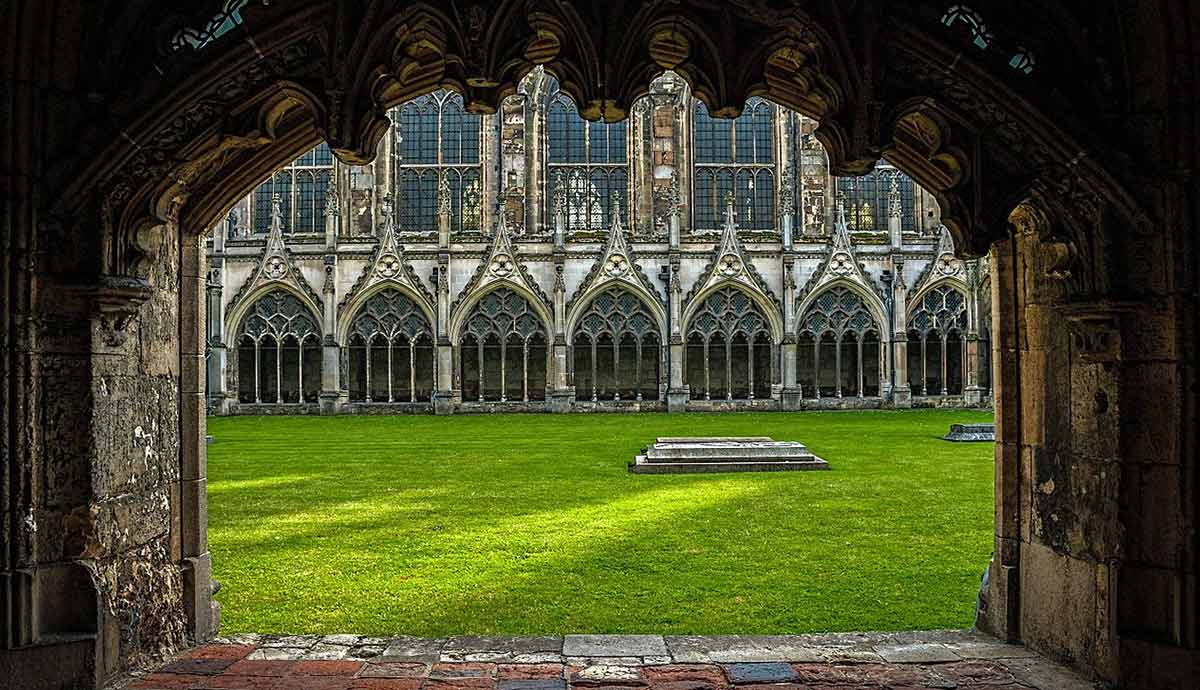
From Canterbury Cathedral to the Tower of London, Englands map is filled with medieval landmarks. Monuments to hundreds of years of complex history, each showcasing different aspects of Englands medieval past, from the Norman conquest to the Plantagenet kings. From political clashes and family feuds to legendary stories, these places guide visitors on a journey into the past, featuring powerful families and ordinary folks. Lets venture into a map of medieval England, walking around 10 iconic landmarks.LandmarkLocationHistorical Significance & Key EventsWarwick CastleWarwickshireBuilt by William the Conqueror; later became a key stronghold in the War of the Roses.Tower of LondonLondonServed as a royal palace and a notorious prison for figures like Anne Boleyn and Guy Fawkes.Canterbury CathedralKentSite of Thomas Beckets murder in 1170; inspired Chaucers The Canterbury Tales.Tintagel CastleCornwallFamed as the legendary birthplace of King Arthur and linked to the story of Tristan and Isolde.Dover CastleKentKnown as the Key to England; fortified by Henry II and later used for WWIIs Operation Dynamo.Durham CathedralDurhamA masterpiece of Norman architecture built to house the shrine of St. Cuthbert.Westminster AbbeyLondonThe coronation site for nearly every British monarch and burial place for 30 royals.Rievaulx AbbeyNorth YorkshireA massive Cistercian monastery closed by Henry VIII during the Suppression of the Monasteries.York MinsterYorkHouses Britains largest collection of medieval stained glass and sits atop a former Roman base.Rochester CastleKentStrategically guarded the Medway River; famously survived two major baronial sieges.1. Warwick Castle, WarwickshireWarwick Castle, East Front from the Outer Court, by Canaletto, 1752. Source: Wikimedia Commons/Birmingham Museum and Art GalleryBuilt on a meander of the River Avalon, Warwick Castle was one of Englands most iconic baronial strongholds. Throughout the centuries, five influential families owned the castle, later converted into a stately home, as earls of Warwick: the Beaumonts, Beauchamps, Nevilles, Dudleys, and Grevilles. The first structure was built on the site of a motte-and-bailey castle erected at the time of William the Conqueror, when the River Avalon served as a defense against the Danish raids.Todays building dates back to the 1100s and was commissioned by the 1st Earl of Warwick, Henry de Beaumont. The castle, however, underwent numerous renovations and expansions throughout the centuries. In 1871, a fire ravaged the private apartments, but the main structure was luckily spared.In the 16th century, Warwick Castle became a key location in the War of the Roses as it was passed to Richard Neville, famously nicknamed the Kingmaker for his role in controlling Englands power structure.2. Tower of LondonThe Tower of London. Source: TimeOut MagazineOne of Londons most iconic landmarks, the Tower of London stands on the north bank of the River Thames, on the border with the City of London. Throughout the years, the complex served as a royal palace, prison, arsenal, royal mint, and menagerie. After his 1066 coronation, William the Conqueror was the first to order the construction of fortifications on the site, then a major port area.The central keep, known as the White Tower, dates back to 1078 and is 90 feet (27 meters) high. Four towers stand at each corner of the buildings walls. Over the years, a series of concentric curtain walls were erected around the central structure. The outer curtain is protected by a moat. The impressive defense system was breached only once during the 1381 Peasant Revolt, when the rebels, protesting a new tax, managed to enter the Tower.During the Middle Ages, the Tower of London was turned into a notorious political prison and place of execution. The prisoners entered the complex through a watergate, later nicknamed Traitors Gate. Among the most famous historical figures imprisoned or executed in the Tower were Guy Fawkes, Anne Boleyn, Thomas More, and the adolescent king Edward V and his younger brother. The Tower of London is a UNESCO World Heritage Site.3. Canterbury Cathedral, KentView of the cloister of Canterbury Cathedral, photograph by Gary Ullah, 2014. Source: Wikimedia CommonsThe seat of the Archbishop of Canterbury, the cathedral is the mother church of the Anglican Communion. The original church, known as Christ Church, was built in the 6th century by St. Augustine of Canterbury, sent to Kent by Pope Gregory the Great.Damaged by Danish raids in 1011 and a fire in 1067, the church was rebuilt by Archbishop Lanfranc in 1070 in the Norman style. The key event tied to the Canterbury Cathedral took place a century later, in 1170, when Archbishop Thomas Becket was murdered inside the building by four knights who thought they were acting on an order from King Henry II, involved in a bitter dispute with Becket at the time.Thomas Becket was buried in the cathedral, and his tomb soon became an important pilgrimage site. Between the late 14th and early 15th century, Geoffrey Chaucer famously centered The Canterbury Tales around a group of pilgrims travelling to the town to visit Beckets tomb. In 1988, the cathedral was added to the UNESCO World Heritage Sites list.4. Tintagel Castle, CornwallView of the ruins of Tintagel Castle in Cornwall, photograph by Kerry Garratt, 2007. Source: Wikimedia CommonsBuilt in the 1230s by Richard, Earl of Cornwall, Tintagel Castle has long been associated with Arthurian legends. Erected half on the mainland and half on a headland of the Cornish Sea, Tintagel Castle was named as the birthplace of the legendary King Arthur by Geoffrey of Monmouth in his Historia Regum Britanniae (ca. 1136).According to Monmouths account, King Uther Pendragon, thanks to Merlins magic, took on the likeness of King Gorlois of Cornwall, one of his allies, to spend the night with Igraine, Gorlois wife. It was during this night that Arthur was conceived. Tintagel Castle is also linked to the legend of Tristan and Isolde, which features it as the location of King Marks court.Researchers have found artifacts dating back to Roman rule near the castles ruins. The first building on the site, however, was erected between 350 and 850 AD, and it is likely associated with Dumnonian royalty, the rulers of Cornwall in the late 4th and 8th centuries.5. Dover Castle, KentAerial view of Dover Castle, photograph by Chensiyuan, 2017. Source: Wikimedia CommonsA castle complex overlooking the English Channel at its narrowest point, Dover Castle is one of Englands larger castles and stands at a key strategic position for the countrys defense. The oldest building on the site is a lighthouse erected by the Romans after their conquest of Britain in the 1st century AD. The Saxons fortified the site around 1000 AD.William the Conqueror gained control of the keep in Dover around 1066 and ordered that its defenses be improved. Henry II later added further fortifications and built the castle visible today. In the 13th century, the complex withstood two sieges during the First and Second Barons War against King John, who lost the Duchy of Normandy to the French in 1204.During the Napoleonic Wars, a series of underground tunnels was dug under the castle. In World War II, they became the headquarters of Operation Dynamo, the plan organized to evacuate the British Expeditionary Force from Dunkirk.6. Durham Cathedral, DurhamView of Durham Cathedral, photograph by TSP, 2020. Source: Wikimedia CommonsConstructed between 1093 and 1133, Durham Cathedrals story begins in 995. According to legend, this year, a group of monks searching for a site to build a new priory after their original one was destroyed by Viking raids, arrived in present-day Durham. They were guided by a vision of St. Cuthbert, their prior, who had been murdered in 687. After burying the saints coffin, the monks built a wooden church over it.In 1018, the original wooden church was replaced by a stone construction, which became a pilgrimage site. Then, in 1093, after the founding of the Benedictine Priory of St. Cuthbert, construction for a new church to replace the Anglo-Saxon one began.Completed around 1130, the new cathedral is an outstanding example of Roman architecture, and, alongside the nearby Durham Castle, was added to the UNESCO World Heritage Sites list in 1986.7. Westminster Abbey, LondonWestminster Abbey, London. Source: FlickrWestminster Abbey, located just west of the Houses of Parliament in the Greater London borough, stands on the site of a former Benedictine monastery. Queen Elizabeth I turned it into the Collegiate Church of St. Peter in Westminster in 1560.According to legend, the first Christian monarch of the East Saxons, Saberht, erected a church on a small island in the River Thames. Initially known as Thorne, the building was later referred to as west minster (monastery). By 785 AD, a small group of monks lived on the island. Then, in 1065, a new church, built by Edward the Confessor, was consecrated on the same site.The following year, William the Conqueror held his coronation in the newly constructed church. Over the following centuries, every British monarch would be crowned there, except Edward V and Edward VIII.In 1245, King Henry III razed the existing building to erect a new church, the present-day abbey, in the Gothic style, featuring its characteristic pointed arches, rose windows, flying buttresses, and ribbed vaulting. The rebuilding continued intermittently until the Tudor period.Westminster Abbey is the resting place of 30 royals and several poets. It is also home to what is believed to be Englands oldest door, likely carved in the 1050s.8. Rievaulx Abbey, North YorkshireThe ruins of the nave of the church at Rievaulx Abbey, photograph by Michael D. Beckwith, 2017. Source: Wikimedia CommonsThe ruins of this Cistercian Abbey stand in the valley of the same name in the North York Moors Natural Park. One of the largest 12th-century English churches, Rievaulx Abbey became the headquarters of St. Bernard of Clairvauxs mission in northern England.A monastic order founded at Citeaux, France, in 1098, the Cistercians sought a solitary and ascetic life under the guidance of the Rule of St. Benedict. In England, the Cistercian order first appeared in Surrey in 1128. Under St. Bernard of Clairvauxs rule, the order gained considerable influence in the 12th century, especially in Wales and Yorkshire, where it contributed to the areas economic progress.By the end of the 12th century, the community at Rievaulx Abbey had doubled in size, counting 140 monks and about 500 lay brothers. To accommodate the larger number of people, many buildings were expanded or newly built. The abbeys activity continued until 1538, when it was closed during Henry VIIIs Suppression of the Monasteries.9. York Minster, YorkView of York Minster, photograph by Amkazi, 2022. Source: Wikimedia CommonsThe seat of the Archbishop of York, York Minster is home to Britains largest collection of stained glass. Comprising the so-called Five Sisters Window in the north transept and the Great East Wing, the minster exhibits some of the English medieval glazing extant.After the Roman conquest, the town of York, then called Eboracum, housed a major army base and administrative center. It was here that Constantine the Great was proclaimed Roman emperor by his soldiers in 306 AD, after his fathers death during a military campaign in northern England.The first church in York, then an early center of Christianity, was a wooden building dating back to the Anglo-Saxon period. The stone building that replaced this first structure was damaged during the Danish raids of 1075. Construction of a new church began in 1220, after the baronial revolt, under Walter de Gray, who was named Archbishop of York in 1215.10. Rochester Castle, RochesterPrint showing Rochester Castle, between 1890 and 1900. Source: Wikimedia Commons/Library of Congress, Washington DCLike York, the city of Rochester first developed as a Roman settlement. Located on the east bank of the Medway River, it controlled a strategic crossing connecting East Kent and London. Fallen into disrepair after the end of Roman rule in the 5th century, Rochester regained relevance in the 7th century, when it was established as a bishopric.The first castle ever built in Rochester, made of timber and earthworks, dates back to William the Conquerors time. Then, in the 1080s, Archbishop Gundulf began the construction of a stone building. In 1127, Henry I gave control of the castle to William de Corbeil, Archbishop of Canterbury, who, in exchange, fortified its defenses.In 1215, during the First Baronial War, the rebels took control of Rochester Castle. King John retook it after a siege. In 1264, the castle witnessed a second siege led by Earl Simon de Montfort and a group of barons. The Kings Hall and other buildings were badly damaged during the clash. The structure then fell into disrepair.
0 Comentários
0 Compartilhamentos
39 Visualizações

 English
 Arabic
 French
 Spanish
 Portuguese
 Deutsch
 Turkish
 Dutch
Dutch
 Italiano
 Russian
 Romaian
 Greek
Greek