


WWW.THECOLLECTOR.COM
The Irishmen in Mexican Uniform Who Fought Against the US During the Mexican-American War
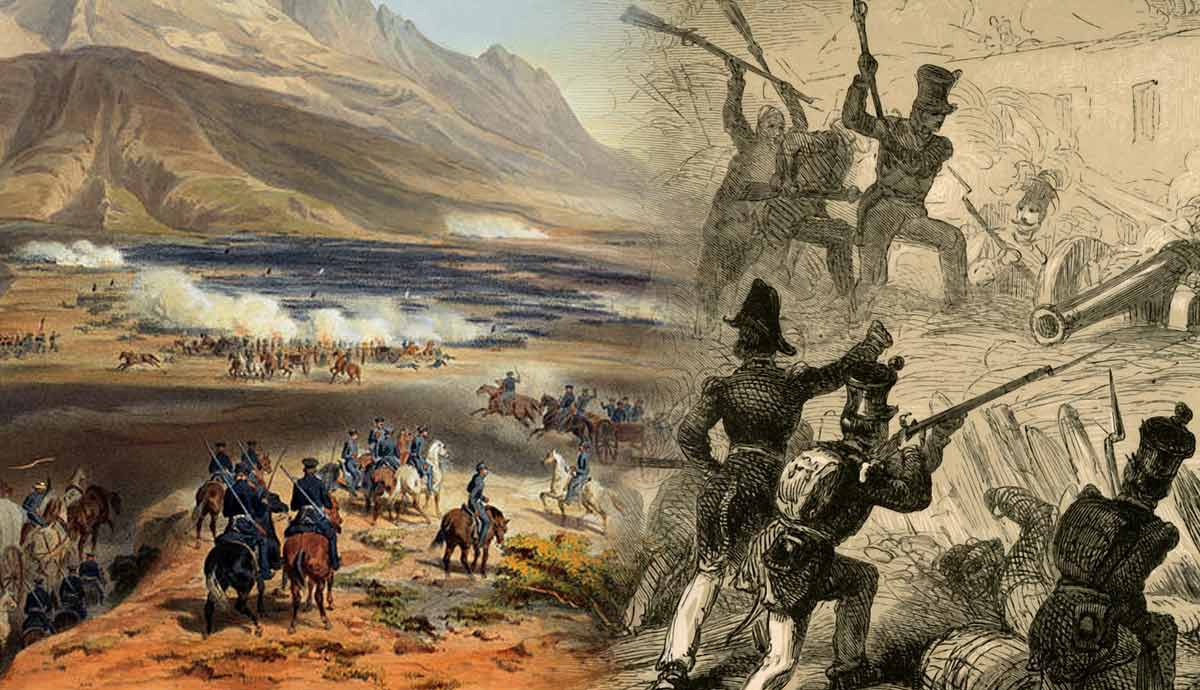
The Mexican-American War remains a controversial conflict in both the United States and Mexico. Triggered by disputes following the American annexation of Texas, US armies eventually occupied Mexico City and forced the Mexicans to cede around half its territory. Both sides suffered from mass desertion, but the most famous of these deserters were an Irish-led contingent in the US Army who switched sides to fight with the Mexicans as the Saint Patrick Battalion, known in Spanish as the San Patricios.The Mexican-American WarStorming of Chapultepec by James Walker, 1857. Source: Wikimedia CommonsThe Mexican-American War was fought between April 25, 1846 and February 2, 1848. It was caused by disputes between the Mexican and American governments after the US annexation of Texas in 1845. The conflict was triggered by the Thornton Affair when a column of 80 US soldiers was ambushed by a larger Mexican force in disputed territory. The US president, James K. Polk, used the attack to justify an invasion of Mexico.Polk was primarily motivated by the concept of manifest destiny, the idea that the United States was divinely ordained to expand to the Pacific coast. The USA was a young, dynamic state, whereas Mexico was seen as a weak foe. In the decades after its declaration of independence from Spain in 1821, Mexico had suffered political and economic instability. The Mexican Army was poorly trained, equipped, and led. By contrast the US forces were a mix of regular and volunteer soldiers. An estimated 47% of the US Army in Mexico was made up of foreign born soldiers. The volunteers provided a valuable source of manpower as the war expanded from skirmishes to pitched battles.The war united the US in a surge of patriotism but it also had its critics. Many prominent personalities from the American Civil War first fought in Mexico and were affected by it. Ulysses Grant later wrote I was bitterly opposed to the measure, and to this day regard the war, which resulted, as one of the most unjust ever waged by a stronger against a weaker nation. It was an instance of a republic following the bad example of European monarchies.DesertersTaking of Monterrey by Albert Bobbett, 1878. Source: MeisterdruckeConditions for soldiers in the 19th century were brutal. They were generally ill-treated by officers and regarded as brutes and criminals by the rest of society. The Mexican Army lost soldiers in droves, usually before battle. Poorly fed, treated, and equipped, many conscripts saw no reason to fight. The US Army saw nearly 15% of its strength lost to desertion every year in peacetime. The desertion rate actually went down during the war to 8%, with 9,200 soldiers deserting from an initial strength of 111,000.The 1840s was a time of unprecedented mass immigration to the US, particularly from Ireland. Over a million Irish emigrated from their home which was then suffering the ravages of the worst famine to ever hit the island. Large numbers of these risked journeys on overcrowded vessels known as coffin ships due to the high death toll. The survivors arrived penniless and destitute to an America that was less than welcoming.The army offered employment to many Irish as little education was required and soldiers could be guaranteed food and employment. Desertion by European immigrants was generally motivated by the promise of land, money, and promotion. They had weak ties to the USA and gave themselves up to guerrillas or simply crossed to the Mexican lines. Many Catholic immigrants were sympathetic to the Mexican cause and escaping the harsh conditions meted out by their Protestant officers.Formation and BackgroundBattle of Buena Vista by Adolphe Jean-Baptiste, 1851. Source: National Gallery of Art, Washington DCThe St. Patricks Battalion was the most famous group of deserters. It was a unit mostly composed of Irishmen and Germans, though Poles, Canadians, English, Swiss, Italians, French, Scots, Spaniards, and Mexicans could also be found in the ranks. The initial battalion was known as the Legin de Extranjeros (Legion of Foreigners), forming the core of what would be better known as the St. Patricks Battalion. Mexicans also nicknamed them Los Colorados due to the sunburnt appearance of the paler European deserters.The battalion started as an artillery unit but would later be reorganized as infantry and cavalry due to the increasingly desperate war situation, though the San Patricios continued to deploy artillery. Starting as a group of 48 Irish artillerymen, it reportedly boasted over 700 soldiers at its height but by the end of the war struggled to keep more than two companies in the fight due to the high casualties.As deserters, the San Patricios had a higher level of training on average than the typical Mexican conscript. Their officers were typically promoted from the ranks like John Riley, an Irishman who had served in the British and American armies as an enlisted soldier but was promoted to officer by the Mexicans. Martin Tritschler, a German captain in the unit, along with Riley, convinced many Irish and Germans to desert to the Mexican side.First BattlesBattle of Churubusco by J Cameron, 1847. Source: Library of CongressThe Battle of Monterrey, September 21-24, 1846, was the first large engagement for the San Patricios. Three days of urban warfare saw the Mexicans defeated but a truce negotiated that allowed them to retreat unharmed in exchange for the citys surrender. The San Patricios skill with artillery helped prolong the battle and they were credited with defeating at least two of the American assaults on the city. The unit was expanded after the battle and they created a silk battle standard with an image of Saint Patrick on a background of Irish green.They were now entrusted with the heaviest artillery the Mexicans had, 18 and 24 pounder cannons. On February 2, 1847 at Buena Vista, they were deployed on high ground that commanded the battlefield. Here they switched between firing on American infantry to fighting artillery duels with rival US batteries. A contingent also joined a Mexican attack on an enemy battery. The Mexican infantry routed the US troops, allowing the San Patricios to haul away two US 6 pounder cannons.Their artillery skill was enough to draw the anger of the US commander, Zachary Taylor, who dispatched a squadron of cavalry to take that damned battery. The battle ended with mixed results. The Mexicans withdrew, with General Santa Anna claiming success due to capturing US artillery and colors. The Americans claimed success for retaining control of the field of battle. The San Patricios paid a bloody price and lost one third of their number in the fierce fighting. Delighted with the success of their foreign volunteers, Mexican authorities continued to offer bonuses to deserters and promised land grants after the war.A Reckoning at ChurubuscoConvent of Churubusco by James Walker, 1851. Source: Wikimedia CommonsSanta Anna reformed the San Patricios into an infantry and cavalry unit with some artillery. They are believed to have fought at the defeat of Cerro Gordo but their high point was at the Battle of Churubusco on August 20, 1847. The battle followed a string of defeats with the Mexican forces in constant retreat. The San Patricios (by now numbering fewer than 300 men) dug in around a convent only a few miles from Mexico City, reinforced by two battalions of Mexicans.The fierce resistance convinced US general Winfield Scott that the convent was an ammunition depot. The first two US assaults were beaten back with heavy losses. The Americans gradually upped the pressure on the flanks and took the outer fieldworks. Mexican resistance began to weaken as they ran out of ammunition with soldiers either making desperate bayonet charges or leaving the battlefield.The San Patricios continued to defend the convent with courage borne of desperation. On several occasions their allies attempted to surrender but were prevented by the Irish as the deserters could expect less generous terms. The US finally took the convent after a bloody close quarters battle. When the Mexican commander Anaya was asked where the ammunition was, he retorted Had I any ammunition you would not be here! Nearly two-thirds of the San Patricios were killed or captured, fewer than a hundred escaped to Mexican lines.Paying the PriceBattle at Churubusco by Carlos Nebel. Source: Amon Carter Museum of American Art, Fort Worth, TexasThe US Army wasted no time in punishing the San Patricios. Out of more than 80 prisoners, over 70 were immediately charged with desertion. Court martials were convened immediately after the battle on August 23 and 26. Popular sentiment had been in favor of a lynching, with even other Irish troops in the army viewing them as traitors. Thousands of soldiers had deserted from the US Army during the war but only the San Patricios had fought against it, which may account for the harshness of their punishments.Several were pardoned as they had been captured by the Mexicans. John Riley and those who had deserted before the official declaration of war were branded with a D on the face and given fifty lashes. At least 50 were sentenced to hang, the first 16 on September 10, 1847, their graves having been dug by their branded comrades. Another four were hanged the following day.The remaining 30 were hanged on September 13 at the Battle of Chapultepec. The gallows was set up in full view of the citadel with orders to hang the San Patricios the moment the US flag replaced the Mexican one on the battlements. The condemned soldiers taunted the US troops and gave a final cheer for the Mexican flag before their execution. Colonel Harney, officer over the execution, left the bodies for carrion, stating he had only orders to hang them, not cut them down. It remains one of the largest mass executions in US history.LegacyThe presidents of Ireland and Mexico commemorating the San Patricios, 2013. Source: President of IrelandThe surviving San Patricios were mustered out of service in 1848 at the end of the war. Some stayed in Mexico, claiming the land that had been promised to them by the government. A few like Riley stayed in the army. There are several streets named in their honour in Mexico. They are also commemorated on Saint Patricks Day and on 12 September in memory of their executions.Praised in Mexico, the San Patricios are relatively unknown in the USA, though sympathy for their cause in the aftermath of the war is believed to have affected General Scotts unsuccessful presidential bid in 1852 due to the harsh punishments he meted out on any captured San Patricio. Despite his perceived anti-Irish bias, only an estimated 4% of Irish soldiers deserted from the US Army during the war.Although the Saint Patricks Battalion is usually considered Irish and Catholic, it is likely that nearly half of the battalion were of non-Irish origin. Similarly, only seven of the first 16 soldiers executed took the last rites. An Irish identity seems to have been stamped on the unit since many of its officers were Irish. US authorities also seemed to buy into this hysteria of an Irish and Catholic conspiracy to subvert their forces. In reality, the San Patricios was a cosmopolitan unit with each soldier having their individual reasons for deserting. Harsh conditions, religion, money, land, were all motivators for any soldier desperate enough to risk crossing to Mexican lines. They were part of a long tradition of Irish soldiers fighting in foreign service.
0 Commentarios
0 Acciones
19 Views

 English
 Arabic
 French
 Portuguese
 Deutsch
 Turkish
 Dutch
Dutch
 Italiano
 Russian
 Romaian
 Portuguese (Brazil)
 Greek
Greek