


WWW.THECOLLECTOR.COM
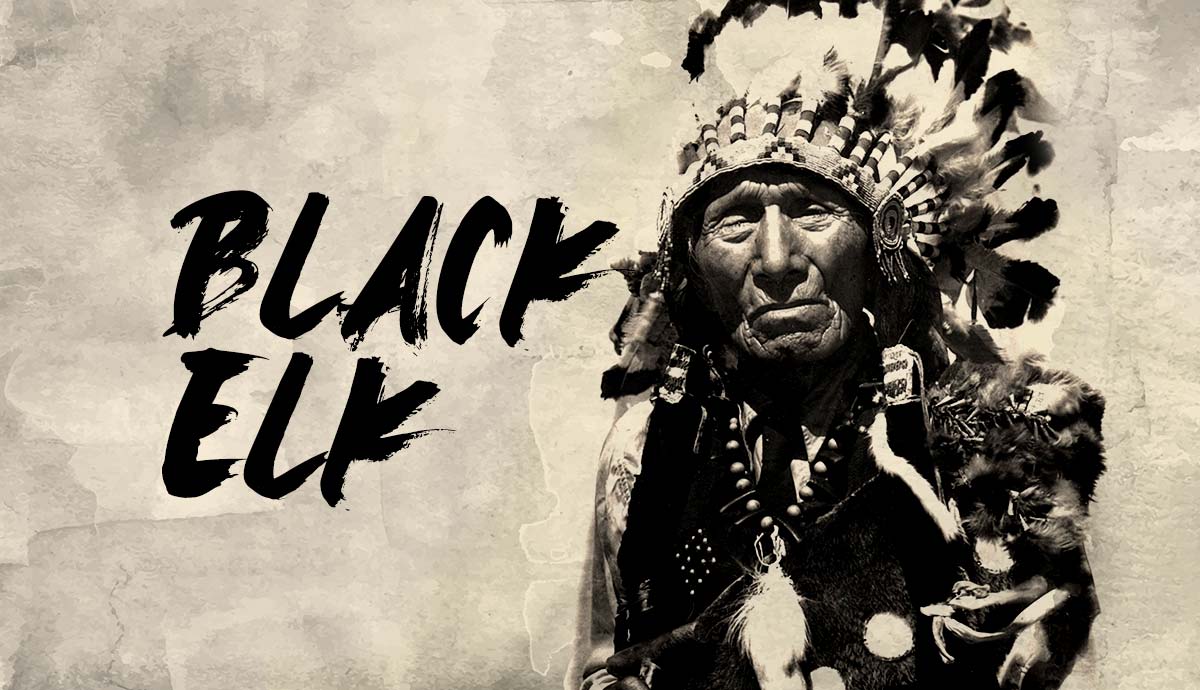
How Black Elks Story Shattered Old Myths About the American West
19th-century America left many Indigenous peoples feeling as if they were trapped between two worlds: their peoples traditional way of life and the onslaught of white America. Black Elk, born in 1863, was no exception. He lived a long life between two centuries and two realities, experiencing myriad adventures along the way. Thanks to his autobiographical novel, Black Elks worldview has come to life for thousands. He saw profound change rapidly overtaking his country and his own life, but he survived and left his mark on history.A Resounding VoiceStatues in front of the main building at the John G. Neihardt State Historic Site. The statues depict Black Elk sharing a vision with Neihardt. Source: WinterU via Wikimedia CommonsThe closing years of the American West were rife with violence, loss, and treachery. As history is told by the victor, perspectives from this era viewed through the modern lens are often from those of white Americans. As the US Army, supported by the federal government, was tasked with clearing the West of The Indian Problem, their voices were generally the ones recorded. One key delineation from the status quo was the publication of Black Elk Speaks in 1932. Oglala Lakota leader Black Elk, who saw the incredible changes of Manifest Destiny firsthand, gave his oral history to author John Neihardt, who turned it into the written word, the testimony of a voice so often suppressed. The classic book led the way for more Native voices to come through, changing history through the unveiling of personal truths.Map of the Little Powder River watershed. Source: Shawn Steinfeger/Wikimedia CommonsBlack Elks story began many years before the breakthrough novel was even imagined. Born along the Little Powder River in what is now Montana, he was the son of Black Elk and Sees the White Cow. Born Hehaka Sapa, his birth is believed to have taken place in December 1863. He began having visions at only five years old, setting him on a path to become a holy man and healer among his people. He didnt tell anyone about these visions until he was older, wanting to see where they would take him. Meanwhile, his world was changing fast around him. His people fought the United States in Red Clouds War, concluding in 1868 with the Treaty of Fort Laramie, which set land aside for the Lakota, protecting it from white incursion.Short-Lived VictoryLt. Col George Armstrong Custer. Source: Library of Congress via Wikimedia CommonsJust a few years later, Lt. Col. George Armstrong Custer led an exploratory expedition into sacred Lakota land, commonly known as the Black Hills, breaking the Treaty of Fort Laramie. Gold was discovered, and instead of stopping miners, the government offered to buy the land. The Lakota refused, and tensions grew. Skirmishes between settlers and the Lakota and other tribes escalated to the point where the US government sent out orders to confine all Indigenous people to reservations. Many refused, leading to a series of battles. Barely a teen, Black Elk watched all of this unfold in front of him. He was too young to fully participate in the Battle of the Little Bighorn, or the Greasy Grass, but took his first scalp after the battle. He collected guns and ammunition from the battlefield for his people and later recalled the songs that were sung about the victory and Custers death.Black Elks family spent time in Canada with Sitting Bull. Source: Art Canada Institute via Wikimedia CommonsWhile Black Elk commemorated his peoples great victory, their celebration would be short-lived. The US continued to press First Peoples onto reservations. Starving and out of resources, great leaders such as Crazy Horse were forced to surrender.Crazy Horse, an important Oglala figure, was killed in 1877, leaving his people looking to others in the tribe for leadership. Black Elk and his family spent time as refugees in Canada with Hunkpapa Lakota chief Sitting Bull before they were forced to return to the US and surrender to the reservation system.Growing StrengthA placard memorializing a Black Elk quote. Source: Chris Light/Wikimedia CommonsAs his people endured persecution, Black Elk felt his spiritual strength growing. He revealed his visions to his family and a medicine man named Black Road. When he shared his prophecies, Black Road instructed him to act them out during a ceremony known as the Horse Dance. This ceremony helped Black Elk come to terms with his visions and erased his hesitations about acting upon them. After the Horse Dance and a subsequent ceremony, Black Elk became revered as a holy man among his people.Buffalo Bill Cody in 1911. Source: Library of Congress via Wikimedia CommonsIn 1886, recruiters sent by Buffalo Bill Cody came to the Oglala reservation seeking performers to join Codys famed Wild West Show. Black Elk decided to sign on, hoping that seeing more of the white world would help him understand it. He was optimistic that he could use that knowledge to help people who were suffering. With the Wild West Show, Black Elk performed at places like Madison Square Garden. In 1887, the troupe headed to Europe to perform for Queen Victoria. After the show ended its European run, Black Elk and a few friends got lost and missed their ship back to America. They ended up stranded in Europe for approximately a year. During this time, Black Elk worked with a competing show of a similar nature and developed a relationship with a French woman. Eventually, Cody returned and gave Black Elk the option of staying and performing or heading back to the States. Black Elk elected to go home.Hope for the Future1891 Wood engraving of Lakota Ghost Dancers. Source: Library of Congress via Wikimedia CommonsWhen Black Elk returned home in 1889, he found his people in even more despair. Congress had further reduced the size of the Great Sioux Reservation by half. Disease was common, and food was scarce. Black Elk soon heard word of a new phenomenon, the Ghost Dance, which was a spiritual movement founded by a Paiute leader. Though the dancing itself was peaceful, it was prophesied that a new world order would result: white influence would disappear, and tribes would be able to return to more hopeful times. When Black Elk participated in the Ghost Dance himself, he experienced strange physical sensations and powerful visions (Neihardt, 186).Ghost Dancers at Pine Ridge, 1890. Source: Library of Congress via Wikimedia CommonsThe ghost dance gained immense popularity, and while hope may have spread for many Indigenous people, fear was spreading among the US Indian agents and government officials. Suspicion and tension grew, and conflicts arose, including the massacre at Wounded Knee in 1890.At Wounded Knee, US soldiers killed hundreds of unarmed Lakota of all ages. Black Elk was not present at Wounded Knee, but he arrived not long after, having heard shooting from where he was at the Pine Ridge Reservation (Neihardt, 196). Black Elk and others who accompanied him on a rescue effort for survivors were shot at repeatedly. Black Elk spoke of having no gun but holding his sacred bow in front of him. He heard bullets around him, but none landed (Neihardt, 199). Speaking later of the horror he witnessed among the carnage, he said, When I saw this, I wished I had died too, but I was not sorry for the women and children. It was better for them to be happy in the other world, and I wanted to be there too (Neihardt, 200). His recollections spoke volumes of the despair his people were experiencing in the face of Manifest Destiny.Red Cloud, seated, and a female companion in 1900. Source: Library of Congress via Wikimedia CommonsBlack Elk and his followers skirmished with the US soldiers in the days that followed Wounded Knee but eventually surrendered at the behest of Lakota leader Red Cloud. This surrender marked the end of an era for the Lakota people, one in which they now had no choice but to assimilate or die. Confined to the reservation, Black Elks life had drastically changed. He married Katie War Bonnet in 1892, and they had three children. Katie died in 1903, and he remarried in 1905 to Anna Brings White.Changing With the TimesBlack Elk was eventually baptized Catholic. Source: Nheyob/Wikimedia CommonsIn 1904, Black Elk converted to Catholicism. From then until his death, he baptized hundreds of his tribesmen and members of other Indigenous groups. He added Nicholas to his name, retaining Black Elk as his surname.In 2017, a canonization process was initiated by the Catholic Church. It is still in progress, but once fully completed, Black Elk will be declared a saint. This aspect of Black Elks life was largely excluded by Neihardt in his novel and is refuted by some of Black Elks ancestors, who dont believe he was truly a Catholic. Just before his death, Black Elk told his daughter, Lucy, the only thing I really believe is the pipe religion. This refers to a series of seven traditional Lakota ceremonies involving the sacred red pipe. Black Elk died on August 19, 1950, at 87 years of age. He is buried at Saint Agnes Catholic Cemetery in Manderson, South Dakota.Black Elk in 1948. Source: South Dakota Hall of FameBlack Elk didnt simply tell a story when he sat down with John Neihardt. He breathed life into the histories of his time, providing details from a perspective that had been too often hushed in the past. Black Elks remarkable life was one of war, adventure, and spirituality, all on the backdrop of a quickly changing landscape on the American Plains. Not only did Black Elk speak, he opened doors to the idea that history comprises many stories that need to be told.Recommended Reading:Neihardt, John (1932). Black Elk Speaks. Lincoln, NE: University of Nebraska Press.
0 Commenti
0 condivisioni
1 Views

 English
 Arabic
 French
 Spanish
 Portuguese
 Deutsch
 Turkish
 Dutch
Dutch
 Russian
 Romaian
 Portuguese (Brazil)
 Greek
Greek