Archaeologists Unearthed A 2,500-Year-Old Mass Grave Filled With As Many As 89 Infants And Children Near Jerusalem
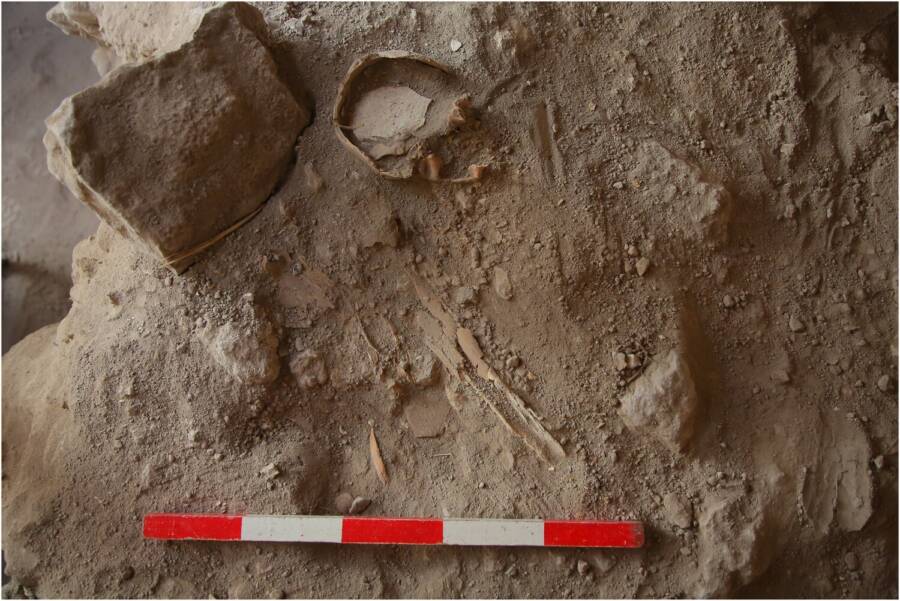
The Lautenschlger Azekah ExpeditionThe upper half of one of the dozens of childrens skeletons found in the cistern in Azekah.During archaeological excavations in Israels ancient city of Azekah, archaeologists came across an ancient cistern that had been used for centuries by various civilizations. Inside, they made an unexpected and gruesome discovery. The cistern was found to contain dozens of small skeletons, the bodies of infants and young children who had died 2,500 years ago.Archaeologists dont believe that the children were the victims of a plague, war, or natural disaster. Rather, it seems that they died of natural causes, most before the age of two, and were laid to rest here in this repurposed cistern.The Mass Grave Of Children And Infants Discovered In AzekahThe Lautenschlger Azekah ExpeditionAn archaeologist in the lower layer of the cistern.According to a recent study in Palestine Exploration Quarterly, the cistern in Azekah was first excavated between 2012 and 2013. The cistern was ancient; it had originally been used by the ancient Canaanites (perhaps as early as 3500 B.C.E.) to store water. But as archaeologists examined the sites various archaeological layers spanning hundreds of years, they made a chilling discovery when they came across a jumble of dozens of small human bones.Ultimately, archaeologists determined that between 68 and 89 individuals had been buried in the cistern during the early Persian period in the 5th century B.C.E. Of these, almost all were young children. The majority of them were under the age of five, and most of these were under the age of two. Many of the children in the cistern had seemingly been buried with small grave gifts which included beads, metal jewelry, and ceramics.The Lautenschlger Azekah ExpeditionA collection of beads, possible funerary offerings, which were found in the cistern alongside the human remains.Curiously, it seems that the cistern was used as a burial site over a long period of time, at least a few decades. It does not seem that the children buried there had died from natural disasters, war, or disease. Researchers also ruled out the possibility that the site was used for ritual sacrifice, as the bones show no evidence of violence, and no ritual or unique offerings were found. Rather, the children in the cistern seemingly died of natural causes and were buried in this space, which had been specifically designated for children and infants.[The] cistern was used during the early Persian period mainly for burying infants and young children who had not yet been weaned from breastfeeding, the researchers said.They continued: The findings indicate that before this crucial stage in life, a human seems not to have yet achieved an independent existence, earning the honor of a separate burial. In our opinion, this was an accepted way during this period to bury young children and infants who were still breastfeeding, many of whom did not survive this early stage of their lives.This discovery ultimately provides a look into how ancient societies understood personhood, as well as how they buried and mourned their young. And it offers new insights into Azekah itself, a site with a rather eventful history.The Story Of Azekah During AntiquityThe Lautenschlger Azekah ExpeditionAn aerial view of Azekah. The square at the bottom left of the frame marks where the cistern burials were discovered.Perhaps best known for being adjacent to the site of the mythic battle between David and Goliath, Azekah was first settled in the Early Bronze Age some 4,000 years ago. During the Bronze and Iron Ages, Azekah was one of the most important sites in the Judean foothills, and its cistern was used to store water.Archaeological evidence suggests that the cistern went out of use around the 6th century B.C.E., when Azekah was destroyed during the Babylonian conquest of Judah. Azekah then fell under Persian rule, and it was during this time in the 5th century B.C.E. that its cistern was repurposed as a mass grave for infants and young children.Since archaeological excavations began here nearly 15 years ago, this cistern is far from the only exciting find. In 2025, for instance, a three-year-old uncovered a 3,800-year-old Canaanite amulet. The stone artifact depicts scarabs beetles sacred to ancient Egyptians adding to the long list of evidence that attests to the close cultural ties between Canaan and Egypt during the Bronze Age.Now, this cistern has added yet another piece to the puzzle that is Azekahs storied past.After reading about the 2,500-year-old mass grave of infants and children that was found in Israel, discover the story of Golgotha, the Biblical site where Jesus Christ was crucified. Then, go inside the curious question of where Jesus was buried.The post Archaeologists Unearthed A 2,500-Year-Old Mass Grave Filled With As Many As 89 Infants And Children Near Jerusalem appeared first on All That's Interesting.




 English
 Arabic
 French
 Spanish
 Portuguese
 Deutsch
 Turkish
 Dutch
Dutch
 Italiano
 Russian
 Portuguese (Brazil)
 Greek
Greek