


WWW.THECOLLECTOR.COM
The Real Reason US States Are Ditching Their Old Flags
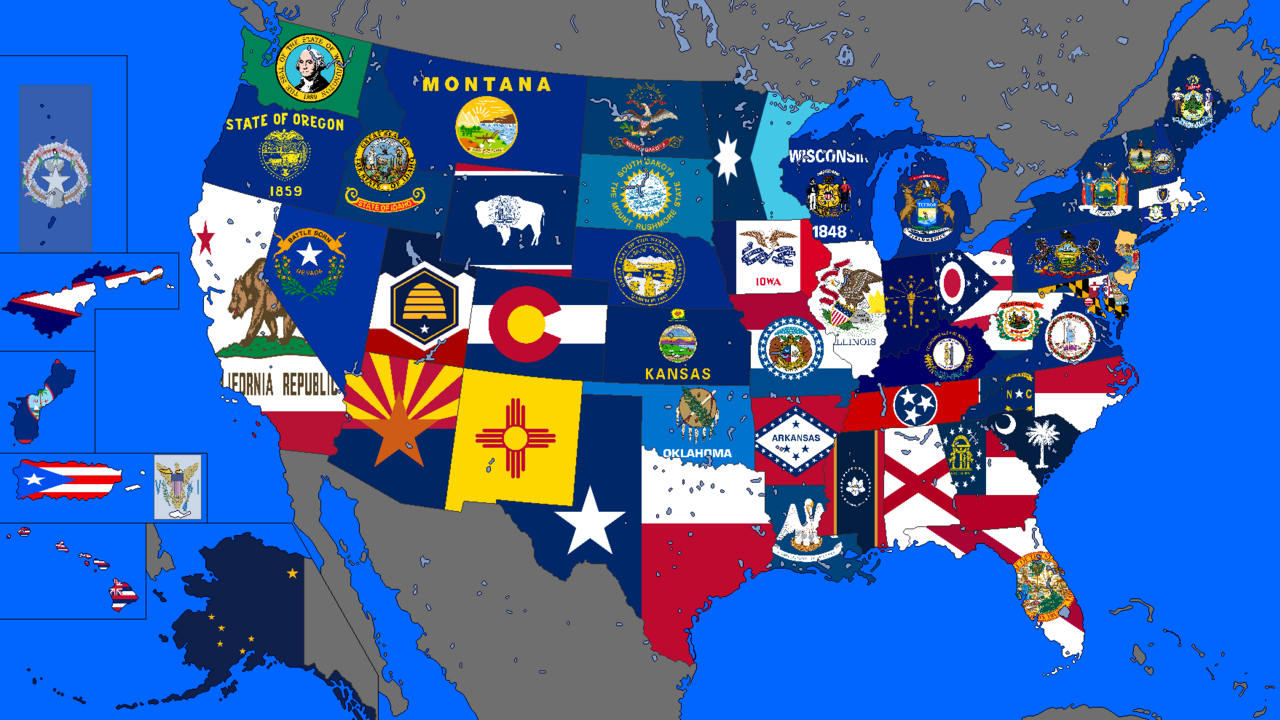
For over a century, the vast majority of US state flags have looked remarkably identical from a distance. Navy blue backgrounds slapped with complex, unreadable state seals seemed to be the prominent design of a state flag. Today, that era is coming to an abrupt end. States are scrapping their century-old banners in favor of striking, modernized designs. This sudden wave of vexillological reform is rooted in a complex mix of shifting cultural values, a reckoning with controversial history, and a booming internet subculture that has finally caught the attention of state legislatures.Why the Seal on a Bedsheet Design is Finally DyingFlag of Washington. Source: Wikimedia CommonsIn vexillology, the phrase seal on a bedsheet describes a flag that contains a state or nations seal set on a solid-colored background. This design, currently being phased out by a number of states via legislative action, originates in the American Civil War. It was common at the time for Union regiments to set their insignia on a solid blue background for use as their banner.Furthermore, in 1893, the Worlds Columbian Exposition in Chicago (colloquially the Worlds Fair), created a demand for states to create flags of their own as they sought representation at this historic and global event. Complex seals set on solid backgrounds was once again the go-to design utilized by commercial artists at the time.Recently, however, the seal on a bedsheet design has fallen under criticism, with many calling out this designs lack of distinctiveness and poor visual intelligibility, despite about half of US states using a flag of this type.The issue of poor visual intelligibility has been brought up repeatedly, especially after numerous instances of seal on a bedsheet flags being flown upside down unknowingly. Additionally, manufacturing costs for such flags are more expensive than their more symmetrical counterparts due to the necessity of printing unique images on both sides of the flag.What Are the Rules of Good Flag Design?The old and new Utah state flags. Source: route-fifty.comThe North American Vexillological Association (NAVA), an organization of flag enthusiasts and scholars, has made significant contributions to the efforts of many states updating their flags to more modern and simplistic designs. The organization highlights five key principles that instruct individuals on how to create a meaningful and effective flag design:PrincipleDescriptionKeep It SimpleThe flag should be so simple that a child can draw it from memory.Use Meaningful SymbolismThe flags images, colors, or patterns should relate to what it symbolizes.Use 2 or 3 Basic ColorsLimit the number of colors on the flag to three which contrast well and come from the standard color set.No Lettering or SealsNever use writing of any kind or an organizations seal.Be Distinctive or Be RelatedAvoid duplicating other flags, but use similarities to show connections.What can be gleaned from this list is that many of the flags originally created for US states break, more often than not, multiple rules from this list. Of course this list, created by NAVA, does not constitute any sort of law or official ruleset. This is exemplified by the changing of Mississippis flag into one that contains lettering, as explained below. Yet, it would still be wise to adhere to these principles when creating a flagmore broadly, a symbolthat will be displayed before a seemingly innumerable number of people from a vast variety of cultures and backgrounds.How Controversial History Sparked the Redesign MovementFlag of Minnesota (1983-2024). Source: Wikimedia CommonsTo put a long and complex story into a few words, around 2020, many Americans began to take a more critical look at their history and the symbols in their culture used to represent that history. People decided that some things needed to be changed. Take, for example, the state flag of Minnesota. Changed in 2024 into a light-and-dark blue-shaded flag with a single white star, the original flag of the Land of 10,000 Lakes was rebuked for its outdated depiction of a Native American. The Lieutenant Governor of Minnesota, Peggy Flanagan, praised the new design as one that better represents all Minnesotans.Redesigned Minnesota State Flag. Source: Wikimedia CommonsThis push for flags to better represent the current populace of a state, rather than a specific historical faction, is no better represented than by the situation surrounding the state flag of Hawaii. Red, white, blue, and with the Union Jack in the top left corner, the current Hawaiian flag is under scrutiny for representing Hawaiis oppressors, rather than the actual people that currently live there. The search is on for a new design of Hawaiis flag that better represents its multicultural people and their heritage.These states seeking to make changes to their flags are but two examples of many that illustrate how modern sensibilities are pushing lawmakers and voters to adopt new symbols that represent all citizens, and do not contain offensive or outdated imagery. On that note, however, there is one case that stands above the rest.Mississippi and the Fall of Confederate ImageryOld and New Mississippi State Flags. Source: fox29.comThis may come as a surprise to many, but the flag of Americas confederate south persisted long after the end of the Civil War. Up until 2021, Mississippis state flag prominently displayed the stars and stripes of the confederate flag. It was the last flag in the US to display this symbol.Following calls for racial justice in America in 2020, Mississippis state government took up the initiative of redesigning their flag in an effort to accurately represent the current population. After narrowing down a number of submissions, the people of Mississippi voted on the new design, and a red, yellow, and blue flag with a white magnolia flower and the words In God We Trust was chosen on January 11, 2021. It is dubbed the New Magnolia or the In God We Trust flag.Mississippi has set a new precedent for the successful transition from one flag to another. The state has proven that the redesign of a historic symbol can be a unifying experience, rather than one that is permanently divisive.The Role of Grassroots Vexillology and Citizen DesignersRoman Mars gives his TED Talk. Source: TED TalksThe rise of social mediaand the internet in generalhas brought many topics to attention in the eyes of the public, and flag design is no exception. A seminal 2015 TED Talk by radio producer and podcaster Roman Mars went viral for its critique of the flags you see every day. Titled Why city flags may be the worst-designed thing youve never noticed, Mars talk was the catalyst for numerous city and state flag redesigns. It also got the discussion started on the internet, in places such as Reddit.The Reddit Vexillology community has over 500,000 weekly visitors, and is the center for online flag-related discourse. Such online forums allow for public discourse, and eventually lead to real change. Take, for example, the 2022 redesign of the Utah state flag, which had more than 7,000 residents submit redesign proposals online for the states successful More Than A Flag campaign. The online discussion of this event was thriving, with dozens of Reddit posts receiving thousands of upvotes and hundreds of comments each.Which US States Are Changing Their Flags Next?1901 Flag of Maine. Source: Wikimedia CommonsAfter the success stories of Minnesota, Mississippi, and Utah, many other states are now looking into a vexillological redesign. In both Illinois and Massachusetts, legislation has been introduced that would allow for the change of both states seal on a bedsheet flag designs. While no final answer has been made in either state due to split public opinion, the discussion is well underway.In the state of Maine, however, it is an interesting situation. Rather than voting on a newly-submitted redesign, a 2024 proposal submitted to the state legislature suggested that the state revert back to its pre-1909 flag design, consisting of a green pine tree and blue star set on a cream colored background. This is in contrast to the current seal on a bedsheet design. This proposal received 45% of the vote, which was not enough to turn this idea into a reality, but does go to show that a sizable number of people are ready for something new.Finally, Washington, Oregon, and Michigan all have flag redesigns in the talks. But will these come to fruition? Only time will tell.Will the Modern Corporate Flag Aesthetic Last?Finalists for Minnesota State Flag Redesign. Source: MPR NewsWhat weve seen thus far is a shift from traditional flag designs, boasting complex seals and historical imagery, into more modern iconography, featuring geometrical shapes and patterns. While a great many people are in support of this change, there are also those that criticize it for being too corporatized and sterile. Other criticisms include that of motivation; that flag redesigns are not rooted in a genuine desire for a better symbol, but rather an increased push for progressive agendas.Still others say that strict adherence to NAVAs principles make for flags that are too similar, too uniform, and ultimately, unoriginal and nondistinctive; making a full circle back to the original criticisms of the seal on a bedsheet design.Are generic and modern designs superior to their more maximalist, traditional counterparts? Will the flags of the past make a comeback in the future? Let us wait and see if these new flags will stand the test of time, or if future generations will long for the charm of the older designs.
0 Comentários
0 Compartilhamentos
21 Visualizações

 English
 Arabic
 French
 Spanish
 Portuguese
 Deutsch
 Turkish
 Dutch
Dutch
 Italiano
 Russian
 Romaian
 Greek
Greek