Glencoe hoard linked to massacre finds home in the Highlands
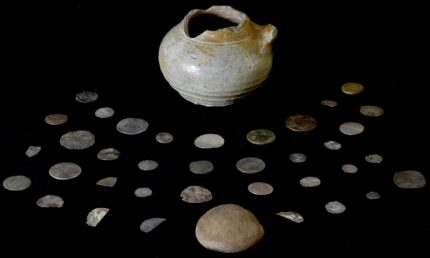
The Glencoe coin hoard, linked to the brutal 1692 massacre of the Glencoe MacDonald clan and maybe even buried by one of its victims, is going on permanent display at the Glencoe Folk Museum in the Scottish Highlands near where it was found.The hoard was discovered in 2023 during an excavation of a summerhouse in a glen near the Pass of Glencoe that was used as a hunting lodge or feasting hall by chief Alasdair Ruadh MacIain MacDonald of the Glencoe MacDonald clan. The coins had been placed in a pot and covered with a pebble before burial under the hearth of a grand stone fireplace.The pot contained silver and bronze coins from the 16th and 17th centuries. Most of them were British coins, minted by Elizabeth I, James VI of Scotland/James I of Britain, Charles I, the Commonwealth, Charles II. However, it also contained a bronze coin of Philip IV of Spain (r. 1621-1665), a brass coin of Louis XIII of France (r. 1610-1643) and a rare quattrino of Pope Clement VIII (r. 1592-1605). Other objects discovered in the excavation of the hoard include:musket shot, a powder measure, spindle whorls, and high-status pottery from England, France and Germany, including a large fragment from a beardman jug produced in workshops on the Rhine.None of the coins found in the hoard were minted after the 1680s, which indicates they were hidden right before or even during the massacre. Since nobody ever returned to retrieve this valuable treasure, its possible the person who buried it was one of the killed. Another possibility is that it was buried there by a survivor fleeing the massacre who never had the opportunity to return. The presence of English coins is expected in a Scottish hoard, but the European coins and pottery fragments suggest some of the coins may have been collected by Maclain himself who was known to have traveled widely on the continent.Dr Eddie Stewart, senior archaeology lecturer at Glasgow University, said of the project: The excavations at the summerhouse site, and our surveys and excavations in the wider landscape, paint a vivid picture of the world of the Macdonald of Glencoe chiefs. Instead of wild and savage clansmen in a remote glen, they were highly educated, well-travelled and better connected with access to continental educations, imported wine and tobacco, and fine dining wares from Germany, France, and England.The coins from the hoard highlight these connections which surely played a part in how the chiefs presented themselves and performed their status and worldliness to their clan, kin, and guests.The Glencoe Folk Museum is the ideal location to tell this story, as it combines the charm of authentic 1800s thatched croft cottages with a new fully accessible exhibition space and a remote engagement program that makes the museums collections and events available worldwide via the internet. It is currently closed for construction and will reopen early next year.Catriona Davidson, the Curator of Glencoe Folk Museum, said: We are so excited to be adding these artefacts to our collection. One of the aims of our current redevelopment project is to create exhibition spaces with the environmental conditions and security to allow us to acquire more significant objects and were thrilled that this has already paid off.Items such as these give us a tangible connection to the people who lived here in the past and can tell us so much about everyday life in the Glen. We cant wait to work with the archaeology team to interpret the artefacts for the Museum and share their stories in the place where they were discovered.




 English
 Arabic
 French
 Spanish
 Portuguese
 Deutsch
 Dutch
Dutch
 Italiano
 Russian
 Romaian
 Portuguese (Brazil)
 Greek
Greek