


WWW.THECOLLECTOR.COM
Why Geishas Are Not Courtesans and How This Myth Began
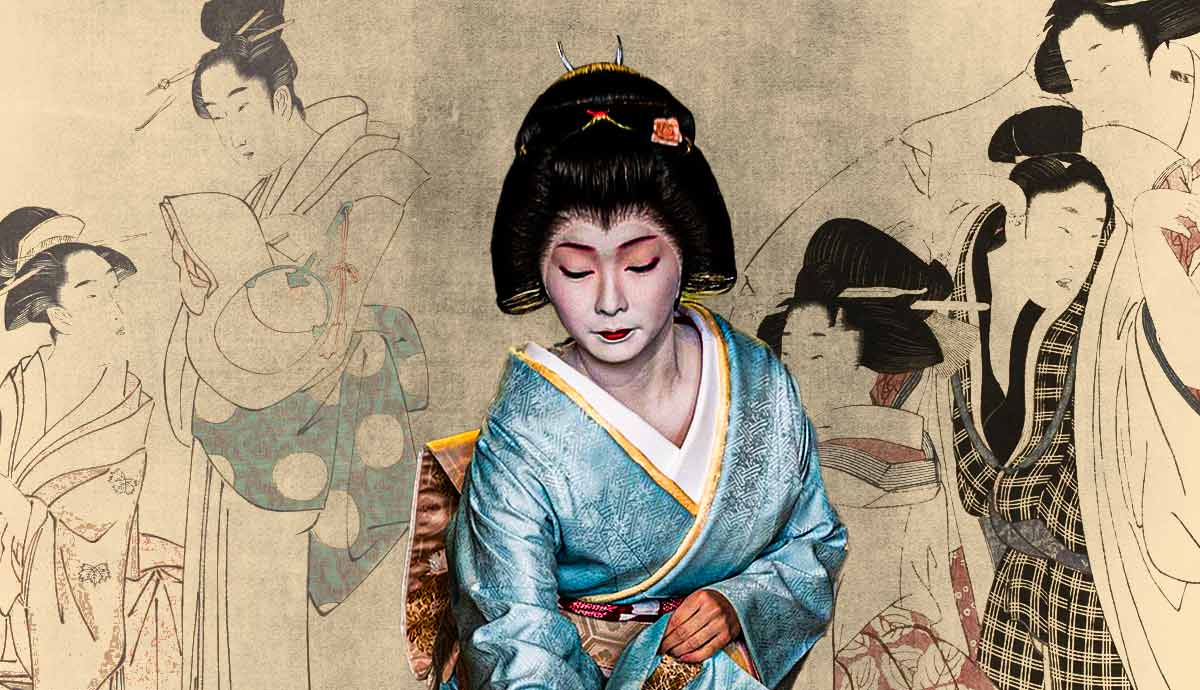
Donning a bright white face make-up and immaculate sculpted black hair, geishas are typically clad in traditional flowing kimonos. Literally translating to art person or artist, geishas are exceptionally gifted in dance, music, singing, and in engaging in conversations with their patrons. Partly due to misconceptions in Western media, geishas have long been assumed to be courtesans. While cases of them having relations with their patrons existed, this persistent belief is most definitely untrue.How Geishas Training Differentiated Them From CourtesansMaiko and geisha playing musical instruments, 1915. Source: New York Public LibraryThe journey to becoming a geisha has been known to be an arduous pursuit, typically spanning a girls childhood and teenage years. While most girls enter the profession today out of their own volition, impoverished girls in the past were being sold into an okiya (geisha house) at a tender age. Starting as a shikomi, they would be tasked with household chores and run errands while learning the posture and etiquette of their seniors. Soon they progressed to the minarai stage, where they would no longer have to perform chores and could instead shadow the senior geisha at banquets.Maiko at the spinning wheel, 19071918. Source: New York Public LibraryFormal artistic training would begin when these girls turned 18 and became maiko (apprentices). Dressed in the most colorful kimono, a maiko had to master the art of dance, shamisen (music), tea ceremony, singing, and refined conversation. Special training in the craft of subtle flirtation, graceful movement, as well as playful banter would serve to prepare the maiko for the life of a geisha in future. Years of apprenticeship would finally culminate in her formal debut as a geisha with the erikae, also known as the Turning of The Collar ceremony.Historical OriginsTwo Geisha by Chbunsai Eishi, 1792. Source: The Metropolitan Museum of Art, New YorkHistorically, geisha culture is generally accepted to have taken root in 17th-century Edo Japan, where it flourished alongside the pleasure districts in urban centers. Before their time, female performers in the Heian period (7941185), known as saburuko, engaged the nobility in song, dance, and conversation. Later during the Kamakura (1185-1333) and Muromachi (1336-1573) periods, shirabyoshi performers who donned male clothing kept the aristocratic circles entertained with religious and classical dances. These early forms of performance art laid the foundations for the highly codified and artistic world of the geishas from the 17th century onwards.When Geishas Were MenWoodblock print of a kabuki scene featuring three dancing male geishas alongside a female geisha by Utagawa Yoshiiku, 1864. Source: Museum of Fine Arts BostonContrary to popular belief, geishas in the past were predominantly male, with their origins dating as far back as the 13th century. Before the first female geisha was recorded around 1750, geishas were exclusively male entertainers in the pleasure quarters of Edo (modern-day Tokyo), Osaka, and Kyoto. They were highly sought after for their witty jokes, songs, and dances at teahouses and social events, captivating distinguished members of the nobility and samurai class. As skilled entertainers proficient in creating a relaxed atmosphere for their patrons, male geishas wore many hats: those of court jesters, storytellers, musicians, and companions.Spring Scene of Nakanocho in Shin Yoshiwara, Edo, Japan, a licensed pleasure district by Utagawa Hiroshige, 1839-1842. Source: Art Institute ChicagoHowever, by the 18th century, male geishas had fallen out of favor as they became associated with low-brow humor and raunchy performances. It was said that the government had such little respect for male geishas that they refused to register their profession in the official census. Alongside the dwindling samurai class, who were their key patrons, male geishas found themselves increasingly threatened by the rising popularity of female geishas. In 1800, the number of female geishas was three times that of male geishas.The Women in the Pleasure QuartersScenes from the Pleasure Quarters by oka Michinobu, early to mid-18th century. Source: Minneapolis Institute of ArtWithin government-sanctioned pleasure quarters like Yoshiwara, Shimabara, and Shinmachi, geishas plied their trade among those known as yujo (woman of pleasure). Against the backdrop of the romanticized floating world, this proximity and association contributed to the misconception that geishas, too, were part of the flesh trade. However, in reality, women in the highly regulated pleasure quarters adhered to a strict social hierarchy, with clearly distinguished roles and functions.An Oiran accompanied by two Kamuro by Torii Kiyonaga, circa 1615-1868. Source: The Metropolitan Museum of Art, New YorkAt the top of the yujo pecking order was the extravagantly dressed oiran (high-class courtesan) who commanded wealth and prestige. Men would dream of spending an evening in her company, but in reality, only a select few could enjoy this privilege. The oiran boasted an exclusive clientele comprising powerful merchants and high-ranking samurai. Intimacy with her was never immediate; it was the fruit of an extended, ritualized process blending courtship, entertainment, and artistry. This was in sharp contrast to the quick, transactional lovemaking with little ceremony offered by the lower-ranking courtesans. Trapped in the system of debt bondage, most of these lower-ranking workers had been sold into the trade as children. With little control over their clients or living conditions, many were also susceptible to abuse and venereal diseases.Geishas Were Forbidden From Selling Sexual ServicesTwo Courtesans and a Geisha by Torii Kiyonaga, 1783. Source: The Metropolitan Museum of Art, New YorkUnlike a yujo, a geisha was prohibited from offering sexual services to her clients. This was an explicit rule put in place for two main reasons. One was to preserve the sanctity of their roles as entertainers; the other was to ensure that geishas did not pose as direct competition to courtesans. Should a courtesan accuse a geisha of stealing business, an official investigation would be launched, potentially costing the geisha her livelihood. Similarly, a geisha was not allowed to don flashy accessories or wear a lavish kimono, as these were often associated with the oiran.But There Were a Handful of ExceptionsTwo Geishas and a Tipsy Client by Kitagawa Utamaro I, 1805. Source: Philadelphia Museum of ArtSome geishas in the past, usually the more established ones, were known to have a danna, which translates to patron. Typically wealthy, he would finance the geishas expenses and shower her with gifts in exchange for a more exclusive relationship, which may or may not include sex. However, whether or not intimacy was part of the picture, the geisha-danna relationship was a highly respected one. For the danna, it represented his wealth, as well as his cultural sophistication. For the geisha, it meant that she was highly desirable and artistically accomplished.A scene from Hot Spring Geishas (1968), a movie revolving around the lives of onsen geishas working in a small seaside resort town. Source: IMDbAway from the glamor of established pleasure quarters in cities, there existed not-so-accomplished geishas who struggled with abuse and debts. Making a living in onsen (hot spring) towns, they were known as onsen geisha whose image was often negative and associated with sex work. In an autobiography published in the 1950s, former onsen geisha Sayo Masuda described how she went through mizuage, a ceremonious practice where rich patrons would bid to deflower a maiko.Masuda was later forced to pretend to be a virgin by the profit-hungry mother of her okiya, who sold her four more times. Mizuage is a controversial, now-obsolete rite that had been heavily disputed by some geishas. While those like Masuda detailed first-hand experiences with mizuage, others such as Mineko Iwasaki, a famed geisha in the 1960s from Gion, Kyoto, vehemently insisted that no such practice ever existed where she worked.Stereotypes Through a Western LensMemoirs of a Geisha by Arthur Golden, 1997. Source: GoodreadsHailed as Japans most famous geisha, Iwasaki is known for her memoir Geisha, a Life (2003), where she sought to correct pervasive misconceptions about geishas. Iwasaki was previously interviewed by American writer Arthur Golden as part of his research for the popular, but hugely controversial novel Memoirs of a Geisha (1997). The two were later embroiled in a legal dispute after Iwasaki sued Golden for breach of confidentiality and defamation. Sharing her experiences with Golden on the condition of anonymity, Iwasaki was aghast when the latter thanked her explicitly in the acknowledgements section of the novel, which she claimed was made up of distorted facts about geishas.Memoirs of a Geisha (2005), directed by Rob Marshall, was praised for its lavish visuals but criticised for its historical inaccuracies and Orientalist portrayals. Source: IMDbThough well-received in the West and later adapted into a film, the 1997 novel was arguably guilty of perpetuating stereotypical misrepresentations and Western fetishization of geishas. For example, the protagonist Sayuris entire career as a geisha was framed by the sensationalized depiction of mizuage. Geishas were also portrayed as exotic and submissive Eastern women who existed for the male gaze and attention. Such harmful misrepresentations did little justice to a geishas arduous years of rigorous artistic training in real life. Not only were they being cast as objects of male gratification, their true roles as accomplished, refined performers were also diminished.Geisha Girls in Post-World War II Occupied JapanU.S. servicemen walking into Yasuura House, one of the comfort facilities in Yokosuka, Tokyo, 19451946. Source: Wikimedia CommonsLong before Memoirs of a Geisha, the West had associated geisha culture primarily with sleazy entertainment. During the Allied Occupation of Japan (19451952), after World War II, the notorious Recreation and Amusement Association (RAA) was established to provide organized prostitution. Rationalized as a way to prevent sexual violence on the general population, the RAA set up comfort facilities for the Allied soldiers stationed in Japan. Staffed by some 50,000 workers, these facilities included bars, restaurants, and brothels.Marine on patrol passes geisha girls on Kyushu, 1945. Source: The National World War II MuseumThe women working in these establishments comprised those already in the trade and those lured into it by misleading and vague job advertisements. Some of them brandished the name geisha girls while serving drinks, dancing, and sleeping with the Allied soldiers. Partly due to the language barrier and similar kimono wear, geisha girls became synonymous with prostitution, furthering the Western misconception about geishas profession.Tides of Change: Legislative and Social ShiftsProstitutes on the lookout for customers in a poorer section of Yoshiwara after the Second World War, 1946. Source: Maryland Institute for Technology in the HumanitiesIn 1956, the Japanese government introduced a Prostitution Prevention Law that essentially criminalized prostitution and archaic practices such as mizuage. Coming into full effect in 1958, this critical legislative shift greatly benefited the geisha, with a clearer demarcation of their social functions, vis--vis sex workers. A monumental step towards redefining their profession, the post-1958 milieu allowed the geisha to reclaim their identity as custodians of traditional Japanese art and culture.Two geishas walking in Gion, Kyoto, Japan by Marie-Sophie Mejan, 1987. Source: Wikimedia CommonsNonetheless, as post-war Japan saw improved educational opportunities, rapid urbanization, and modern entertainment venues, like hotels and nightclubs, the appeal of the geisha profession dimmed. In particular, compulsory education laws in the 1960s significantly reduced the training period for geishas-in-training as girls could no longer start at a tender age. By the 1980s, it was clear that Japan had left its Edo-era culture behind in pursuit of a modern, technologically advanced society. The number of geishas dwindled to around 17,000, a sharp dip from the estimated 80,000 active in the 1920s.Are Geishas Courtesans? NoA geisha based in Kyoto performing a dance with a fan by Sawai Susao, 2019. Source: Wikimedia CommonsToday, while only about 1,000 geishas remain active in Japan, they are revered as custodians of centuries-old arts such as classical dance and tea ceremony. Their presence is most prominent in Kyoto, where several historic geisha districts continue to safeguard and showcase Japans cultural heritage. Since the 17th century, the geisha profession has weathered numerous challenges: from negotiating its place within the pleasure quarters to adapting to relentless political changes. Once burdened by gross misrepresentations, geishas have come a long way since and are now celebrated as symbols of pride and refined artistry in Japan.
0 Yorumlar
0 hisse senetleri
1 Views

 English
 Arabic
 French
 Spanish
 Portuguese
 Deutsch
 Dutch
Dutch
 Italiano
 Russian
 Romaian
 Portuguese (Brazil)
 Greek
Greek