


WWW.THECOLLECTOR.COM
How Bathsheba Went From Davids Greatest Sin to His Heirs Mother
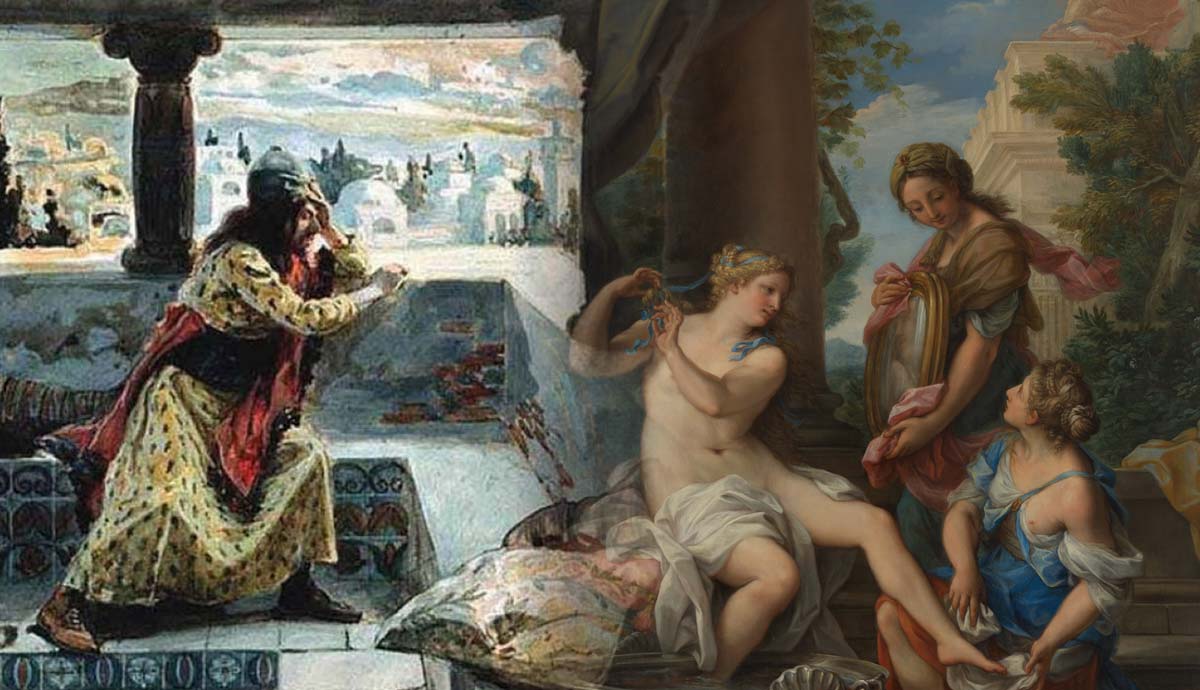
When it comes to biblical immorality, no one quite delivers like King David upon seeing Bathsheba. Their story reads like a fever dream of soap opera scandal: a kings rooftop lust, a bathing beauty, a husband sent to his doom, and a prophet with receipts from the Almighty. Oh, and lets not forget the aftermath: a dead child, a cursed lineage, and a second son who would go on to build the Temple and become one of the wisest (and most infamous) monarchs in history. Bathsheba emerges as a cunning power player, securing her son Solomons place on the throne. The tale is as layered as it is unsettling, leaving us questioning the nature of power, agency, and how one royal misstep has echoed throughout history.King David on a Rooftop, Instead of Fighting a WarKing David Spies Bathsheba, by James Tissot, 19th century. Source: PicrylBy the time of the infamous rooftop incident, David had been king for over 15 years. He had transformed from the shepherd boy who took down Goliath to a seasoned ruler, well-established in his palace in Jerusalem. His kingdom was flourishing, his conquests were piling up, and his personal life was, lets say, complicated. With six wives already sharing his royal quarters, David wasnt exactly experiencing poverty in the consort department.By ancient custom, spring was the season when kings went out to war. Yet David, the once-hands-on warrior-king, stayed behind in his palace, delegating the campaign to his loyal general Joab. Joab and the Israelite army were laying siege to the Ammonite capital, Rabbah; a grueling campaign. Among those enduring the brutality of the battlefield was Uriah the Hittite, one of Davids elite soldiers. Calling him a Hittite, and remembering him thusly, also seems to be a bit of a literary backhand. He was probably a second-generation Israelite, as the name Uriah isnt one of Hittite origin.Uriah was part of the Thirty, a group of highly skilled warriors who formed the backbone of Davids military might. To reach that rank required immense courage and skill; Uriah had earned this place. Yet as he fought on the front lines, his king stood on his palace rooftop, enjoying the comforts of home. It was there that David noticed Uriahs wife, Bathsheba, bathing nearby.The story spiraled from there. David, already married in the multiple, was overcome by his desire for Bathsheba and summoned her to a meeting.The Girl on the RooftopBathsheba Mourns, by Henri de Triqueti, 19th century. Source: Wikimedia CommonsBathshebas story invites modern readers into deeply uncomfortable territory. When modern folk imagine her bathing on a rooftop, the titillating scene conjured is often one of a grown woman intentionally seducing the king, soaping up where he can easily spy on her. But lets pause and look at the context: Bathsheba was likely very young. Young enough, in fact, that she just may have been purifying herself after experiencing her first menstrual cycle.Bathsheba wasnt a stranger to King David, either. Her grandfather, Ahithophel, was one of Davids most trusted advisors, a man renowned for his wisdom and influence. Her father, Eliam, had been one of Davids elite warriors, also counted among the Thirty. Bathsheba had grown up in a family that served Davids court and military. She wasnt some unknown beauty who suddenly appeared on a rooftop one day. She was part of the extended network of loyalty and service that bolstered Davids reign.Additionally, historical context can clear up a lot of common misconceptions about the rooftop. The bath Bathsheba was taking was most likely part of a mikvah, a ritual purification mandated by Jewish law. She wasnt luxuriating in plain sight to attract attention; she was following religious tradition. The very idea that she was seducing David collapses under scrutiny. If anything, she was fulfilling a religious and cultural obligation, not orchestrating an affair.Ancient Mikvah, Jerusalem. Source: Wikimedia CommonsWhat makes Bathshebas situation even more tragic is her youth and vulnerability. She had been married to Uriah the Hittite, but given her age, their union was likely a political arrangement rather than a marriage of equals. Some scholars argue she may have been too young for the marriage to have even been consummated yet.The story of Bathsheba as a siren says more about historical biases than the truth of her circumstances. She was a young girl from a family who gave themselves into the service of the royal house, married to a soldier, and likely living under the shadow of courtly politics. Her choices were shaped by the world around her, where a kings summons was not a request but a command. She simply had no choice.David Summons Her, She Gets Pregnant, Then What?Illuminated text, Bathsheba Bathing, Medieval. Source: GetArchiveThey meet. They know each other. Then, as far as the king is concerned, the tryst is over and his hunger is sated. That is until Bathsheba notifies him that she is carrying proof of the affair. If, as some suspect, she hadnt known any man before the king, her life was suddenly in even more dire straits. The consequences of being labeled an adulterer were fatal: stoning was the punishment prescribed by law. Bathshebas fate, and the fate of the child that grew within her, were tied to Davids decisions. Both of their survival depended on the kings willingness to protect her, and his choices left much to be desired.Davids first attempt to cover up his actions was riddled with faulty smoke and mirrors. He summoned Uriah back from the battlefield, ostensibly for a report on the war. The kings real intention was to send Uriah home to sleep with Bathsheba, creating the illusion that her child was conceived within the bonds of matrimony. However, Uriahs loyalty to his comrades and his unyielding sense of duty prevented him from enjoying comforts denied to his fellow soldiers. Not even Davids ploy of getting the soldier drunk could sway him.When deception failed, Davids solution turned deadly. He sent Uriah back to the front lines with sealed orders instructing Joab to position him where the fighting was fiercest and then withdraw support, ensuring Uriahs death. The man unknowingly delivered his own death sentence. The plan worked, and Uriah was killed in battle; a betrayal that left Bathsheba widowed and free to remarryquickly.Bathsheba Bathing, from the Book of Hours, 1300-1500. Source: GetArchiveAfter a brief mourning period for Uriah, Bathsheba was brought to the palace and married to David. To the public, it may have seemed like an act of gentle stewardship, a king caring for the widow of a soldier who had served him well. In reality, it was damage control. But the prophet Nathan saw through Davids ploy and delivered a devastating rebuke. In a parable that mirrored Davids sins, Nathan likened him to a rich man who stole and slaughtered a poor mans only lamb. When David condemned the hypothetical man, Nathan struck with the truth: You are the man!Nathans prophecy foretold violence and tragedy within Davids household; a punishment that began with the death of Bathshebas child. The baby did not live longer than seven days, leaving Bathsheba to grieve yet another loss. In a matter of months, she had been torn from her first marriage, thrust into a dangerous relationship with a much older man, and lost her firstborn child.Again, somehow, she managed to pick up the pieces and continue living. She went on to have four more sons with David: Shammua, Shobab, Nathan (not to be confused with the prophet), and Solomon. Her enduring friendship with the prophet Nathan, who had foreseen that Davids sins would lead to death in her own family, suggests a remarkable strength and resilience in the face of such overwhelming trauma.Enter SolomonBathsheba Leading Solomon, by Gilles Rousselet, 17th century. Source: Look and LearnSolomons birth marked a turning point in Bathshebas story, both as a mother and as a woman wielding political influence in a world shaped by and for men. By the time of Solomons birth, David was nearly 50 years old burdened with a tumultuous household. Bathsheba, likely still a teenager, now had to navigate the childhood of a vulnerable son; a son whose future would shape the destiny of Israel.When Solomon was born, the prophet Nathan, who had once rebuked David for his sins, delivered a message of grace: God loved this child. While in the womb, the Almighty called this baby a Jedidiah, meaning beloved of the Lord, signaling to all his divine favor. This blessing set Solomon apart, but it was Bathshebas calculated influence that secured his path to the throne.Bathsheba at Her Bath, by Giuseppe Bartolomeo Chiari, ca. 1700. Source: The MET, New YorkThough Solomon was not Davids eldest son, Bathshebas determination ensured he was not overlooked in the scramble for succession. Davids indulgence with his other children, particularly his older sons, had already proven to produce nothing but chaos. Amnon, Davids firstborn, committed an unspeakable crime against his half-sister Tamar, and Davids refusal to act led to Absaloms vengeful murder of Amnon. Absalom, in turn, declared himself king and forced David into a humiliating retreat. After all, if David couldnt protect his own daughter or take retribution on her abuser, how could he effectively run a country? Through all this, Bathsheba and Solomon witnessed firsthand the destructive consequences of unchecked ambition and parental inaction.Bathsheba understood the precarious position Solomon was in. Absalom, with his striking beauty and magnetic charisma, had stolen the hearts of the people and likely dismissed Solomon as a mere child. It wasnt this older brother but Bathsheba who saw what others overlooked: Davids growing affection for Solomon and the divine promise attached to him.Young Mother and Child, by Elisabeth Baumann, 19th century. Source: CreazillaAs David aged, his remaining sons jockeyed for power. Adonijah (the next in line after Absaloms murder of Amnon and then his own death after usurping the crown) declared himself king with the backing of key allies. During this final power grab, Bathsheba, in a masterful display of political acumen, approached the ailing David alongside the prophet Nathan. She reminded the king of his earlier vow that Solomon would succeed him all while exposing Adonijahs premature claim to the throne. Her timing and tact were impeccable, compelling David to publicly anoint Solomon as his heir, effectively quashing Adonijahs rebellion before it could take hold.Bathshebas role didnt end with securing Solomons kingship. She remained a trusted advisor and a powerful presence in the royal court (after all, she was now queen mother). Even after Davids death, she skillfully navigated palace intrigues, including Adonijahs attempt to marry Abishag, one of Davids concubines; a move that Solomon interpreted as a threat to his reign. It was Bathsheba who brought this request to Solomon, a gesture that demonstrated her continued influence. She likely knew the outcome would not extend Adonijahs lifespan.Solomon grew to be a man of contrasts, renowned for his wisdom and wealth, but flawed by his insatiable appetite. His request for wisdom at Gibeon earned him divine favor, and his legendary judgment solidified his reputation as Israels wisest ruler. Yet, as he aged, Solomons heart turned toward the foreign gods of his many wives and concubines, leading to spiritual decline and the eventual fracturing of the kingdom after his death. Bathsheba probably did not live to see this change of character.Chalk Imagining of Young King Solomon, by Benjamin Robert Haydon, 1812. Source: The MET, New YorkAs the mother of the wisest king of Israel, she left an indelible mark on history. One can only wonder what Bathsheba thought of Solomons many marriages and his eventual straying from Yahweh. Did she warn him against repeating Davids mistakes, or was she powerless to prevent her son from repeating history?Though the Bible leaves much of Bathshebas inner life to speculation, her actions speak volumes. She rose above scandal and tragedy to become a mother of kings and a wise strategist in a complicated court. Solomons reign, with all its splendor and flaws, was a testament to the strength and influence of the woman who ensured he could live long enough to flourish.
0 Commentarii
0 Distribuiri
20 Views

 English
 Arabic
 French
 Spanish
 Portuguese
 Deutsch
 Turkish
 Dutch
Dutch
 Italiano
 Russian
 Portuguese (Brazil)
 Greek
Greek