


WWW.THECOLLECTOR.COM
The Price Sisters: The Controversial Lives of the Most Famous IRA Volunteers
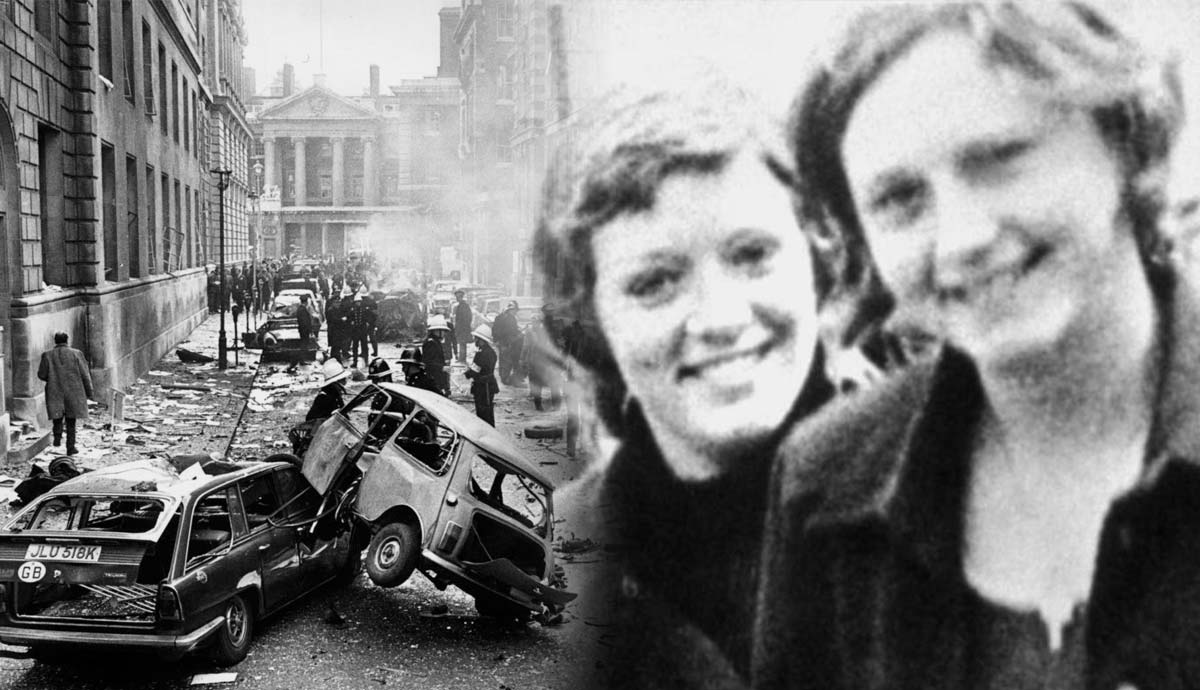
Dolours and Marian Price were involved in Irish republicanism during the decades-long conflict that became known as the Troubles. After the two sisters joined the IRA in the early 1970s, they were soon charged for their involvement in the 1973 IRA bombings in London. Whilst imprisoned, they went on a hunger strike that lasted over 200 days. The Price sisters were also part of the Unknowns, a secret unit responsible for many disappearances during the Troubles, including that of Jean McConville.The Price Sisters: Irish Republicanism Runs in Their BloodDolours and Marian Price pictured at a civil-rights march, 1972. Source: The Irish TimesAndytown, or Andersonstown, is a suburb in the western part of Northern Irelands capital city, Belfast. Nestled beneath two hills that perch high above the city, Andersonstown is a predominantly Catholic, nationalist area of the city. Though it is now a family-friendly, peaceful part of Belfast, it once teemed with paramilitary activity during the Troubles. It was in this suburb that Dolours and Marian Price were reared by a family entrenched in Irish republican ideology.Dolours Price, born in 1950, and Marian Price, born in 1954, were exposed to Irish republicanism from an early age. Their father was a staunch Irish republican and former member of the Irish Republican Army (IRA). Likewise, their mother (and grandmother) were part of the all-female faction of the IRA, the Cumann na mBan. Bridie Dolan, aunt to the Price sisters, lived with the family, and she, too, was a faithful Irish republican. In her twenties, she lost her eyesight and her hands when she accidentally dropped the explosives she was handling for the IRA.The girls grew up hearing stories about their parents taking part in bombings and other paramilitary activities, fostering their desire to follow in their family members footsteps. The sisters decided from an early age that they wouldnt stand on the sidelines of the republican cause but would instead take direct action for a united Ireland.Civil Rights ActivistsInjured civil rights activist at a protest in Londonderry/Derry, 1968. Source: Irish TimesAfter attending school in west Belfast, including a teacher-training course, the Price sisters decided they would make more of a difference in their community if they took part in political activism. In 1969, they participated in the Belfast to Londonderry/Derry civil rights march, where they were attacked by loyalists during the Burntollet Bridge incident.The Burntollet Bridge illustrated the political and civil unrest that had begun months prior in Northern Ireland. Marchers protested gerrymandering, or the manipulation of electoral districts. They called for freedom of speech and fair representation in jobs and housing in Londonderry/Derry, as Catholics were often discriminated against compared to Protestants.However, during the march, activists were attacked by Ulster loyalists. Many Catholics felt that the police force in Northern Ireland, the Royal Ulster Constabulary (RUC), did not protect the marchers from loyalist attackers, furthering the already ignited tensions between nationalist and unionist communities.The Price family was familiar with the RUC, as the force had raided the Price home before due to perceived IRA connections. The Burntollet Bridge incident was a turning point for the two women, inspiring them to take up arms alongside the IRA.Crazy PricesDolours and Marian Price standing outside 10 Downing Street in London, c. 1972. Source: The IndependentTwo years later, in 1971, Dolours Price became the first woman to gain full membership in the IRA. Her membership came on the heels of the reintroduction of internment, a policy by which people, mostly republicans, were imprisoned without a trial. This policy influenced many young people to become volunteers for the IRA, prepared to lose their lives or commit acts of terrorism for Irish independence. Marian followed soon after.The Price sisters walked the streets of Belfast armed, sometimes hiding rifles under their coats for potential confrontations with the British Army. They moved explosives for the IRA, using their charming, self-assured personalities to get through British Army checkpoints. Locally, they were known as the Crazy Prices. The sisters were also involved in high-profile paramilitary activity.Damage after IRA bombings in London, 1973. Source: Pursuit/The University of MelbourneIn March of 1973, bombs were set off in London. A bomb exploded in a car outside the Old Bailey, the Central Criminal Court in London, and one outside of Westminster. The city had been warned before the bombs exploded, though over 200 people were still injured, and one person died of a heart attack. The IRA was behind the bombing, and Dolours herself took responsibility for the campaign. She believed that bombing London would make more of a statement rather than bombing Belfast, so she, along with Marian and other IRA volunteers, planned the attack.The group managed to steal four cars in Belfast and refit them with English license plates, shipping them on a ferry across the sea. Bombs were planted in all four cars, and they were all set to explode before 3 pm. However, an informer within the IRA had tipped off the British police, and the authorities were prepared to thwart the attack. In total, two bombs exploded before the police could detonate them.The IRA volunteers were found at Londons Heathrow Airport, ready to board a flight to Dublin. In total, eight volunteers, including the Price sisters, were convicted and received double life sentences.A Hunger for IrelandBobby Sands and fellow prisoners at Long Kesh prison in Northern Ireland, early 1970s. Source: Bobby Sands TrustOnce imprisoned, the Price sisters decided to go on a hunger strike. Throughout Irish history, Irish prisoners had used fasting and starvation as a form of protest and as an example of their willingness to die for Ireland. In the early 20th century, Irish and British suffragettes alike used hunger strikes to protest the lack of womens rights during the suffragette movement.In 1981, in the midst of the Troubles, Bobby Sands and nine others died on hunger strike as they worked to put pressure on Prime Minister Margaret Thatcher and her government. Years before, though, Dolours and Marian had begun their own hunger strike, demanding to be transferred to a prison in Northern Ireland and to be recognized as political prisoners.Due to public outcry over the sisters being fed against their will in prison, the British government discontinued their force-feedings, though the two continued with their hunger strike for more than 200 days. They were eventually transferred to Armagh prison in Northern Ireland. Dolours spent six years in Armagh and was eventually released because of her physical deterioration. Likewise, Marian was released in 1980 due to her health decline.The UnknownsJean McConville, one of the Disappeared, pictured alongside family, photograph by Doubleday. Source: The Wall Street JournalDolours belonged to the Unknowns, a secret unit in the IRA, and it is believed Marian was also part of the elusive group. The unit was responsible for a number of disappearances during the Troubles, including that of Jean McConville. McConville was a mother of ten who went missing in Belfast in 1972.After being seen helping a British soldier and with rumors spreading that she was an informer, McConville was abducted by the IRA. It is believed Dolours was one of the volunteers who aided in her disappearance, driving her across the Irish border where she was held captive and later murdered. However, it is also rumored that Marian was the one to kill McConville after Dolours had confided to a number of people that Marian was the murderer. McConvilles body was found in 2003 on Shelling Hill Beach in County Louth in the Republic of Ireland.That same year, Dolours was part of the kidnapping and disappearance of Seamus Wright after it was discovered he was a double agent for the British Army. Price drove him and Kevin McKee, a teenager who was also discovered to be an informer, across the border. Both were executed and secretly buried. In 1999, the IRA admitted that it had murdered nine out of the 16 Disappeared, people who had been abducted, murdered, and interred in remote locations by republicans during the Troubles. The remains of three of the victims have never been found.The Price Sisters Lives After the Good Friday AgreementTaoiseach and Fianna Fail leader Bertie Ahern and British Prime Minister Tony Blair signing the Good Friday Agreement, 1998. Source: Ireland.ieAfter she was released, Dolours moved to Dublin, where she worked as a journalist and married the actor Stephen Rea. When the Good Friday Agreement was signed in 1998, both sisters criticized it, believing the deal did not justify the suffering the people of Belfast went through during the Troubles. In the early 2000s, she contributed to the Belfast Project.Based out of Boston College in Massachusetts, the project was an oral history archive intended to document peoples experiences during the Troubles. The director of the project was Ed Moloney, an Irish reporter who had extensive experience interviewing paramilitaries. Dolours was one of more than 40 paramilitaries who were interviewed. She detailed her experiences within the IRA, particularly her participation in disappearances. She revealed that she had driven Joe Lynskey, an IRA volunteer who was caught having an affair with the wife of another IRA member, across the border to his death.Dolours was also known for speaking out against Gerry Adams. Adams is an Irish politician, civil rights activist, and former president of Sinn Fein, a democratic socialist party present in both Northern Ireland and the Republic of Ireland. He was also instrumental during the peace process. Dolours disclosed Adams as her commanding officer in the IRA, though he adamantly denies this claim. Until her death in 2013, Dolours supported a united Ireland.A woman leaves flowers at the entrance of the Massereene Army Base. Source: Belfast TelegraphIn 2009, Marian Price was arrested in connection with the attack on the Massereene Barracks in Northern Ireland. The attack left two British soldiers dead. She was charged with supporting an act of terrorism by providing an object for the purpose of a terrorist attack. She was later charged with supporting an illegal organization after presenting at a rally in Londonderry/Derry, which commemorated the Easter Rising. In 2011, she was imprisoned but was released in 2013 after protests.In late 2024, Marian spoke out against her alleged involvement in the disappearance of Jean McConville. In the TV adaptation of Say Nothing, journalist Patrick Radden Keefes book detailing the Troubles, Marian is depicted murdering Jean McConville. She has threatened to sue Disney+ over the depiction, saying that she had nothing to do with the disappearance or murder. However, Keefe supports the claim that Marian murdered McConville.The Price sisters were complicated and controversial figures, representing not only the cost of the Troubles in Ireland as a whole but also of families caught in the crossfires of the conflict.
0 Reacties
0 aandelen
27 Views

 English
 Arabic
 French
 Spanish
 Portuguese
 Deutsch
 Turkish
 Italiano
 Russian
 Romaian
 Portuguese (Brazil)
 Greek
Greek