


WWW.THECOLLECTOR.COM
Queen Elizabeths Divisive Visit to Belfast During the Troubles
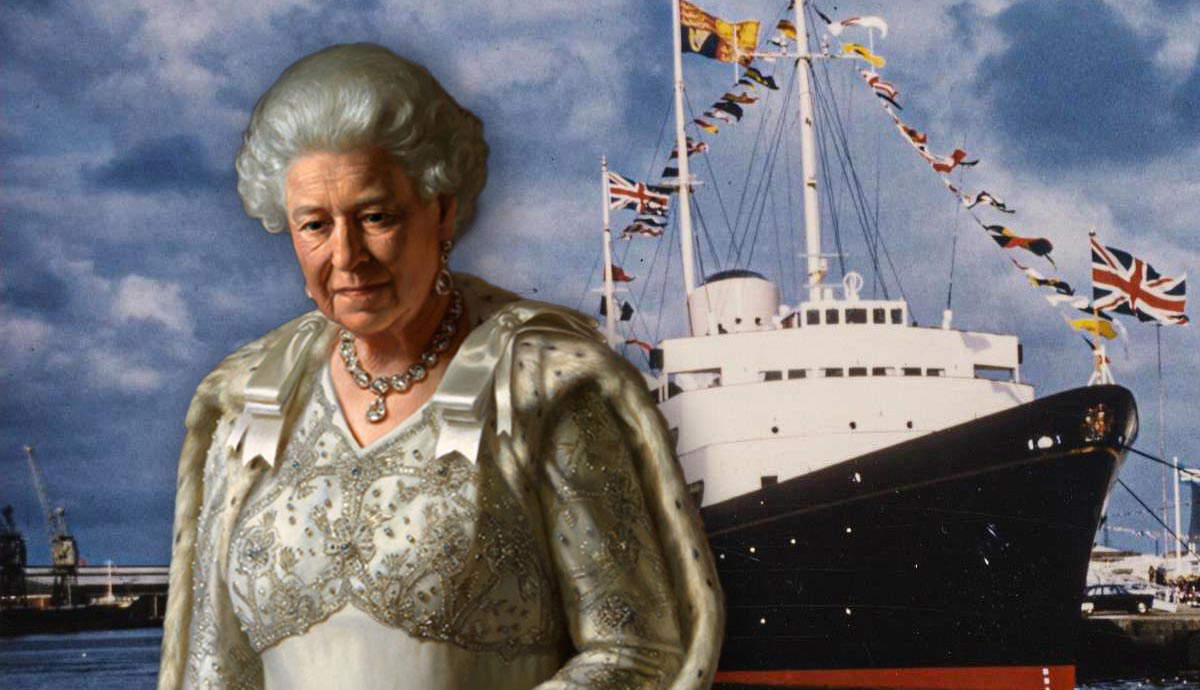
Queen Elizabeth IIs Silver Jubilee in 1977, marking the 25thanniversary of her reign, came after one of the bloodiest years of the Troubles, the sectarian conflict that ravaged Northern Ireland for three decades from 1969 to 1998. For the first time in eleven years, the Queen decided to visit Belfast, then one of the most dangerous cities not only in the United Kingdombut in the whole of Europe. Unionists and Loyalists, loyal to the Crown and determined to maintain Northern Irelands status within the United Kingdom, felt reassured. On the other hand, Nationalist and Republican groups saw her visit as a further insult and a symbol of British imperialism.Belfast, 1977Civil Rights protesters from Derry meeting the Paras during a peaceful protest near Magilligan Prison, just a week before Bloody Sunday, photograph by Eamon Melaugh, 1971. Source: The Museum of Free DerryQueen Elizabeth IIs visit to Northern Ireland as part of her Silver Jubilee Tour came at a particularly tense time. Indeed, the early months of 1977 were a turning point in the history of the Troubles. 1976 had been the second bloodiest year in the history of the Troubles with 308 victims, the vast majority, 220, were civilians.As McKittrick & McVea note in Making Sense of the Troubles, Loyalist violence (violence perpetrated by Loyalist paramilitary groups determined that Northern Ireland should remain part of the United Kingdom) fell sharply, going from 127 killings in 1976 to just 28 in 1977. In the five years prior to 1977 the loyalist toll was 590; in the five years from 1977 on it was only 84. One of the reasons for this was the appointment of Roy Mason (1925-2014) as Secretary of State for Northern Ireland in September 1976.Women of the Derry Womens Action Committee protesting against internment in Waterloo Place, Derry, 1971-72. Source: The Museum of Free DerryDetermined to defeat the Irish Republican Army (IRA), whose members Mason believed were nothing less than terrorists, as well as Loyalist paramilitary groups, he immediately made it clear that the British would never withdraw from Northern Ireland. As a result, many reassured Loyalists began to move away from violence.Masons security and political policies for Northern Ireland were based on the three-part strategy introduced by his predecessor, Merlyn Reese (1920-2006): normalization, Ulsterization (also known as the primacy of police) and criminalization. The only way to achieve a normalization of the situation in Northern Ireland, that is, to reduce the level of violence and the death toll, was to cause an Ulsterization of the conflict by recruiting the men of the Royal Ulster Constabulary (RUC) and Ulster Defence Regiment (UDR) locally and reducing the number of British soldiers killed and wounded.The third part of the strategy, criminalization, involved the abolition of special category status for Republican prisoners, who would then be considered ordinary, rather than political, prisoners.Street party to celebrate the Silver Jubilee in Lynwood Chase, Bracknell, photograph by Chris Mitchell, 1977. Source: Wikimedia CommonsIn May 1977, the loyalist United Unionist Action Council (UUAC) launched a major strike to pressure the British government into a tougher security policy and restore majority rule, that is, devolved government in Northern Ireland under a system of simple majority rule. As gangs of Ulster Defence Association (UDA) men appeared on the streets of Belfast threatening shopkeepers, blocking roads, and hijacking vehicles, the strike quickly became known as Paisleys strike, after Ian Paisley (1926-2014), then leader of the Democratic Unionist Party (DUP). In 1977, after eight years of conflict, Northern Ireland was still one of the most dangerous and militarized areas in Europe. So were Belfast and Derry/Londonderry, which Queen Elizabeth visited in August.The Silver JubileeHer Majesty Queen Elizabeth II and his Royal Highness the Duke of Edinburgh in Australia in 1954. Source: National Museum of AustraliaIn 1977, Queen Elizabeth II celebrated the 25th anniversary of her accession to the throne. She was a 25-year-old mother of two when her father, George VI (1895-1952), died at Sandringham House on February 6, 1952 at the age of 56. In 1977, thousands of people gathered throughout the UK and Commonwealth to celebrate her reign, as well as her birthday on April 21.The trip to Northern Ireland was part of a major three-part tour of the Commonwealth, which took Queen Elizabeth and her husband, Prince Philip, Duke of Edinburgh (1921-2021), to Scotland in May and then to Wales and Northern Ireland. As the official website of the British Royal Family notes, No other Sovereign had visited so much of Britain in the course of just three months; the six jubilee tours in the UK and Northern Ireland covered 36 counties. They also traveled to Western Samoa, Fiji, Tonga, New Zealand, Australia, Tasmania, Papua New Guinea, the British West Indies (BWI), and finally Canada.Belfast Lough, Northern Ireland, photograph by K. Mitch Hodge. Source: UnsplashOn the morning of August 10, HMY Britannia, the royal yacht in service from 1954 to 1997, dropped anchor in Belfast Lough to a 21-gun salute. It was the Queens first visit to Northern Ireland in eleven years. In 1966, just before the Troubles broke out, she had traveled to Belfast to open a new bridge. As the royal limousine made its way down Great Victoria Street, a 17-year-old nationalist boy from west Belfast threw a concrete block at the car, denting the bonnet.In 1977, while Prince Philip met the workers of a local shipyard, the Harland and Wolff, Queen Elizabeth made only two appearances during her 38-hour visit to Northern Ireland. One at Hillsborough Castle, the other at the New University in Coleraine. On August 10, Queen Elizabeth II then traveled by helicopter from Belfast Lough to Hillsborough Castle, where she was greeted by a crowd of schoolchildren waving Union Jacks.Mary McAleese in Phoenix, photograph by Liam Hughes, 2008. Source: Wikimedia CommonsIt was reportedly the first time in her 25-year reign that she resorted to traveling by helicopter to avoid possible ambushes. Security was stepped up at Hillsborough Castle, a late-18th century Georgian country house in the north-west of County Down, which has served as the official residence of the Secretary of State for Northern Ireland since 1972 and as the British monarchs when visiting Northern Ireland. British soldiers could be seen patrolling the grounds outside Hillsborough Castle while Queen Elizabeth inspected a guard of honor made up of members of the UDR, the infantry regiment of the British Army formed in 1970 and active until 1992, when it was amalgamated with the Royal Irish Rangers to form the Royal Irish Regiment.33 years later, in December 2005, Queen Elizabeth met Irish President Mary McAleese, the first President of the Republic of Ireland to be born in Northern Ireland, in the Hillsboroughs Red Room.The Speech in ColeraineBelfast, Northern Ireland, photograph by K. Mitch Hodge. Source: UnsplashOn the night of August 10, the Royal Yacht sailed from Belfast Lough and anchored off the north coast at Portrush. From there, Queen Elizabeth traveled once again by helicopter to the New University of Ulster, some 60 miles north of Belfast.On what was to be the last day of her Jubilee visit around the United Kingdom, she told her audience that it had been eleven years since she had last been there, but during much of that time we have watched events with deep concern and sadness. No one could remain unmoved by the violence and the grief that follows it. But we have also watched with admiration the fortitude and resilience with which the challenge has been met. The sufferings here have evoked sympathy and concern throughout the world and nowhere more than in the rest of the United Kingdom. To see such conflict taking place within our country emphasizes the clear and continuing responsibility for us all to bring back peace and stability to this community.The car used by Queen Elizabeth during her 1954 tour of Australia. Source: National Museum of AustraliaBy reassuring the Northern Irish Protestant community of Northern Irelands place within the United Kingdom, within our country, and by describing the people of Northern Ireland as one community, Queen Elizabeth was achieving a double objective. On the one hand, she was winking at the loyalist and unionist community who had made it clear that there would be unrest if the Queens visit to Northern Ireland was canceled at the last minute. On the other, she was echoing what many thinkers and writers, including Belfast-born Robert McLiam Wilson, would later argue. Namely, that the people of Northern Ireland are neither wholly Irish nor wholly British, that they are members of a unique community that is ultimately Northern Irish.Violence is always senseless and wrong Queen Elizabeth continued, adding that if this community is to survive and prosper people with different beliefs and aspirations must live and work together in friendship and forgiveness. There is no place here for old fears and attitudes born of history, no place for blame for what is passed.Queen Elizabeth, Prince Philip, Princess Margaret with American President Jimmy Carter, Giulio Andreotti, and Pierre Trudeau among the others in London, 1977. Source: Wikimedia CommonsAnd despite the threats of the IRA and the bloodshed on the streets of Belfast just a few days before her visit, Queen Elizabeth said that when she had the opportunity to meet men and women from all walks of life, including many who have been directly affected by violence, she saw hopeful signs of reconciliation and understanding. Policemen and soldiers have told me of the real cooperation they are receiving. I have sensed a common bond and a shared hope for the future.She concluded her speech by saying that the aim of all, government and people, must be to turn into reality our hopes for a peaceful and stable future and a better life for all. I believe the opportunity is there to be grasped. I look forward to the day when we may return to enjoy with the people of Northern Ireland some of the better and happier times so long awaited and so richly deserved.IRA leaders (from left to right: Martin McGuinness, Daith Conaill, Sen MacStiofin, Seamus Twomey) holding a press conference in the Bogside in Derry after Operation Demetrius. Source: The Museum of Free DerryNorthern Ireland was the last stop on the Queens Silver Jubilee tour of Britain and the Commonwealth. As the Troubles continued, the Queen did not visit Northern Ireland at all during the 1980s. It was not until June 1991 that the Queen and the Duke of Edinburgh finally traveled to the armys Thiepval Barracks in Lisburn, before holding a garden party at Hillsborough where they met the families of some of the victims.The royal couple returned to Northern Ireland three more times before the turn of the century, in 1993, 1995, and 1997. In June 2012, long after the official end of the Troubles with the signing of the Good Friday Agreement in April 1998 and 35 years after the Silver Jubilee celebrations, the Queen returned to Belfast, and on the final day of her visit, she shook hands with former IRA commander Martin McGuinness (1950-2017) at the Lyric Theatre.Queen Elizabeth, a SymbolAboriginal artist Vincent Namatjira humorously portrays himself alongside Queen Elizabeth in The Royal Tour, highlighting the Aboriginal perspective on such a controversial figure as the British monarch, 2020. Source: Museum of Contemporary ArtQueen Elizabeth II was reportedly terribly, terribly tense about her 38-hour visit to Northern Ireland. And rightly so. For heavily armed Republican groups like the Provisional IRA, she was a symbol of occupation and imperialism.Republicans and members of Sinn Fin welcomed her by taking to the streets of Belfast. Some were photographed holding a banner with the slogan: Queen of Death, 69-77 1,800 dead. Anti-monarchist graffiti, reading Stuff the Jubilee, appeared on walls and fences in Catholic neighborhoods. Some of the most tense areas of Belfast were eerily empty, except for soldiers patrolling or crouching in doorways. Buses had been diverted. On the other hand, for Unionists and Protestants, Queen Elizabeths decision to include Northern Ireland and Belfast in her Commonwealth tour was a reaffirmation of the Crowns support and presence in Northern Ireland. They welcomed her by draping their homes and streets in Union Jacks.Queen Elizabeth presenting the 1966 World Cup to Bobby Moore, captain of the England team on July 30 at Wembley Stadium, 1966. Source: Wikimedia CommonsA contingent of some 32,000 regular and reserve troops and police officers were deployed on the streets of Belfast. Troops with dogs trained to sniff out explosives swept the grounds of the New University of Ulster in Coleraine, where Queen Elizabeth finally made her short speech. The timing of the Queens visit was also highly symbolic. The two-day trip coincided with two important anniversaries in the recent history of Northern Ireland, turning points in the evolution of the Northern Ireland conflict. The first was the 6th anniversary of Operation Demetrius in 1971, commonly known as internment without trial when hundreds of Catholics suspected of involvement with the IRA were arrested en masse, taken to the newly built Long Kesh prison near Lisburn, subjected to in depth interrogation, and held for days without trial.Queen Elizabeths visit to Northern Ireland also coincided with the 8th anniversary of the Battle of the Bogside and the (un)official start of the Troubles. On August 12, 1969, Protestant loyalist members of the Apprentice Boys marched through Derry/Londonderry and came dangerously close to the Bogside, a Catholic stronghold. Local Catholics saw the annual parade of the Apprentice Boys as an insult. They began to taunt the marchers. The Royal Ulster Constabulary (RUC), the police force of Northern Ireland, tried to push the rioters back and moved into the Bogside firing CS gas, the first time it had been used in the United Kingdom. Loyalists followed suit, smashing the windows of Catholic homes. Two days of rioting followed, spreading south into Belfast. At 5 pm on August 14, the British Army arrived on the streets of Derry, marking the official start of the Troubles.A Bloody JubileeNot just Queen Elizabeth: the British punk rock band The Clash (picture here is Mick Jones) traveled to Belfast to begin their 1977 tour, 1978. Source: Wikimedia CommonsThe IRA made its presence felt during Queen Elizabeths trip to Belfast, according to a New York Times article published at the time, although it did not carry out any attacks against the Queen or her staff. IRA men and women, wearing black leather jackets and black berets, attended the funeral of 16-year-old Paul Jason McWilliams, a member of the Fianna, the junior wing of the IRA, at Milltown Cemetery in Belfast.McWilliams, who had recently been arrested for rioting, had been temporarily released from St Patricks Training School to attend his grandmothers funeral. His family was from Ballymurphy, an area dominated in the 1970s by army bases and fortifications, as McWilliams brother recalled in 2012, an area full of constant armed foot patrols and raids on peoples homes. McWilliams was shot dead near his home in Springhill Avenue on August 9.On July 13, 1977, the Queen and Prince Philip arrived in Hull onboard the Royal Yacht Britannia, 1977. Source: Wikimedia CommonsSinn Fin reported at the time that two eyewitnesses said that McWilliams was shot in the back as he tried to get through a gap in a fence and that British soldiers had not warned him, contrary to their claims after the killing. Within hours of McWilliams death, an IRA sniper killed a soldier from the same unit responsible for his death, the Third Light Infantry Battalion, in retaliation. Once the Queens visit to Northern Ireland was finally over, Prince Philip is reported to have patted the Queens hand and said: There now, its over. Unless they sink the Britannia were safe. The official website of the British Royal Family estimates that during the 1977 Silver Jubilee Commonwealth tour the Queen and The Duke of Edinburgh travelled 56,000 miles, mostly on Her Majestys Yacht Britannia.The Coronation Theatre, Westminster Abbey: A Portrait of Her Majesty Queen Elizabeth II, painting by Ralph Heimans, 2012. Source: National Portrait GalleryIn 1977, Queen Elizabeth chose Belfast and Northern Ireland as the final stop on her Silver Jubilee tour to celebrate the 25th anniversary of her reign. It was a risky decision. 1976 had been one of the bloodiest years of the Troubles, and her two-day trip fell on two important anniversaries in the recent history of Northern Ireland. If the Catholic community and Republican groups, such as the IRA and the Irish National Liberation Army (INLA) saw her presence as a further insult, the Protestant community felt reassured by the monarchys determination not to abandon them. Queen Elizabeths visit highlighted the sectarian nature of the conflict that was to ravage the province for another 20 years.
0 Comments
0 Shares
26 Views

 Arabic
 French
 Spanish
 Portuguese
 Deutsch
 Turkish
 Dutch
Dutch
 Italiano
 Russian
 Romaian
 Portuguese (Brazil)
 Greek
Greek