


WWW.THECOLLECTOR.COM
How Thurgood Marshall Took Jim Crow to Court and Won
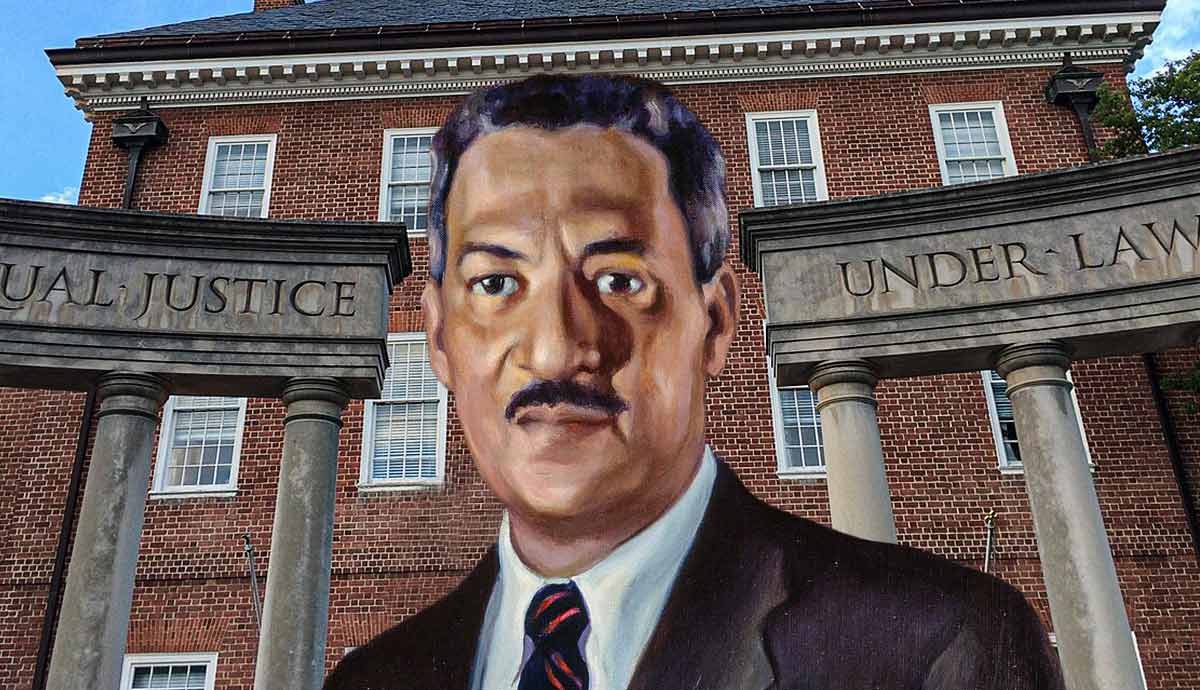
Passion, both for the law and civil rights, defined the life of Thurgood Marshall. He drew on his life experiences to identify problems within the US justice system and subsequently challenged these problems on Constitutional grounds. He became the first African-American man to serve on the US Supreme Court, but even before that, he was tearing down racial divides within the law, taking on and winning landmark cases as a young lawyer. From lower middle-class beginnings to a permanent place in history, Thurgood Marshall was a strong voice for change and equality.Thoroughly Interested in the LawA photo of a young Marshall, likely taken between 1935 and 1940. Source: Library of Congress/Wikimedia CommonsFrom an early age, Thurgood, born Thoroughgood Marshall on July 2, 1908, in Baltimore, Maryland, had a keen interest in the justice system. Tired of being teased by schoolmates, Marshall legally changed his name to Thurgood at the age of six. He grew up in a lower-middle-class home with his brother and parents, Norma and William. Norma was a teacher, and William, the grandson of a slave originally from the Congo, worked as a railroad porter and later as a steward at an exclusive whites-only club. When he wasnt working, William enjoyed attending local court proceedings and often brought his sons along with him. Lively discussions would follow, with the lawyers arguments rehashed by the trio, often at the dinner table. Marshall would later remark that his father never told him to be an attorney, but turned me into one.A 1940 photograph demonstrates the presence of Jim Crow laws. Source: Library of Congress/Wikimedia CommonsMarshalls intrigue with US law only grew as he got older. Once, in high school, he was given a punishment for misbehavior that would pique his interest: he was ordered to read the Constitution. He even memorized certain parts, considering the fact that many of his contemporaries, including him and his family, were not, at the time, able to enjoy the rights outlined in the document. Like many locations of the era, Baltimore was still operating under Jim Crow laws. Marshall himself attended an all-Black school. Public restrooms were segregated, and discrimination permeated his community.Classroom to CourtroomMarshall, far right, with fellow NAACP members in 1956. Source: Library of Congress/Wikimedia CommonsMarshall decided he could be a voice for change, and that the law was the avenue to successfully make those changes. After graduating from high school, he followed his brother to Lincoln University, which at the time was considered the Black counterpart to Princeton University. At first, Marshall embraced the social aspects of college and relied on his intelligence to make up for missed classes. However, after a brief suspension involving a hazing incident with his fraternity, Marshall decided it was time to get down to business. He focused on academics and got involved in civil rights causes in the surrounding community. He met Vivian Burey, and in 1929, they married. After completing his undergraduate degree in 1930, Marshall decided law school was the logical next step.Charles Hamilton Houston was one of Marshalls most influential mentors. Source: Wikimedia CommonsMarshalls first choice of law school was the University of Maryland, and he applied upon his college graduation. However, he was denied admission due to his race. Instead, he attended Howard University Law School, where he graduated first in his class in 1933. His family strongly supported this pursuit, with Norma Marshall even selling her wedding ring to help pay for her sons legal studies. While at Howard, Marshalls interest in civil rights law and the Constitution grew even further. He was inspired by a mentor, Charles Houston, who introduced him to the NAACP. Houston was in charge of the NAACP Legal Defense and Education Fund and served as the organizations first general counsel. While Houston did this work, Marshall often worked alongside him.Fighting Landmark CasesThurgood Marshall argued his way to success in Brown v. Board of Education in 1954. Source: Wikimedia CommonsThurgood Marshall briefly attempted to start his own law practice, but found that business was slow and clients often couldnt pay. He found more success working alongside Houston and the NAACP. One of his first cases was Murray v. Pearson, which he worked on with Houston. In the case, Marshall defended a man whose shoes hed been in just a few years before; Donald Murray had been denied entrance to the University of Maryland Law School on the basis of race.In 1936, Marshall, Houston, and Murray won their case, marking one of the first successful challenges to segregation and the separate but equal doctrine in the United States. In 1938, Houston resigned, and Marshall took over his position as the NAACPs general counsel. Later, he became the special counsel of the NAACPs Fund, Inc., a legal activism organization. He continued to argue civil rights cases, including his first before the Supreme Court in 1940. Chambers v. Florida was based on the murder conviction of four Black men who had been forced to confess to the crime by police in violation of their constitutional rights. This defense was a success for Marshall.Marshalls official portrait taken in 1976. Source: Library of Congress/Wikimedia CommonsAs a lawyer, perhaps the most notable of Marshalls cases was Brown v Board of Education in 1954. This case directly challenged the separate but equal doctrine, and ultimately, struck it down. The justices ruled once again in Marshalls favor, deciding that separate educational facilities are inherently unequal, thus desegregating American schools under the law. The win established Marshall as one of the most successful lawyers in America, and his prominence increased. In 1955, his wife died from aggressive lung cancer, and Marshall found himself a widower after 25 years of marriage. He remarried to Cecilia Suyat, and the pair had two sons.Becoming a JudgeMarshall painted by Betsy Graves Reyneau. Source: National Portrait Gallery/Wikimedia CommonsIn 1961, Marshalls legal reputation led to an appointment by President John F Kennedy to the US Second Circuit Court of Appeals. For four years, Marshall served as a judge on the circuit, issuing over a hundred decisions. None of his circuit court decisions was ever overturned by the Supreme Court. In 1965, Lyndon Johnson appointed Marshall to be the nations first African-American Solicitor General. In his new position, the third highest in the Justice Department, Marshall was assigned to argue on behalf of the federal government in Supreme Court cases. During his two-year tenure, Marshall argued 19 cases and won 14 of them.Sitting SupremeMarshall with Lyndon B Johnson in 1965. Source: LBJ Library/Wikimedia Commons1967 would propel Marshall into another first when Johnson appointed him the first Black member of the Supreme Court. In an era where Civil Rights legislation on the federal level was only newly enacted in America in recent years, Marshalls appointment was a landmark in itself. Johnson later remarked that Marshalls appointment was the right thing to do, the right time to do it, the right man, and the right place.In his new role as Associate Justice, Marshall continued to uphold his strong dedication to the importance of individual and civil rights for the American people. He was known as a liberal justice, arguing against the death penalty repeatedly over his term. In fact, he wrote over 150 dissenting opinions relating to death penalty appeals during his time as a justice.Though dedicated to the law, Marshall was known for his laid-back attitude, even in the courthouse, where he greeted the Chief Justice with Whats shakin, Chief baby? in the hallways. As time went on, the Supreme Court grew more conservative with the appointment of eight judges by Republican presidents, which often frustrated Marshall and weakened his influence. Nonetheless, he remained dedicated to his beliefs and interpretations of the law, writing strong dissents when necessary.An Incredible LegacyThe Thurgood Marshall Monument at the Maryland Capitol Building. Source: Wikimedia CommonsAfter 24 years on the Supreme Court bench, Thurgood Marshall retired in 1991. His successor was Justice Clarence Thomas. Just two years into retirement, Marshall passed away from heart failure. He was buried at Arlington National Cemetery.Despite the loss of his physical presence, Marshalls impact on the American people remains. To quote an obituary piece about him, Every day we live with the legacy of Justice Thurgood Marshall. Today, the Thurgood Marshall Institute at the Legal Defense Fund (formerly Fund, Inc.) uses social science research and public education to further Marshalls intentions of supporting a multiracial democracy.A voice for change, Thurgood Marshall fought for continued improved access to constitutional rights for all Americans. Though his name might not be as recognizable as that of Martin Luther King, Jr. or Malcolm X, Marshall toiled alongside them in the fight for equality in America. Using the law as his tool for progress, Marshall spent his life dedicated to the cause of opening doors for people of all races, and the results of his efforts linger today.
0 Kommentare
0 Geteilt
44 Ansichten

 English
 Arabic
 French
 Spanish
 Portuguese
 Turkish
 Dutch
Dutch
 Italiano
 Russian
 Romaian
 Portuguese (Brazil)
 Greek
Greek