


WWW.THECOLLECTOR.COM
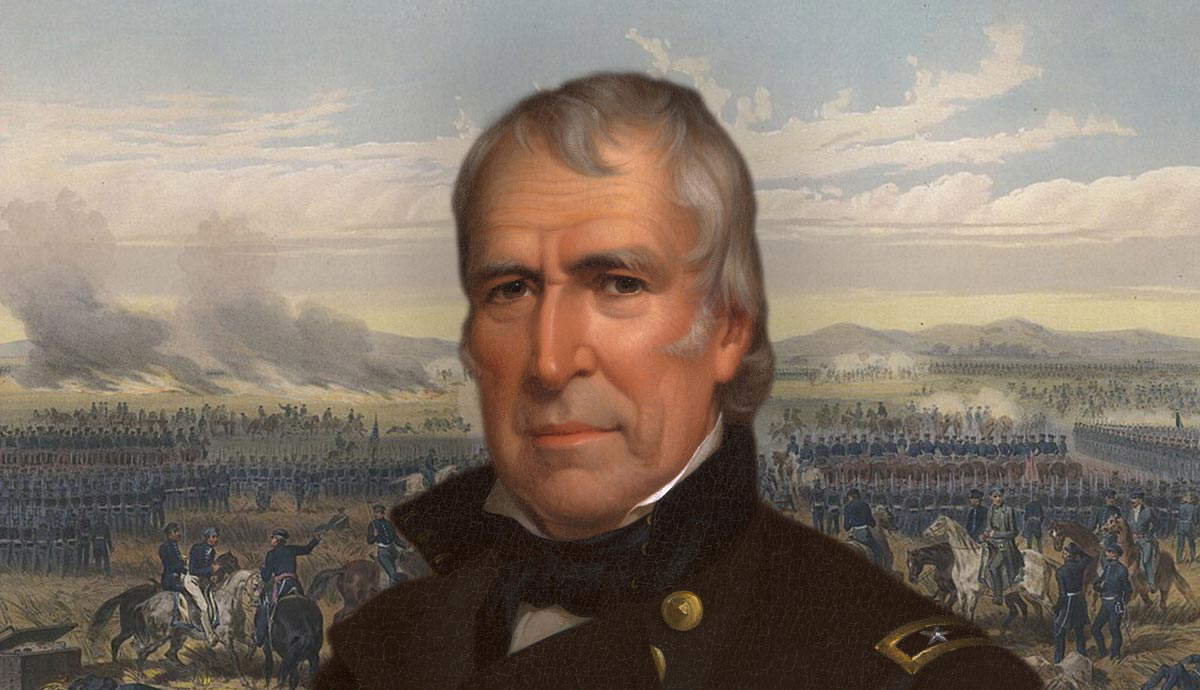
How Zachary Taylors Battlefield Successes Led Him to the Presidency
Born in Virginia in 1784, Zachary Taylor was a soldier and landowner who played a key role in Americas westward expansion. After winning early fame during the War of 1812, Taylor spent the following decades commanding frontier outposts and occasionally suppressing Native American uprisings. He achieved national recognition for his victories in Texas and northern Mexico during the Mexican-American War. His fame led him to the White House, but he died 16 months later in July 1850 at a time when disagreements over slavery threatened to tear the Union apart.Young ZackPhotograph of Zachary Taylors childhood home in Louisville, Kentucky. Source: Wikimedia CommonsZachary Taylor was born on November 24, 1784 in Orange County, Virginia. He was born into one of the most prominent families in the state and his father Richard was a Continental Army officer during the Revolutionary War. In recognition of his service, Richard Taylor had been granted a large parcel of land near Louisville, Kentucky. When Zachary was eight months old, he accompanied his family to Louisville.As a young child, Taylor was educated at home by his mother. He quickly learned to farm the land and would become a shrewd businessman. In 1808, at a time when the US Army was being expanded at a time of increasing tensions with Britain in the wake of the Chesapeake Affair, the 23-year-old Taylor received a commission as a first lieutenant in the Seventh Infantry Regiment.After recruiting a company of around 80 men, Taylor sailed with them to New Orleans in April 1809 to report for duty. Serving under the command of the incompetent and corrupt Brigadier General James Wilkinson, Taylor was among the hundreds of men who fell ill in the summer heat. Taylor was granted extended leave to recuperate at his home in Louisville, where he married Margaret Mackall Smith in June 1810.After returning to the army as a captain in early 1811, Taylor was given command of Fort Knox on the Wabash River in the Indiana Territory to protect American settlements from Native American raids. The posting lasted for a month until Taylor received orders to appear as a witness in one of several courts-martial involving General Wilkinson.War of 1812Tecumseh, the Shawnee shooting star, by Owen Staples, 1915, based on an engraving by Benson John Lossing, 1868, Source: Wikimedia CommonsDuring Taylors absence from Indiana, on November 7, 1811 General William Henry Harrison defeated an Indian ambush at Tippecanoe Creek led by Tenskwatawa, the brother of the legendary Shawnee chief Tecumseh. Following the victory, Harrison sacked Tenskwatawas base of Prophetstown, encouraging the Native American tribes to seek closer relations with the British in Canada.In March 1812, three months before the formal outbreak of the War of 1812, Taylor returned to Indiana to command the small garrison at Fort Harrison. In early September, when most of Taylors men weakened from disease, the fort was attacked by a party of indigenous warriors, who set fire to the blockhouse with all of Taylors supplies. Taylor kept his head and ordered his men to put out the fire and repair the defenses, causing the raiders to abandon their attack the following morning.Taylors success marked the first American victory in the War of 1812 and led Tecumseh to abandon his raids on Indiana Territory and retreat north to join the British. Since the northwestern theater had calmed down, Taylor unsuccessfully lobbied for a transfer to the northeast around New York and Lake Ontario.After participating in a series of minor pacification actions in Indiana in 1813, Taylor took command of American forces in the Missouri Territory in 1814. In early September, Taylor was encamped on Credit Island on the Rock River when he was attacked by a Native American force. Although Taylor managed to drive them out of the island, the appearance of a British artillery unit led him to withdraw with minor losses.Old Rough and ReadyPhotograph of the Okeechobee battlefield. Source: Wikimedia CommonsBy late 1814, Taylor was frustrated that he was still only a brevet major, and in early 1815 he received a promotion to full major. However, the War of 1812 had already ended and Taylor was once again reduced to captain. He refused the commission and retired to Louisville, but was commissioned as a major in the Third Infantry Regiment within a year.Between 1816 and 1818, Taylor commanded the garrison at Fort Howard in Green Bay, Wisconsin. He then returned to Louisville and was promoted to lieutenant colonel in April 1819. Following a series of frontier postings in the 1820s, Taylor saw action in the Black Hawk War in 1832, named after the chief of the Sauk Indians who led an uprising in April 1832 in response to American encroachments on tribal land.Taylor, who had fought against Black Hawk at Credit Island, led a mixed force of regulars and militia under Brevet Brigadier General Henry Atkinson. After the militia suffered initial reverses, Taylor received orders to establish a base for supplies and reinforcements, enabling Atkinson to defeat Black Hawk in July.In 1837, Taylor arrived in Florida with 1,000 men to participate in the Second Seminole War, which had already frustrated several American generals efforts. On Christmas Day 1837, Taylor launched a frontal attack against the Seminoles at Okeechobee. Although Taylor broke the enemy line and forced the Seminoles to retreat, the victory had been won at a significant cost, with over 150 casualties. The Seminoles registered only 11 killed and 14 wounded. Nevertheless, Taylors conduct at Okeechobee earned him promotion to brevet brigadier general and while his men bestowed upon him the nickname Old Rough and Ready.Landowner and SlaveholderZachary Taylors Cypress Grove Plantation in Mississippi, 1840s. Source: Southern Illinois University Edwardsville via Wikimedia CommonsIn addition to his career as a soldier, Taylor was a landowner and property speculator who profited from Americas westward expansion. Beginning in the 1820s, the Taylor family had its primary residence in Baton Rouge, Louisiana. Two of Taylors daughters died in infancy in 1820, shortly after the move to Louisiana.At around the time of the Black Hawk War, Taylors 18-year-old daughter Sarah fell in love with the young Jefferson Davis, future president of the Confederacy. Taylor was adamant that his daughter would not become a military wife, but this did not prevent the couple from eloping in 1835. Three months later, Sarah died of malaria at 21.Taylors wife Margaret often accompanied him to his various postings, and they remained in Florida until 1840 when Taylor was granted leave to return to Louisiana. In April 1842, while commanding the outpost at Fort Smith in Arkansas, Taylor acquired the Cypress Grove Plantation in Jefferson County, Mississippi along with its 81 slaves, a number which increased to above 100. Low cotton prices and regular flooding meant that the plantation was not profitable during Taylors ownership.Mexican-American WarZachary Taylor by James Reid Lambdin, 1848. Source: National Portrait Gallery, Smithsonian InstitutionIn June 1845, Taylor received orders to take a small force to Fort Jesup in western Louisiana. While this appeared to be a routine frontier posting that Taylor had been used to throughout his military career, his latest command had considerable political significance in the context of the annexation of Texas.In 1836, American settlers in Texas secured independence from Mexico. The Texans were vulnerable to a counterattack by the Mexicans and sought assistance from the United States. American political elites were split on the prospect of annexing Texas, which contributed to sectional tensions over the expansion of slavery. The election of Democrat James K. Polk in 1844, a protg of President Andrew Jackson, led President John Tyler to initiate the process of annexation on the eve of his departure from office in March 1845.With the Texas legislature due to vote on annexation on July 4, 1845, Taylor was ordered to advance to the village of Corpus Christi on the bank of the Nueces River, within a strip of disputed territory between Texas and Mexico. Taylor only arrived at the end of July and proceeded to spend several months drilling his men while Polk attempted to negotiate a major land purchase from Mexico.By 1846, it was clear that Mexico would not sell any land to the United States at any price. In March, Taylor advanced on Matamoros on the Rio Grande, encountering minimal Mexican resistance. Following a tense stand-off, a Mexican cavalry detachment crossed the Rio Grande and attacked an American patrol, leaving 16 dead. This action marked the outbreak of the Mexican-American War.The Battle of Palo Alto by Carl Nebel, 1851. Source: Wikimedia CommonsWith fewer than 3,000 men under his command, May 8, 1846 Taylor repulsed a Mexican attack by General Mariano Arista at Palo Alto thanks largely to his light artillery, which inflicted heavy casualties on the enemy. After Arista withdrew on the morning of the 9th, Taylor overruled his subordinate officers by launching a pursuit. Taylor caught up with Arista at Resaca de la Palma and secured a decisive victory by capturing the Mexican guns on the Matamoros road and breaking the Mexican line.Taylors victories over Arista earned him national fame, and President Polk gave him authority to make operational decisions at his own discretion. By mid-May, Taylor had occupied Matamoros, where he spent the next three months attempting to integrate some 8,000 enthusiastic but ill-disciplined volunteers into his army. In August Taylor advanced on Monterrey with 6,000 men and captured the city by the end of September.Taylors capture of Monterrey won him promotion to major general, but his decision to agree a truce with the Mexicans to reorganize his exhausted army angered President Polk. Polk believed that Taylors occupation of northern Mexico would eventually force the Mexicans to the negotiating table, but by late 1846 he was persuaded to support a plan for General Winfield Scott to lead an amphibious landing at Veracruz and march on Mexico City.Battle of Buena Vista by Adolphe Jean-Baptiste, 1851. Source: National Gallery of Art, Washington DCTaylor was incensed when Scott helped himself to his best men for the landing at Veracruz. Although he received new reinforcements to replace some of the men Scott had taken, he had no more than 5,000 men when Mexican dictator General Antonio Lpez de Santa Anna launched an offensive with a force three times larger.On the suggestion of his subordinate General John E. Wool, Taylor occupied a strong defensive position at Buena Vista. Although the Mexicans made good progress in outflanking Taylors position on February 23, Taylor ordered Jefferson Daviss Mississippi Rifles to stem the Mexican advance. Taylors artillery continued to play a major role in beating off the Mexican attack. Both sides had sustained heavy losses, and Santa Anna withdrew on the morning of the 24th and hurried back to Mexico City to confront General Scott.Following Scotts conquest of Mexico City in September 1847, the Treaty of Guadalupe-Hidalgo ended the Mexican-American War with Mexico ceding more than 500,000 square miles of territory to the United States.PresidentPresident Taylor and his cabinet. Lithograph by Francis D. Avignon based on Mathew Bradys daguerreotypes, 1850s. Source: US Library of CongressAlthough Scott had the glory of capturing Mexico City, Taylor emerged from the conflict as a national hero. Both men sympathized with the Whig Party, but while Scott signaled his presidential aspirations in 1839, Taylor did not become a serious presidential candidate until 1847.Taylors candidacy was championed by Kentucky senator John Crittenden, a moderate Whig who was alarmed at the sectional tensions over slavery. The Whigs were dominant in the free states in the north, while the Democrats controlled the slave states in the south. While the Whigs had opposed the Mexican-American War, a military hero and southern slaveholder like Taylor on the Whig ticket would appeal to both north and south.After formally declaring himself a Whig in April 1848, Taylor beat Scott and veteran statesman Henry Clay to the presidential nomination in June. To balance the ticket, New Yorks Millard Fillmore was chosen as the vice-presidential nominee. Taylor defeated Democrat Lewis Cass of Michigan and was inaugurated as president on March 4.Despite being a slaveholder himself, Taylor was opposed to the prospect of newly conquered territories of New Mexico and California becoming slave states. The population of California had increased rapidly following the 1849 Gold Rush. Taylor encouraged Californias application for statehood, but their draft constitution explicitly prohibited slavery, which ensured that it would be denied by the southern-dominated Senate. Taylors hopes for statehood for New Mexico were held up on similar grounds.Taylors administration also faced a number of foreign policy challenges, including the British presence in the Caribbean. Both the British and Americans hoped to build a canal through Central America, and in February 1850, Taylors secretary of state John Clayton negotiated the Clayton-Bulwer Treaty which prevented either country building such a canal unilaterally.Death and LegacyThe Death of General Zachary Taylor, 12th President of the United States, print from 1850. Source: Cornell University LibraryWith Congress deadlocked on California and New Mexico, a trio of veteran senators warned that the issue could break apart the Union. These were John C. Calhoun of South Carolina, a champion of southern states rights, Daniel Webster of Massachusetts, a liberal stalwart, and Henry Clay of Kentucky, the Whig veteran nicknamed the Great Compromiser.In early 1850, Clay proposed a legislative package with provisions for the admission of California as a free state while leaving the question open in Utah and New Mexico, and a strengthened Fugitive Slave Act that would be enforced by federal agents. The latter was a major concession to the south, but Taylor refused to support it and insisted on immediate statehood for California.With matters still unresolved in Congress, Taylor attended the ceremony of the laying of the foundation stone for the Washington Monument on July 4, 1850. In the sweltering summer heat, the 65-year-old president ate apples and cherries washed down with cold milk. Taylor was soon suffering from acute gastroenteritis, likely caused by contaminated food and drink as a result of Washingtons poor sanitation systems. His condition quickly deteriorated, and he died at 10:35pm on July 9.Taylors successor Fillmore supported an initiative to break up Clays compromise package into five separate bills, all of which were passed by September 20. While the Compromise of 1850 temporarily resolved disagreements over slavery, it did not prevent the outbreak of Civil War a decade later.Owing to his brief tenure in office, historians rate Taylor as a poor president. However, his biographer John Eisenhower credits Taylor for being a committed Unionist when many southern officers, including his own son Richard, would go on to break away from the Union.
0 Comments
0 Shares
30 Views

 Arabic
 French
 Spanish
 Portuguese
 Deutsch
 Turkish
 Dutch
Dutch
 Italiano
 Russian
 Romaian
 Portuguese (Brazil)
 Greek
Greek