


WWW.THECOLLECTOR.COM
Why Was a Crusade Launched Against the European Cathars?
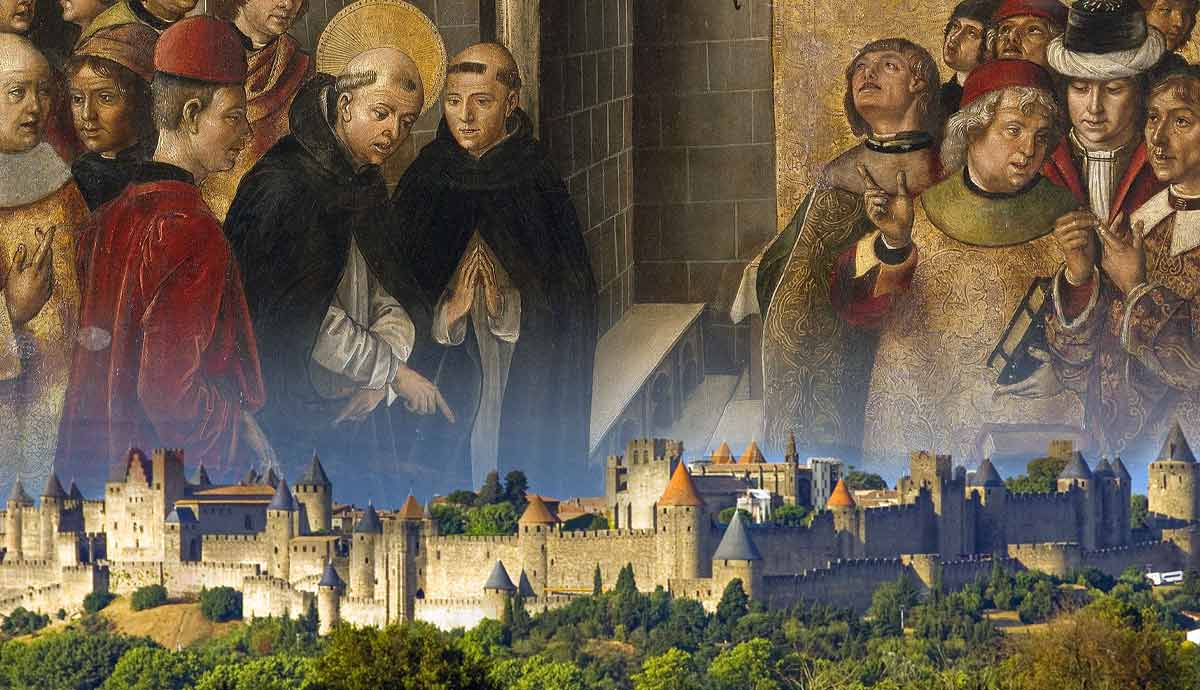
As far as religious movements go, Protestantism and the European Reformation tend to get the most attention, while movements like Catharism often go unnoticed. Despite this, Catharism was one of the biggest thorns in the side of the Catholic Church between the 12th and 14th centuries, even provoking a Crusade against the movement in the early 13th century. Read on to find out all about Catharism and why it was so important to the Catholic Church to shut it down and kill its followers, the Cathars.The Origins of the CatharsWar in Heaven, by Gustave Dor, 1866. Source: Wikimedia CommonsThe Cathars, or Albigensians, have an unusual origin story, insofar as there is no set moment or piece of evidence that historians can pinpoint as the beginning of the Cathar movement.Some theories presume that the Cathars originated from the Byzantine Empire, and that radical beliefs from an Eastern Orthodox sect of Christianity developed into what came to be known as Catharism. Others believe that it originated sometime in the mid-12th century in regions of southern France and northern Italy.It was around 1145 that the Cathars began to appear around southern France, and not long after their first appearances, their teachings began to spread by word of mouth.The Inherent Beliefs of CatharismSt Dominic and the Cathars burning each others books, by Pedro Berruguete, c. 1493-99. Source: Museo del PradoThere was one principal belief in Catharism, which was that there were two gods: a good God, such as the God that the Bible teaches about, and an evil god, or Satan, who created the material, physical world. It was this belief in Satan as a god that was seen as heretical. In the Bible, Satan is described as Lucifer, a fallen angel, but to put him on the same level with God was deemed heretical by the Catholic Church, as was the idea that Satan could create anything other than pure evil.As such, the Cathars sought to separate themselves from the material world because they saw it as an inherently evil place. Cathars wanted to restore their souls to divine purity, and the only way to do so was to reject as much of the physical and material world as possible. This belief that the Cathars were trapped angels led them to be known among each other, and their critics, as the pure ones, a notion that the Catholic Church simply refused to accept.Fallen Angel, by Alexandre Cabanel, 1847. Source: Wikimedia CommonsInterestingly, the Cathars rejected the material and physical elements of the Catholic Church, something that King Henry VIII would adhere to almost four centuries later when he undertook the Dissolution of the Monasteries, stripping Catholic churches and monasteries of their gold and other wealth. While Henry VIII primarily did this for economic gain and to fund his wars on foreign soil, it is still interesting to compare the two. The Cathars were criticizing the wealth of the Catholic Church almost 400 years before the European Reformation had its first stirrings in Bohemia.The Cathars believed that Catholic priests were corrupted by the material world, and as such, their views could not be taken seriously. Because of all the glitz and glamor surrounding priests in the Middle Ages, this feeling was stronger the higher up the Catholic Church hierarchy one traveled. The pope was not seen as Gods representative on Earth by Cathars but arguably closer to Satans, because of how much he had been corrupted by the physical and material world.This was treasonous and blasphemous language. Cathars had not just become a mouthy sect of the Church; they had become heretics. And as such, strong action had to be taken by the Catholic Church against the Cathars.First Measures Against the CatharsThe Cathars being expelled from Carcassonne in 1209, by Master of Boucicaut, c. 1415. Source: The British LibraryDespite Catharism only originating around the mid-1140s, by the 1160s, it had become a strong sect and had gained numerous followers. This was when the Church began to condemn Catharism, or at least acknowledge it as an annoyance.In the early 1160s, the Church attempted to suppress the heretical teachings of Catharism, with little success. Popes and archbishops worked together with local clergymen to send out missionaries to southern France and northern Italy in an attempt to convert the Cathars back to Catholicism, but this was of little avail.In 1167, the Council of Saint-Felix was held, which established who the senior bishop figures were to be in Cathar Churches. The only evidence we have of the leader of this Council is a man referred to by the name Papa Nicetas, who was presumed to have been the Bogomil Bishop of Constantinople. He had been sent to Lombardy and ended up heading this landmark council.Very little else is known about what went on at the Council, save that seven bishops were appointed, and that they were not to interfere with each others bishoprics; much like how the Seven Churches of Asia did not interfere with each others independence.Just before the turn of the 13th century, this had become too much for one of medieval Europes most formidable popes, Innocent III, to bear. An iconic pope who was unafraid to call for crusades (he also called for the Fourth Crusade), he decided that enough was enough and called for a crusade against the Cathars.The Albigensian CrusadeThe Pope Innocent III fresco, mid-13th century. Source: PicrylIn a moment that shocked Christendom, Pope Innocent III had called for a crusade against fellow Christians. This was unheard of and showed how damning Innocents views of the Cathars were. He was prepared to give them the same treatment given to Muslims, or the Infidel, as they were commonly referred to.This new crusade, which became known as the Albigensian Crusade, started the downfall of Catharism.Following the murder of a papal legate, allegedly by a Cathar, the Albigensian Crusade was launched in 1209. It would rage on until 1229, with the final aim of ending Catharism once and for all.It is important to remember that Europe was high in the midst of crusading fever at this point. As such, when a Crusade to put heretics down much closer to home arose with far fewer risks and at far less cost than travelling halfway across the known worldit was simply too good to turn down.The French Crown openly supported this crusade. Interestingly, what may have swayed the French Crown to become so openly involved in the crusade was that participants were promised remission of sins from the Papacy if they were to take part and help finance it.The Massacre of BziersThe Church of Saint Mary Magdalene in Bziers, where estimates of 7,000 Cathars were massacred in 1209. Source: Wikimedia CommonsPerhaps the most notable event of the Albigensian Crusade came in the first few months. Following the Siege of the French town of Bziers, the infamous Massacre of Bziers took place.Bziers was seen as a stronghold of Catharism, and after a siege, the town walls were breached, and the carnage began. It was not just the known Cathars that were butchered, but almost everyone in the town. One source claims around 20,000 were killed, rightfully giving this military event the name the Massacre of Bziers.Like many other medieval crusades, the Albigensian Crusade was also very stop-start in its nature, and depending on funding, finances, manpower, and a multitude of other factors. So while it seems that two decades was an awfully long time for a crusade in a small region of southern France, the reality was that it did not take that long.The formal end to the Albigensian Crusade came when the Treaty of Paris was signed at Meaux on April 12, 1229. This Crusade had done what Innocent III had set out to do over two decades prior eradicate the Cathar movement. Although this was not to be the complete end, the Cathars still faced persecution in later years.Further Persecution and the End of the CatharsAlbigensian Crusade, Giovanni Battista Crespi, 1628. Source: Wikimedia CommonsFollowing the military defeats that the Cathars faced during the Albigensian Crusade, the majority of their support base was wiped out.However, as sects popped up every now and then in the latter half of the 13th and early 14th centuries, a Medieval Inquisition, similar to the later Spanish Inquisition, was set up to target and kill Cathars. This attack against the Cathars was ultimately successful in its goal and eradicated Catharism from France by the end of the 14th century.Any Cathars that were left did not rise again as a movement, but instead joined other sects or kept their teachings beyond the reach of contemporary chroniclers.
0 Comments
0 Shares
28 Views

 Arabic
 French
 Spanish
 Portuguese
 Deutsch
 Turkish
 Dutch
Dutch
 Italiano
 Russian
 Romaian
 Portuguese (Brazil)
 Greek
Greek