


WWW.THECOLLECTOR.COM
Why Was King James Is Court Seen as Scandalous?
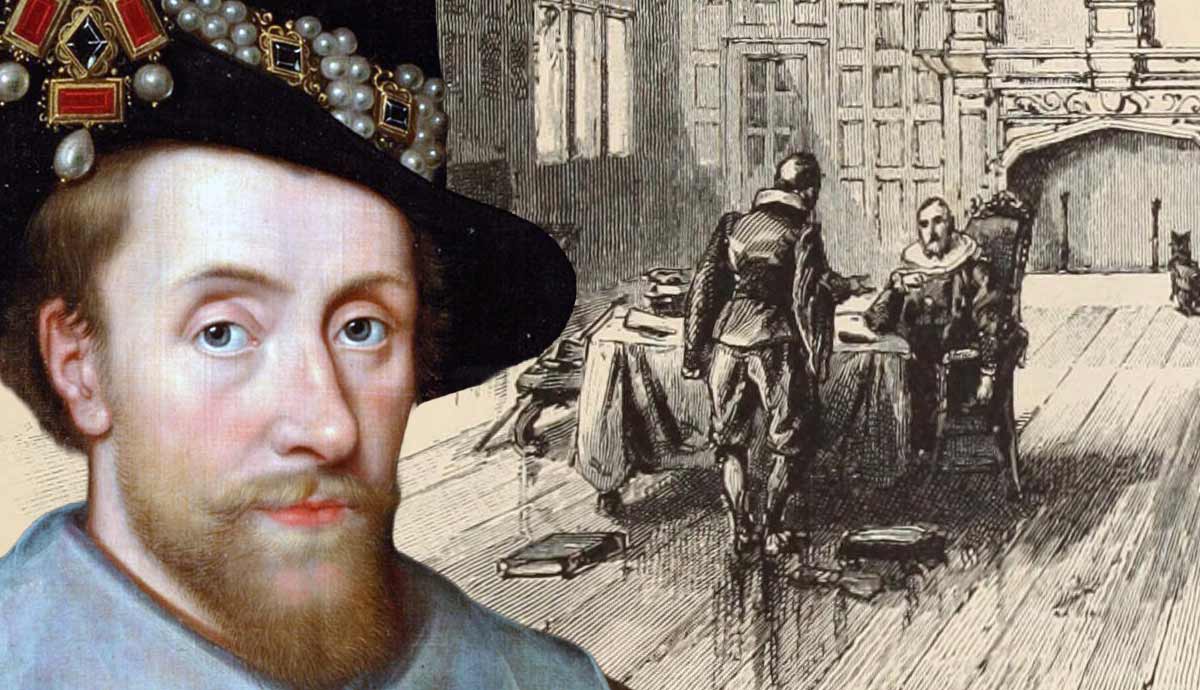
If you want to hear about secrets and scandals, there is no better place to look than the royal courts of England. Any noble courtier, whether they be from the Tudor, Stuart, Georgian, or Victorian era, would have had a myriad of tales to recount to a willing listener. This is because the reigns of each and every monarch have been brimming and seething with accusations, murders, plots, affairs, executions, poisonings, and gossip.In this article, we will consider three of the greatest scandals that occurred at the court of King James I; some that lasted a few years, and others that stayed with him a lifetime.Scandal Number 1: King James I and HomosexualityPortrait of King James I, after John de Critz, after 1605. Source: Kunsthistorisches MuseumWhen considering the reign of King James I of England, what is the first scandal that comes to mind? Academics and history-enthusiasts alike would almost certainly claim it to be the sexuality of King James himself. This is because he is remembered largely for his adoration of the attractive young gentlemen attending his court.Huw Lemmey and Ben Miller wrote that King James I had a persistent, foolhardy habit of falling head over heels for beautiful, arrogant and reckless favourites. David M. Bergeron characterized King Jamess relationships as special intimacy, including, but not restricted to, homoerotic desire and same-sex love. Keith Coleman also described King Jamess relationships with men as sexual, describing him as bisexual, but with a strong preference for men.On the whole, there seems to be little doubt among historians that King James was interested in men and pursued them not only for sex, but also for love, friendship, and affection. As stated by Coleman, he may very well have desired women too, for he fathered several children with his wife, cared for her deeply, and some elements of their relationship were extremely passionate. Even more convincingly, King James was also thought to have sought further intimacy with women, for he is known to have taken a Mistress named Anne Murray.An engraving of the future King Charles I with his parents, by Simon Van de Passe, 1612. Source: Wikimedia CommonsIn private, King James showered his favorites with sweet expressions of love, but in public, it was a different story altogether. He expressed the opposite opinion and portrayed himself as a man who agreed with the Church and the laws at the time that such behaviors and desires were wrong, unforgivable, and frowned upon by God.Although King James spent a lot of time and effort on publicly condemning potential same-sex relationships, many of his contemporaries were unconvinced. Of course, he had plenty of cause to hide who he really was and to conceal his romantic inclinations. His intimacies with certain gentlemen were meant to have been kept secret, but in reality, the rumors regarding his forbidden bedroom activities were widespread.King James I, by John de Critz, 1605. Source: Museo del PradoIn the interests of fairness, and taking into consideration the wider views of bigger groups of historians, it should be noted that not everyone agrees that King James was gay or bisexual. Some say that his verbal and written expressions of love, such as those so often found in his personal letters, may have been misinterpreted as words of romance and obsession rather than of innocence and brotherly friendship. The themes of male bonding and platonic but intense friendships were prevalent during this era, particularly among the upper classes, in part due to the amount of time spent with other young men during youth.It is impossible to understand someones true thoughts and feelingsespecially those of a king who has been dead 400 yearsand consequently, the topic of his true affections and intentions has been hotly debated throughout the centuries. What we do know for certain is that King James I had many male favorites, and whether or not it was true, the people around him genuinely believed that his relationships with these men were both romantic and sexual.Three Male Favorites of King James IPortrait of Philip Herbert, by Anthony van Dyck, 1634. Source: National Gallery of VictoriaWhat do Esme Stewart, Alexander Lindsay, George Gordon, Robert Carr, Philip Herbart, and George Villiers have in common? Well, not only were they all great favorites of King James I, but they were also all rumored to have shared his bed. With some, King James may have offered not only sex, but actual romantic love.Let us now take a moment to briefly review the most notable facts regarding three of these men, and to question why, when, and how they became the subject of royal attention and affection.Richard Preston, 1st Earl of DesmondRobert Preston had his turn at being a favorite of King James. In the year 1609, thanks to his acquired favor, he was made Lord Dingwall. Ten years later, still evidently in Jamess thoughts, he was also granted the title Earl of Desmond, by which he is now well remembered.The relationship between Richard Preston and King James began not in England but in Scotland. After the exile of King Jamess first love interest, Esme Stewart, the position of court favorite lay vacant. It was soon filled by Preston, who appears to have gained special royal favor by the early 1580s.Their relationship was long-lived, but eventually ended shortly after King James inherited the throne of England and met a whole host of new and eligible gentlemen. One of whom was Robert Carr, whom King James noticed in 1608, and who replaced Robert Preston swiftly and successfully.Robert Carr, Earl of SomersetPortrait of Robert Carr, by John Hoskins, 1625-30. Source: National Portrait Gallery, LondonRobert Carr, 1st Earl of Somerset, is best remembered for being a politician and the favorite of King James I. Shortly after the arrival of the new King James in England, Robert Carr suffered an accident at court. He broke his leg at a jousting match whilst King James was in attendance, and this appears to have been the event that caused King James to notice him properly for the first time.The relationship between King James and Robert Carr was completely different from that which had existed between King James and Robert Preston. Everything happened quickly, for he was installed as favorite, given an enormous amount of power, then later disgraced and thrown into the Tower of London within less than a decade. Robert Preston had managed to stay in favor much longer and much more securely, but the relationship with Robert Carr was slightly more complicated.At the height of his influence, however, Robert Carr was instrumental in persuading King James to dissolve parliament, perhaps with the fear of being displaced by them in mind. On March 24, 1611, he was created Viscount Rochester.It was in the following year, the time of his marriage to Frances Howard, that things began to go downhill for Robert Carr and King James. The relationship was eventually brought to a dramatic close by a scandal that would taint the court for several years.George Villiers, 1st Duke of BuckinghamPortrait of George Villiers, by Peter Paul Rubens, 1617-28. Source: Wikimedia CommonsGeorge Villiers is, perhaps, the most famous of the potential lovers of King James. It may be that George is most famous in the history of the love of King Jamess life because it was he that the king wrote most passionately and beautifully about. I, James, am neither a God nor an angel, but a man like any other, he began, therefore I act like a man and confess to loving those dear to me more than other men.Anne of Denmark seemed untroubled by the relationship between her husband and George. On the contrary, they actually became great friends. Her letters to him were always filled with affection, and she requested that he always be true to James.At the height of their relationship, King James even referred to himself and Buckingham as husband and wife. In one notable letter of December 1623, after the death of Anne, King James informed the Duke that he was looking forward to their upcoming marriage. I only desire to live in this world for your sake, he claimed, and that I had rather live banished in any part of the earth with you than live a sorrowful widows life without you.Portrait of Anne of Denmark, by John de Critz, 1605. Source: Royal Museums GreenwichAt the time of King Jamess death in 1525, George Villiers was abroad on a diplomatic mission in France. It is reported that the news instantly brought him to tears.On the accession of the new King Charles I, George Villiers remained in royal favor and became one of his closest friends and advisors. His image at court changed dramatically overnight, and his persona went from that of a feminine lover to that of a strong, independent, experienced, and masculine figure.Scandal Number 2: The Overbury ScandalPortrait of Sir Thomas Overbury, 19th century portrait. Source: The National Portrait Gallery, LondonNow we move on to scandal number two, which involves a man named Thomas Overbury and also Robert Carr, whom we met in the previous scandal.Sir Thomas Overbury was an English poet and essayist who lived between the years of 1581 and 1613. However, he is most famous for being at the center of the political and social scandal that now bears his name, in a very unfortunate way.The scandal began around 1612 with an affair between two historic figures: Robert Carr and Frances Howard, Countess of Essex. Overbury and Carr had been great friends, but Overbury was extremely opposed to this new romantic relationship. Not only was Frances already married, but Overbury considered that she was already notorious for her immodesty. Robert Carr was a favorite of King James, and possibly even a lover. However, Carr and Frances were supposedly infatuated, and nothing would stop them from continuing the affair.In response, Thomas Overbury penned a poem entitled A Wife, which painted a picture of a virtuous and Godly woman, one whom a man of the early 17th century should choose for a spouse. After reading the finished result, Frances was infuriated and saw this poem not only as an attack on her personally but also as an attempt to convince Carr to break up with her.Portrait of Francis Howard, by William Larkin, 1615. Source: Wikimedia CommonsKing James I attempted to resolve the whole situation by getting Thomas Overbury out of the way for a while. To do so, he offered Overbury an assignment as ambassador to the court of Michael of Russia. Overbury declined, and King James was so enraged over the situationand may also have been influenced by the jealousy he had felt previously regarding his close relationship with Robert Carrthat he had him held in the Tower of London, where he died on September 14, 1613.Just two months later, after a successful appeal for annulment from her first husband, Frances married Robert Carr. The ceremony was the most prominent event of the season at court.Over the months that followed, rumors that Thomas Overbury had been murdered began to circulate. Two years later, as late as 1615, King James was persuaded to investigate the affair further. This was despite the fact that he himself, alongside Frances and Carr, was rumored to have arranged his murder.Rather scandalously, Frances Howard and Robert Carr were both found guilty and were even sentenced to death for their parts in the conspiracy to kill Thomas Overbury. Predictably, however, they were released and pardoned by King James six years later, giving just enough time for him to remove himself from the scandal. However, their four accomplices were not so lucky and, lacking any royal favor, were executed by hanging.The Overbury scandal hung over the Court of King James I for seven years and caused irreparable damage not only to Jamess relationship with Carr, but also to his reputation.Scandal Number 3: The Lake and Cecil ScandalDepiction of the Star Chamber, by John Rogers Herbert, 19th century. Source: Wikimedia CommonsNext, we move on to the Lake and Cecil Scandal. This was one of the most notable scandals that occurred during the reign of King James I, and comprised a feud between two noble families. These families were connected by the marriage of Anne Lake and William Cecil, who was also known as Lord Roos. Events began in the year 1618, and the disaster that ensued tainted the Stuart court for several years afterward.Despite the negative impact the scandal had on King James and his followers, it has been somewhat understudied by historians. Many similar happenings have been researched and written up by various academics, but there is only ever a brief mention of the Cecils and the Lakes. However, this does not lessen the length or volume of the repercussions that followed.It all started when Anne Lake, Lady Roos, accused her husband of having an affair with his step-grandmother, the Countess of Exeter. Both Baron Roos and the countess denied all charges and requested that King James step in and put the matter to rights. King James complied, taking it upon himself to personally investigate all the accusations (and counteraccusations of poisoning and assassination attempts).The case was eventually taken to the Star Chamber with King James I as judge. The long and short of the story is that both sides sued each other for slander, but the Lakes lost their case. Both Baron Roos and his step-grandmother, the Countess of Exeter, were declared innocent and free to go about their lives.A depiction of the Tower of London, 15th century. Source: British LibraryAs a result of her initial accusation and the events that followed, it was Annes reputation that suffered. It was written that there were spoken extraordinarily foul matters of Lady Ross. As a result of her guilt, Anne Lake spent a short period in the Tower of London. She was soon released and died of natural causes nine years later, in 1630.Nothing truly dreadful came of these events for either the Lake family or the Cecils. This does not diminish the fact that, for many years, the Lake and Cecil scandal was fervently discussed and whispered about not only by noblemen and women at court, but by members of the public on the streets of London.King James I: His Death and LegacyKing James I, being carried to heaven by two angels, painted by Rubens, Banqueting House, Whitehall. Source: Wikimedia CommonsDuring the later years of his life, King James I was plagued by ill-health. He suffered from arthritis, gout, kidney stones, and fainting fits, all of which caused him to increase his intake of alcohol, endure tooth loss, and retire from almost all public appearances. In early 1625, King James suffered a stroke and died at Theobalds House in Hertfordshire on March 27 of that same year.The funeral of King James took place on May 7 and was described as a magnificent but disorderly affair. Bishop John Williams, who gave the sermon, stated the following. King Solomon died in peace, when he had lived about sixty years. And so you know did King James.Like many kings before him, King James I was laid to rest in Westminster Abbey. The position of his tomb was lost and remained unknown for many years, until his coffin was eventually found in the Henry VII vault, following excavation work in the 19th century.The inscription on his coffin plate, when translated from Latin to English, readsLaid here are the remains of the most noble Prince James I, King of Great Britain, France, and Ireland: he was born in Scotland on the 19th June 1566, and died most devoutly in England on 27th March 1625. He lived 58 years, 9 months, 8 days, having ruled Scotland for 57 years, 7 months, 29 days, and England for 22 years, 3 days.
0 Comentários
0 Compartilhamentos
41 Visualizações

 English
 Arabic
 French
 Spanish
 Deutsch
 Turkish
 Dutch
Dutch
 Italiano
 Russian
 Romaian
 Portuguese (Brazil)
 Greek
Greek