


WWW.THECOLLECTOR.COM
How Did the Byzantine Empire Shape the Medieval World?
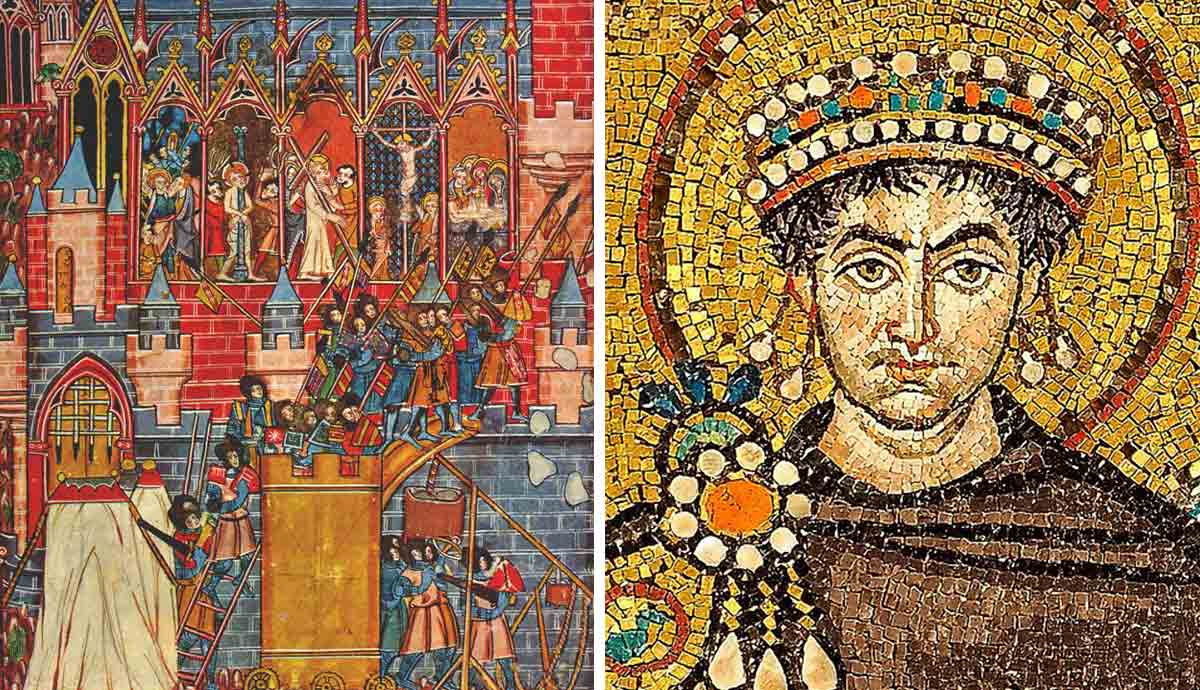
From its origins as the Eastern Roman Empire to its untimely demise at the hands of the Ottomans in 1453, the Byzantine Empire was one of the most powerful and influential empires in the history of the world. Through key leaders such as Constantine, Justinian, and Basil II, the Byzantine Empire rose to prominence, inspiring culture, art, weaponry, and much more. Here is how Byzantium shaped the medieval world around it.The Preservation of HistoryByzantine Empire (red) and Western Roman Empire (green) following the death of Theodosius in 395 AD. Source: Wikimedia CommonsOne of the most important things that the Byzantine Empire did to shape the medieval world was to preserve history.Byzantine scholars ensured that classical Roman and Greek texts were copied, re-copied, and preserved so that they had records of the pastand in turn, scholars who were educated in the Byzantine system ended up doing the same for their contemporary texts, which is why we know so much about the Byzantine Empire today.This also helped to inspire and preserve Byzantine culture, because the scholars who were in charge of copying and preserving Roman and Greek texts did not just copy historical facts, but also the works of playwrights and philosophers, which undoubtedly helped to inspire future Byzantine writers in their works, too.And as for the outside world, it was not just Byzantine writers and creatives that were inspired by the preservation of these texts. The Renaissance, which arose in Italy around the turn of the Late Medieval Period, was hugely inspired by the texts that became more accessible throughout Europe (thanks to Johannes Gutenbergs printing press and the fall of Constantinople in 1453). A large part of the availability of these texts was thanks to the diligent work undertaken by Byzantine scholars centuries previously.Legal Codes and Law DevelopmentMosaic of Justinian I, c. 547 AD, Basilica San Vitale, Ravenna. Source: Wikimedia CommonsAnother major influence that the Byzantine Empire had on the medieval world was the development of legal codes and the way that laws were issued.The most famous example of Byzantine legal influence comes from the Emperor Justinian I (r. 527-65), known as the Justinian Code, or Corpus Juris Civilis in Latin. This was the comprehensive legal document that was the codification of Roman Law undertaken by Justinian.The document helped to establish and form the basis for modern legal systems, especially modern civil law systems, which are still used in Europe, Russia, and other parts of the Western world to this day.Byzantine Solidus of Justinian II, 7th century AD. Source: The British MuseumBut it was not just the codification of Roman law that set Byzantium apart and helped to shape medieval Europe when it came to its legal reforms. Standardized procedures were one of the most important things that the Byzantine Empire created from a legal point of view, and the impact can still be seen in the modern world today. One such example was the setting of salaries for official positions, such as for government officials.This can still be seen across the world today, and a prime example is the idea of the National Minimum Wage. The idea of standardized wages in European politics can certainly be traced back to these very Byzantine legal developments.Another early legal reform that had an active impact on medieval European politics was known as the Farmers Law.The purpose of the Farmers Law was to protect farmers property and inflict punishment upon those who damaged it. It also established the village as a tax unit and required all members of the village to pay a communal tax. The importance of farming was clearly highlighted here, and this was the case for the majority of farms in medieval Europe, too. The Farmers Law has been modified, but the principle remains the same throughout much of Europe.Religious InfluenceIcon depicting the First Council of Nicea. Source: Wikimedia CommonsPerhaps the biggest influence that the Byzantine Empire had on the medieval world was from a religious perspective.Eastern Orthodox Christianity was the primary religion in the Eastern Roman Empire (the Byzantine Empire).To this day, Eastern Orthodox Christianity has been the primary religion in the Christian Balkans, Greece, Eastern Europe, and parts of Russia, and is dominant there today.After the Great Schism of 1054when the Eastern Orthodox Church split from the Catholic Churchit became even more powerful and shaped Eastern Europe and the religious culture of the region for centuries. Furthermore, the Eastern Orthodox Church was never affected by the European Reformation, at least not to the extent that Western Europe was. A prime example is how Protestantism is the most notable denomination of Christianity in many Western European countries now, but Eastern Orthodox Christianity is still dominant in the Balkans, Greece, and parts of Russia.Art and ArchitectureThe Hagia Sophia. Source: Wikimedia CommonsAnother influence that the Byzantine Empire had on the medieval world was through its art and architecture.While early Byzantine art took its primary influences from Greek and Roman works, it was not long before it took on its own theme and became known as Byzantine art.Mosaics of rulers such as Justinian are just as synonymous with Byzantine art as Roman mosaics are with their leaders in the Western Roman Empire. But it was not just art that set the Byzantine Empire apart and helped it to influence medieval Europe.Many Eastern Orthodox churches took on a Euro-Asian style, which makes sense geographically, considering where Constantinople (now Istanbul) was located, on the frontier between Islamic Asia and Christian Europe. Their circular-domed buildings might make readers think of Russia first, but remember why Russia became an Orthodox Christian countrybecause of the lasting influence of the Byzantine Empire.Byzantine buildings and artworks spread even further than Orthodox Christianity. Just take a look at medieval-era churches constructed throughout Europe in places such as Tallinn (Estonia), Budapest (Hungary), Bratislava (Slovakia), and even more modern iterations built in the Russian-Byzantine style, such as in Helsinki (Finland).The Military Role of Byzantium in Medieval EuropeSiege of Jerusalem in 1099, c. 13th-14th century. Source: BnFFinally, the diplomatic role that Byzantium played in medieval Europe was also hugely important to how medieval Europe developed and was influenced in later centuries.Because of its geographical location, Byzantium almost acted as a last frontier of Europe, protecting the continent (or Christendom) against the Islamic Infidel.As such, invaderswhether they were Mongols, Huns, or Islamic warriorsoften had to go through Byzantium to reach Europe. If Europe were attacked, the location of Byzantium would give other European countries more time to respond and re-arm if necessary.Byzantium was greatly respected in Europe, and a notable example of when this deal worked both ways was when the Byzantine Emperor Alexios I Komnenos requested military aid from Christendom to fight the infidels who were on his empires borders. This call for help was answered by Pope Urban II, who, in 1095, called for what became the First Crusade.Without Byzantium, there would have been no First Crusadeand likely no Crusades at all.Final ThoughtsReplica of a miniature of Emperor Basil II in triumphal garb, original 11th century. Source: Wikimedia CommonsThe Byzantine Empire was undoubtedly one of the most influential empires in the history of the world.From creating legal codes that would influence generations of European lawmakers for centuries to artwork and architecture that spread as far as the Nordic countries, the impact that Byzantium had on the medieval world simply cannot be overstated.It is therefore fair to conclude that without the Byzantine Empire, Europe would look completely unrecognizable today, and the impact it had on the medieval world cannot be undervalued.
0 Comments
0 Shares
1 Views

 Arabic
 French
 Spanish
 Portuguese
 Deutsch
 Turkish
 Dutch
Dutch
 Italiano
 Russian
 Romaian
 Portuguese (Brazil)
 Greek
Greek