


WWW.THECOLLECTOR.COM
Admiral Nelsons 9 Most Important Battles
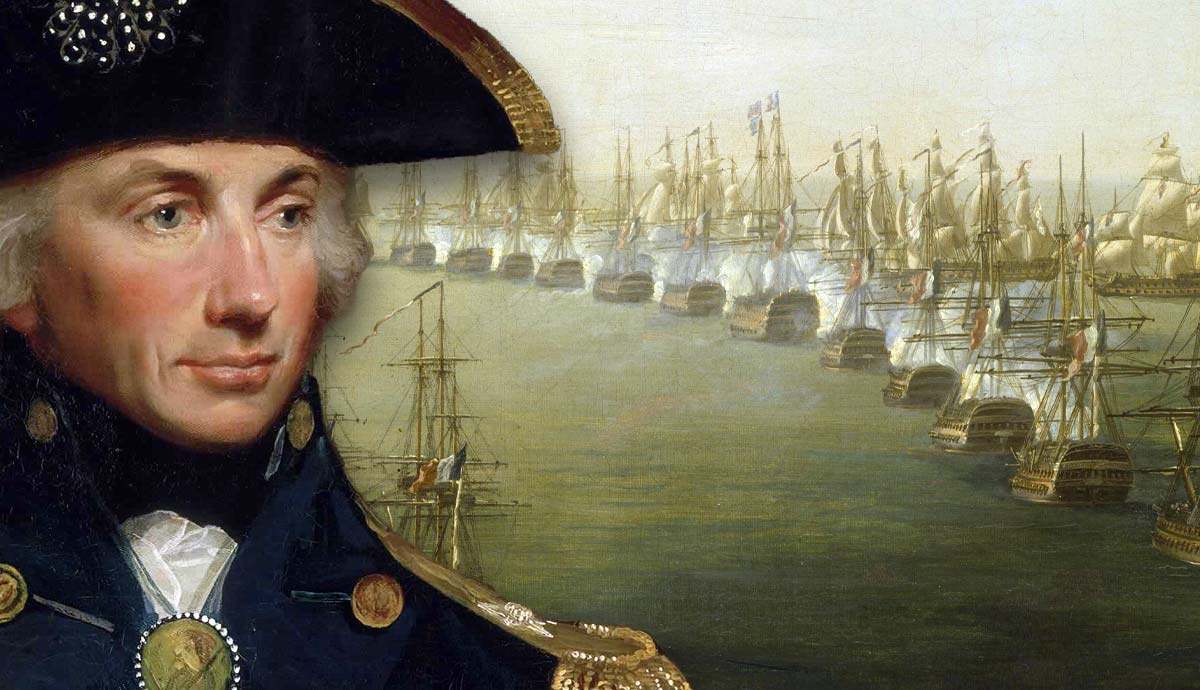
Horatio Nelson is the most famous naval figure of the Napoleonic Wars because of his major victories against diverse opponents (Cape St Vincent 1797, Nile 1798, Copenhagen 1801, Trafalgar 1805, to name a few). But these battles werent the only ones he participated in. Ever since he was 16 years old, he had taken part in naval battles and engagements until his last hour of triumph during the Battle of Cape Trafalgar in 1805, in which he was killed. Here is a list of all of his major battles, including the victories and the defeats that arent talked about as often.1. First Experience of BattleNelson Boarding the San Josef at the Battle of Cape St Vincent, 14 February 1797, by George Jones, 1797. Source: Royal Museums GreenwichDuring his stay in the East Indies from 1774 to 1776, Nelson was stationed on HMS Seahorse as an Able Seaman at the age of only 16 years old, to safeguard British convoys in the Indian Ocean, amid the first Anglo-Maratha War.This conflict pitted Great Britain against the Maratha Empire in India. Two of Hyder Alis (the ruler of the Kingdom of Mysore in Southern India) ketches attacked the boat on which Nelson was stationed. After a brief exchange of fire, the two Indian ships sailed off. This was Horatio Nelsons first experience of battle.2. Battle of Fort San JuanPortrait of young Horatio Nelson with the Fort of the Immaculate Conception behind him, by John Francis Rigaud, 1781. Source: Wikimedia CommonsFour years later, in 1780, during the American War of Independence, now-Captain Horatio Nelson of HMS Hinchinbrook was given command. Alongside Colonel John Polson, he was to sail up the San Juan River (now in Nicaragua) and capture the towns of Granada and Leon, on the north-western shore of Lake Nicaragua.The expedition was riddled from the beginning with disease, including yellow fever. Despite this, Nelson pushed his men and succeeded in capturing the Fort of the Immaculate Conception against a Spanish garrison of 228 men under the command of Juan de Ayssa after a two-week siege.The British held this fortress for nine months before abandoning it to the Spanish in January 1781. They never managed to perform their initial objectives and were forced to return to Jamaica because of disease. Nelson was praised for his efforts, mostly because of his initiative throughout the siege.3. Siege of CalviPrint depicting Nelson losing sight in one eye during the Siege of Calvi, by William Henry & Bromley, 1808. Source: Wikimedia CommonsIn 1793, during the French Revolutionary Wars, the Corsican people revolted against the French garrison on the island of Corsica and sought support from the British to expel the French from the island. Captain Horatio Nelson, under the command of Lord Hood, the admiral in command of the British Mediterranean Fleet, took part in the Siege of Calvi.The French, with a garrison of around 5,000 men, entrenched themselves in the heavily fortified city of Calvi. The British besieged them for over two months, after which the French capitulated. During these months, the French suffered around 700 casualties, whereas the British suffered around 100 casualties. Nelson, always fighting in the front lines, was blinded in one eye after a sandbag exploded in front of him, after being hit by a French cannonball.4. Battle of Cape St VincentPainting showing Nelson receiving the surrender of the San Josef at the Battle of Cape St Vincent, by Daniel Orme, 1799. Source: Royal Museums GreenwichOn February 14, 1797, during the War of the First Coalition, the British and Spanish fleets met off Cape St Vincent to fight a bitter battle. The British, under the command of Admiral Sir John Jervis, had fewer ships than the Spanish (15 to 25).Commodore Horatio Nelson, now commanding HMS Captain, refused to obey the admirals order and split off from the British group of ships to engage the Spanish fleet almost single-handedly.Being hit by six different Spanish boats simultaneously, Nelson ordered a boarding and succeeded in capturing the closest Spanish ship, the San Nicolas, an 80-gun ship of the line (compared to Nelsons 74-gun ship of the line). This wasnt enough for him, though, and he ordered, from the now-captured Spanish vessel, to board the San Josef, shouting, Westminster Abbey or Glorious Victory! This manoeuvre greatly helped the British to win the Battle of Cape St Vincent.5. Battle of Santa Cruz de TenerifePainting showing the wounded Nelson at the Battle of Santa Cruz de Tenerife, getting dragged to his ship, by Richard Westall, 1806. Source: Royal Museums GreenwichDuring the same war, in July 1797, Horatio Nelson planned and launched an amphibious assault on the Spanish port city of Santa Cruz de Tenerife in the Canary Islands. The British had around 4,000 regulars and sailors, and the Spanish defenders, under the command of Antonio Gutierrez de Otero y Santayana, had around 1,700 regulars and militia.Nelson, confident in his troops, planned a nighttime landing. The British met fierce resistance from the Spanish defenders, and Nelson decided to lead the next move. He was subsequently hit in his right arm and had to flee to his ships further in the sea. His arm was bleeding continuously and was therefore amputated before being thrown overboard. This battle ended in a complete British defeat, and they had to retreat and leave the Canary Islands alone.6. Battle of the NileThe Battle of the Nile, 1 August 1798, Nicholas Pocock, 1808. Source: Royal Museums GreenwichNapoleon Bonaparte was given command to sail from Toulon and invade Egypt in the name of the French Republic in May 1798. Horatio Nelson, now Rear-Admiral, was ordered to follow the French forces and stop them from landing anywhere.After a chase of more than two months, Nelson learned that the French had landed their troops in Alexandria and placed the French fleet in Aboukir Bay, on the Nile. Even though it was late in the day, Nelson ordered the British fleet to engage in combat with the French. The British had 14 ships of the line, whereas the French had 13 and four frigates.The Destruction of LOrient at the Battle of the Nile, 1 August 1798, by George Arnald, 1825-7. Source: Royal Museums GreenwichThe French admiral, Franois-Paul Brueys dAigalliers, had not placed his fleet directly next to the shore because there were significant shoals between it and the shore, and he thought that no ships could pass through. Nelson, being Nelson, ordered his first ships to go around the French fleet into the shoals so they could fire and concentrate firepower on the first French ships, with British ships firing on both sides.This strategy worked, and the French vanguard did not engage in the battle. The French suffered almost 5,000 casualties, without counting prisoners. The British suffered fewer than 1,000 casualties. The battle ended with the dramatic explosion of the French flagship LOrient.Napoleon was now stuck in Egypt without a fleet to rescue him.7. Battle of CopenhagenThe Battle of Copenhagen, 2 April 1801, by Robert Dodd, 1801. Source: Royal Museums GreenwichIn 1801, Denmark-Norway, Prussia, Sweden, and Russia formed the League of Armed Neutrality, or League of the North, against Great Britain. The British decided to send a fleet, under the command of Admiral Parker, to Denmark to dissuade them from fighting and to continue on with their alliance.Nelson, now Rear-Admiral, was given command of twelve ships-of-the-line while Parker stayed behind with the heavier ships. On April 2, 1801, Nelson engaged the Danish fleet anchored in front of Copenhagen. The battle was difficult for the British at the start, with the Danish having the upper hand. Nelsons commander even gave the signal to his ships to retreat and disengage from the action.Possibly the most famous portrait of Horatio Nelson, by Lemuel Francis Abbott, 1799. Source: Royal Greenwich MuseumsAccording to eyewitnesses, Nelson then told his flag captain Thomas Foley, You know, Foley, I only have one eyeI have the right to be blind sometimes, before holding his telescope to his blind eye and saying,g I really do not see the signal. He therefore disregarded Parkers signal and ended up winning the battle after multiple hours of fighting.8. Raid on BoulognePainting depicting the nighttime raid on Boulogne, Louis-Philippe Crpin, 19th century. Source: Wikimedia CommonsVice-Admiral Lord Horatio Nelson tried in August 1801 to destroy some French vessels anchored at Boulogne, which were thought to be used for the future invasion of England planned by Napoleon.Nelson decided to attack at night, but he was met with fierce resistance by the French, and his attack was completely thrown off, just like at the Battle of Santa Cruz de Tenerife.9. Battle of TrafalgarThe Death of Nelson, by Benjamin West, 1806. Source: Walker Art GalleryNelsons last and most important battle was the Battle of Trafalgar in October 1805. The British had 27 ships of the line and four frigates. The combined French and Spanish fleet had over 33 ships of the line and five frigates. Nelson decided to split his fleet into two columns and attack perpendicularly the combined enemy fleet.This technique, moving away from traditional naval tactics, won him victory in the end. The battle ended up being a major British victory, suffering less than 2,000 casualties, whereas the French and Spanish suffered around 7,000 casualties. However, the British also lost their hero, Admiral Nelson.
0 Comments
0 Shares
31 Views

 Arabic
 French
 Spanish
 Portuguese
 Deutsch
 Turkish
 Dutch
Dutch
 Italiano
 Russian
 Romaian
 Portuguese (Brazil)
 Greek
Greek