


WWW.THECOLLECTOR.COM
The True Story of the Incas Last Stand in the Little-Known Jungle Capital of Vilcabamba
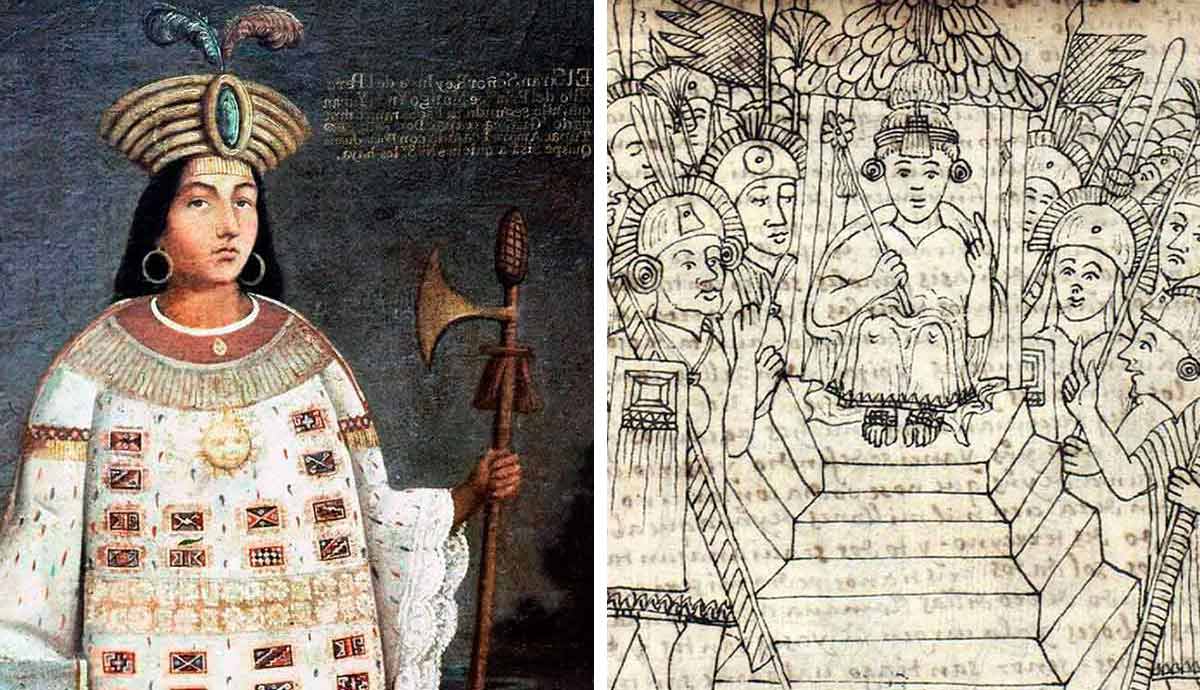
When the Spanish arrived in the Inca Empire, they found its last great leader, Huayna Capac, dead and one of his sons, Atahualpa, holding tentative power over the kingdom after defeating his brother in a years-long battle of succession. Disease and war had ravaged the population, severely hindering their ability to fend off the colonizers. Thats not to say they didnt try. Though the initial battle during which the conquistadors captured the Inca ruler was relatively short, rebellion soon followed and raged for decades.Ruling an Empire: Puppet KingPizarro Seizing the Inca of Peru, John Everett Millais, 1846. Source: Victoria and Albert MuseumHaving first misled Atahualpa into believing they would ransom him and move on to plunder elsewhere and then killing him, the Spanish put a brother of Huayna Capacs on the throne as puppet emperor, believing they would have more success in conquering the empire with someone the natives saw as a rightful heir as titular power. He died after just a few months, however, leaving Francisco Pizarro and the Spanish in a quandary: who could sit on the throne that would convince the Empires inhabitants their divine rulers were still in charge while the Spanish ran things behind the scenes?In what must have seemed like divine providence, the solution fell in their lap: Manco Inca, another son of Huayna Capac, just 17 years old, suddenly reappeared. Manco shared a bloodline with the recently defeated Huascar and had gone into hiding when he lost the battle of succession; with Atahualpas death, he believed himself rightful heir and presented himself to the Spanish as an ally in their mission to rid the land of Atahualpas army and followers. Misleading yet another member of the Inca nobility, convincing this one they fully supported his claims to the throne his brother had lost, the Spanish crowned Manco the new Sapa Inca.The new Sapa Inca, taking the Spanish at their word, set about trying, as best he could, to reestablish the complex network of governance and economic management that made the Empire what it was. His puppeteers set about looting the Empire of all its gold and silver, constantly demanding more. After two yearsand the theft of his primary wife and sisterManco had had enough. Realizing the Spanish had no intention of relinquishing control to him, let alone leaving, the Sapa Inca slipped out of Cuzco and launched a rebellion in 1536.Inca on the RunPortrait of Manco Inca from Recuerdos de la Monarquia Peruana, bosquejo de la historia de los Incas, Justo Apu Sahuaraura Inca, 1838. Source: Wikimedia CommonsThe Inca quickly managed to pen the majority of the conquistadors into Cuzco, surrounding the ancient capital with tens, perhaps hundreds, of thousands of warriors, compared with a few hundred Spaniards and approximately 500 of their native allies. Yet they were unable to secure a victory. Indigenous attacks that Manco ordered in other parts of the Empire, particularly the mountainous north, had more success, killing dozens of Spaniards. But with a strong foothold in the region, including the settlement that would go on to become the capital of Peru, Lima, the conquistadors were now receiving steady reinforcements, and their numbers were far greater than the small contingent that had captured Atahualpa four years earlier.After the greatest surviving Inca general, Quizo, was slain in a failed attack on Lima, hundreds of Spanish reinforcements headed toward Cuzco. Realizing he would be defeated, Manco lifted his siege of the city, at which point two factions of conquistadors began battling each other for its control.View from atop the fortress at Ollantaytambo. Source: Kristen JancukFirst managing his rebellion from Ollantaytambo, where he secured a decisive victory against the Spanish, Manco Inca ultimately retreated further from Cusco, relinquishing control of large portions of his empire to the Spanish and their new puppet emperor: Mancos brother, Paullu. Manco fled first to Vitcos, which the Spanish shortly thereafter raided, stealing untold treasures as well as Mancos son, and ultimately to Vilcabamba, in the Amazon.It was here, in dense, difficult terrain nearly inaccessible to Spanish horses, that he established the rebel capital, determined to preserve the Inca way of life, free from the colonizers interference. From their jungle refuge, the Indigenous peoples opposed to Spanish rule continued to wage war for nearly 40 years. No longer in command of tens of thousands of troops, Manco and the much-diminished free Inca state adopted guerilla warfare: ambushing small Spanish contingents, cutting supply lines and stealing weapons and horses.Assassination FeverPortrait of Francisco Pizarro, Amable-Paul Coutan, c. 1835. Source: French Ministry of CultureIn addition to contending with ongoing attacks by natives still loyal to Manco, the Spanish also faced internal conflict, ultimately leading to the assassination of Francisco Pizarro by conquistadors loyal to his rival, Diego de Almagro, who had been executed by one of Pizarros brothers. The assassins fled into the countryside and sought refuge with Manco, who, for his part, wisely housed them in Vitcos, rather than his new capital. Ultimately it didnt protect him; once Spain appointed a new viceroy to replace Pizarro in 1544, the assassins saw an opportunity to ingratiate themselves with the new leadership: kill the Sapa Inca of the rebellious free Inca state.Patiently waiting for the man who had housed and protected them for two years to visit Vitcos, they then stabbed him to death while he was playing horseshoes. Unfortunately for them, they hadnt thought their plan out much beyond this assassination and were all slain by Mancos loyal subjects as they fled toward Cusco.Illustration of the crowning of Manco Inca, from El primer nueva crnica y buen gobierno, Felipe Guaman Poma de Ayala, 1615. Source: Wikimedia CommonsMancos dream of recapturing his empire died with him, and a period of relative peace with the Spanish followed as his nine-year-old son ruled through several regents, but the holdout free Inca state remained. When Sayri-Tupac finally came of age, the Spanish managed to lure him to Cusco with promises of wealth and a lifestyle befitting an emperor, hoping this would finally bring an end to the ersatz kingdom of Vilcabamba.But when he died shortly after arriving in 1560, the remnants of Tawantinsuyu then crowned Mancos oldest son, Titu Cusi, who had once been kidnapped by the Spanish and witnessed his fathers assassination, Sapa Inca. Titu Cusi, who provides his own history of the Spanish conquest in An Inca Account of the Conquest of Peru, was quick to reignite guerrilla efforts against the Spanish colonizers that had slaughtered his family and enslaved* his subjects. Though he had no intention of recapturing the territory lost, he would not give up his fathers fight to protect what remained of the once great empire.Vilcabamba FallsPortrait of Tpac Amaru, last Sapa Inca, c. 18th century. Unknown artist, Cuzco School. Source: Wikimedia CommonsThroughout Titu Cusis rule, as small-scale attacks against the Spanish were launched, entrance into Vilcabambanot only the capital city but the surrounding areawas tightly controlled. The Sapa Inca continued to negotiate with the Spanish, refusing to abandon Vilcabamba but always leaving the impression he might be convinced. He went so far as to be baptized in the Catholic Church. But in 1569, Titu Cusi made what would be a crucial mistake: under threat of large-scale Spanish incursion, he allowed missionaries into Vilcabamba.Horrified by the pagan rituals of the Inca kingdom, the two friars sent to Christianize the natives took a hardline approach, ultimately destroying an Inca temple. One was banished while the more popular friar was allowed to remain, but the damage was done. When Titu Cusi suddenly died shortly thereafter, the remaining friar was quickly blamed for what looked to be poisoning and killed in retribution.Not wanting the Spanish to learn of the Sapa Incas death, the kingdom of Vilcabamba fell silent, no longer communicating with the capital and refusing all envoys. When one of these envoys was killed, the newest Spanish viceroy, Francisco de Toledo, decided enough was enough. He amassed a force to finally conquer Vilcabambabut when they arrived, they found the capital abandoned. Its citizens themselves sacked and burned the city before they left, leaving nothing for the Spanish to recover. The Spanish searched the countryside, determined to capture the latest Sapa Inca, Tupac Amaru. When they finally tracked him down, he was brought to Cuzco, tried, and condemned to death. He was beheaded in the town square on September 24, 1572.The Inca Empire was no more.Rediscovering VilcabambaSome of the buildings excavated at Vilcabamba today. Source: Salkantay Trek MachuOnce abandoned, Vilcabamba was reclaimed by the Amazon and its location lost to time. Though certainly local Indigenous peoples were aware of the ancient city hidden in the jungle, the location of Vilcabamba puzzled historians and researchers for centuries. When he discovered Machu Picchu, Hiram Bingham was convinced hed finally found the lost city of the Incas, despite all evidence to the contrary. It would take another half century for Vilcabamba to actually be identified.In 1964, amateur explorer Gene Savoy set out to take a deeper look at some overgrown ruins Bingham had been shown in 1911 and dismissed as too insignificant to be the lost Inca capital. He brought workers with him to clear out the layers of jungle encasing the ancient structures, revealing not a few scattered buildings but a city complex. Bingham, it seemed, had explored just the outskirts of the city and, unimpressed, moved on. Savoy and his team, in contrast, spent weeks digging further into the jungle and found the heart of the ancient city.Years later, an architect, Vincent Lee, with some guidance from Savoy, embarked on a new expedition to the site. Guided by the early Spanish chronicles, which largely hadnt been published in English until the 20th century, he was able to identify specific sites, including forts, included in descriptions of Vilcabamba, definitively proving that the lost city of the Incas had at last been found.Vilcabamba is still being excavated today. Its ruins cover an estimated 20-25 square miles, suggesting that Manco and his successors expanded a small outpost into a true Inca capital. Though far less accessible than Machu Picchu, it can be visited by intrepid tourists willing to undertake a trek through the jungle to explore the mysterious city where the Inca made their last stand.*The Spanish used the term encomienda for their own brand of de facto slavery; encomenderos were granted tracts of land as well as Indigenous peoples to labor on it, purportedly in exchange for their protection.Further reading: The Last Days of the Incas, Kim MacQuarrie, 2007
0 Commentarii
0 Distribuiri
20 Views

 English
 Arabic
 French
 Spanish
 Portuguese
 Deutsch
 Turkish
 Dutch
Dutch
 Italiano
 Russian
 Portuguese (Brazil)
 Greek
Greek