


WWW.THECOLLECTOR.COM
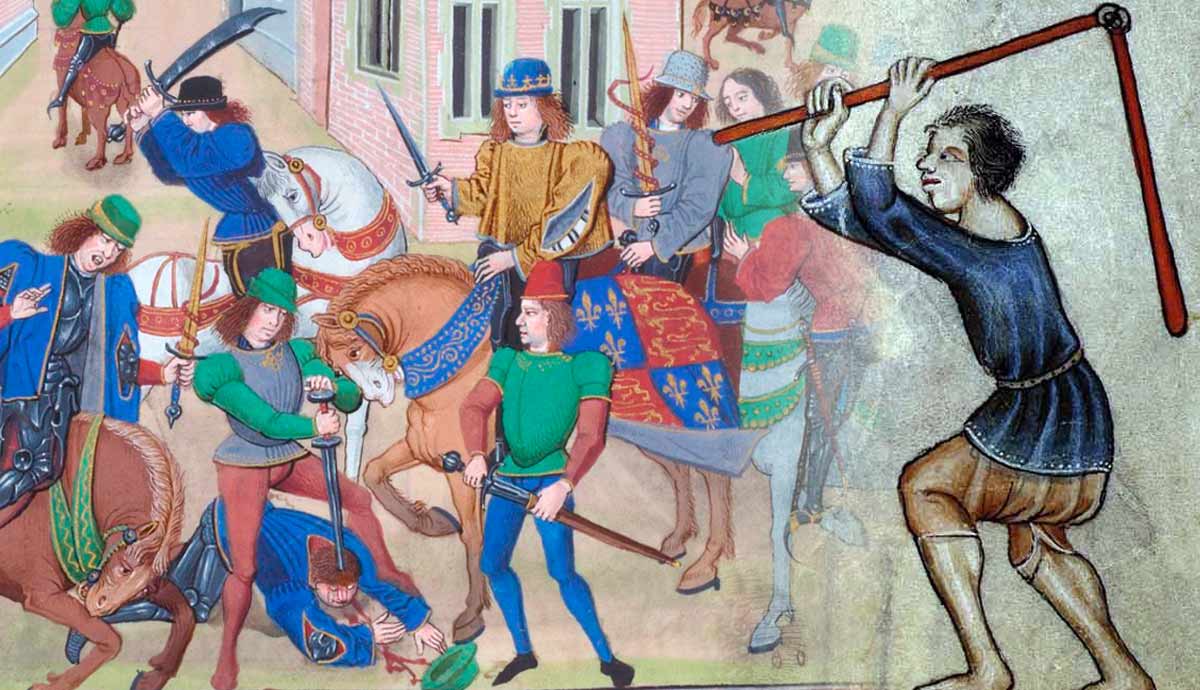
How the Peasants Occupied London in 1831 and Why Their Rebellion Failed
In 1381, England erupted in a series of rebellions known to posterity as the Peasants Revolt. The key event was the invasion and taking of London by the rebels from the surrounding counties. But why did the rebels march on London? How were they able to seize it despite the presence of the city authorities and royal government? How was the rebellion in London broken? And what was the significance and impact of their achievement?Social Upheaval Before the RevoltPeasants engaged in threshing, from Luttrell Psalter, c. 1330. Source: British LibraryThe Peasants Revolt is inseparable from the Black Death, the plague that ravaged Europe from 1346 to 1353, wiping out perhaps half of its population. Despite the economic and demographic desolation, there were winners from the disaster. Many rural villagers suddenly found that they had inherited the land of their dead family. Others found that their time and skill were worth much more in a time of labor scarcity and were able to demand more. This was a dramatic rebalancing of the established order.In response, the upper echelons of society attempted to consolidate their position, bringing in laws that attempted to restrict wages, the movement of peasants, and even mandate what clothing different classes could wear. These laws largely failed because landowners needed labor and were prepared to pay for it, regardless of what parliament said. But the laws also made the winners of the Black Death feel that their newfound prosperity was under threat. Attempts to re-establish the traditional power of manorial courts led to direct resistance, particularly in the counties near London, for example, with seized animals being forcibly retaken.Meanwhile, as Edward III aged and finally died in 1377, the progress of the Hundred Years War against France worsened. The French were now raiding the English shore. The government raised taxes to pay for the expensive, under-pressure garrisons within France and to build defenses. This was unpopular at the best of times, but particularly when a war is going badly. There was a widespread feeling that senior men in government were taking advantage of the youth of the new king, Richard II (only ten years old in 1377), to embezzle funds meant for the war. Particular targets of derision were the kings uncle, John of Gaunt, and Simon Sudbury, Archbishop of Canterbury and Lord Chancellor, and even the kings mother, Joan of Kent.A Groaning CapitalJohn of Gaunt from Chronique d Angleterre (Volume III), by Jean of Wavrin, c. late 15th century. Source: British LibraryLondon was not immune to this wider resentment, but also had its own specific issues. At the time, it was not much larger than the original Roman settlement, whose walls were more in evidence than today around the citys borders. Familiar sites we associate with London, such as Westminster Abbey, were still far outside its gates. There was just one bridge over the Thames, and the river was wider, marshier, and more tidal. The various rivers and tributaries that flow into it, many of which are now covered, were still mostly open to navigation, fishing, and human and animal waste. The buildings were wooden, and the streets were narrow.Unlike Paris, London lacked the cache of an acclaimed university, although it did possess a number of religious establishments and hospitals. However, it was a hub of economic activity and had become increasingly politically volatile. This was a particular problem as the formerly itinerant royal government was now very much settled in the surrounding area.Most of the capitals economic, legal, and political activities were conducted via guilds and fraternities, groups of merchants and skilled laborers like modern unions, some of which still play a key part in the governance of the City of London to this day. These bodies grew increasingly frustrated in the build-up to 1381 by the growing power of royal courts such as the Marshalsea Court, which they felt undermined their ancient traditions of justice.There was also resentment of foreigners moving into the city and competing with local craftsmen and traders, with Flemish weavers a particular target. John of Gaunt was, again, a focus, primarily because he protected the heretic John Wyclif, who was reviled by the London authorities. A rumor emerged that he wanted to replace the citys elected mayor with an appointed captain. He was nearly lynched in 1377 by an angry mob.The Revolt EruptsJohn Ball and Wat Tyler during the Peasants Revolt, miniature in Froissarts Chronicles, c. 1470. Source: British LibraryThe trigger for the revolt was a fresh poll tax levied in 1381. The government knew there would be widespread evasion, so it sent commissioners into towns and villages to assess peoples goods. On May 30th, 1381, one such commissioner in Brentwood was attacked while attempting to collect taxes. The villagers spread the word, and before long, a revolt had broken out across Essex and Kent. The rebels typically formed in villages, then congregated and marched on larger towns, such as Rochester, Maidstone, and Canterbury. It soon became clear that the target was London.On June 12th, the men of Kent reached Blackheath, a field just southeast of London overlooking the capital and the surrounding country. The Essex rebels camped at Mile End to the northeast. The men of Kent had already elected a man called Wat Tyler to be their leader and had also freed a notorious preacher, John Ball, from Maidstone prison. Ball was a former priest, now excommunicated, who was deeply influenced by the social levelling of the Black Death and the teachings of Wyclif. He had spent years roaming the countryside preaching social equality. According to the chronicler Thomas Walsingham, he delivered the following words to the assembled rebels:When Adam delved and Eve span, Who was then the gentleman? From the beginning, all men by nature were created alike, and our bondage or servitude came in by the unjust oppression of naughty men. For if God would have had any bondmen from the beginning, He would have appointed who should be bond, and who free. And therefore I exhort you to consider that now the time is come, appointed to us by God, in which ye may (if ye will) cast off the yoke of bondage, and recover liberty.Medieval serfs, from Queen Marys Psalter (Ms. Royal 2. B. VII), 1310. Source: British LibraryThe rebels had a clear ideology and a clear plan, of which John Balls sermons were symptomatic. They wanted to consolidate and extend the gains of the Black Death, making all below the king equal before the law. Serfdom would be abolished, and the kings evil advisors would be punished. They arrived at the walls of London with a list of traitors, which included the Archbishop of Canterbury. In the rebels eyes, they were not radicals or revolutionaries, but restoring the kingdom to its natural state.Enemy at the GatesRichard II meeting the rebels on the Thames, miniature in Froissarts Chronicles, c. 1470. Source: University of PennsylvaniaThe king had already received word of the revolt on the 10th and had retreated from Windsor Castle to the Tower of London. However, most of the soldiers were in France. At most, the king had his personal bodyguard and perhaps 200 soldiers to try and keep the city against as many as 30,000 armed rebels. He was reliant on the goodwill and defence of the city authorities and townspeople, but as weve seen, this could not be guaranteed. The king and his council, therefore, agreed to respond to the rebel demands with a negotiating party.A small group led by the bishop of Rochester duly went to Blackheath and asked them to return home. The rebels refused. In response, probably conscious of their weakness, the king himself, still only 14 years old, agreed to negotiate directly with the rebels at Greenwich, the site of a royal palace. On 13th June, he sailed out from the Tower up the Thames, flanked by four barges full of armed soldiers. However, once he got to Blackheath, he refused to come onto land. The rebels would not speak to him unless he did. With both sides frustrated, Richard returned to the Tower.With the last attempt to negotiate having collapsed, the Kentish rebels must have lost patience and resolved to enter the city. That afternoon, they made their way to Southwark on the south bank of the Thames. It is likely at this point that they attacked Marshalsea Prison and freed those within it. They moved onto London Bridge, which at the time would have been a large structure lined with buildings similar to Florences Ponte Vecchio. The mayor, William Walworth, was ready to resist, but the townspeople sided with the rebels. They threatened the gatekeepers and forced them to open the gates. The same day, the men of Essex arrived outside Aldgate. The Kentish rebels duly moved westward from the Bridge and opened the Aldgate entrance.Inside the CityMap of London c. 1300, from Historical Atlas, by William Shepherd, 1921. Source: University of Texas LibrariesAt least some of the rebels likely had military experience from the campaigns in France. They had organized themselves along the lines of local militias. Once inside the city, it was clear that they had a pre-determined set of targets. One of the chroniclers records that they caused no trouble until they reached Fleet Street. The Fleet and Newgate prisons, just outside the city, were then attacked, as well as the homes of Flemish merchants and craftsmen.The first major target was Clerkenwell Priory, the home of the Knights Hospitaller, significant as it was headed by Sir Robert Hales, the Lord Treasurer, and one of the men the rebels wanted executed. They duly destroyed the priory and burned the nearby manor. They then made their way to another Hales-linked target, moving west to The Temple. At the time, this was a set of buildings that acted as the legal headquarters of the Hospitallers. Legal documents, books, and papers were ceremoniously brought out of the buildings and burned. The buildings themselves were then demolished.A separate group attacked the home of another man on the list, John Fordham, the Keeper of the Privy Seal. He somehow escaped even as the crowds ripped his home apart. Others were not so lucky, with one chronicler recording that 18 men across the city were beheaded.View of the Savoy Palace,by Charles Thurston Thompson, from The Town: Its Memorable Characters and Events. St Pauls to St Jamess (1848). Source: Internet ArchiveThe rebels and London crowds then moved onto what must have been the most reviled target, the Savoy Palace, home of John of Gaunt and a huge and valuable collection of gold and silver goods. The militaristic order of the rebels is clear in the way they behaved once they reached the palace. Rather than ransacking and looting, they set out to systematically destroy the icons of the dukes wealth. Soft furnishings were burned, metalwork was smashed, and gems were crushed. Again, any legal documents and records were burned, and the remains thrown into the city drains. Once satisfied that the building had been suitably denuded of its valuables and documents, it too was burned.The rebels now moved towards the Tower itself. One can imagine the king and his counselors, including those on the rebels list, looking out at the crowd beneath them, with the flames licking the black clouds rising into the evening sky.A Second Attempt at NegotiationThe Tower of London and Old London Bridge in the late 15th century, from a manuscript of poems by Charles, Duke of Orleans. Source: British LibraryThe king called a council in the Tower of the lords and knights that were around him, but they seemed to have become frozen in awe at the situation. Frustrated, the king asked the mayor to summon the citys aldermen and sheriffs to Mile End, a settlement a mile from Aldgate, the following day, and to issue a proclamation calling for the dispersal of the crowd. He then went to a Tower overlooking the rebels camp at St Katherines (at the time, a hospital, now gentrified docklands) and issued a proclamation asking that they go back home in return for a general pardon. The rebels, in one voice (which may just mean that the men of Kent, Essex, and London agreed), refused unless those on their list of traitors inside the Tower were handed to them.In response, the king issued a bill, repeating his call for them to return home in return for vague promises of remedy. The rebels were unconvinced and again refused to move. Also frustrated, it seems that the captains of the rebels ordered that anyone learned in law or who worked for the exchequer or chancery should be executed, and unspecified sites were burned. Again, the king called for advice from his lords, but none was given, leaving the young king to look out over his burning city from one of the Tower turrets.Meeting at Mile EndOld London Bridge, by Claes Jansz, 1616. Source: Wikimedia CommonsThe next day, the rebels left 80 men to watch over the Tower while the majority, one chronicler estimates as many as 100,000, traveled to Mile End to await the king. Richard arrived with a retinue of lords and his guard of knights. The rebels greeted him respectfully, stating that they would have no king but him. The king was then approached by Wat Tyler, apparently now representing the whole rebel crowd. Tyler repeated the demand for the traitors to be handed to them. The king replied that any traitors proven by the law could be handed over.A further small band of rebels, with banners and streamers, then approached with a petition. Most of the petitions contents had already been articulated. It called for the abolition of serfdom. No man should have to serve another except by his free will and contract. The king, presumably realizing he had no leverage, agreed, repeating that only traitors proven by law should be executed.Punishing TraitorsThe murder of Simon Sudbury, Archbishop of Canterbury and Lord Chancellor, miniature in Froissarts Chronicles, 1470. Source: British LibraryNevertheless, one chronicler now states that Tyler and a group of rebels returned to the Tower to start hunting the men on their list. They interrupted a mass being given by the Archbishop of Canterbury in the chapel at the Tower, took him, Sir John Hale, and other men from the list to Tower Hill, and summarily executed them. A proclamation also went out calling for all Flemings and foreigners owning property to be dispossessed and the men beheaded. The heads of the traitors, and perhaps Flemings too, were paraded through the streets on wooden poles to the shrine of Westminster Abbey, and then to London Bridge, where they were placed on spikes.The crowd then undertook two coordinated attacks on groups of foreign merchants in the city. Thirty-five Flemings were found in the Church of St Martin in the Field and all executed. We are told that the homes of Lombards and other aliens were then attacked and goods looted. The king somehow learned that his Archbishop was dead. A new chancellor, the Earl of Arundel, was quickly appointed. Charters and letters began to be issued confirming his acceptance of the rebel demands.The next day, a crowd of the rebels again went to Westminster Abbey. It seems they had heard that Richard de Imworth, Marshal of the Marshalsea, who even one of the chroniclers calls a pitiless tormentor, was hiding there. He was presumably seeking sanctuary and safety after the prison had been destroyed. When they entered, Imworth clung to a marble pillar. They pried him off, took him to the Cheap, and beheaded him. They also killed a valet, simply for speaking well of William Appleton, one of their traitors.The king again issued proclamations calling for the rebels to leave, but to no avail. Instead, the king himself went to Westminster Abbey at 3 pm with 200 men. After saying some prayers at the high altar, he made an offering and gave confession. Its possible he was steeling himself for what he was about to do. Thereafter, he issued yet another proclamation, calling for the rebels to meet him at Smithfield.Meeting at SmithfieldMemorial to Wat Tyler and the Peasants Revolt, St Bartholomews Church, West Smithfield, 2024. Source: Wikimedia CommonsThe king arrived after the rebels at Smithfield, who had arrayed themselves in a battle formation to the west, complete with banners. He was encouraged by the Mayor of London to go out towards them and call for Tyler again. Tyler rode out on a little horse. He dismounted, carrying a knife he borrowed from someone else. He half-dipped his knee, shook the kings arm with some force, called the king brother, and told him that he would soon have 40,000 men ready to serve him.The king simply asked, Why will you not go home? Tyler replied that they would not leave until they had a charter confirming that their demands would be honored, and threatened consequences for the lords of the realm if this did not happen. The king again asked him to articulate the demands, which Tyler duly did. The chroniclers now add more detail, implying that the rebels called for all lordship to be abolished save that of the king, the church to be stripped of most of its land and bishops, the end of outlawry, as well as the end of serfdom. The king again agreed to all the demands that he could reasonably deliver, provided it did not threaten his crown, and repeated his call for Tyler and his men to go home.Perhaps Tyler was a bit taken aback by how easy the process had been. The kings men, the mayor, and the lords had stayed back. He had spoken freely with the king and apparently won all he wanted. Unsure what to do, and it being a hot day, he called for a flagon of water. When he got it, he rinsed out his mouth, presumably spitting it onto the floor in front of the king. He then called for ale, taking a draught before remounting his horse.Wat Tylers Death, by Anker Smith & James Northcote,1796, Tyler became a folk hero to the revolutionaries of the 18th century, via Artoftheprint.comAt this point, presumably enraged by the disrespect, one of the kings servants, Sir John Newton, declared that Tyler was the greatest thief and robber in the whole of Kent. Tyler called for him to come forward. The lords pushed him forward. Tyler ordered one of his banner carriers to cut off the mans head. This seems not to have happened, and instead Newton repeated his accusation.Tyler went into a rage and attempted to attack himself. Walworth now attempted to intervene to try and arrest Tyler, but was stabbed in the stomach. He was saved by his armor and hacked Tyler with his sword three times. Tyler spurred his horse. It carried him towards the rebels, allowing Tyler to shout for his fellow rebels to avenge him, before he collapsed off the horse, half-dead. The rebels drew their bows in the direction of the lords.Bloody Encounter at ClerkenwellThe Death of Wat Tyler, miniature in Froissarts Chronicles, 1470. Source: University of PennsylvaniaThen, something remarkable happened. The teenage king, in the midst of the chaos, spurred his own horse and charged out towards the rebels. He issued his famous call, that they shall have no captain but me, and ordered the rebels to meet him in the field of St John of Clerkenwell.The wounded Walworth returned to London to try and restore order and summon armed men to help the king. When he arrived in the field, the king had ordered the rebels to array towards the west. This allowed Walworths men to pin them back and envelope the rebels like sheep in an enclosure. He demanded Tyler be handed to him, only to be told hed been taken to a hospital. Walworth went to the hospital, dragged Tyler back to Smithfield, and had him beheaded. The head was taken to the king, who had it carried alongside him to intimidate the rebels. At this moment, the rebels seem to have thrown in for mercy from the king, which was initially granted. He even granted them an escort of two knights per band out of the city.Aftermath of the Peasants RevoltRichard II, 1390. Source: Westminster AbbeyThe kings bravery had saved the city, the lives of many of his retinue, and possibly his own. The rebels were now quietly departing the city. An attempted foray northwards was blocked. The rebellion still spread, however, with further revolts in Norfolk and Suffolk. Now that the capital was secure, however, the authorities had breathing space to mount their response. In due course, men were sent out to capture known rebel leaders and put them on trial. Some of the bodies were sent back to London to be put on display as a warning to others. However, the vast majority of rebels, probably for practical reasons, were pardoned.The Peasants Revolt was a widespread event, but its most dramatic events happened in London. London had increasingly become the stage on which the drama of English political society was manifested and played out, and the Revolt was another stage in this evolution.Although the attack did not even last a week, its hard to exaggerate the damage and impact of the assault. Large sections of the city were burned. Perhaps as many as 140 Flemings alone were beheaded, as well as countless lawmen, government officials, and other foreigners. The Archbishop of Canterbury and Lord Treasurer, two of the most senior officials in the kingdom, were beheaded summarily by farmers, craftsmen, and laborers. The fact that the great lords of the realm were apparently paralyzed in indecision and fear is a testament to the scale of the disaster and the shock.That makes it all the more surprising, almost incredible, that a boy of 14 would have the courage and confidence to face them down. It would save what was left of London and the royal government and enable him to restore control. It would also have far-reaching consequences for Richards ego and his ultimate fate.Select BibliographyThe St Albans Chronicle: The Chronica Maiora of Thomas Walsingham, I, 1376-1394, ed. & trans. J. Taylor, W. Childs & L. Watkiss (Oxford, 2003)The Anonimalle Chronicle, 1333-81, ed. V.H. Galbraith (Manchester, 1927)Knightons Chronicle, 1337-96, ed. & tr. G.H. Martin (Oxford, 1995)Chronicles by Jean Froissart, trans. G. Brereton (London, 1968)Barron, C.M., Revolt in London, 11th to 15th June 1381 (London, 1981)Dunn, A., The Great Rising of 1381: the Peasants Revolt and Englands Failed Revolution (Stroud, 2002)Hilton, R.H., Bond Men Made Free: Medieval Peasant Movements and the English Rising of 1381 (Oxford, 1973)
0 Commentarios
0 Acciones
33 Views

 English
 Arabic
 French
 Portuguese
 Deutsch
 Turkish
 Dutch
Dutch
 Italiano
 Russian
 Romaian
 Portuguese (Brazil)
 Greek
Greek