


WWW.THECOLLECTOR.COM
How Robert Gould Shaw Became the White Officer Who Led the 54th Massachusetts
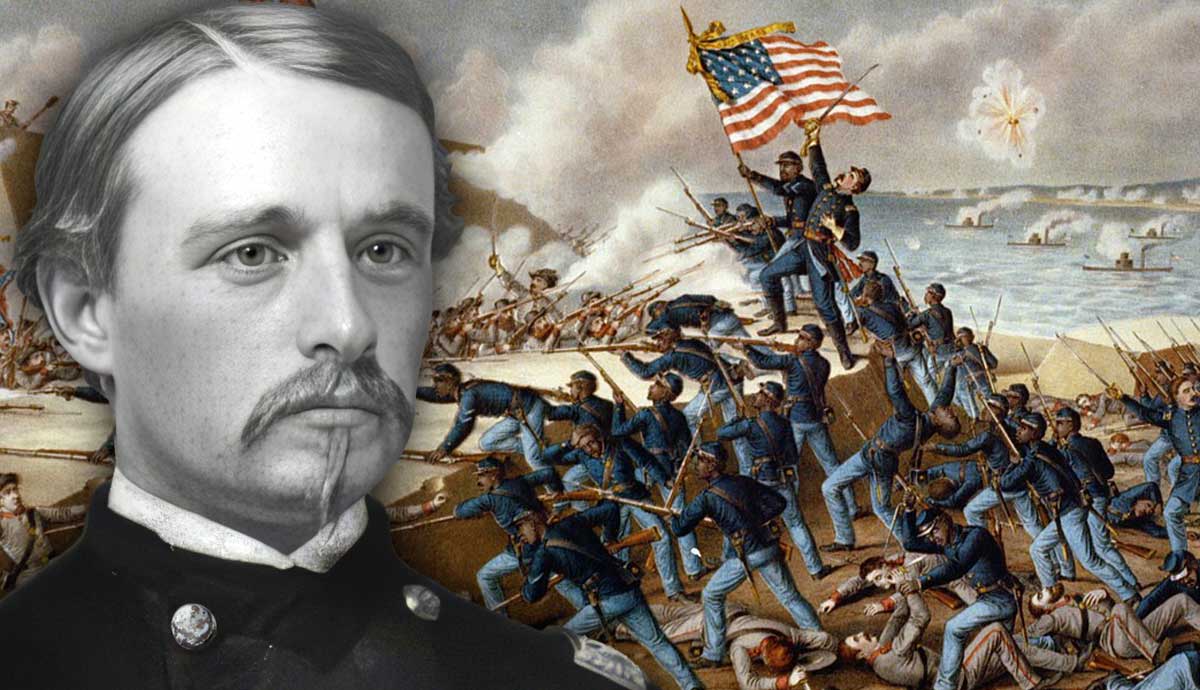
Robert Gould Shaw is best remembered for leading the 54th Massachusetts Infantry, the first Black regiment raised in the North during the Civil War following Lincolns Emancipation Proclamation. Born into an abolitionist family, Shaw accepted the command of the 54th, believing deeply in the wrongs of slavery. His death at the Battle of Fort Wagner in South Carolina turned him into a symbol of sacrifice, and his leadership inspired thousands to join the Union cause. Shaws legacy lives on in history books and monuments.Early LifePortrait of a young Robert Gould Shaw. Source: DPLARobert Gould Shaw was born in Boston in 1837 into one of the most influential abolitionist families in the North. His parents, Francis and Sarah Shaw, were active in anti-slavery causes and supported efforts to end the institution of slavery long before the Civil War began. The Shaws eventually moved to Staten Island, New York, embedding themselves in a prominent abolitionist neighborhood which included the Stowes and Emersons. Despite his privilege, Shaw often found himself on the wrong end of many events at school, accumulating many demerits for various acts.In 1851, Shaw left his preparatory academy, St. Johns, to attend boarding school in Europe. His parents believed a more strict environment away from his friends and family was what he needed. First attending school in Switzerland for two years, then transferring to a school in Hanover, Germany, Shaw struggled with maintaining his grades and staying out of trouble just as he had back home.Portrait of Col. Robert Gould Shaw by Horace Burdick, c. 1895. Source: Harvard Art MuseumsShaw returned to the United States after graduating in 1856. From 1856 to 1859, he studied at Harvard University but dropped out a year before graduating. Shaw showed signs during this time of being a restless young man, unsure of the direction he wished to take his life. His parents often tried to provide a path for him, but Shaw would quickly lose interest. When the Civil War broke out, Shaw knew the course of his life for the foreseeable future, not just out of patriotism, but because he believed in the cause his family had championed for years. His upbringing laid the foundation for the decisions he would make later in life, especially the one that would define his legacy.Early War EffortsLt. Robert Gould Shaw with the 2nd Massachusetts Infantry, c. 1861. Source: Wikimedia CommonsBefore taking command of the 54th Massachusetts, Shaw had already seen his fair share of war. He enlisted in the Union Army in 1861 as a private in the 7th New York Militia. Signing an initial 90-day enlistment, Shaws service was completed in May. The 7th New York was dissolved that same month, leaving Shaw with no choice but to return home if he wished to continue serving the Union cause. At the end of May, Shaw was commissioned a second lieutenant in the 2nd Massachusetts Infantry. At a time when the Union lacked experienced and battle-tested officers, Shaw was selected for leadership for his education and family prestige. He fought in several early engagements, including the very first large-scale engagement of National and Confederate troops, Bull Run. Shaw was known among his peers as a competent, if not extraordinary, officer.The opposite of the ill-tempered, unruly young man of his youth. These early years in the Army were formative, helping him grow from a hesitant volunteer into a capable leader. Still, Shaw wasnt entirely convinced that a military life was for him. Just as with his time at school overseas and Harvard, military life for Shaw presented its challenges. He struggled with moments of doubt as expressed in letters between his mother and father. His correspondence shows he even considered leaving the service shortly before his 90-day enlistment expired.However, everything changed when Massachusetts Governor John Andrew, a family friend, asked him to lead a new experiment in the war effort: a regiment composed entirely of Black soldiers led by white officers. The assignment came with enormous political and personal pressure. After much deliberation, he accepted the offer. That decision would place him at the forefront of one of the most important chapters in Civil War history.Commanding the 54thRecruiting poster for the 54th Massachusetts colored infantry, c. 1863. Source: Wikimedia CommonsIn early 1863, Robert Gould Shaw was appointed to lead the 54th Massachusetts Volunteer Infantry, the first official African American unit raised in the North during the Civil War. The regiment was formed in Boston and quickly drew national attention, although it struggled in recruitment efforts. The men who joined the 54th were not only fighting to preserve the Union; they were fighting for their own freedom and the future of Black Americans. The 54th was composed of African American men from all over the nation and of various economic strata. Some were former slaves, and many had never known what it meant to be the property of another person, yet they were all together, ready to fight for freedom.Shaw took the role seriously. He drilled his men hard and instilled them with discipline as he knew they would have to prove their effectiveness at a much steeper rate than white soldiers. While he drilled his men hard, he advocated for them with great tenacity. Shaw fought to ensure they received equal payan issue that plagued Black soldiers throughout the warand made sure their uniforms and supplies matched the standards of white regiments.While the early days of the 54th saw the regiment assigned to physical labor, Shaw continued to advocate for his men to be given the chance to prove their worth. By late June 1863, Shaw and the 54th were on their way to South Carolina as part of the campaign to take Charleston.The Assault on Fort WagnerMap depicting the siege of Fort Wagner, Morris Island, Charleston Harbor, S.C., July 1863. Source: Library of CongressOn July 18, 1863, Shaw and the 54th Massachusetts led a bold assault on Fort Wagner, a heavily defended Confederate stronghold near Charleston, South Carolina. The fort was key to controlling the harbor, as any ship attempting to launch an assault would be cut down by the battery inside the fort. To take the fort, soldiers would cross over a mile of beach with no cover, leaving them vulnerable to cannon fire.Shaw knew the attack would lead to a large number of casualties, but he volunteered for the 54th to lead the assault on Fort Wagner. As the men marched across the narrow beach, at the head was Col. Robert Gould Shaw. Shaw would be the first to begin to take the fort, he was shot and killed while mounting the parapet, one of the first to fall in the assault. Nearly half of the 54th was killed, wounded, or captured during the failed attack.The Aftermath of WagnerThe Storming of Fort Wagner, by Kurz & Allison, c. 1890. Source: Wikimedia CommonsThough the attack failed to take Fort Wagner, the bravery shown by Shaw and his men made headlines across the nation. Journalists across the North praised their heroism, and the story of the 54th inspired thousands of Black men to enlist. After the battle, Confederate forces buried Shaw in a mass grave with his fallen soldiers, intending it as an insult.In the eyes of the Confederacy, a white officer deserved a proper burial, not one alongside enlisted soldiers, much less Black troops. But Shaws family saw it differently. When Union forces offered to retrieve his body, Shaws father refused. He said there could be no holier resting place for his son than beside the men he had led in battle. Initially meant as an insult, the Confederate burial made his sacrifice even more meaningful to the Union. After the war, the Army disinterred all those buried at Fort Wagner and reburied them in a mass grave at the National Cemetery in Beaufort, South Carolina. Nonetheless, Shaws burial became a powerful part of the story of the 54th.LegacyMemorial to Robert Gould Shaw and the 54th Massachusetts Volunteer Infantry Regiment, Boston Common, Boston, Massachusetts. Sculpture created 1884-1887 by Augustus Saint-Gaudens. Source: Wikimedia CommonsIn 1897, more than three decades after his death, a memorial to Robert Gould Shaw and the 54th Massachusetts was unveiled on Boston Common in Boston, Massachusetts. Sculpted by Augustus Saint-Gaudens, the bronze relief is one of the most celebrated monuments in American history, visited by thousands each year. The memorial itself is a message of equality. Rather than appearing above or in front of his men, Shaw is depicted alongside them. The detail captures the unity and purpose of the regiment as they marched into battle.The monument was groundbreaking for its time. It didnt just honor a single man, it honored the collective sacrifice of an entire regiment. The dedication ceremony was attended by dignitaries, veterans of the 54th, and thousands of onlookers, both Black and white. Booker T. Washington gave a moving speech, highlighting the importance of the 54th in American history.
0 Comentários
0 Compartilhamentos
24 Visualizações

 English
 Arabic
 French
 Spanish
 Portuguese
 Deutsch
 Turkish
 Dutch
Dutch
 Italiano
 Russian
 Romaian
 Greek
Greek