


WWW.THECOLLECTOR.COM
10 Most Dramatic Melodramas of the British Royal Family
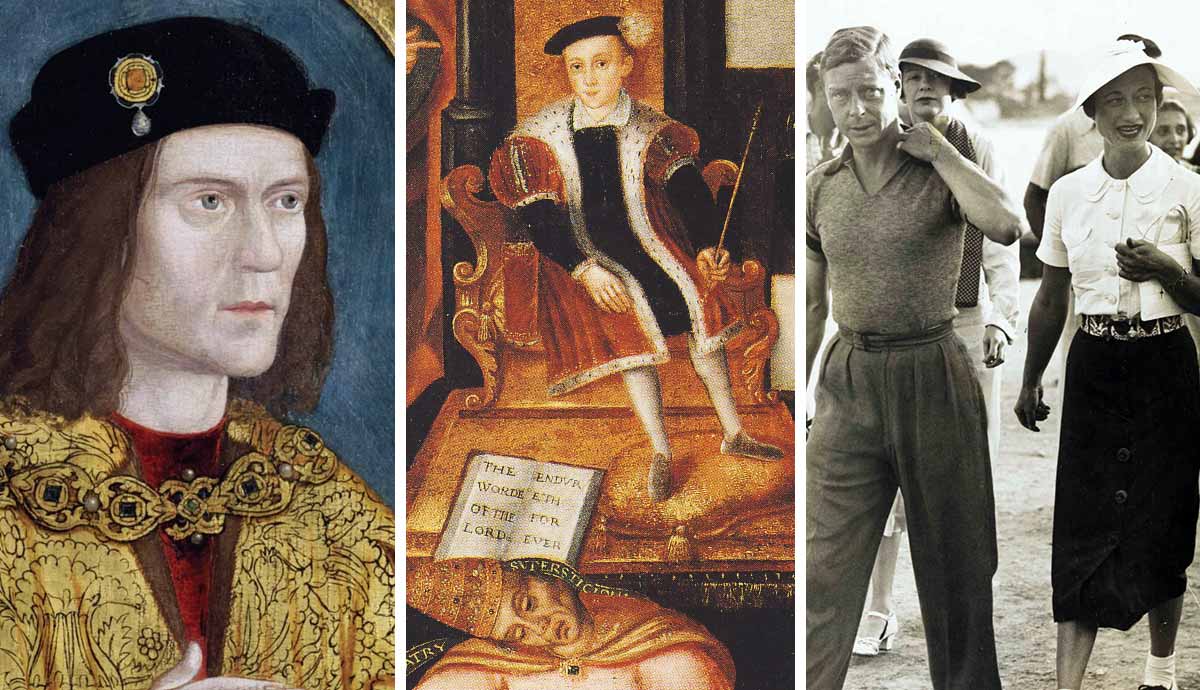
Today, it seems that the British royal family is constantly in the headlines for dramas worthy of a soap opera. From the Diana-Charles-Camilla love triangle, to William and Kate and Harry and Meghan, plus Prince Andrews secrets, it seems that the lives of the royal family have never been so melodramatic. But these royal melodramas are not a product of the modern age. Family feuds, inadvisable marriages, and dramatic divorces have characterized the British royal family from its inception. Read on to discover ten of the most melodramatic stories of the British royal family, which would surely occupy significant column inches if they were covered by the media today.1. Emma of Normandy: The Woman Behind the ThroneEmma of Normandy in The Encomium Of Queen Emma, unknown artist, c. 1050. Source: British LibraryEmma of Normandy was one of the most significant figures in 11th-century England, when power was being contested between the Anglo-Saxon House of Wessex and the Vikings. A noblewoman born across the Channel, Emma was married to King Aethelred the Unready, who was usurped by the Viking leader Swen Forkbeard. Not wanting to sacrifice her position and her sons, Alfred and Edward, Emma married Sweyns son Cnut, with whom she had another son, Harthacnut.When Cnut died and his son from an earlier marriage, Harald Harefoot, was elected king, she probably instigated an attempted invasion by Alfred, who was living in exile with her family in Normandy. This backfired, with Alfred having his eyes burned out with a hot poker by a backer of his half-brother and dying of his injuries. It is possible that she persuaded Harthacnut, who took the throne upon Harolds death, to name his elder half-brother Edward as his successor. He followed Harthacnut as king, becoming Edward the Confessor. Emma is a great example of the influence medieval noblewomen could have on society and politics through marriage and maneuvering.2. Stephen & Matilda: Warring GrandchildrenEmpress Matilda, from History of England by the monks of St Albans. Source: Reading MuseumWilliam of Normandy conquered England in 1066. Sixty years later, his grandchildren fought a bitter war over his inheritance. The dispute arose as Matildasometimes known as Empress Matilda due to her marriage to the Holy Roman Emperor Henry Vwas the direct heir, being the daughter of Henry I of England, William the Conquerors fourth son. The barons of England didnt particularly want a woman, known for her assertiveness and stubbornness, who had largely been raised in a foreign court holding sway over them. They opted for Stephen, the son of the Conquerors daughter, Adela, who was a powerful landowner and seen as more pliable.This sparked a largely forgotten but very destructive civil war in England known as the Anarchy (11381153), most popularly depicted in Ken Folletts The Pillars of the Earth. Who had the upper hand changed over the course of the conflict. Ultimately, war weariness and the death of Stephens son Eustace led to a negotiated peace whereby Stephen held the throne for the remainder of his life but would name Matildas son, the future Henry II, as his heir.3. The Angevins: Dysfunctional DynastyHenry II, Young Henry, and Richard the Lionheart, from the Historia Anglorum by Matthew Paris, unknown artist, c. 1250. Source: University of CambridgeHenry II inherited his mothers stubbornness and fiery temper. He was known for his philandering and reluctance to delegate power and land to his sons. This led to estrangement between him and his older, beautiful, and cunning wife, Eleanor of Aquitaine. Together, they were among the most powerful rulers in Europe, with realms extending from the Scottish border to the Pyrenees. However, their strong personalities meant that the relationship broke down in the 1160s, when she allegedly stirred four of Henrys sons into rebellion.The revolt lasted a year, but the negotiated end saw Eleanor placed under house arrest for the next 15 years. Meanwhile, Henry continued to fall out with different coalitions of his sons, especially his son and expected heir, Young Henry. To further complicate matters, the King of France, Philip Augustus, to whom Henry theoretically owed some of his continental territories, continually machinated with Eleanor and her sons. It was during one of these coordinated rebellions in 1189 that the apparently broken-hearted Henry II died when his favorite son, John, had joined with Richard the Lionheart and Philip. Eleanor returned to England in victory, ruling as her son Richard Is regent and reversing many of Henrys acts.4. Cousins in Conflict: Wars of the RosesPortrait of Richard III, unknown, c. 1510. Source: Society of Antiquaries of LondonRichard II was overthrown by his nobility in 1399, led by his cousin Henry Bolingbroke, who was enthroned as Henry IV. The moving aside of one wing of the Plantagenet for another set a dangerous precedent. In the 1450s, with the mentally ill Henry VI on the throne and the English position in France in dire peril, Richard of York, a descendant of another of Richard IIs cousins, started to put forward his own claim to the throne. This sparked a series of civil wars typically packaged together as the Wars of the Roses, reflecting the symbols of the two family wings: the red rose of Henry VIs Lancastrians and the white rose of the Yorkists.This was a true family-on-family conflict, with both sides claiming to be the true and rightful claimants to the throne based on links back to Edward III, Richard IIs grandfather. The drama reached its apogee when Richard, Duke of Gloucester, purportedly murdered his nephews, Edward and Richard, to seize the crown for himself in 1483. Richard III was defeated in battle at Bosworth in 1485 by Henry Tudor, another distant family member.5. Henry VIII and Anne Boleyn: A Turbulent MarriageAnne Boleyn, unknown artist, c. 1550. Source: Hever CastleA son of Henry Tudor, Henry VIII has an infamous reputation for his multiple marriages, many of which ended in bloodshed. Most famous was the marriage between Henry and Anne Boleyn. Henry, frustrated with the lack of a surviving son from the well-connected and popular Catherine of Aragon, divorced her in favor of the seductive, clever, and younger Anne. The repercussions split the English church from Rome and began a tension between England and Spain, Europes most powerful realm, that would endure for a century. Then, once Anne failed to deliver a son herself, Henrys chief minister, Thomas Cromwell of Wolf Hall fame, engineered her trial and execution, freeing Henry to marry Jane Seymour, who did produce a son in the future Edward VI.6. Henry VIIIs Children: Sibling RivalryEdward VI and the Pope: An Allegory of the Reformation, unknown artist, c. 1575. Source: National Portrait GalleryIt is now generally agreed among historians that Henry VIII did not particularly want to trigger the religious chaos that followed from his actions. Nevertheless, his three surviving (legitimate) children steered England through a series of religious changes over the remainder of the 16th century, from Edward VIs fervent Protestantism, to Mary Is bloody counter-reformation, before settling on Elizabeth Is middle course.What is often overlooked in discussions of religious and political upheaval is the relationship between the siblings. Unlike the preceding medieval monarchs, we have detailed letters and accounts of their bonds and disputes, such as Edward VI disapproving of Mary continuing to celebrate mass, of Elizabeth begging for protection during her sisters reign, and of Mary and Elizabeth siding together against the potential ascendancy of Lady Jane Gray, the great-granddaughter of Henry VII.7. The Duke of Monmouth: The Other ChildThe Beheading of the Duke of Monmouth, unknown artist, 1689. Source: Rijksmuseum AmsterdamFollowing the English Civil Wars and Interregnum, Charles II was restored to the throne. As it became clear, however, that he and his wife Catherine of Braganza were unlikely to produce a legitimate heir, many feared the prospect of his Catholic younger brother, the Duke of York, James, taking the crown. Amidst the ferment and disquiet of the period, James Scott, Charles IIs illegitimate son and first Duke of Monmouth, emerged as a possible Protestant alternative. Monmouths fame increased due to his battles against the Dutch, French, and rebel Scots, frustrating his father due to the contrasting growing unpopularity of James. Monmouth was identified, probably falsely, as a conspirator in the Rye House Plot to assassinate Charles and James in 1683.Things came to a head upon Charles death in 1685. The cabal that had formed around Monmouth encouraged him to declare himself the legitimate heir in place of James and to lead an armed rebellion. The revolt was easily crushed, and Monmouth was executed by his uncle. Ultimately, James legitimacy and existing bonds with the nobility were enough to secure the execution of his nephew and the throne. Until that is, another family drama emerged.8. Father & Daughter: James II & Mary IIEngraving of William III and Mary II, by Robert White, c. 1689. Source: National Portrait GalleryJames IIs hold on the throne was tenuous. He quickly turned the country against him by appointing Catholic ministers, attacking bishops, and manipulating local government. Fortunately, the heir apparent was James daughter by his first marriage, Mary, an upstanding Protestant who happened to be married to William of Orange, leader of the Netherlands and the Protestant hero of Europe for his resistance to the Catholic powers. Just to deepen the melodrama, William also happened to be James nephew.The birth of a son by Jamess second marriage in 1688 changed everything. A plot emerged to dethrone James in favor of William and Mary and end the prospect of a Catholic dynasty once and for all. William gladly took up the invitation and succeeded where Monmouth failed. Landing in Torbay in 1688, he quickly marched across the country to London. James saw that the writing was on the wall and fled. His son, James Francis Edward Stuart, and his more famous grandson, Bonnie Prince Charlie, would try to reclaim England and Scotland for their line over the coming decades, each failing in turn.9. Fathers & Sons: The GeorgesGeorge I, by Sir Godfrey Kneller, c. 1714. Source: National Portrait GalleryWilliam and Mary were followed by Marys sister Anne, the first monarch of the Kingdom of Great Britain, played by Olivia Coleman in The Favorite. In tragic circumstances, she produced no surviving heir. A potential succession crisis was solved by giving the crown to George, Elector of Hanover, a distant relative of the Stuart dynasty via James I. So began the Hanoverians, a line of monarchs that began with the introverted German-speaking George I and ended with Victoria.What is little known about the dynasty is a bizarre, recurring pattern of father-son conflict, complicated further by the fact that they were usually called George. George I clashed constantly with his son, who actively worked with his fathers enemies in Parliament to counter most of his policies, frequently hosting meetings of the opposition at his own home. Ironically, George IIs own son, Frederick, did the same to him, even openly campaigning at elections. There were fights over money due to George IIs stinginess. Frederick even stopped his mother and father from attending the birth of their grandchild by bundling his wife into the back of a cab. Frederick unexpectedly died in 1757, leaving his son, another George, as the heir apparent.George III, most famous for losing the American colonies and being mad, followed the pattern and fell out frequently with his boisterous and extravagant eldest son, who was once again called George. They clashed over the Prince of Wales wild spending, radical politics, and choice of women. At the age of 21, he insisted upon marrying someone who was both a commoner and a Catholic, despite the latter being forbidden by law. They went through a sham and void ceremony. George served as regent during his fathers mental health episodes, but despite Britains resistance and successes in the Napoleonic Wars, he was never popular, growing increasingly obese as the years went by.George III, by Allan Ramsay, 1761. Source: Royal Collections TrustIt is peculiar that the same pattern of clashing fathers and sons repeated down the Hanoverian line. By now, though, it mattered for little in terms of national politics. The real power of the monarchy began to decline following the Glorious Revolution of 1688, leaving George IV with much less influence than even his great-grandfather.10. Doomed Love: Edward VIII and Wallis SimpsonEdward VIII and Wallis Simpson on holiday in Yugoslavia, 1936. Source: International Churchill SocietyMoving into more modern times, the story of Edward VIII and Wallis Simpson is now pretty well known. Although it sounds petty now, the King-Emperors determination to marry the American divorcee, going against the teachings of the Anglican church and the morality the royal family was supposed to embody, threatened to bring down the monarchy. Eventually, Edward VIII abdicated in favor of his brother, George VI, the father of Elizabeth II. Elizabeth and her mother, also called Elizabeth, never forgave Edward for forcing the shy, introverted George into a role that he did not want and that they blamed for his premature demise. Still, it was likely a blessing in disguise, with George VI and his family becoming symbolic of Britains resistance to Nazism, while Edward, demoted to Duke of Windsor, traitorously positioned himself as a pretender in the event of German invasion, even advising them on suitable bombing targets.Family dramas, then, have plagued the British royal family for a millennium. We should just be happy that now the battles only take place in newspaper headlines and ghostwritten books rather than on battlefields.
0 Kommentare
0 Geteilt
20 Ansichten

 English
 Arabic
 French
 Spanish
 Portuguese
 Turkish
 Dutch
Dutch
 Italiano
 Russian
 Romaian
 Portuguese (Brazil)
 Greek
Greek