


WWW.THECOLLECTOR.COM
How Asatru, the Cult of the Norse Gods, Returned as an Official Religion in Iceland
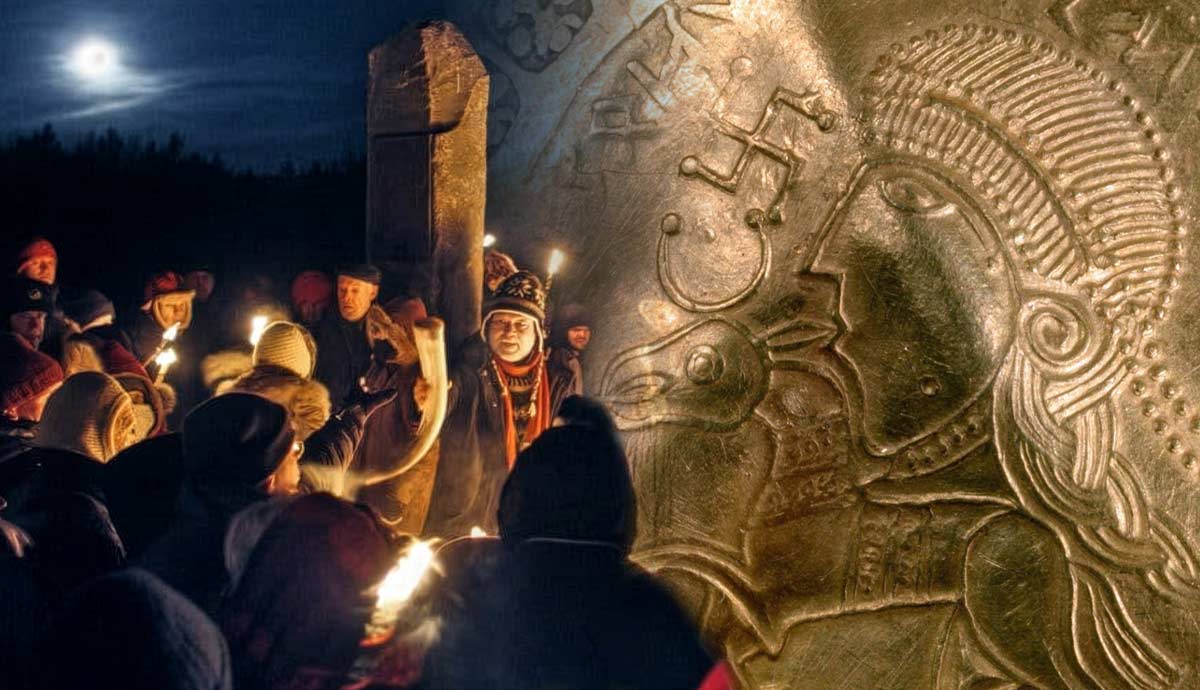
Throughout the 18th and 19th centuries, Europe was gripped by an interest in rediscovering its pre-Christian past. While for many this was a purely academic exercise, for others, embracing ancient culture was a way to live closer to nature. This resulted in a period of religious revival and the creation of new neopagan faiths around the continent. In the Norse and Germanic countries, revived commitment to the Old Norse gods, also known as the Aesir, is called Asatru or Heathenry. Unfortunately, Heathenry became intertwined with racialism, especially in Nazi Germany, tarnishing its reputation. Consequently, when a group of independent heathens decided to formalize their faith in Iceland in the 1970s, it was not a simple process.Romanticism and the Rise of Neo-PaganismThe Lady of Shalott, painting by Romantic artist John William Waterhouse, 1888. Source: TateThe 18th and 19th centuries saw the rise of Romanticism in Europe. This was an intellectual movement that was reacting to the emphasis on reason and scientific empiricism of the Enlightenment. The Romantics focused more on the lived experience, embracing emotion, imagination, individuality, intuition, and the power of nature.One result of Romanticism was a renewed interest in the past, with ancient cultures characterized as noble savages. This, combined with the rejection of the more dogmatic aspects of structured Christianity, also led to an interest in pre-Christian religions. The Romantics characterized these pagan religions as capturing the folk soul, and being more connected with both human nature and nature itself.In response to events including Romanticism, the French Revolution, and the Napoleonic Wars, the same period saw a rise in nationalism, as countries sought to establish their unique cultural identities, often drawing on their history. Scholars focused on the pre-Christian era, bringing significantly more information about these native cultures to light. This led to the Celtic revival across the British Isles.Spectators gather at Stonehenge to watch a group of Druids carry out the Dawn Ceremony on the summer solstice, or longest day of the year, 1956. Source: JSTORRomanticism also saw a rising interest in the spiritual and the supernatural, which became intertwined with history. In England, claims were made that Stonehenge was linked to the old Celtic religion, even though we now know that it pre-dates the Celts by a few thousand years. It was also claimed that many pagan witches survived the conversion to Christianity and the witch trials, and that the ancient religion was still practiced, though again, with no evidence to support this claim.Esoteric orders focused on occultism and mysticism emerged during this period. The New Ancient Druid Order was established in 1717, the Hermetic Order of the Golden Dawn in 1888, and Gerald Gardner established the Wiccan New Forest Coven in 1954. These and other groups are called neopagan because while they are inspired by ancient pagan beliefs, they arent religions that have been practiced continuously, unlike Zoroastrianism. Instead, they are new recreated religions.Rediscovering the Vikings and HeathenryCarta Marina showing the Viking realms, by Olaus Magnus, 1539. Source: Library of CongressIn Scandinavian countries, this same period saw rising interest in the Vikings and Norse mythology. Relevant texts, like the Prose Edda, written in the 13th century by the Icelandic author Snorri Sturluson, and which is our main source for Norse mythology, began to be translated for wider consumption. The first translation of the Old Norse text into Swedish was published in 1819, followed by a translation into English in 1842 and other languages.The first Viking longship, the Tune Ship, was discovered in Norway in 1867, leading to deeper interest in Viking sailing and raiding, and Viking archaeology more generally. The term Viking was popularized by Swedish author Erik Gustaf Geijer in c. 1830 with his poem Vikingen (The Viking), and it quickly spread. The German composer Wagner wrote his four famous operas based on shared Germanic and Norse legends between 1848-1874, among other things, popularizing the idea that Vikings wore horned helmets, which archaeology reveals is untrue.Fritz Vogelstrom as Siegfried in The Ring, 1916, via Deutsche FotothekMatching the revival of ancient religions in England, in Scandinavia and Germany, there was a renewed interest in the old religions, which was sometimes called Wotanism, referring to the principal god of the pantheon known as Wotan in German and Odin in Norse mythology. This religious revival took different forms in different countries, and today it is more commonly known as Heathenry. It focused on both Norse mythology and the idea of the noble Viking culture.In Germany, it was also known as the Vlkisch (folk) movement and was closely tied to ideas of nationalism and racialism. It fed into the Antisemitism and Aryanism that came to characterize Nazi Germany, as well as the Nazi leaderships interest in occultism and the supernatural. Heathens, from Germany and other countries, have struggled to decouple Heathenry from racialism since the fall of the Nazis.Asatru: Folk Religion RevivalSveinbjorn Beinteinsson at an Asatru blot in 1991. Source: Wikimedia CommonsAfter the end of World War II, there was still widespread interest in Heathenry. In Iceland, a group of private heathens met and decided that it was a good idea to establish an organization to formalize their religion, which was not recognized in Iceland at that time.The leaders of the movement included Sveinbjorn Beinteinsson, a farmer and poet, Jormundur Ingo Hansen, a prominent Reykjavik hippie, Dagur Thorleifsson, a journalist and active member of the local theosophy occult group, and Thorsteinn Gudjonsson. They met on the first day of summer (the first Thursday after April 18th in Iceland) in 1972 and formed Asaturarfelagid, which means Fellowship of Asatru, with Asatru meaning to be true to the Aesir, the name of the main pantheon of gods in Old Norse religion.Hilmar Orn Hilmarsson leading an Asatru ceremony, c. 2020. Source: Prospect MagazineWhile the members of Asatru share a general affinity with Old Norse religion, there is no strict dogmatic doctrine that believers in Asatru must ascribe to. Beinteinsson, who was also elected the first leader of the order, called the Allsherjargodi, said that he believed in hidden forces that were tied to the land and connected with place, and which was understood by their pre-Christian Icelandic ancestors through Norse mythology. Thorleifsson expressed that for him, the most important element was a move back to living in harmony with nature. Beintiensson also suggested that he considered it important for the Icelanders to have their own native faith, and nurture it as much as imported religions, such as Christianity.In an interview in 2010, the current leader of Asatru, Hilmar Orn Hilmarsson, said:I believe in a higher power which appears to us in the multiplicity of nature and of human life. We have manifestations of certain primal forces which we regard as gods and we have a division in the roles of the gods. These are powers that are visible, half-visible and sometimes invisible. One could have a long scholarly discussion on the role of individual gods, but in the end, this is a question of a feeling for the different aspects of life.The Norwegians Landing in Iceland in 872, by Oscar Wergeland, 1877. Source: National Museum, NorwayIceland was settled by Vikings, mostly from Norway, during the 9th and 10th centuries, and most of the new arrivals were Norse pagans. But from around 980 AD, Christian missionaries began to arrive in Iceland. Then, when the king of Norway, Olaf Tryggvason, converted to Christianity near the end of the century, he further pushed the new religion. There were many conversions, which led to rivalry in Iceland between Christian and pagan groups, which threatened civil war.Believing that they needed to be united to combat external threats, the Icelanders decided that they needed one law and one religion. At a meeting of the Althing in 1000 AD, they decided to convert to Christianity as a nation. While it was agreed that there would be tacit acceptance of private pagan practices, it was not long before the powerful Church saw pagan practices outlawed, though there is evidence that veneration of the pagan gods continued in some centuries.A Controversial ReligionThe Asatru Fellowship celebrates the winter solstice in skjuhl, 2018. Source: Iceland ReviewAfter the creation of Asatru, the group sought formal recognition from the Minister of Justice and Ecclesiastical Affairs, Olafur Johannesson. He initially did not take the request seriously, but when the Asatru representatives left the ministry, the lights in the center of town went out in a thunderstorm, which the Minister apparently thought was a sign from Thor, the Norse god of thunder, making him more sympathetic to the idea.On the other side, the Bishop of Iceland at the time, Sigurbjorn Einarsson, recommended that Asatru not be recognized as a religion. He published a written opinion in which he pointed out that the Icelandic constitution granted everyone the right to found organizations to serve God, singular, and therefore that polytheistic religions were not protected. He also pointed out that the new religion had no doctrinal scriptures or houses of worship. He also pointed out the historical connection between Heathenry and racialism that had been so disastrous in the first half of the century.Nevertheless, Asatru was recognized as an official religion in 1973, which meant that they were given the right to perform legal marriages and similar ceremonies and were made eligible to receive a share of the national church tax based on their proportional number of members. Asatru only had 21 members in 1973, but in January 2018 it had 5,770 members, or 1.5% of the population of Iceland.Religious StructureAsatru burial ground in Iceland. Source: Wikimedia CommonsWhile Asatru has no official doctrine, it does have an official structure in Iceland led by the Allsherjargodi. The community conducts periodic blot festivals to celebrate the Norse gods. The first one was held on August 5, 1973, which included the construction of a plaster statue of Thor. There was also chanting of verses from the Poetic Edda and ritual drinking and feasting.There were concerns that the ritual would include animal sacrifices, but Beinteinsson assured critics that it would not, because it was simply not practical. While ancient Icelanders were accustomed to slaughtering animals and had the tools available, in the modern age, it is much more practical to buy a carcass. The group has always firmly rejected using Asatru as a justification for animal sacrifice.An Asatru burial ground was established in 1999, and the first burial took place there the same year.Hilmar Orn Hilmarsson holding drinking horn, 2009. Source: Wikimedia CommonsThe fellowship always expressed a desire to construct a temple, but work only began in earnest to secure a site and finance the building in 2005. While land has been secure on skjuhld hill, just outside Reykjavik, on a magnificent site surrounded by forests and a panoramic view of the sea, and a design made by architect Magnus Jensson, the structure is still not complete.While the group, through the Allsherjargodi, was politically active in the early days of Asatru, for example, opposing the legalization of abortion in 1974, they quickly stepped back and remained mostly non-political. However, they did erect a nidstong, or curse pole, to protect from nuclear weapons in 1985, and another to oppose a hydropower plant in 2003. In the 2000s, the group also supported gay marriage and fought for the separation of church and state in Iceland. Over the years, they have also repeatedly criticized those who have tried to use Asatru to justify supremacist ideology, militarism, and animal sacrifice.Asatru Around the WorldGold bracteate featuring a warrior on horseback and a runic inscription to Odin, Source: Vejle Museerne, DenmarkWhile Asaturarfelagid is specifically an Icelandic organization, similar movements have emerged around the world. In Sweden, Sveriges Asatrosamfund was formed in 1994 and was renamed Samfundet Forn Sed Sverige in 2010. It was joined by the Nordic Asa-Community in 2014, which has since overtaken it in size.In Norway, the group satrufellesskapet Bifrost (Asatru Fellowship Bifrostreferring to the Rainbow Bifrost Bridge in Norse mythology) was formed in 1996, and Forn Sed Norge was formed in 1998, and both are authorized to perform legally binding civil ceremonies. In Denmark, Forn Sirsatr and Vanatr Association in Denmark was formed in 1999 and officially recognized in 2003, dedicated to the Aesir and the Vanir, another race of gods in Norse mythology.Several Asatru-related groups have been established in the United States. The first, the Odinist Fellowship, was established by Danish heathen Else Christensen as early as 1969. Overall, Asatru is less centralized in North America, and many groups maintain a focus on racialism.
0 Комментарии
0 Поделились
29 Просмотры

 English
 Arabic
 French
 Spanish
 Portuguese
 Deutsch
 Turkish
 Dutch
Dutch
 Italiano
 Romaian
 Portuguese (Brazil)
 Greek
Greek