4 Ships That Shaped the Outcome of World War II
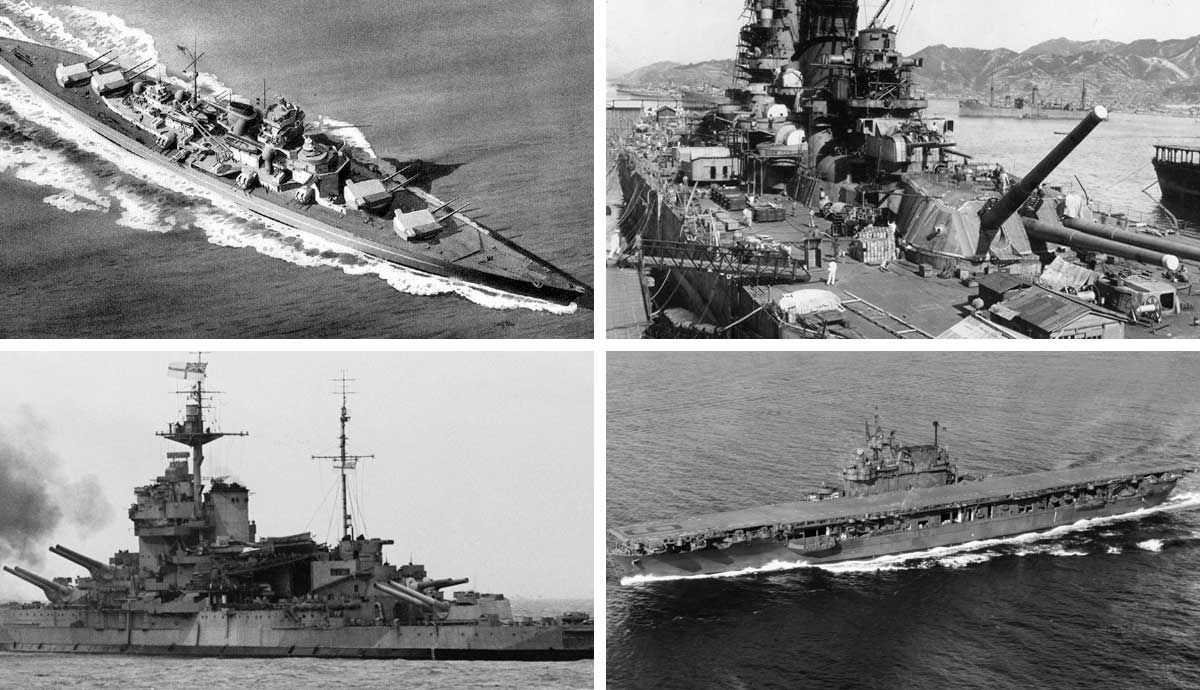
World War II naval history gave rise to a range of doctrines and tactics. New technologies and resources changed dramatically how naval clashes occur. Yet despite this, singular vessels still became turning points. They changed morale, became flash points, and even altered political decisions.Outcomes Changed by Allied ShipsHMS Warspite The Grand Old Lady. Source: Robert Sullivan/flickr.comHMS Warspite The Grand Old LadyA veteran of the 1916 Battle of Jutland, this Elizabeth-class battleship served into the next war. HMS Warspite did change outcomes. This boat served in major Allied crises, delivered perhaps the most accurate battleship bombardments ever, and supported critical operations needing precise naval gunfire.Two of the major campaigns for Warspite:Cape Matapan (1941): In this night battle, Warspite hit an Italian cruiser multiple times.Three of four cruisers were sunk. Italys navy never again attempted a direct engagement.Normandy Landings (1944): On this critical day of days, Warspites guns fired the first Allied shots. Supporting the British Gold Beach, her superb gunnery decimated German shore batteries, hitting landing craft. Warspites bombardments enabled the securing of the landing zone.Warspites moving of the war trajectory cant be disputed. From the 1940 Narvik battle to the June 6, 1944, landings, this old veteran served. Warspite kept slogging on. Few battleships achieved this kind of operational service.USS Enterprise The Gray GhostUSS Enterprise under kamikaze attack on 5/13/1945. Source: U.S. NavyFor the first desperate months of the Pacific War, America struggled badly. In 1942, the Imperial Navy repeatedly sank ships, including the USS Yorktown, Lexington, and Wasp. The Enterprise would survive these battles, earning the moniker The Gray Ghost. Japanese propaganda repeatedly reported her sunk. Twice during 1942, the Big E would be the Pacifics only active carrier.The Enterprise fought in every Pacific campaign from 1942 to 1945. Of all these fights, its finest shaping moment was:The Battle of Midway (1942): In this great clash of carriers, Enterprises squadrons proved decisive. Its squadrons launched the most effective, coordinated strikes. By battles end, four Japanese carriers went to the bottom.The USS Enterprises hardiness evolved, displaying American resilience in a critical time. It also provided the sole critical airpower when none existed.Outcomes Changed by Axis WarshipsDrawing of battleship Tirpitz. Source: Office of Naval IntelligenceSchlachtschiff Tirpitz The Lonely Queen of the NorthUnlike the ill-fated Bismarck, Tirpitzs career turned out very differently. Germanys remaining true battleship never engaged in a fleet action. Nor did Bismarcks twin ever sink another ship in battle. At 823 feet long, over 50,000 tons, and armed with eight 15-inch guns, the Tirpitz was no easy prize.Tirpitz lay moored in Norway for the wars duration. Tirpitz truly sortied into the Arctic only twice, both times unsuccessfully by 1942. After this, Tirpitzs presence represented only danger. The battlewagon became a fleet-in-being.The Tirpitz shaped the war, albeit much differently than Enterprise or Warspite:Threat to convoys: Nearly a quarter of the Russia-bound Lend-Lease aid came by convoy. Norway couldnt be avoided. The Tirpitz became a potential threat. If it sortied successfully, the raiders big guns would decimate any convoy.Strategic pressure: By never sailing, the Tirpitz exerted danger at the highest levels. This took up Allied naval resources, especially battleships and carriers. The German behemoth tied up naval assets that could be employed elsewhere.The Allies launched over 20 operations to sink Tirpitz. None sank Germanys remaining battleship. The RAF finally sank the Tirpitz on November 12, 1944, with two 12,000-pound bombs.IJN Yamato Symbol of Yamato-damashii (Japanese spirit)The Yamato in the late stages of construction in 1941. Source: Naval History and Heritage CommandThis Japanese battlewagon represented Japans massive fleet battle theory (Kantai Kessen). Equipped with an 18.1-inch (46 cm) cannon, Yamamoto was the largest battleship ever constructed.Like the Tirpitz, Yamamoto took part in battles but never sank a foe. Yamamoto spent more time moored than sailing. The worlds largest gunned ship, at 72,000 tons, shaped the war easily. The U.S. Navy, wary of a marauding super battleship, kept contingency plans ready.The Yamamoto influenced the war by:Sheer power: Yamamotos size and big guns meant few Allied ships could match it. If it ever broke out, the battleship could shatter any opposing force.Submarine patrols: The USN regularly positioned submarines near ports from which the Yamamoto sailed.Defense Scenario: Because of Yamamotos size, the U.S. Navy planned island invasions carefully. Task forces stood ready to intercept.The IJN Yamato exploded after capsizing on July 4, 1945. Source: Naval History & Heritage CommandThe Yamamoto was finally sunk, ironically by American carrier planes.These four ships demonstrated something that moved the dial. Whether during a campaign, an event, or an action, an impact made them stand out.




 English
 Arabic
 French
 Spanish
 Portuguese
 Deutsch
 Turkish
 Dutch
Dutch
 Italiano
 Russian
 Romaian
 Greek
Greek