


WWW.THECOLLECTOR.COM
The Mystery of Cerdic, the First King of Anglo-Saxon Wessex
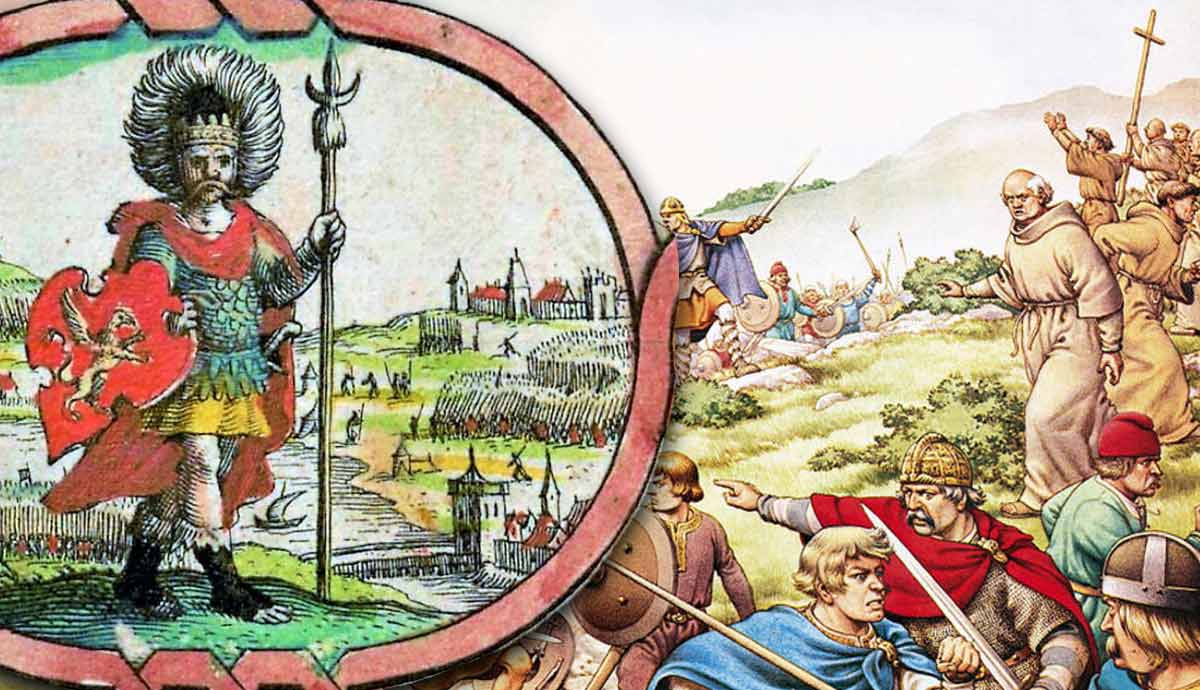
The kingdom of Wessex was one of the most prominent Anglo-Saxon kingdoms in the medieval period. It encompassed many important settlements in the south of Britain, and it eventually grew to become the most powerful kingdom, creating the country of England. For that reason, it is profoundly ironic that Cerdic of Wessex, its legendary founder, might actually have been a native Briton rather than an Anglo-Saxon. What is the basis for this suggestion regarding Cerdics origin, and does it really stand up to scrutiny? In this article, we will examine the evidence.Who Was Cerdic of Wessex?Depiction of Cerdic of Wessex, in Theatre, by John Speed, 1611. Source: University of CambridgeCerdic of Wessex is an important founding figure in Anglo-Saxon history. He allegedly founded the kingdom of Wessex, conquering a fairly sizable portion of land over many years and setting himself up as the head of a new dynasty. According to the records, the subsequent kings of Wessex were all his descendants.We do not know for sure if Cerdic ever existed. However, he does appear in the earliest records about the formation of Wessex. He appears for the first time in the Anglo-Saxon Chronicle, dating to the late 9th century and commissioned by Alfred the Great, one of Cerdics alleged descendants. This chronicle does not provide a detailed narrative explaining Cerdics career, but it does contain several entries that provide an overview of it.According to these entries, Cerdic arrived in Hampshire with his son Cynric by way of the sea in the 6th century. After many years, they had conquered everything from the Isle of Wight to Bernwood Forest in Buckinghamshire.Why Some Believe That Cerdic of Wessex Was a BritonJesus College MS 20, folio 38r, showing the name of Cadwallon in the top left corner, Welsh, c. 14th century. Source: Bodleian Library, OxfordWhy do many people, including a number of scholars, believe that Cerdic may have been a Briton? The key reason is because of his name. The name Cerdic appears to be just another variation of the well-attested Brythonic name Caradoc, which also appears as Ceredic in the case of some individuals. For example, one attested individual from the 6th century was Ceredic ap Gwallog. Therefore, on the basis of his name apparently being a Brythonic name, this would seem to suggest that Cerdic of Wessex was a Briton.In addition to his own name, the name of his son Cynric is also believed by some scholars to have been Brythonic. It could potentially come from the Brythonic Cunorix, which evolved into Cynyr in Welsh. Furthermore, a slightly later descendant was Cedda, believed to be from Brythonic cad, meaning battle. His grandson, in turn, was named Cdwalla, a Saxon variant of the Brythonic name Cadwallon. Due to this concentration of apparently Brythonic names in the early generations of the kings of Wessex, many scholars believe that the founder of the dynasty, Cerdic, was actually a Briton.Possible Candidates for his British IdentityJesus College MS 20, folio 35v, showing the name Caradawc Vreichfras on the fourth and fifth lines, Welsh, c. 14th century. Source: Bodleian Library, OxfordIn addition to vaguely suggesting that Cerdic may have been a Briton, some researchers go further and connect him with specific individuals known from the medieval Welsh records. As we saw earlier, the Anglo-Saxon Chronicle places Cerdic in the 6th century, specifically in the first half of that century. According to the available sources, at least three Brythonic kings known as Caradoc lived in that era in the same general region of Britain.One of them was Caradoc, who ruled Gwent in southeast Wales in the early 6th century. He was possibly the son of Ynyr. Another king, who may possibly be the same person, was Caradog Freichfras, who was recorded as the son of Llyr Marini. His territory was near that of the former Caradoc, apparently encompassing Brycheiniog, the kingdom above Glamorgan and somewhat above Gwent. He is also recorded as the Chief Elder of Gelliwig in Cerniw, which would appear to be Llanvetherine in Gwent.A view of Archenfield, part of the larger medieval kingdom of Ergyng, the territory of Prince Caradoc. Source: Wikimedia CommonsAnother candidate for Cerdic of Wessex is Caradoc ap Gwrgan Fawr. His father, Gwrgan, was the king of Ergyng, a kingdom encompassing much of Gloucestershire and Herefordshire. Hence, he also lived in the same general part of Britain as the other two Caradocs, although he was based further east. Additionally, there is no record of this Caradoc ever becoming king.While many scholars place Caradoc ap Gwrgan in c. 600, many others place him in c. 500. Crucially, Gwrgans first cousin was Dubricius, whose birth is considered to have been in c. 465. This suggests that Caradoc, the son of Gwrgan, should be placed in the generation after that. Therefore, he could easily have been active throughout the first half of the 6th century, just like Cerdic.It appears that Gwrgan was succeeded by his maternal grandson Athrwys rather than by his sons. Could this have caused Caradoc to look elsewhere, perhaps to the Anglo-Saxons, for help in asserting his own sovereignty? This is one scenario that might harmonize well with the idea that he was identical to Cerdic of Wessex, who fought against the Britons.Do These Arguments Stand up to Scrutiny?Ida of Bernicia, in Saxon Heptarchy Map, by John Speeds Saxon, 1611. Source: University of CambridgeThe biggest issue with these arguments is that the Anglo-Saxon records consistently make Cerdic the descendant of Anglo-Saxon figures. In fact, his genealogy connects him to the ancestors of the kings of Bernicia. Of course, these genealogical records come from centuries after the fact. They are not necessarily reliable, nor do they necessarily even reflect what people genuinely believed at the time they were written. Instead, many of them may have been created for propaganda purposes.In the case of Cerdic of Wessex, many scholars of Anglo-Saxon history believe that his genealogy was actually a modified version of the list of kings of Bernicia. This would explain why the early generations are the same, and it would also explain certain other unusual features about Cerdics alleged line of descent. Whether this argument is correct or not is impossible to say. Nevertheless, it does raise serious doubt on the reliability of Cerdics ancestry.Furthermore, if Cerdics recorded ancestry was an artificial creation, then we have to ask why this was. What was wrong with Cerdics actual ancestry? Were the medieval scribes trying to hide an unfavorable origin, such as the fact that he was a Briton?Alternative ExplanationsKing Aethelfrith of Northumbria battling against the Britons, by Patrick Nicolle, c. 20th century. Source: Fine Art AmericaAnother issue with this argument about Cerdic having a Brythonic origin is the simple fact that this is not the only explanation for his apparently Brythonic name. For one thing, scholars have argued that not all of the names that are supposedly Brythonic in the House of Wessex actually were and that they can also be understood as Anglo-Saxon names. One example is Cynric. While this could derive from the Brythonic Cunorix, it could also simply mean Kin-Ruler to the Anglo-Saxons. Nevertheless, the majority of the apparently Brythonic names in this dynasty do indeed seem to be Brythonic, so this particular corpus of evidence does appear to stand up to scrutiny.However, this does not necessarily mean that Cerdic himself was a Briton. There are at least two possible alternative explanations for the use of Brythonic names by this dynasty. The first is that it may have come about as a result of Brythonic women being captured by the Anglo-Saxons and being taken as wives.Map of the Brythonic and Anglo-Saxon kingdoms in the 7th century, where West Saxons stands for Wessex, by David Hill, 1981. Source: Wikimedia CommonsFor example, if Cerdics father, Elasius, had captured a British woman, then the choice of name may have come from her rather than from him. This would adequately explain why Cerdic was given this name. After all, the records show that it was clearly a very popular name at the time. A variation of this possibility is that Cerdics father had married a British woman as a form of political alliance, and not as the result of a violent capture. The Britons and the Anglo-Saxons did sometimes intermarry on the dynastic level, despite the general era of warfare in which they were living.A completely different possibility is that these names were consciously chosen by the Anglo-Saxons of Wessex simply because they liked them. They would no doubt have been familiar with the names used by the Britons since no Anglo-Saxon kingdom entirely wiped out the native population. Therefore, they may have learned of these names from the Britons living within their territory, or from reports of powerful Brythonic kings from outside their territory.Was Cerdic of Wessex Really a Briton?Jesus College MS 20, folio 37v, showing a British figure named Ceredic ap Cunedda on the fourth line, Welsh, c. 14th century. Source: Bodleian Library, OxfordIn conclusion, we do not really know for sure if Cerdic of Wessex was actually a Briton. It is certainly a distinct possibility. After all, he had a Brythonic name, as did an unusually large number of his descendants. Furthermore, the possibility that his recorded line of descent in the Anglo-Saxon records was actually an artificial creation suggests that his true origin may have been embarrassing. This, too, may well point to a British origin.On the other hand, his dynasty may have made greater use of Brythonic names than other dynasties due to a high concentration of captured British brides. Or, they may have had unusually close relations with British dynasties or a particular admiration for nearby British kings. We simply do not know.If Cerdic of Wessex really was a Briton, however, then the most likely identification is that he was Caradoc the son of Gwrgan. Of all the known Caradocs and Ceredics of that era, his territory was the closest to Wessex. Furthermore, his chronology is a perfect match for Cerdic of Wessex. Finally, given that his inheritance was passed on to his nephew Athrwys, there is a plausible explanation for why this Caradoc would have set himself up elsewhere and fought against fellow Britons.
0 Комментарии
0 Поделились
27 Просмотры

 English
 Arabic
 French
 Spanish
 Portuguese
 Deutsch
 Turkish
 Dutch
Dutch
 Italiano
 Romaian
 Portuguese (Brazil)
 Greek
Greek