


WWW.THECOLLECTOR.COM
How the Martellus Map Saw Africa and Europe During the Age of Exploration
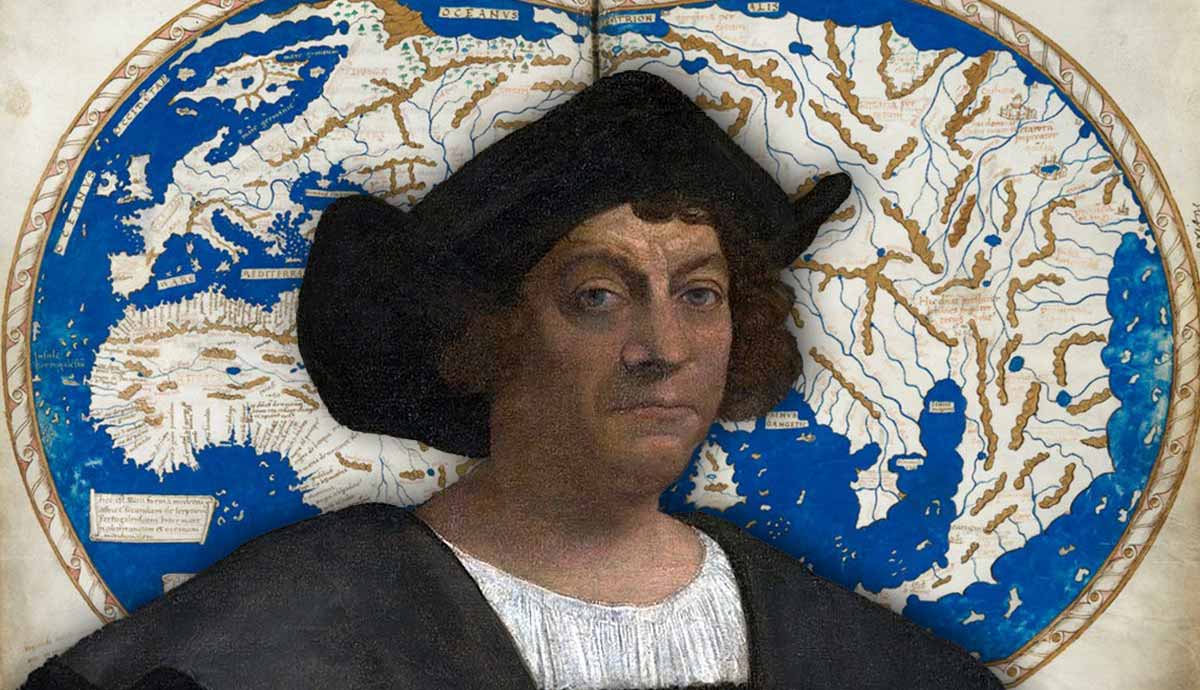
Between the end of the Middle Ages and the beginning of the Modern Age, Western Europes understanding of the world beyond its borders started to change. Tales from travelers, pilgrims, and shipmasters radically altered the medieval picture of the globe. Meanwhile, the discovery of Ptolemys works gave a scientific basis to cartography. Active between the 1480s and 1490s, the German cartographer Henricus Martellus witnessed the beginning of the Age of Exploration that brought European explorers to Africa, Asia, and America. Today, his maps show one of the last views of the pre-Columbian world from Europes perspective.Who Was Henricus Martellus?Reproduction of the so-called Pianta della catena, a map of Florence in the 15th century originally designed by Francesco Rosselli, 1887. Source: Wikimedia Commons/Musei Civici Fiorentini, FlorenceLittle is known of the life of the cartographer who signed his maps as Henricus Martellus Germanus. We only know for certain that he was active between the 1450s and 1490s in Florence. Some suggest the name Henricus Martellus may be the Latinized version of Heinrich Hammer. While the signature indicates his German origins, no archival documents confirm this theory.Recently, research into the German community in Florence in the 15th century identified Martellus with Arrigo di Federico Martello, an employee of the Martelli family, linked to the influential Medici dynasty and patrons of the arts. A subsequent study, however, disproved this identification. To this day, his background remains unclear. It is likely, though, that he came from Nuremberg, at the time the center of the German Renaissance.When Martellus was based in Florence, all the leading cartographers based their work on Ptolemys Geography. An astronomer, mathematician, and geographer living in Alexandria during the 2nd century CE, Ptolemy remained largely unknown in Europe until the late 14th century. When the Byzantine humanist Manuel Chrysoloras arrived in Florence in 1397, he brought with him a manuscript of Geography, revolutionizing cartography.Map of Europe, Africa, the Mediterranean, and Asia, after Ptolemys Geography, by Nicolaus Germanus, c. 1460. Source: The New York Public Library Digital Collections; with Ptolemy, by Joos van Ghent and Pedro Berruguete, 1476. Source: Wikimedia Commons/Louvre Museum, ParisTranslated into Latin in 1406, Ptolemys work gave Europe a new view of the oikumene, or inhabited world, showing a more connected globe. By recording longitudes and latitudes for thousands of locations, he provided the necessary techniques to draw maps. He also showed how to reproduce the Earth on a flat surface. Like many other cartographers of his time, Martellus was deeply impacted by Ptolemys Geography, producing a series of manuscripts of the Alexandrine geographers opus.Martellus, however, did not just reproduce Ptolemys world map but updated it with a series of tabulae modernae, additional maps with the new geographical data coming in from the voyages of discovery funded by Portugal. Martelluss interest in keeping up to date with the latest data clearly emerges from his manuscript of Ptolemys Geography located at the National Library of Florence:In this very splendid manuscript are contained the Cosmography of Claudius Ptolemy with modern regional maps and all the ports and coasts, both those already known and those newly discovered by the King of Portugal.Martellus World: Europe & The Age of ExplorationThe planting of the cross by Bartolomeu Dias at the Cape of Good Hope in 1488, by F. Benda, c. 1750. Source: Wikimedia CommonsBy the time Martellus was working on his manuscripts and world maps, Western Europes view of the globe had radically changed. In the 13th century, the Pax Mongolica, a period of relative stability under the Mongol Empire, gave European travelers the opportunity, for the first time in centuries, to visit the East, expanding their geographical knowledge. Through travel accounts such as Il Millione (The Million), the travelogue compiled by Italian explorer Marco Polo, people became more familiar with China and other lands beyond India.Europes interest in the East was largely fueled by the popularity of spices. Used as a symbol of personal wealth, medicine, and cooking ingredients, spices became the worlds first globally traded product. Despite their craving for the exotic aromas, however, Europeans had only vague notions about the countries that produced them.Fra Mauros world map depicts Africa surrounded by water (shown at the top of the map), mid-15th century. Source: Wikimedia Commons/Biblioteca Nazionale Marciana, VeniceIn the 15th century, the emergence of the Ottoman Empire began to threaten Venices monopoly on the spice trade and access to the trading routes, prompting European merchants to look for ways to reach the lands where spices grew in abundance. According to Ptolemy, reaching Cathay (present-day China) by sailing around Africa was impossible, as he believed the Indian Ocean to be landlocked. The data collected by the newest explorations, however, contradicted this theory. A map compiled by Fra Mauro (pictured above) in the 1450s in Venice, for example, showed Africa surrounded by water.In the early 14th century, Prince Henry the Navigator of Portugal funded various expeditions on the western African coast. Then in 1488, Portuguese navigator Bartolomeu Dias circumnavigated the southern end of Africa for the first time. The Age of Exploration had begun. From Florence, Martellus followed the Portuguese maritime exploits, adding the newest geographical knowledge to his maps.The Martellus Map(s)Map based on Ptolemys cartographic data, c. 1480. Source: Firenze 1903Though Martelluss cartographic works are undated, scholars believe the map in the Insularium Illustratum at the Biblioteca Medicea Laurenziana (Florence) is his earliest surviving attempt to reproduce the globe on a surface.The Insularium Illustratum, meaning Book of Islands, was a popular genre in the late medieval and Renaissance periods. The one compiled by Martellus is the first to include islands outside the Mediterranean (Britain, Ireland, and Japan, among others) and a world map, a sign of the expanding horizon of 15th-century Western Europe.The world map in the Florence manuscript of the Insulatium Illustratum was likely designed around 1488, as attested by the toponym ilha de fonti (also known as Penedo das Fontes, or Rock of the Springs) in southern Africa, a name given by Barolomeu Dias to an island in Algoa Bay. Compared to the modern atlas, in Martelluss working map, the shape of Africa appears distorted, especially in the southern portion, which is drawn as an eastward jutting peninsula.The Martellus Map at the British Library, c. 1489. Source: British Library, LondonIn the copy of the world map in the Book of Island located at the British Library, Martellus modified the shape and position of Africa. Likely struggling to design a coherent image from the incomplete and conflicting information, Martellus drew the southern tip of Africa beyond the maps border.Three legends added on the continent again attest to Martelluss efforts to keep up to date with the Portuguese expeditions. This is the modern true shape of Africa according to the map of the Portuguese, from the Mediterranean Seas to the southern ocean, reads the first one. This mountain, which is called Monte Negro, was reached by the fleet of [John] the second King of Portugal; the fleet was commanded by Diego Co, who to commemorate the fact, set up a prominent marble column with a cross on it, comments a second legend referring to Diego Cos 1484-86 voyage.Martelluss emphasis on the greater accuracy of the cartographic data obtained by the Portuguese navigators is an implicit critique of Ptolemys perception of the world. In nearly all maps compiled in this period, the Ptolemaic system is shown alongside the new data, a testament to the coexistence of ancient and modern that is a key feature of Renaissance culture. In this sense, the cartographic works of Matellus (among others) provide a crucial glimpse into pre-Columbian Europes ever-shifting view of the globe.Africa & Europe in the Martellus MapsThe Martellus Map at Yale, c. 1489. Source: Yale University LibraryBesides the British Library manuscript, Martelluss individual world map located at Yale University is of particular interest. Designed around 1491, when Christopher Columbus had yet to cross the Atlantic to land on a previously unknown continent, the Yale map has considerably darkened over the centuries, making the text contained in the legends illegible. In 2014, however, a team led by historian Chet Van Duzer was finally able to decipher the maps information using multispectral cameras.Even before Van Duzers project, the Yale map (like the British Library copy) exaggerated the extent of Eurasia, a clear indication of Martellus Eurocentrism. The focus on Portuguese cartographic data regarding the African continent also reveals Europes obsession with finding a new route to the spice-growing lands in the East, a source of wealth that would derive from a combination of spices, gold, coffee, cotton, and slavery.Van Duzer and his team also found that the German-born cartographer likely based his depiction of Africa on the so-called Egyptus Novelo map. Found in three manuscripts of Ptolemys Geography, the Egyptus Novelo used data from an African source: the geographic knowledge shared by the Ethiopian delegation at the 1441 Council of Florence, a meeting that was part of an ecumenical council aimed to end the East-West Schism between the Roman Catholic Church and Eastern churches.The Martellus Maps LegacyPortrait of a Man, Said to be Christopher Columbus, by Sebastiano del Piombo, 1519. Source: Wikimedia Commons/Metropolitan Museum of Art, New York CityResearch on Martellus cartographic work shows he was still active in the 1490s, when Christopher Columbus made his first voyages across the Atlantic. However, Martellus does not mention Columbus, nor does he use data from his travels. Still, scholars believe the Genoese explorer was familiar with Martellus maps and consulted them while planning his expeditions.According to Chris Van Duzer, the Martellus maps influence on Columbuss understanding of the world emerges from a study of the writing by the navigators son, Ferdinand. In particular, Ferdinands description of Cipangu (present-day Japan) matches its configuration in Martelluss works. In no other surviving maps from the Age of Exploration, explains Van Duzer, is Japan shown as in the German cartographers map.In this sense, the Martellus maps embody the world as seen by the Europeans in the 15th century, before the discovery of a landmass across the Atlantic. Instead of showing the American continent, Martellus depicted an enormous peninsula south of present-day Malaysia. This so-called Dragon Tail is a source of debate among scholars. Some identify it with a portion of South America. Others put it down to the inexact geographical knowledge circulating at the time.The 1507 Waldseemller Map. Source: Library of Congress, Washington DCIn the 1970s, Arthur Davies even used the presence of this westward jutting peninsula to claim that the map was not the work of Martellus, but it was made by Columbuss brother, Bartholomew. According to Davies, Bartholomew distorted the map to persuade the Spanish monarchs to fund Christopher Columbuss plan to reach the East by sailing westward across the Atlantic. While this theory is undeniably fascinating, it has since been disproven.In the early 16th century, Magellans circumnavigation and Vespuccis voyages confirmed that Columbus had not reached the East but discovered a new continent: America. In 1507, cartographer Martin Waldseemller, influenced by Martellus works, designed the first world map referring to the New World as America.
0 Reacties
0 aandelen
54 Views

 English
 Arabic
 French
 Spanish
 Portuguese
 Deutsch
 Turkish
 Italiano
 Russian
 Romaian
 Portuguese (Brazil)
 Greek
Greek