


WWW.THECOLLECTOR.COM
How a High-Ranking Nazi Commander Became Known as the Savior of Paris
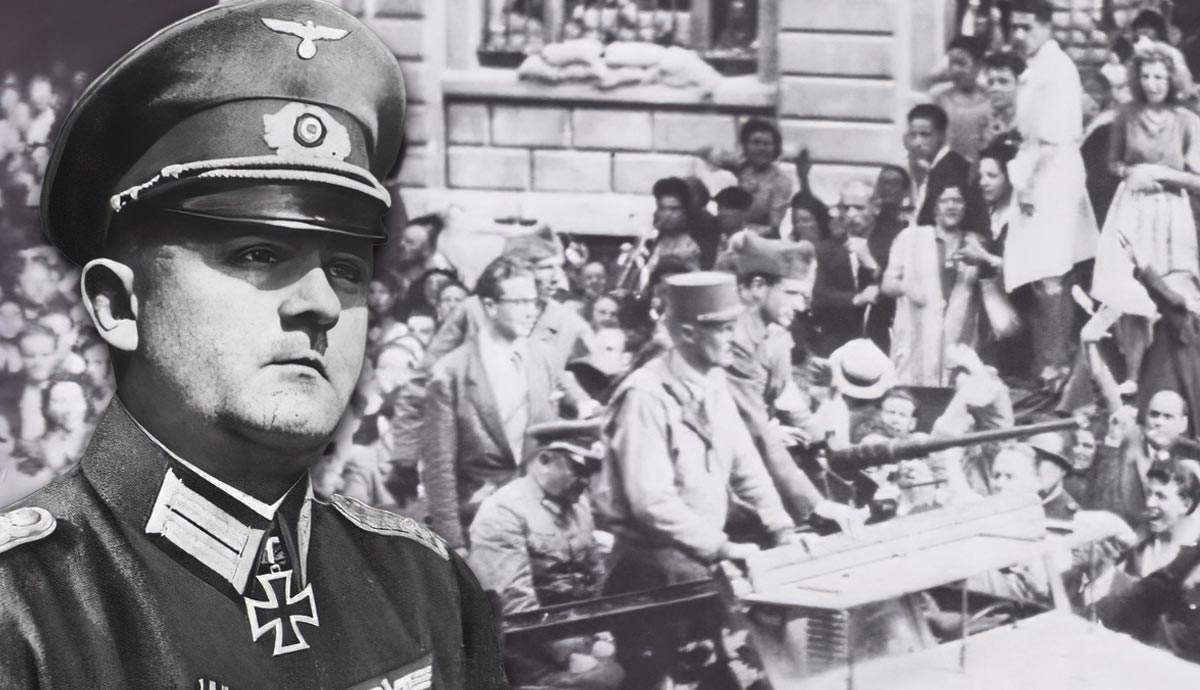
Despite Dietrich von Choltitzs extensive career in the military, he is mainly remembered as the last commander of the Nazi forces in occupied France in 1944, who disobeyed Adolf Hitlers order to destroy the city of Paris. According to his memoirs, his disobedience was dictated by his affection for French history and culture and his belief that Hitlers mental state had deteriorated. However, there exist opinions that Choltitz did not have much control over the city due to the successful efforts of the French resistance. Was his memoir simply an attempt to reshape his image?Early Life & Military Career of Dietrich von CholtitzIs Paris Burning?, a film by Michel Landi, 1966. Source: PosteritatiDietrich von Choltitz was born on November 9, 1894, in modern-day Poland, in an aristocratic family of Prussian origins. Choltitz underwent military training and, in 1913, he joined the 8th Infanterie-Regiment Prinz Johann Georg N. 107 of the Royal Saxon Army in Dresden, Germany. With the beginning of World War I, he fought on the Western Front, participating in several key battles of the war: Battle of the Marne (September 612, 1914), First Battle of Ypres (October 19November 22, 1914), Battle of the Somme (July 1November 18, 1916), and Battle of St. Quentin (March 21April 5, 1918).After the end of World War I, Dietrich von Choltitz joined the German military of the newly established Weimar Republic. In November 1924, he was promoted to lieutenant and, in the spring of 1929, to Rittmeister, a rank equivalent to that of a captain.During the inter-war period, Dietrich von Choltitz demonstrated resilience, dedication, and leadership skills, which gained him wider recognition and fame. As a result, in 1937, he was appointed as major of the Nazi forces. Before the outbreak of World War II, Choltitz played a key role in the occupation of Sudetenland by Nazi Germany in September 1938.Soon, Choltitz was appointed as the commander of the 16th Air Landing Regiment in Sagan, tasked to prepare for the Nazi invasion of Poland in September 1939. He headed Nazi forces in key battles, including the Battle of d (September 68, 1939) and the Battle of the Bzura (September 919, 1939).Armored vehicles of the Division Leclerc fighting before the Opera, August 25, 1944. Source: Wikimedia Commons/National Museum of the US Navy, Washington DCThe decisive battle for Dietrich von Choltitz was the Battle of Rotterdam held between May 10 and 14, 1940. Following the air landing in the city, he demonstrated excellent military skills and capabilities in urban warfare, successfully securing crucial strategic locations for the Nazi forces advance.Then, Choltitz participated in the siege of Sevastopol from October 30, 1941 to July 4, 1942, though less successfully. His regiment faced strong resistance from Soviet forces. The siege proved to be a harsh and prolonged battle for the Germans, resulting in high casualty rates. In June 1944, Dietrich von Choltitz was transferred to the Western Front as head of the Army Corps tasked with curbing the Allied powers breakout from Normandy.The Liberation of ParisGeneral Charles de Gaulle during a triumphal procession down the Champs-lyses as part of the celebration of the liberation of Paris. Source: Wikimedia Commons/Imperial War Museums, LondonNazi Germany had invaded France in May 1940. France had been under Nazi occupation for almost four years when on August 1, 1944, Choltitz was promoted to General of the Infantry and appointed as the military governor of Paris, the capital city of France. Choltitz inherited limited resources and troops consisting of unmotivated and tired conscripts. On the other hand, the French resistance and the French communist party were rapidly gaining strength.By August 1944, the Allies had landed in Normandy and were advancing toward Paris, putting pressure on the German occupiers. The French Resistance, which had been organizing underground opposition since the Nazi occupation, saw an opportunity to take action. The situation became particularly tense when the French police went on strike against the Nazi occupation on August 19, 1944, marking the beginning of the French revolt. The French Forces of the Interior, a coalition of resistance fighters, launched attacks against German troops while awaiting the arrival of American and British forces, who were pushing the German army eastward.Several weeks earlier, Adolf Hitler ordered Choltitz to suppress any attempts of revolt and insurrection without pity. Already on August 20, 1944, Choltitz received a direct order from Hitler to cause the widest destruction possible of Paris, adding in a cable dated August 23 that Paris must not fall into the hands of the enemy, or, if it does, he must find there nothing but a field of ruins.At this time, the Supreme Commander of the Allied Expeditionary Force, Dwight Eisenhower, and Charles de Gaulle, the head of the French government in exile, did not plan to liberate Paris directly. Instead, they sought to encircle the city, forcing the Nazi forces to push back to the German border. The uprising, however, changed the circumstances. Larry Collins and Dominique Lapierre, authors of Is Paris Burning? (1965), recall President Eisenhowers words: Just the kind of a situation I didnt want, a situation that wasnt under our control, that might force us to change our plans before we were ready for it.Photo of Dietrich von Choltitz. Source: Wikimedia Commons/German Federal Archives, BonnOn August 20, Charles de Gaulle visited Eisenhowers headquarters in Granville, Normandy, to urge him to reconsider and liberate Paris sooner. De Gaulle feared that the communists might take control of Paris, and he saw the entrance of the Free French Forces under his leadership into Paris as a matter of national importance.Meanwhile, the situation in Paris was rapidly deteriorating. The ceasefire agreement negotiated by the Swedish consul in Paris appeared fragile and resistance fighters erected barricades and seized governmental buildings. However, despite their efforts, they had limited resources and could not liberate the city alone.Choltitz debatedHitlers directive to demolish the city. He hesitatedto carry out the order for several factors. Most importantly, a few weeks prior, Choltitz had visited the German Fhrer whose mind was in a deteriorated state. During this meeting, Choltitz became convinced that AdolfHitlers mental state was decliningand that Nazi Germany was losing the war.Ultimately, Choltitz opposed the directive to demolish Europes cultural and historical center, considering his limited capacity to cope with the resistanceand the advancing Allied forces.Choltitz sought help from Swedish Consul Raoul Nordling, a neutral diplomat who had already helped negotiate the ceasefire on August 20. Choltitz requested that Nordling send a telegram to the Allied powers urging them to move quickly into Paris.On August 25, 1944, the Free French Second Armored Division and the American Fourth Infantry Division entered Paris. The Nazi soldiers surrendered. Reportedly, Adolf Hitler called Choltitz the same day, asking angrily Is Paris burning? It wasnt.The next day, August 26, Charles de Gaulleled a paradefrom theArc de Triomphedown the Champs-lyses. Paris was liberatedand saved.Capitulation of the German forces in Paris signed by Dietrich von Choltitz, August 25, 1944. Source: Wikimedia Commons; with Photo of Dietrich von Choltitz, c. 1930-1938. Source: Wikimedia Commons/German Federal Archives, BonnAfter World War II, Dietrich von Choltitz was placed at Trent Park in London along with other high-ranking Nazi military personnel. He was eventually released in 1947 without being charged with war crimes. In Nazi Germany, the military tribunal accused Choltitz of treason and convicted him in abstention. However, with the assistance of his high-ranking military friends, the enforcement of the order was delayed until the end of World War II. Choltitzs family managed to escape execution or imprisonment.Due to his efforts in 1944, Dietrich von Choltitz became widely known as the savior of Paris. He passed away on November 4, 1966, in Baden-Baden, West Germany, at the age of 71.The Controversy Around the Figure of Dietrich Von CholtitzGeneral Dietrich von Choltitiz sitting behind General Leclerc after the liberation of Paris, August 25, 1944. Source: Wikimedia CommonsAfter his funeral, the Associated Press praised Dietrich von Choltitz as a central figure in saving Paris from destruction.Jean Edward Smith, biographer of President Dwight Eisenhower, stated:Paris was saved by the actions of several leaders, including Choltitz, who disobeyed the fhrers instruction to demolish the city; de Gaulle, who steadfastly exerted every ounce of influence as president of the provisional government to save Paris; and Eisenhower, who rejected textbook military doctrine and let common sense prevail.Indeed, World War II left most European cities in ruins, while Pariss historical treasures remained almost untouched when the war ended.In his memoirs, Dietrich Von Choltitz wrote: If for this first time, I disobeyed (an order), it was because I knew Hitler was crazy.For many, Choltitz was simply not capable of destroying the city as he lacked both manpower and material to cause such destruction. Moreover, the fact that Paris was a less critical strategic location and the citys early surrender saved it from mass destruction. Given his extensive military career, in which he had been involved in destroying cities like Rotterdam and Sevastopol without showing any sentimentality, Choltitzs actions regarding Paris appeared particularly surprising.ForLionel Dardenne, from the Museum of Order of the Liberation, Hes created a legend for himself. People make a place for themselves in history either by saving or destroying, he decided his myth would be that he saved the city.Self-proclaimed or otherwise, the truth about Dietrich von Choltitzs role in saving Paris likely falls somewhere in between.
0 Commenti
0 condivisioni
40 Views

 English
 Arabic
 French
 Spanish
 Portuguese
 Deutsch
 Turkish
 Dutch
Dutch
 Russian
 Romaian
 Portuguese (Brazil)
 Greek
Greek