


WWW.THECOLLECTOR.COM
6 Famous Russians Buried in Moscows Novodevichy Cemetery
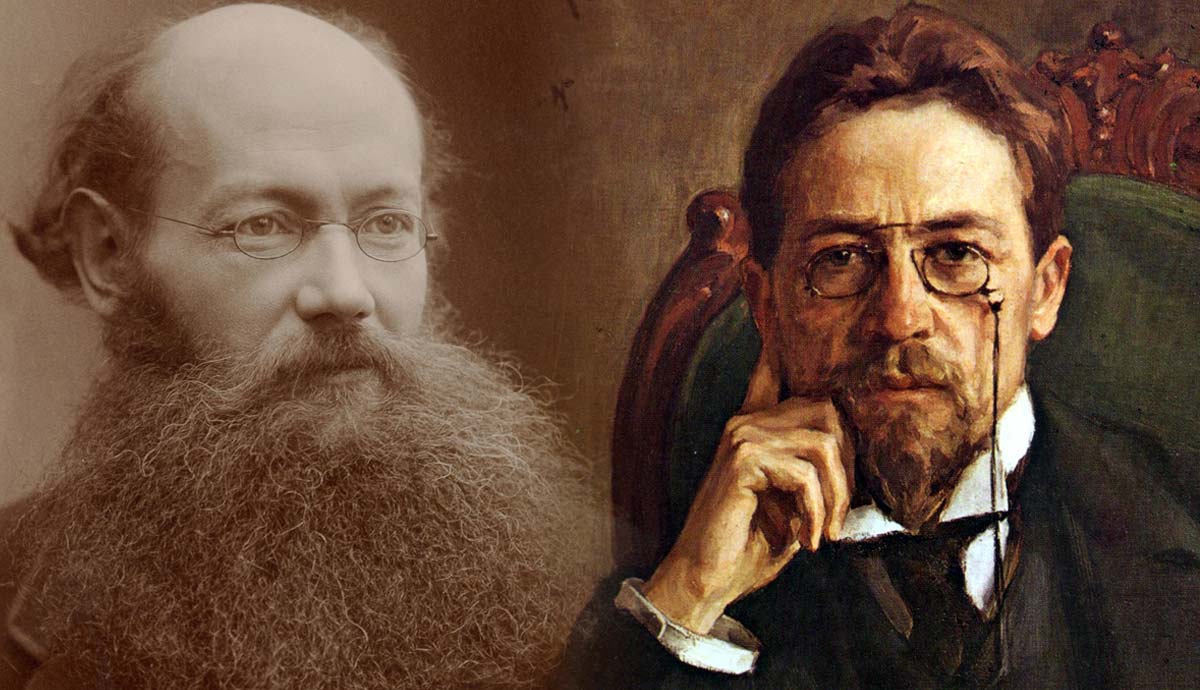
The Novodevichy Convent on the banks of the Moskva River is one of the most distinctive buildings in the Russian capital. Inaugurated in 1898, the Novodevichy cemetery became Russias second-most prestigious burial ground during the Soviet period. The graves of many famous Russians buried in other monasteries were transferred to the site. In addition to world-renowned writers, musicians, and actors, Novodevichy is the final resting place for many Soviet and post-Soviet politicians, including three heads of state. But who exactly is buried in Novodevichy Cemetery?1. Isaac Levitan (1860-1900)Portrait of Isaak Levitan, by Valentin Serov, 1893. Source: Tretyakov Gallery via Wikimedia Commons/Tretyakov Gallery, MoscowOne of the most celebrated Russian landscape artists, Isaac Levitan was born in 1860 to a Jewish family in present-day Lithuania. After the family moved to Moscow, Levitan studied at the Moscow School of Painting and began exhibiting his work in 1877.In 1880, the Moscow art collector Pavel Tretyakov acquired Levitans painting Autumn Day. Sokolniki, featuring a path in a Moscow park with a female figure painted by his friend Nikolay Chekhov (the brother of the writer Anton Chekhov). Tretyakov retained an interest in Levitans work and acquired more than 20 pieces during the artists lifetime, which are exhibited in the State Tretyakov Gallery.After leaving the Moscow Art School in 1884, Levitan routinely exhibited his work with the Peredvizhniki movement, a group of artists who moved away from representing classical and Biblical scenes and embraced subjects within Russia. Together with Ivan Shishkin, Levitan represented a new golden age of Russian landscape painting.While Shishkin is known for bringing the Russian forest to life, Levitan acquired international renown for his mood landscapes, often featuring a vast open expanse with a path or creek extending into the distance. His 1894 painting Over Eternal Peace, featuring a small wooden church overlooking a vast body of water that disappears into the horizon, is emblematic of his style.During the 1890s, Levitan made three trips to Western Europe and acquired international recognition, and he incorporated elements of French Impressionism into his later works. He suffered from poor health for much of his life and was diagnosed with a serious heart condition in 1894. After his death in 1900, he was initially buried at the Dorogomilovo Jewish cemetery in Moscow, but in 1941, his remains were transferred to the Novodevichy Cemetery near Chekhovs grave.2. Anton Chekhov (1860-1904)Portrait of Anton Chekhov, by Osip Braz, 1898. Source: Wikimedia Commons/Tretyakov Gallery, MoscowAnton Pavlovich Chekhov is one of the most famous Russian writers to have lived. In the West, he is best known for his players, who portray the decline of the Russian gentry at the turn of the 19th century, but in his native Russia, Chekhov is primarily known for his short stories.Born in Taganrog, near the Black Sea, in 1860, Chekhov remained in his hometown for almost 20 years. In 1876, his father moved to Moscow with his eldest sons to avoid debtors prison, leaving Chekhov and his mother behind to sell the estate. After finishing his education, Chekhov joined his family in Moscow in 1879 and began training as a doctor. Before his graduation in 1884, he supported the family by submitting short stories to literary journals.Chekhov continued writing after he qualified as a doctor. His medical work brought him into frequent contact with poor and sick people whom he treated for free. These experiences influenced his writing, and Chekhov developed a distinctive style by ending his short stories in a way that left it up to readers to draw their own conclusions.Anton Chekhovs grave at Novodevichy Cemetery, Moscow, photograph by Jimmy Chen, 2017. Source: Jimmy ChenIn 1887, Chekhov wrote his first play, Ivanov, which proved an unexpected hit. It was at this time that he formulated the concept known as Chekhovs gun, a principle stating that every single element of a story should be necessary and contribute to the final plot.He continued to write several shorter pieces for the stage, but The Seagull played to a hostile audience during its St. Petersburg premiere in 1896. This setback proved a blessing in disguise, as Konstantin Stanislavsky saw the potential of the play as a tragedy and staged a successful revival at the Moscow Art Theater in 1898. Chekhovs Uncle Vanya premiered in Moscow the following year.Chekhov was plagued by poor health throughout his life but was reluctant to submit himself to examination by his colleagues. He began coughing blood in the mid-1880s, but it was only in 1897 that he was officially diagnosed with tuberculosis. This prompted him to move to Yalta, where he wrote Three Sisters and The Cherry Orchard. In 1901, he married the actress Olga Knipper, but they were frequently apart as Chekhov remained in Yalta while Olga continued her career in Moscow.In 1904, Chekhov and his wife set off to Germany to seek treatment for his illness. He died on July 15, 1904, at the age of 44. His body was returned to Russia in a refrigerated railway carriage carrying oysters and buried at Novodevichy Cemetery.3. Pyotr Kropotkin (1842-1921)Pyotr Kropotkin, photograph by Felix Nadar, c. 1876. Source: BnF GallicaBest known as a revolutionary theorist, Prince Pyotr Kropotkin was born in Moscow to an aristocratic family in 1842. As a child, Kropotkin enrolled in the Corps of Pages in St. Petersburg and served as a courtier to Tsar Alexander II upon graduation in 1861.As an opponent of serfdom, Kropotkin welcomed the tsars abolition of the institution in 1861 but later believed that the tsars reforms did not go far enough. In 1862, he took the opportunity to embark on a five-year journey through Siberia on government service. In addition to surveying lands recently annexed to Russia, he took a great interest in observing how animals survived the harsh climate. His observations helped him develop the concept of mutual aid, in which animals cooperated rather than competed with each other to ensure their survival.Kropotkins existing sympathy for the political prisoners in Siberia and his observations of the natural world led him to adopt left-wing ideas about cooperation. He returned to St. Petersburg and was elected to the Russian Geographical Society, but was inspired by the Paris Commune of 1871 to become more politically active.Although he rejected political violence, Kropotkins call for political agitation was enough to get him arrested by the tsarist secret police in March 1874. He escaped from prison in 1876 and went to Switzerland, where he lived for the next five years until he was expelled by the Swiss authorities following the assassination of Tsar Alexander II in 1881.Pyotr Kropotkins grave at Novodevichy Cemetery, Moscow, photograph by Jimmy Chen, 2017. Source: Jimmy ChenBy 1886, Kropotkin established a base in London, where he would live for the next three decades. During his period, he produced some of his best-known works, including The Conquest of Bread, a political manifesto for anarchist communism, envisaging a society under common ownership where people were only required to work for five hours a week. Responding to claims that humans would not be willing to work without a profit incentive, Kropotkin argued that people are happy to do work they enjoy and are willing to help fellow members of the community.When the First World War broke out in 1914, Kropotkin split the anarchist movement by declaring in favor of Britain and France. After Tsar Nicholas II was overthrown in 1917, Kropotkin returned to Russia in June. He refused an offer of a post in the Provisional Government but argued for Russias continued participation in the war. Following the Bolshevik Revolution, Kropotkin challenged Lenins centralization of power. He died in February 1921 at the age of 78 and was buried at the Novodevichy Cemetery. Although the Bolsheviks offered him a state funeral, they soon suppressed his writings after his death.4. Sergei Prokofiev (1891-1953)Sergei Prokofiev. Unknown photographer, 1918-1920. Source: The US Library of Congress, Washington DCSergei Prokofiev was one of the most accomplished Russian composers of the 20th century. Born in 1891 in present-day Ukraine, Prokofiev was a musical prodigy who wrote his first piano piece at the age of five and a short opera at the age of nine. In 1904, he began studying at the St. Petersburg Conservatory after a recommendation from the composer Alexander Glazunov.Much younger than the other students, Prokofiev was regarded as boastful and arrogant. He was a talented pianist, and his first two piano concertos were regarded by contemporaries as extremely modern and difficult to play. However, he demonstrated his versatility with his First Symphony (the Classical) from 1917, conforming to a more conventional style.In 1913, Prokofiev made his first foreign trip and encountered Sergei Diaghilev in Paris. His Scythian Suite of 1915 featured music initially intended for a ballet. He would later write three successful ballets performed by Diaghilevs Ballet Russes in the 1920s. His 1935 ballet Romeo and Juliet features the famous Dance of the Knights.After the Russian Revolution, Prokofiev received permission from the Soviet Union to leave the country, heading first to the United States and then to Paris. His most famous opera, The Love for Three Oranges, set to a French libretto written by Prokofiev himself, was premiered in Chicago in December 1921. By the 1930s, Prokofiev yearned to return to the Soviet Union. He was commissioned to write the music for the Soviet film Lieutenant Kij, which premiered in 1934. Prokofievs music was so popular that he reworked it into a standalone suite. In 1936, he returned to Moscow permanently and wrote Peter and the Wolf, one of his most famous compositions.Sergei Prokofievs grave at Novodevichy cemetery, photograph by Jimmy Chen, 2017. Source: Jimmy ChenProkofiev continued to write music for the Soviet film industry, most notably collaborating with Sergei Eisenstein on the 1938 film Alexander Nevsky. A work of propaganda celebrating the triumph of Russian prince Alexander Nevsky over the Teutonic Knights at a time when the Soviet Union and Nazi Germany were poised to go to war, the film was suppressed following the Molotov-Ribbentrop Pact but revived to great acclaim after the German invasion of the Soviet Union in 1941. Once again, Prokofiev exploited the popularity of his film score to adapt the music into a cantata.The German invasion encouraged Prokofiev to write a grand opera based on Tolstoys War and Peace. After receiving feedback from the Soviet authorities to include more patriotic scenes, he initially produced a two-part version intended to be performed over two nights. A final revised version intended for performance on a single evening was not premiered until after the composers death in 1953.In his later years, Prokofiev collaborated with a younger generation of talented musicians, including pianist Svyatoslav Richter and cellist Mstislav Rostropovich. In 1948, his music was denounced by Soviet Culture Minister Andrei Zhdanov for confused, neuropathological combinations which transform music into cacophony.Famously, Prokofievs death at the age of 61 on March 5, 1953, was overshadowed by that of Stalin on the same day. His family could not hold his funeral for three days as crowds of Stalins mourners prevented the body from being brought out of his apartment near Red Square. When he was eventually buried at Novodevichy Cemetery, the mourners were unable to get hold of any flowers for the grave.5. Nikita Khrushchev (1894-1971)Nikita Khrushchev and US Vice President Richard Nixon during the famous Kitchen debate in 1959. Source: White House Historical Association/Nixon Presidential Library/NARANikita Khrushchev served as First Secretary of the Communist Party of the Soviet Union between 1953 and 1964. As Soviet leader, he is best known for dismantling Stalins cult of personality following his Secret Speech of 1956, his unsuccessful efforts to boost agricultural production by turning over Virgin Lands for the cultivation of corn, and his confrontation with President Kennedy during the Cuban Missile Crisis of 1962.Born in 1894 in Kalinovka near the border between Russia and Ukraine, Nikita Khrushchev trained as a metal worker before becoming a political commissar during the Russian Civil War and rising up the ranks of the Communist Party. As head of the Moscow party organization during the 1930s, he was involved in the construction of the Moscow Metro.In 1938, Khrushchev became head of the Communist Party in Ukraine and purged the party organization on Stalins orders. During the Second World War, Khrushchev served as a commissar on the frontlines in Kyiv and Stalingrad and was also present at the Battle of Kursk. After the war, Khrushchev was restored to the leadership of an enlarged Ukraine before being recalled to Moscow in 1949. As head of the party organization for both the city and surrounding province, Khrushchev launched an expansive housebuilding program to provide cheap accommodation after the ravages of war.Nikita Khrushchevs grave at Novodevichy cemetery, photograph by Jimmy Chen, 2017. Source: Jimmy ChenIn the months after Stalins death in March 1953, Khrushchev emerged as First Secretary of the Communist Party and allied with Premier Georgy Malenkov to oust the notorious secret police head, Lavrenty Beria. He consolidated his power by replacing Malenkov with his protg Nikolay Bulgarin in 1955 before demoting Bulgarin and becoming premier himself in 1958. Khrushchevs unpopular reforms to the party apparatus and his decision to back down over the Cuban Missile Crisis saw him overthrown by his protg Leonid Brezhnev in 1964. Khrushchev died seven years later, in 1971, at the age of 77.Had Khrushchev died in office, he would undoubtedly have been buried at the Kremlin Wall Necropolis near Lenins Mausoleum. However, when he died in 1971, he was relegated to the Novodevichy Cemetery. At the request of the Khrushchev family, the sculptor Ernst Neizvestny designed a striking funerary monument made of black and white slabs, emphasizing Khrushchevs positive and negative legacies. Ironically, Neizvestny had been criticized by Khrushchev in 1962 for disfigur[ing] the faces of Soviet people. Until Mikhail Gorbachevs death in 2022, Khrushchev was the only Soviet leader buried in Novodevichy Cemetery.6. Boris Yeltsin (1931-2007)Russian Prime Minister Boris Yeltsin giving a speech to supporters atop a Soviet tank, 1991, via ReutersThe first president of post-Soviet Russia, Boris Yeltsin was born in Sverdlovsk oblast in 1931. He became a construction worker and joined the Communist Party in 1961. During the 1960s, he was responsible for leading construction projects in the city of Sverdlovsk, present-day Ekaterinburg. In 1976, he was appointed First Secretary of the Sverdlovsk Oblast Party Committee. At the age of 45, he was among the youngest provincial leaders in Soviet Russia. In 1977, he ordered the demolition of Ipatiev House, where Tsar Nicholas II and his family had been killed in 1918.In 1981, Yeltsin joined the Communist Partys Central Committee. By this time, he began to have doubts about the effectiveness of the Soviet government and began conducting unannounced inspections to obtain a better idea of how the system was actually operating.Following Mikhail Gorbachevs accession to the leadership in 1985, Yeltsin was transferred to Moscow, where he served as head of the citys party organization and dismissed older corrupt officials in favor of a younger generation. Yeltsin believed that Gorbachevs reforms were not ambitious enough and was dismissed from office in November 1987.His departure from the government allowed him to lead the liberal opposition to Gorbachev. His election as chairman of the Supreme Soviet of the Russian Soviet Federative Socialist Republic in May 1990 prompted a showdown with Gorbachev after Yeltsin issued a declaration of sovereignty for Russia in June. The following month, he resigned from the Communist Party.Boris Yeltsins grave at Novodevichy cemetery, photograph by Jimmy Chen, 2017. Source: Jimmy ChenWhen Communist Party hardliners launched a coup in August 1991 to overthrow Gorbachev, Yeltsin defiantly faced up to the tanks and helped ensure the coups failure. After saving Gorbachev, Yeltsin quickly moved to undermine his government. While Gorbachev sought to broker a new Union treaty to save the Soviet Union, Yeltsin met with the presidents of Ukraine and Belarus on December 8, 1991, to form the Commonwealth of Independent States, effectively dissolving the Soviet Union. Gorbachev duly transferred power to Yeltsin on December 25, and the Soviet Union was formally dissolved the following day.Yeltsins presidency is known for radical economic reforms that led to hyperinflation and economic inequality, as well as the rise of oligarchs who acquired privatized state enterprises at low prices. Yeltsins reforms faced widespread opposition from parliament, and in 1993, he controversially mobilized tanks to shell the parliament building. He forced through a new constitution that concentrated powers in the hands of the presidents. After trailing Communist Party candidate Gennady Zyuganov early in the 1996 presidential campaign, Yeltsin cut a deal with the oligarchs and won reelection.Yeltsin had a reputation for heavy drinking and reportedly canceled several meetings with foreign leaders because he was inebriated. Plagued with health problems, Yeltsin resigned from the presidency on December 31, 1999. His prime minister, the relatively unknown Vladimir Putin, succeeded him in a temporary capacity before winning the 2000 presidential election. Yeltsin died of a heart attack in 2007 and is buried at Novodevichy under a large gravestone representing the Russian flag.
0 Σχόλια
0 Μοιράστηκε
33 Views

 English
 Arabic
 French
 Spanish
 Portuguese
 Deutsch
 Turkish
 Dutch
Dutch
 Italiano
 Russian
 Romaian
 Portuguese (Brazil)