


WWW.THECOLLECTOR.COM
The Chakri Dynasty That Has Ruled Thailand for Over 240 Years
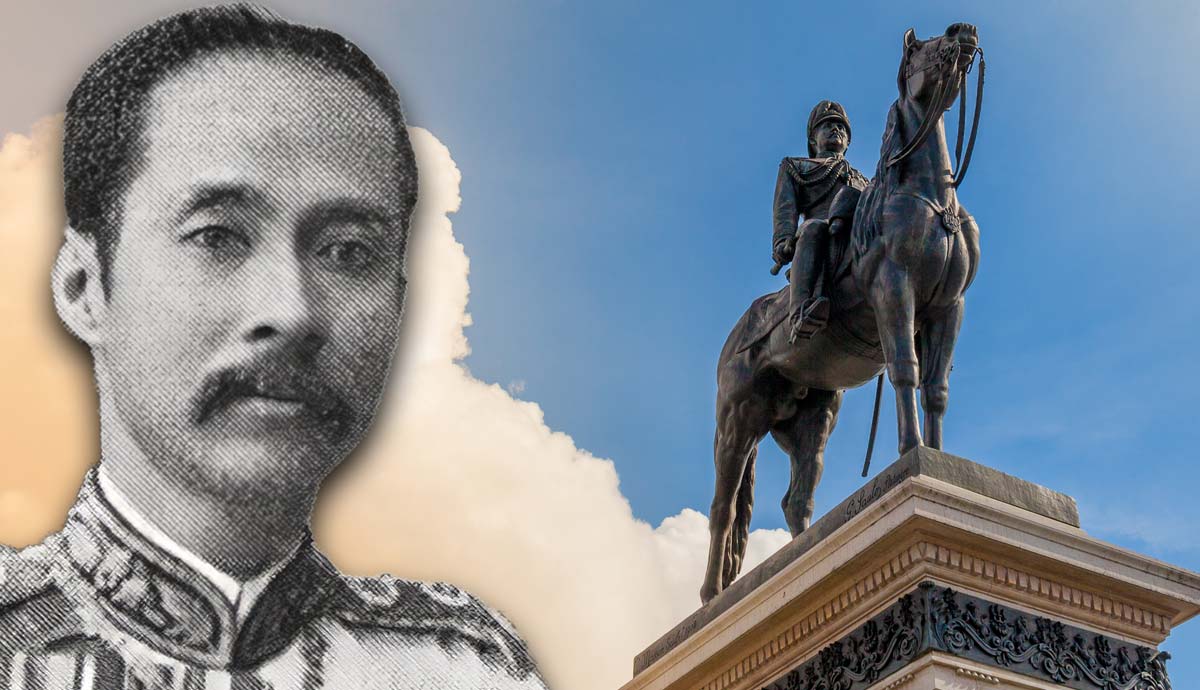
The Thai monarchy is often seen as one of the most peculiar royal institutions in the world. Since 1782, Thailand (known as Siam until 1939) has been ruled by the Chakri Dynasty. The history of the Chakri Dynasty and the history of Siam were closely interlinked until the end of the absolute monarchy in 1932. While Thai monarchs no longer have any political power, the institution retains symbolic importance and has served as a source of legitimacy for many military governments.The Foundation of the Chakri DynastyMural paintings of Rama I-V at the Kanchanaburi War Museum, Thailand, photograph by Jimmy Chen, 2022. Source: Jimmy ChenIn early 1782, the commander-in-chief of the Siamese Army, the Chao Phraya Chakri, was campaigning in Cambodia when he received news that King Taksin had been arrested and removed from power in a coup. He quickly returned to the capital of Thonburi and restored order by neutralizing the rebel forces. However, he was soon faced with the dilemma of what to do with his friend and superior, King Taksin.A military commander of Chinese descent who served as the governor of the province of Tak in the kingdom of Ayutthaya, Taksin had been present when Ayutthaya was occupied and sacked by Burmese troops in 1767. As the Siamese state fragmented into several smaller entities, Taksin established his base at Thonburi on the western bank of the Chao Phraya River, some 50 miles downstream of Ayutthaya. Between 1767 and 1771, Taksin led a series of campaigns that reunified most of Siam and expelled the small Burmese garrison in the country. One of his closest allies was the former governor of Ratchaburi, whom he had raised to Chao Phraya Chakri.In addition to his military conquests, Taksin sought to revive the economy by encouraging agricultural production and establishing commercial and diplomatic links with China. However, by the early 1780s, he was showing signs of mental instability, insisting on being worshipped as a future Buddha and arbitrarily imprisoning family members and close associates. It was this erratic behavior that led to his removal from power. Chao Phraya Chakri knew that restoring Taksin was a great risk at a time when the Burmese threat was not fully extinguished. He also recognized that keeping Taksin alive would risk political instability. With great reluctance, after taking the throne on April 6, 1782, he ordered Taksins execution.ConsolidationStatue of King Rama I at Rajabhakti Park, Hua Hin, Thailand, photograph by Jimmy Chen, 2020. Source: Jimmy ChenThe new king, known posthumously as Phra Phutthayotfa Chulalok (Rama I), moved his capital from Thonburi to the opposite bank of the Chao Phraya River. This area formed the nucleus of the city known to the world as Bangkok but known to Thais as Krung Thep or City of Angels. Situated on a bend of the Chao Phraya River, the site was surrounded by water on three sides. Rama I ordered the construction of a canal on the eastern side, transforming the site into an artificial island known as Rattanakosin Island. Accordingly, Rama Is realm also came to be known as the Rattanakosin Kingdom.Rattanakosin means Abode of the Emerald Buddha, referring to a religious artifact taken by the king from the Laotian capital of Vientiane during an earlier military campaign. The Emerald Buddha became the centerpiece of the temple Rama I built within the Grand Palace complex in Bangkok, known as Wat Phra Kaew or Temple of the Emerald Buddha. The temples outer walls were decorated with scenes from the Ramakien, the Thai national epic based on the Ramayana, a Sanskrit epic following the life of Rama, an incarnation of the Hindu god Vishnu. Official copies of the Ramakien were lost during the destruction of Ayutthaya in 1767, and Rama I supervised and partly contributed to the creation of a new text in 1797.Memorial to the Battle of Lat Ya in the Nine Armies War, photograph by Jimmy Chen, 2022.Source: Jimmy ChenIn 1785, King Bodawpaya of Burma launched an invasion of Siam known as the Nine Armies War, since nine columns of Burmese troops converged on Siamese territory from the north, west, and south. While Burmese forces enjoyed some success on the northern and southern fronts, in December 1785, the king dispatched his younger brother and uparaja (viceroy), Maha Sura Singhanat (also known as Chao Phraya Surasi), at the head of an army to confront the main Burmese invasion force in Kanchanaburi province. The two armies faced each other at Lat Ya, some ten miles northwest of Kanchanaburi City. The Siamese forces cut off the Burmese supply lines and launched an assault in February 1786 that forced the Burmese to withdraw and abandon the campaign.Having already established Siamese suzerainty over Laos, Rama I extended Thai influence into Cambodia and Vietnam during his reign. In 1785, he granted refuge to the exiled Vietnamese lord Nguyn nh, whose family traditionally ruled over southern Vietnam. In 1787, Nguyn nh left Siam and captured Saigon the following year, on his way to conquering the whole of Vietnam and establishing himself as Emperor Gia Long in 1802. This enabled Siam to maintain close diplomatic relations with Vietnam, and Rama had also installed a pro-Siamese ruler in Cambodia.Rama I died in 1809 and was succeeded by his son, Prince Isarasundhorn. The death of the founder of the Chakri Dynasty encouraged another Burmese invasion, but the Siamese armies once again prevailed. Rama II (Phra Phutthaloetla Naphalai) built on his fathers legacy, and the kingdom remained at peace, enabling the king to focus his energies on reviving cultural traditions from the kingdom of Ayutthaya. Rama II was a distinguished poet in his own right who promoted khon dramas based on his fathers version of the Ramakien.Reform and ModernizationStatue of King Rama IV (Mongkut) at Rajabhakti Park, Hua Hin, Thailand, photograph by Jimmy Chen, 2020. Source: Jimmy ChenRama II fell ill and died in July 1824 at the age of 57 without naming an heir. At the time, the expectation was that he would be succeeded by the 20-year-old Prince Mongkut, the son of Queen Sri Suriyendra. Instead, the late king was succeeded by a 37-year-old son from a minor consort, posthumously named Nangklao (Rama III). The new king had been chosen by the nobility owing to his record as an effective military and political leader prior to his accession.During his reign, Rama III expanded trading relations with China, earning a large surplus that he used to build up a fund for emergencies. The reign also witnessed the signing of the Burney Treaty in 1826 between Siam and British envoy Henry Burney. The agreement recognized Siamese control of the Malay states of Kedah, Kelantan, Perlis, Terengganu, and Patani. While Rama III had over 40 children with several consorts, he did not raise any to the status of queen, and when he died in 1851, the throne passed to Mongkut (Rama IV).Best known in the West via a rather unflattering portrayal in the 1956 film The King and I, based on an account by the English governess Anna Leonowens, Mongkut was a reformer and modernizer who encouraged the adoption and teaching of modern science and technology. The king ordered his nobles to wear upper garments, and he himself was often photographed wearing Western-style military uniforms. Mongkuts reign witnessed the Bowring Treaty of 1855, which significantly reduced trade barriers with the British. While the Siamese government lost a large amount of tax revenue from customs duties, the liberalization of trade stimulated foreign investment in the Siamese economy.Statue of King Rama V (Chulalongkorn) at Dusit, Bangkok, Thailand, photograph by Jimmy Chen, 2017. Source: Jimmy ChenHe was particularly interested in astronomy and used his observations and calculations to reform the Buddhist calendar. On August 18, 1868, Mongkut and his son Prince Chulalongkorn accompanied Siamese and European officials to Prachuap Khiri Khan Province, south of Hua Hin, to observe a solar eclipse he had accurately predicted. Both of them caught malaria during the expedition. While Mongkut succumbed to the illness on October 1, the 15-year-old Chulalongkorn (Rama V) survived to become king.During his 42-year reign, Chulalongkorn followed in his fathers footsteps to become one of the greatest reforming monarchs in Thai history. He is best known for the abolition of slavery, which was carried out gradually during his reign and culminated in the Slave Abolition Act of 1905. The abolition of slavery naturally led to major changes in the social and economic system, as well as military recruitment. The Conscription Act of 1905 established a conscript army to replace the slave army. Chulalongkorns other domestic policy achievements included the centralization of administration via a hierarchical system and major infrastructure projects to facilitate economic development.While Chulalongkorn sought to maintain cordial relations with European powers, this failed to prevent France from taking over Vietnam, Laos, and Cambodia to establish the colony of Indochina. Chulalongkorn sent several of his sons to receive military training in Europe. Prince Vajiravudh studied in Britain, Prince Chakrabongse went to St. Petersburg, and Prince Mahidol to Germany. In 1897, Chulalongkorn became the first Siamese monarch to visit Europe, and he made a second visit a decade later in 1907. Despite these efforts to improve diplomatic relations, Chulalongkorn was forced to cede four southern provinces to British Malaya in 1909, shortly before his death.Crisis and AbdicationStatue of King Rama VI (Vajiravudh) in Lumphini Park, Bangkok, photograph by Jimmy Chen, 2018. Source: Jimmy ChenIn 1910, Vajiravudh (Rama VI) succeeded his father, Chulalongkorn, to the throne. Educated at the Royal Military Academy at Sandhurst in Britain, Vajiravudh was an Anglophile who established a Royal Pages School based on Eton and Harrow and upgraded the status of a civil service college founded by his father into Chulalongkorn University. In addition to educational reform, Vajiravudh was intent on improving healthcare and established the countrys first public hospitals. His reign also witnessed the completion of the Hua Lamphong Railway Station in Bangkok and the Don Mueang Airfield, which became Thailands main international airport from 1924 to 2006.In July 1917, Siam declared war on Germany and Austria-Hungary and joined the Allies in World War I. Siamese troops arrived on the Western Front during the closing stages of the war and saw little action. The conflict nevertheless witnessed an increase in Thai nationalism. In September, the king replaced the old royal standard featuring a white elephant with the red-white-and-blue flag that continues to be used today.At around this time, Vajiravudh (the sixth king of the Chakri Dynasty) also began to style himself as King Rama VI, establishing the convention that each king of the Chakri Dynasty would be known as Rama in the English-speaking world. In another initiative inspired by European monarchies, Rama VI promulgated the Succession Law of 1924, prioritizing his full brothers and excluding princes with foreign mothers from the throne. This clause excluded Rama VIs nephew, Prince Chula Chakrabongse, the son of the late Prince Chakrabongse and his Ukrainian wife, Kateryna Desnytska.Siamese troops marching through Paris in the 1919 Victory Parade. Source: Wikimedia CommonsAccordingly, when Rama VI died without a son in November 1925, he was succeeded by his youngest brother Prajadhipok (Rama VII). Educated at Eton College in Britain, Rama VII was a conscientious ruler who sought advice from family members who were senior statesmen. However, his failure to deal with economic challenges during the Great Depression strengthened a political movement known as Khana Ratsadon (The Peoples Party), which called for a constitutional monarchy.On June 24, 1932, Khana Ratsadon took advantage of the kings absence from the capital to take power in Bangkok. The liberal-minded Rama VII agreed to serve as a constitutional monarch, and a constitution drafted by the democratic leader Pridi Banomyong was promulgated in December. However, the king was alarmed by the economic reform program Pridi introduced in 1933 and supported a conservative crackdown on Khana Ratsadon. The ensuing political crisis became intolerable for the king, who abdicated on March 2, 1935.Postwar RevivalImage of King Rama IX (Bhumibol Adulyadej), Bangkok, photograph by Jimmy Chen, 2018. Source: Jimmy ChenWith the democrats in the ascendancy, the abdication of Rama VII seemed rather anti-climactic. Under the terms of the 1924 Succession Law, the new king was Ananda Mahidol (Rama VIII), the 10-year-old elder son of Prince Mahidol, Rama VIIs late half-brother. The young king was studying in Switzerland at the time and remained there for most of his reign. In Bangkok, the government was dominated by Field Marshal Plaek Phibulsongkram (also known as Phibun), who formally changed the countrys name to Thailand in 1939.During World War II, the field marshal put up symbolic resistance to the Japanese invasion in 1941 before signing an alliance with the Japanese and supporting military operations against Burma and India. As the tide of war shifted in the Allies favor, Pridi ousted Phibun in 1944 and controlled the government as regent for the teenage King Ananda.After the end of the war, the king returned to Thailand in December 1945 and was enthusiastically welcomed by his subjects. However, on the morning of June 9, 1945, days before he was due to return to Switzerland to complete his university studies, the 20-year-old king was found dead with a gunshot wound to his head. The circumstances of his death remain a mystery to this day.King Bhumibol inspecting the Royal Rainmaking Project. Source: Assumption University, ThailandThe kings tragic death elevated his 18-year-old brother, Bhumibol Adulyadej (Rama IX), to the throne. Born in the United States in 1927 while his father was studying at Harvard, King Bhumibols reign saw Thailand become an important American ally in Southeast Asia during the Cold War. Bhumibol was also a talented saxophonist who formed his own jazz band in the 1950s.Bhumibol was largely sidelined after Phibun returned to power in 1951, but the king played a crucial role in legitimizing General Surat Thanarats coup that ousted Phibun in 1957. After this, the kings profile was elevated, and the royal projects aimed at developing the Thai economy received government support. Bhumibol studied science in Switzerland and had several patents to his name. In addition to dams and irrigation projects, Bhumibol established the Royal Rainmaking Project in 1955 to research artificial rainmaking techniques to address droughts in rural Thailand.The Chakri Dynasty Today: An Outdated Institution?Mural paintings of Rama VI-X at the Kanchanaburi War Museum, Thailand, photograph by Jimmy Chen, 2022. Source: Jimmy ChenIn the second half of the 20th century, Thai politics was characterized by military dictatorship, punctuated by brief periods of democratic government. Bhumibol remained extremely popular throughout his reign and presented himself as a neutral arbiter in political disputes. However, military leaders often used the king to legitimize and defend their governments by resorting to the notorious lse-majest law, claiming that criticism of the government was the same as criticizing the king.While Bhumibol enjoyed good relations with General Surat Thanarat (1957-1963) and General Prem Tinsulanonda (1981-1987), he sought to distance himself from the military in the 1970s after dozens of protestors, mostly students, were killed protesting against the government in October 1973.In the 1990s, Bhumibol became increasingly reclusive and made few public appearances. He had three daughters and one son with his wife, Queen Sirikit. In 1972, the king designated his son Maha Vajiralongkorn as crown prince, though he was reportedly appalled by the latters propensity for scandal.Despite talk of Bhumibol altering the succession in favor of his favorite daughter, Princess Sirindhorn, when he died in October 2016 after 70 years on the throne, he was succeeded by Vajiralongkorn (Rama X). While Vajiralongkorn is less popular than his father and spends much of his time living in Germany, his place on the Thai throne seems secure for now.
0 Комментарии
0 Поделились
18 Просмотры

 English
 Arabic
 French
 Spanish
 Portuguese
 Deutsch
 Turkish
 Dutch
Dutch
 Italiano
 Romaian
 Portuguese (Brazil)
 Greek
Greek