What Stopped the Black Death From Spreading?
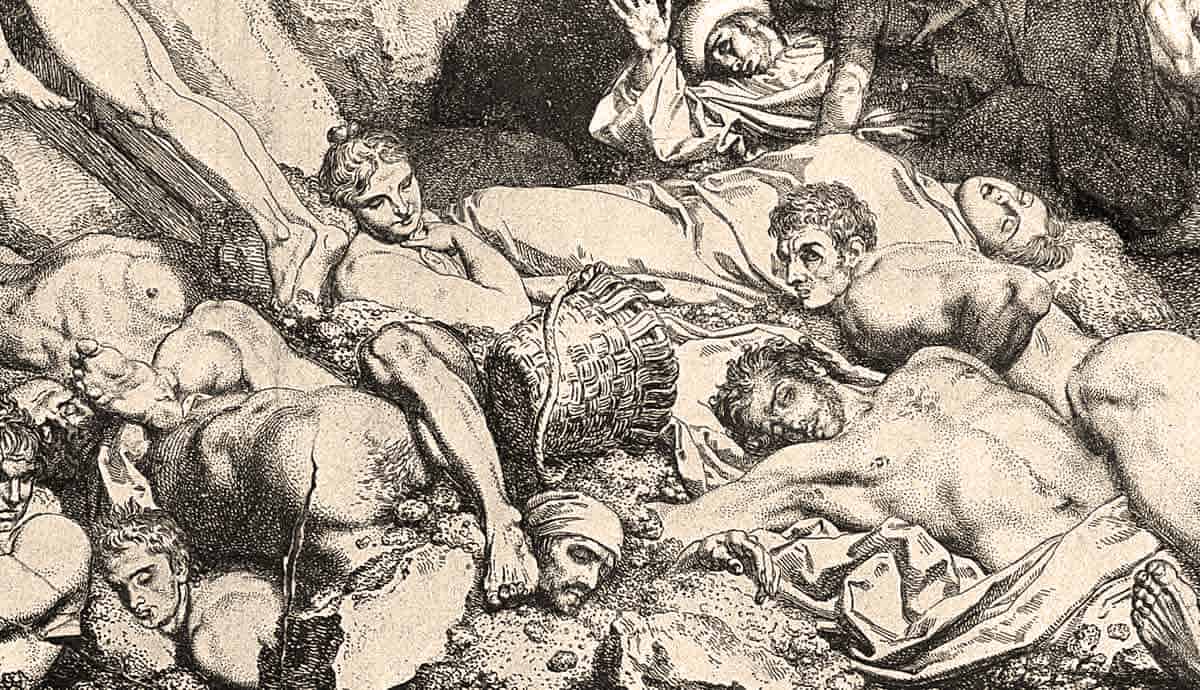
The plague of Florence in 1348, as described in Boccaccios Decameron by Luigi Sabatelli. Source: Wellcome CollectionMany years before the world had modern medicine and clean hospitals, a debilitating plague spread across Europe. This was from the year 1347. The malady known as the Black Death caused millions of deaths during the first wave which lasted until 1351. According to many historical records, the germ is estimated to have killed between 25 million and 50 million people across Europe.Yersinia pestis was the name of the bacterium that caused the affliction. It lived in fleas hosted by black rats. The fleas in turn spread the disease to humans. Because the rats lived on trade ships, they spread the illness across different nations.The Involvement of GovernmentsThe Plague at Ashdod by Nicolas Poussin, 1631, in the Louvre Museum, ParisThose afflicted with the sickness had symptoms such as black boils and high fever, which sometimes led to death. It was in 1347 that the first disease-infested ships arrived in Western Europe through the port of Messina in Sicily. Although the ships from Caffa carried many infected bodies and people, they were allowed to dock at first. After the authorities realized the carnage onboard, they tried to send them away. But it was too late and the germ had already started to spread across the land. After the initial wave of 1347, leaders in different European cities began to notice that the sickness traveled with people and goods. Consequently, the city of Ragusa passed a law in 1377 intended to stop the spread of the disease.Woodcut of dying plague patients, 1532, via Wikimedia CommonsThe law required anyone coming from an area grappling with the ailment to stay on a nearby island for 30 days. The city officials called the duration a trentina. Soon after, the waiting time was changed to 40 days. The duration was called a quarantena. The English word quarantine was derived from that Italian word. Alongside similar rules, the city of Venice built special hospitals on islands such as the Lazzaretto Vecchio in 1423. The hospitals were used to keep the sick away from the general population. Across the continent, hygiene measures were taken to stop the spread. They included cleaning ships with vinegar, burning the clothes of infected people, and holding documents over smoke to disinfect them.Travel restrictions were also common. Many cities and regions banned or strictly limited the entry of people from plague-affected areas unless they had health certificates confirming that they were healthy or had completed quarantine procedures.There Were Social ChangesPlague in an Ancient City by Nicholas Poussin, 1650-1652, Los Angeles County Museum of ArtTo avoid getting infected, some people started to change how they lived. They stopped sharing beds with strangers and moved away from the crowded town centers to the countryside. Also, instead of living in houses made of wood and mud which easily hosted flea colonies and disease-infested rats, people started to build their homes with stone and brick. However, the trend was in part driven by fire safety precautions and legislations aimed at curbing catastrophic fires. This was especially true in the years following the Great Fire of London. The shift was an example of how a change in building architecture could save lives. It worked as rats found it harder to hide in stone walls than in straw roofs. Even though the black rat remained in Europe for a long time, the changes in housing helped reduce contact between humans and the fleas.The Rise of Acquired Immunity to the DiseasePeople fleeing from the plague, by F.L. Wilson, 1630, via Oxford UniversityOver time, genetic mutations in humans made them more resilient to the Black Death germ. Natural selection favored individuals with specific alleles, and as a result, subsequent generations displayed enhanced biological defenses. Despite the recurrence of the pestilence, deaths decreased as the vulnerable population died off. Because the people who were naturally more resistant to the disease survived the first wave, many of them were able to pass the disease-resistant genes to their children. As a result, the later outbreaks that occurred from 1360 onwards were less deadly compared to the first.Germ MutationA scanning electron micrograph depicting a mass of Yersinia pestis bacteria in the foregut of an infected flea.Past studies of bones belonging to the victims of the Black Death have unravelled changes in the genetic makeup of the bacteria that caused the sickness. It is thought that the changes caused the plague to lose its deadly properties. As a result, the germ was able to stay inside a host without killing the person. Essentially, the bacteria became a weaker version of itself over time.The lack of certain genes also allowed the germ to spread unnoticed. As a result, future infections caused fewer deaths. It was not until the 19th century that an effective elixir for the scourge was invented.




 English
 Arabic
 French
 Spanish
 Portuguese
 Deutsch
 Dutch
Dutch
 Italiano
 Russian
 Romaian
 Portuguese (Brazil)
 Greek
Greek